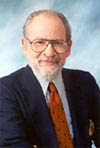
By Alan Caruba
A founding Member of the National Book Critics Circle
Biographies, Autobiographies and Memoirs ~ Lots of Advice ~ Business Books ~ Summer Reading for Kids & Teens ~ Novels
My Picks of the Month
This report has recommended three previous books devoted to President Obama’s life and eligibility to hold the highest office in the land. In retrospect, as carefully documented as they were, the nation was not ready to consider that fact, nor ready to accept the consequences. Lyndon B. Johnson, however, surprised the nation with his announcement that he would not run for reelection in 1968 and, in 1974, Richard M. Nixon became the first President to resign from office in the wake of the Watergate scandal. Prior to Obama’s election, however, Dr. Jerome R. Corsi, PhD, had authored “The Obama Nation”, warning that his credentials and life history was suspect. Now he has written Where’s the Birth Certificate? The Case That Barack Obama is Not Eligible to be President ($25.95, WND Books). More than 380 pages, complete with appendices and footnotes, meticulously reveal that he was not and is not eligible. I believe this book will lead to Obama’s resignation in the run up to the September 2012 Democratic Party nominating convention. I also believe that the mainstream media that formerly ignored or deriding all those who raised this issue are moving inexorably away from that position. Simply stated, Article 2, Section 1 of the U.S. Constitution requires that a President be a “naturally born” citizen and Obama, as is widely known, is the son of a Kenyon citizen. Natural born requires that both parents be American citizens. How and why this was ignored in Obama’s case is examined in Corsi’s book, along with a massive cover up of the documentation that would and should disqualify him. Ignoring the Constitution has serious implications for the rule of law, the keystone of the American Republic.
I recommend you add Catherine Herridge’s new book to your summer reading list. It is The Next Wave: On the Hunt for Al Qaeda’s American Recruits ($25.00,.Crown Forum). If you watch Fox News then you know that Ms. Herridge is a national correspondent based out of Washington, D.C., and you know she has been following the story of terrorism directed against the nation for a long time. As a result, she has contacts deep inside the counterintelligence community as well as having traveled to Guantanamo many times to cover the proceedings there regarding some of the most evil people on Earth. She devotes a lot of the book to connecting the dots involving the life and activities of Anwar al-Awlaki, the American-born imam who facilitated the movement of several of the 9/11 terrorists before the attack on the Twin Towers and Pentagon. His knowledge of American culture has made him a valuable al Qaeda asset, so much so that he is the only American on a CIA hit list. He is currently believed to be hiding out in Yemen, but distance is nothing to the Internet and he is a master of recruiting disaffected American Muslims to attack their fellow Americans. One of them was Nidal Hassan, the Fort Hood killer. Jihad is not just a present-day conflict; it is generational, and it is now a movement as opposed to a top-down vertical organization. The failed underwear bomber and Time Square bomber should not make us forget that there are new plots to kill Americans being hatched every day.
Two companion volumes to the Herridge book will explain a lot to anyone who has not been paying any more attention to al Qaeda or Hezbollah for the last decade or longer. The first is Peter l. Bergen’s The Longest War: The Enduring Conflict Between America and Al Qaeda ($16.00, Free Press) now in softcover is authored by a man widely regarded as a leading expert on al Qaeda, a national security analyst who has been in the belly of the beast. His book provides a comprehensive history of an organization devoted to terrorism for the ultimate purpose of imposing Islam on the West and everywhere else. Your grandchildren will be dealing with this threat. Consider Israel, now more than sixty year’s since its founding, but still facing implacable enemies. One of them is Hezbollah and Thanassis Cambinis has written A Privilege to Die: Inside Hezbollah’s Legions and Their Endless War Against Israel ($15.00, Free Press, softcover). Part standing army, part terrorist group, party political party, and part theological movement, it joins al Qaeda and Hamas it its intention to remake the map of the Middle East. An influential movement, this book will surprise you with its description of the people who are willing to die for it, people who span economic classes and religious sect for its apocalyptic beliefs. Based in Lebanon, the Party of God, has influence well beyond its borders.
I have a friend who has spent most of his life accompanied by dogs and presently has two who regard him as the alpha male of the pack. His love for dogs makes up for a distinct skepticism about humans and it is difficult to disagree with him much of the time. Dog lovers will love The Dog Next Door and Other Stories of the Dogs We love, edited by Callie Smith Grant ($12.99, Revell, softcover). There are an estimated 77.5 million dogs in the U.S. with 39% of U.S. households owning at least one while 24% own two. Americans love their dogs and they will love this follow-up to “A Prince Among Dogs” for the 35 true stories Grant has collected to celebrate these tail-waggers. Another passion for many Americans is baseball and 1961: The Inside Story of the Maris-Mantle Home Run Chase by Phil Pepe ($20.00, Triumph Books) tells of the year-long power surge that approached Babe Ruth’s record of 60 home runs for the 1927 New York Yankees. Maris would surpass it. The book is about an era when the game was not beset with doping scandals and raw power and real skill determined the outcome. Pepe has written more than fifty books on sports and this one is a wonderful look behind the scenes as well as on the field.
I cannot imagine what it must be to pilot a fighter jet, but a new book, Viper Force: 56th Fighter Wing by John M. Dibbs, an award-winning air-to-air photographer with text by Lt. Col. Robert ‘Cricket’ Renner, ($40.00, Zenith Press) will get you as close to the experience as one can have by enjoying page after page of extraordinary photos and a text provided by as 1988 Air Force Academy graduate who retired in 2010 after 22 years of active duty service that included 37 combat sorties over Iraq. If a machine can be called beautiful, than surely the F-16 Fighting Falcon, known to its pilots and crews as the Viper, is a thing of beauty and the photos are testament to that. Reading this book gives one a wonderful insight to the lives of those associated with this fighter jet and a sense of its lethal capacity to protect the nation that built it. From the same publisher comes Burt Rutan’s Race to Space by Dan Linehand ($30.00, Zenith Press). Rutan has earned a reputation as an aerospace visionary and he is seeking to make private space travel affordable and accessible these days. The book is the story of that endeavor. I suspect, however, that its appeal will be mostly to those steeped in the engineering aspects of the effort and those for whom this quest remains the ultimate expression of pushing the envelope.
Odds and Ends: My Mother taught gourmet cooking, mostly French and European cuisine, so I am partial to cookbooks (she wrote two) that share their enthusiasm and recipes for this gastronomic genre. I first encountered Chef Jacques Haeringer through the “Chez Francois Cookbook”, the bible of classic Alsatian cuisine. The chef lives in Northern Virginia where L’Augberge Chez Francois in Great Falls attracts not only the locals, but some famous DC folk as well. His new book is Two for Tonight ($26.95, Bartleby Press) and is a gourmet’s dream of romance when you combine great recipes, a nice bottle of wine, and a summer al fresco meal. These are meals for dining outdoors whether it’s his Alsatian fish stew or any of the other mostly fish dishes with the occasional lamb chop, veal scallopini, or Kobe beef dish for meat-eaters. The color photos are mouthwatering and, yes, I miss Mom's wonderful dinners. While recently attending the Book Expo in New York, I came across a book that I think many older computer users will find of interest. It’s Windows® 7 for Seniors: Quicksteps by Marty Matthews ($20.00, McGraw-Hill, softcover). It has many advantages in that it uses a larger print size, has lots of illustrations, and is filled with how-to tips that will enhance the use of this popular operating program. It is comprehensive and anyone taking advantage of it will discover how remarkable Windows®7 can be.
Many book lovers also aspire to be writers and for those who think they have a novel in them, there’s A Kite in the Wind: Fiction Writers on Their Craft, edited by Andrea Barrett and Peter Turchi ($19.95, Trinity University Press, softcover). It features twenty contributors offering some excellent advice that will answer many of the questions a beginner may have. I have always been a non-fiction writer and concluded long ago that my brain is not equipped to write fiction. That requires a whole different set of sensibilities as well as the development of specific skills. This book will help future and current fiction writers hone those skills.
Let me finish with the thought that I do not normally take note of a specific poet’s work, preferring to deal only with anthologies of poetry. The reason is simple and cruel. If I feature one poet, I receive the books of others and great poetry is usually produced in relatively small amounts in any given era. I am going to make an exception for Maxine Kumin whom I met long ago when we were both young. I was at the Bread Loaf Writer’s Conference, famed even then as a Middlebury College legacy of Robert Frost. I was there to write about it for Publishers Weekly and Kumin was one of the writers there to give readings and share their insights on the craft with aspiring writers. I was, at that point, already an aspiring and published poet but it would be my first and last time. I was old school, but Maxine was a modernist. All this returned to me when I received Where I Live: New and Selected Poems 1990-2010 ($16.95, W.W. Norton, softcover). Maxine is the author of 17 poetry collections, as well as numerous works of fiction and nonfiction. She’s won the Pulitzer Prize and a raft of other literary awards. If you were to choose a present day poet to read, you would discover she writes poetry that goes straight into your mind and heart. There is no way to “describe” a particular poet’s work, though I am sure many try. To read a modern poet, Maxine Kumin would be a very good choice.
Biographies, Autobiographies and Memoirs
The thing about some memoirs is that one often ends up wondering why the writer thought their life was all that significant or why the publisher did. Not all lives are equal in this respect, but I suppose one can learn something from a memoir if it reflects one’s own questions about life or illuminates some dark, unexplored corner.
My AOL address book was recently hacked for the second time and I am searching for software to prevent that occurring again. Serendipitously Mafiaboy: A Portrait of a Hacker as a Young man, arrived. Told by Michael Calce with Craig Silvermann ($22.95, Lyons Press), it is his account of what it was like to be a 15-year-old boy who, in the spring of 2000, was exposed as “Mafiaboy”, the cybercriminal who had crippled the websites of Yahoo!, Amazon, CNN, E*Trade, eBay and Dell. Not only were people asking how some adolescent could pull off devastating denial-of-service attacks, but why? Due out officially in August, Calce reveals the story of how his prodigious talent for unraveling and manipulating computer technology evolved into a teenage obsession. He was too young to realize the scope of the damage he was doing, but joining a gang of hackers gave him a sense of power and mission. In the end, the FBI joined with Canadian authorities in a manhunt to find out who he was. Calce acknowledges how reckless and stupid his attacks were. He was caught, spent eight months in a group home for troubled adolescents, and a year on probation with restricted access to computers. Cyber-folk will find this book of interest. Where’s My Wand? by Eric Poole ($15.00, Berkley, softcover) is an entertaining tale of growing up gay and Baptist in the 1970s. It is not a gay polemic as one might assume, but rather a hilarious recounting of confused gender at a time and place, and in the person of a very clever youngster looking for a way to make sense of it and come to peace with it. Gay folk will no doubt enjoy it, but the surprise is that straight folk will too. A comparable search for identity is told by Maise Houghton in Pitch Uncertain: A Mid-Century Middle Daughter Finds Her Voice ($24.95, Tide Pool Press, Cambridge, MA). It is the story of how she slowly decoded her parent’s marriage as the middle child coming of age in the 1950s. Her parents had an estranged by oddly loyal relationship and the author captures the era and genteel culture of the time. I am not sure who would find this book of interest except for someone of the same age and gender, but it is a well-told account. A very different memoir is told by Kelle Groom, I Wore the Ocean in the Shape of a Girl ($23.00, Free Press) that recounts her young life as an addict and how, at age 19, she became pregnant with a son that she would end up losing twice, first to adoption, and then, within a year to cancer. This is a look into an addictive personality who discovered alcohol at age 15 and was an out-of-control alcoholic by age 19. The child’s death only hastened her downward spiral. The memoir, based in part on journals she kept at the time, is about her search for that lost son. In recovery she became a poet, earning a spot in Best American Poetry 2010, along with other accolades. Anyone who has known an alcoholic knows how totally destructive this addiction can be unless the pattern is broken. In a very real way, writing saved her life.
Sex, Mom, & God by Frank Schaeffer ($26.00, Da Capo Press) recounts what it was like to grow up in L’Abri, the Swiss chalet/Christian community that his parents, Evangelicals Francis and Edith Schaffer ran. He was surrounded by women, beautiful women, but the one who influenced his sexuality was his devout, but candid, mother who was at ease answering his questions about Jesus or sex, believing that conservative religion wasn’t about ruining sex for believers and others. Part memoir, part exploration of Evangelical views on issues such as abortion, premarital sex, and contraception, the book explores the harsh attitude organized religion has toward women and sex, while demonstrating that faith and fun can actually co-exist. Learning to Die in Miami: Confessions of a Refugee Boy by Carlos Eire, the National Book Award winning author of “Waiting for Snow in Havana” ($15.00. Free Press, softcover) recounts what it was like to come of age as a Cuban émigré attached to the memories of his youth in that island nation. He explores the tension between Carlos the Cuban and Charles the American as he eventually embraced his continual reinvention as someone distinctly American.
Nica’s Dream: The Life and Legend of the Jazz Baroness by David Kastin ($26.95, W.W. Norton) is a fascinating biography of Baroness Kathleen Annie Pannonic “Nica” de Koenigswater, a British Rothchild who flew her own plane before she was twenty-one. Her husband was a French baron and, during World War II, they joined the French Resistance and went to North Africa where she drove ambulances at the front lines of battle against Rommel. That might have been enough for a biography, but in 1953 she moved to New York to pursue who overwhelming love of jazz and never left. As a patron of jazz, she befriended jazz legends and, indeed, both Charlie Parker and Thelonius Monk died in her home. There is much to explore in her extraordinary life and the author, a music critic and journalist, plums it for its history of the powerful forces at work in a remarkable chapter in American history when jazz defined American modernism, mid-century New York, self-invention, and race. Any fan of jazz will want to read this book.
New York plays a role in Genius of Place: The Life of Frederick Law Olmsted by Justin Martin ($30.00, Da Capo Press). Olmsted is best known as the designer of Central Park and Prospect Park, as well as other famous sites including Stanford University in California, and the Capitol Grounds in Washington, D.C. He was likely the most famous landscape architect of his times and since, but he was also a champion of abolition to American and British audiences in the 1850s and 60s. He was a forerunner of environmentalists to preserve public places that included Niagara Falls and Yosemite. This is a life well-lived and filled with achievements that still touch the lives of all who enjoy the fruits of his labors.
Adventures of an Accidental Sociologist by Peter L. Berger is subtitled “How to Explain the World Without Becoming a Bore” ($26.00, Prometheus Books) doesn’t live up to its promise. Essentially a memoir of an extraordinary and distinguished career as a sociologist, author and educator, it still manages to spend a lot of time on minutia that may interest his colleagues and former students, but didn’t motivate this reader to engage to the end. Is it just me? That’s a question I often ask, but if an author doesn’t capture and hold my attention, I tend to blame them. By contrast, James Hesketh is a freelance journalist and former motorcycle columnist for The Miami Herald. His memoir is Riding a Straight and Twisty Road ($15.95, Central Recovery Press, softcover) and recounts his life and his love of motorcycling, calling motorcycle riders “motion addicts” in ways that only other cyclists could understand. For them motorcycling is “a celebration of life.” Hesketh tells of a life initially affected by a childhood trauma and then a struggle for recovery to reclaim his life from another sort of addiction. In the course of his memoir, we learn about the changing history of motorcycle culture, a cross-country ride in response to a personal crisis, and the new serenity he found at the end of the road. It is a well-told tale that is sure to resonate with many readers who love motorcycling and/or are seeking recovery from their own addictions.
Lots of Advice
There is no end to books offering advice about every aspect of life and, having seen many of them, I still believe they perform a useful service. I particularly liked Better by Mistake: The Unexpected Benefits of Being Wrong by Alina Tugend ($22.95, Riverhead books). As we all know, we’re told that it’s okay to make mistakes so long as we learn from them and don’t repeat them. Ms. Tugend points out that, in reality, we are frequently punished for making mistakes. She points out that mistakes occur all the time, but her book focuses on how we can identify them correctly and, in the process, improve not only ourselves, but our families, our work, and even the world around us. She has done a lot of research about the cultural attitudes regarding mistakes, how they can affect us from the earliest stages of our lives, and shape us into adults who are risk-averse and reluctant to take on challenges. This is one of those unexpected books, the kind that looks at something commonplace and provides a complete new understanding of it.
Overcoming Anxiety, Worry, and Fear: Practical Ways to Find Peace is one of those titles that tell you everything you need to know about the book. Gregory L. Jantz, PhD, along with Ann McMurray ($13.99, Revell, softcover).has added a new book to the more than 25 he has already written, several coauthored with Ms. McMurray. There is no question that we are living in times that are fraught with anxiety that comes at us from the media and is generated in our own lives as many struggle to make a living and get on with life’s other tasks. This new book offers a whole-person approach to coping with and eliminating anxiety. It is a combination of common sense, biblical wisdom, and therapeutic advice that can free the readers from being anxiety all the time. If this describes you or someone you know, the book will prove a good investment.
I suspect most mothers simply ask themselves “what would my mother do?” by way of raising their own children. I have no doubt that raising children can prove quite overwhelming for many young mothers. Momsense: A Common-Sense Guide to Confident Mothering by Jean Blackmer ($12.99, Revell, softcover) is there to help. The book features “real mom” stories along with proven and practical advice, encouraging them not to seek perfection, but to honestly assess their skills and develop their own mothering style. If you’re a new mom or know one, this book will prove a blessing. It makes a lot of momsense! Books on better parenting abound and I particularly liked Smart Parenting for Smart Kids: Nurturing Your Child’s True Potential by Eileen Kennedy-Moore, PhD and Mark S. Lowenthal, PsyD ($16.95, Jossey-Bass, softcover) in which the two authors combine their expertise to provide strategies to help children develop social and emotional skills that will need to become capable, confident, and caring people. Among the chapters are “building connection”, “developing motivation” and “finding joy.” In a society beset by fear-mongering, endless testing in school, and mixed messages about personal conduct, raising a child is a real challenge, but most parents can do it with a bit of guidance. This book provides that guidance and the children will be the beneficiaries. The iConnected Parent: Staying Close to Your Kids in College (and Beyond) While Letting Them Grow Up by Barbara K. Hofer, PhD, and Abigail Sullivan Moore ($15.00, Free Press, softcover) advises parents on how to stay connected to college-bound youngsters while giving them the space they need to become independent adults. The advent of cell phones, email, and texting, many kids turn to their parents for instant answers on how to handle a variety of problems they encounter. The authors suggest that too much guidance at this stage in life results in kids that never really emerge as adults in their own right. This is a significant book in a new era of connectiveness and one I would recommend to any parent whose child is going off to college.
Getting Down to Business (Books)
With unemployment verging on or exceeding 14 million, Unbeatable Resumes by Tony Beshara ($16.95, Amacom, softcover) is a very timely book indeed. As the author explains, it is a sales tool to get the attention of a hiring authority. Based on 38 years as a placement and recruitment specialist, the author knows what makes a resume effective. This book takes the mystery and the agony out of writing a resume that has a high probability of winning a candidate a face-to-face interview. His survey of more than 3,000 hiring decision-makers, managers and human relations specialists, reveals the hallmarks of a well-written resume. For those seeking employment, this could well be the best investment in yourself that you could make.
Another book on this topic that I would recommend is from the “Knock’m Dead” series that has sold more than five million books to date. Secrets & Strategies for Success in an Uncertain World by Martin Yate ($14.95, Adams Media, softcover) not only deals with resumes, but offers tips on turning interviews into job offers and tips about job security and promotions, understanding key career choices and career change strategies. This book addresses how to take control of your job search, your career, and your life. Career Mapping by Ginny Clarke and Echo Garrett ($17.95, Morgan James Publishing, softcover) isn’t officially due out until next month, but it takes a look at the world of work and concluded that it has changed forever. The only way to thrive in this highly competitive, technology-driven economy is to think of yourself as a free agent says the author. In short, you have to have a plan and her book is devoted to that. She too has been a recruiter and a career coach, so she is well positioned to understand the changes and how to adjust and take advantage of them. This book will work for the newcomer to the job marketplace as well as people nearing retirement age who want to switch gears. Books like this give those out of work a real advantage.
Everyone in business is looking for ways to secure an advantage over their competition. Front Runners: Lap your Competition with 10 Game-changing Strategies for Total Business Transformation by Mahesh Rao ($24.95, Bascom Hill Publishing Group) offers a step-by-step program that has been successfully implemented by numerous executives of Fortune 100 companies over the past decade. Rao has been an executive consultant with more than twenty years of business experience, as well as a coach to top executives, who has spent many years building strategies, managing global business and technology operations. With a degree in engineering and an MBA from Kellogg Graduate School of Management, he holds 14 US and international patents. The book comes with endorsements from the president of Global Brands and Commercial, Hilton Worldwide, and an executive vice president of Cisco Systems.
The “buzz” these days is all about “social media” and anyone seeking to master these rapidly growing communications vehicles would do well to read one or both books that have been recently published. Social Boom! How to Master Business Social Media by Jeffrey Gitomer ($22.99, FT Press--Financial Times) discusses how this tool is the best, least expensive, most direct way of communicating with your customers and how you can take advantage of Facebook, LinkedIn, Twitter and YouTube. It is easy to read and easy to implement. How to Make Money with Social Media by Jamie Turner and Reshma Shad, PhD ($24.99, FT Press, Pearson Education Inc) offers comparable advice and comes with glowing endorsements from top level executives. It is self-described as an in-the-trenches guide” written by experts who have developed money-making marketing campaigns for many of the world’s largest companies. This is not for lightweights because it discusses how to set objectives, assess one’s competition, craft strategies, select platforms, and integrate social media into broader marketing programs. Marketers, executives, and entrepreneurs can all benefit from its advice.
Summer Reading for the Kids & Teens
I have a number of favorite publishers of children’s and young adult books, and among them is Charlesbridge Publishing of Watertown, Massachusetts. Year after year, season after season, their editors and writers provide books for young readers and the latest batch is no exception. There’s Little Pig Joins the Band written and illustrated by David Hyde Costello ($14.95). This one is for the very earliest reader, age 5 or so, and of course can be read to the pre-school set. Being quite small Little Pig finds most musical instruments too big for him to play. It turns out that that he has a natural talent as the leader of the band! Those further along in reading skills, ages 7 and up, will enjoy Leo Landry’s Grin and Bear It ($12.95) about a bear who can write funny jokes by gets stage fright when he tries to tell them. Readers with a Hispanic heritage will especially enjoy Under the Mambo Moon by Julia Durango, illustrated by Fabricio VanderBroeck ($12.95) filled with wonderful poetry and short tales it is a tribute to Latin American cultures and music. What child does not love animals? Cool Animal Names by Dawn Cusick is lavishly illustrated by color photos of all manner of creatures, including insects and fish, who share the Earth. Those in the early grades in school will enjoy Miss Martin is a Martian, a Children’s Book Award Winner by Colleen Murray Fisher, illustrated by Jared Chapman ($7.95) and told from the point of view of one of her students who cannot imagine how she knows so much and is on to all his tricks! For the younger reader age pre-teen and older, there is a spooky, scaring, completely fascinating novel, Escape from Zobadak by Brad Gallagher about a mysterious box that leads to an antique maze of wooden corridors. This story is so complex that it draws the reader in and won’t let go until the last page.
Kids Can Press is another favorite of mine and a visit to its website will reveal why. Two recent books are Totally Human: Why We Look and Act the Way We Do by Cynthia Pratt Nicolson and illustrated by Dianne Eastman ($16.95). Aimed at those aged 8 and up, it is a clever, frank discussion of why humans hiccup, burb, shake when they’re scared, crave surgery food, and many other common characteristics. It’s a great introduction to the human race. Mathemagic! Number Tricks by Lynda Colgan and illustrated by Jane Kurisu ($16.95) will intrigue younger readers with an interest or flair for mathematics, and particularly good for those who need a reason to develop these skills.
There’s a world of fun in How Back-Back Got His Name by Thomas and Peter Weck and illustrated by Len DiSalvo ($15.95, Lima Bear Press) just out this month with a story about Lima Bear and his animal pals who help Plumpton the opossum when his back disappears! Ideal for those aged 4 to 8, it is fully of laughs. The Adventures of Blue Ocean Bob ($16.99, Children’s Success Unlimited LC) is aimed at children aged 5 and up. It quite deliberately intends to share its philosophy of life to motivate young minds to make the most of every day using the creatures of the sea to impart it. For the child that needs a nudge in this direction, it is a good book to share. In a similar fashion, two books from New Horizon Press are intended to help children be team players and to teach the value of perseverance. They are Joni and the Fallen Star by Cindy Jett Pilon, illustrated by John Hazard ($9.95) and The Tale of the Teeny, Tiny Black Ant by Teresa R. Allen, illustrated by Tea Seroya ($9.95). Both are geared to either pre-schoolers to whom they can be read or early readers aged 5 and up.
For the older reader, ages 10 and teens, there’s The Lucy Man: The Scientist Who Found the Most Famous Fossil Ever! ($16.00, Prometheus Books softcover) by CAP Sacier. It is a biography of Dr. Donald C. Johanson who found Lucy, (Australopithecus afarensis) in 1974. A paleoanthropologist, the skeleton was the first up-right walking human ancestor that was mostly complete. Any youngster showing an interest in such things will be immersed for hours in this book. Its foreword is provided by the subject of the book. Just published this month is a novel by Karen DelleCava, A Closer Look, ($16.95, WestSide Books, Lodi, NJ) for those aged 14 and older. It is about alopecia, an affliction that causes a person’s hair to fall out. How Cassie deals with this, at first trying to keep it a secret, and then confronting it when the secret is exposed, is the heart of a story about dealing with setbacks and still achieving one’s goals in life. This may seem a bit creepy, but I suspect many teenagers will find it a reflection in some way of their own lives.
Novels, Novels, Novels
Summer is traditionally a time for taking a novel to the beach or just the backyard to catch some sun and pass some time. I have stacks and stacks of novels and can only share news of some, so here goes.
Rules of Civility marks the debut of Amor Towles ($26.95, Viking) that is in many ways a throwback to the way novels were written in earlier times and, in particular, its theme of rising from humble beginnings to reach great heights, a classic American tale. It is the story of an irresistible young woman that is set in the late 1930s. On New Year’s Eve in a Greenwich Village jazz bar, 25-year-old secretary, Katey Kontent and her boardinghouse roommate meet Tinker Grey, a handsome banker. Both fall for him, but the meeting sets Katey on a year-long journey through the upper echelons of New York society where she encounters a glittering new world of wealth and station, along with all the other emotions and behaviors that lurk beneath the surface. Katey is made of stern stuff and good values. Towles was born and raised just outside of Boston, graduated from Yale University, and an MA from Stanford University. He is a principal at an investment firm in Manhattan. He has just joined the ranks of promising new authors.
A very intriguing story is told by Kevin Klesert in The Other Side of Light ($32.95,
(http://www.theothersideoflight.com/). A combination of science fiction and historical fiction, Klesert asks what would happen if a modern U.S. Naval Task Force with the Secretary of Defense on board to watch how new technology can render the entire task force invisible to the enemy only to have it go awry and transport them back to December 3, 1941, four days before Pearl Harbor! Knowing what happened, they must wrestle with the question of changing history by intervening. I am not going to tell you much more because it would spoil the plot. This one is a fascinating take on the twists and turns of history. The genre of the science of genetics and its unexpected events is the background to The Genius Gene ($34.95 hardcover, $14.95 softcover, $4.99 Kindle, http://www.geniusgenebook.com/) by Howard Bernberg. We are introduced to geneticist Catherine Fox and archeologist Paul Butler, attractive, accomplished, ethical, and widely acclaimed. Political, religious, and scientific institutions are trying to cope with rapid medical advances that allow the potential of our own genomes to be unlocked. This is a complex story of an older Nobel Prize winning geneticist who has developed a package of genetic enhancements he wants to legalize, the purpose of which is to create superior humans and make all others obsolete. The plot's twists and turns will have you turning the pages in this compelling and scary story. Fans of supernatural thrillers will want to glom onto the first four of a five-book series you can check out at http://www.mannyjonesseries.com/. Eli Just has chosen a very different kind of hero to battle the forces of evil, a live-and-let-live bachelor with a minor but successful music career. Strange things begin to happen to Manny when his band takes a break. I am not a fan of this kind of fantasy genre, but Just makes it work. The Manny Jones series is priced at $29.95.
Among the softcover novels available there are several that stand out. On the light side, there’s Why I Love Singlehood by Elisa Lorella and Sarah Girrell ($13.95, Amazon Encore). Eva Perino is single and the proud owner of The Grounds, a bustling coffee shop in the heart of a North Carolina college town. She’s busy, she’s happy, and there is no need, she feels, for a man in her life. It has been two years since her live-in boyfriend broke her heart and her blog about singlehood is a big hit, but Eva begins a secret and very funny search for love when she secretly joins an online dating site. It is soon time to decide between her lifestyle choices. A very different story is told by Christina Ali Farah in Little Mother ($22.95, Indiana University Press). The Somali-Italian author provides an insight to the Somali diaspora, the result of that torn nation’s civil wars. She tells the story of two cousins, Domenica Axad and Barni, forced to flee. Barni ekes out a living in Rome and Domenica wonders Europe in a painful effort to reunite her broken family. After ten years the two women meet again and, when Domenica gives birth to a son, Barni, an obstetrician, is there by her side. It is a powerful story of the strength of women, family, and the tenacious yearning for a homeland that has been denied to them. Short stories make for good summer reading and you will find some excellent ones in Stolen Pleasures by Gina Berrialt ($15.95, Counterpoint Press). She died in 1999 after receiving many awards for her four novels, short story collections, and several screenplays. Novelist and screenwriter, Leonard Gardner, shared her life for many years and selected the stories in this collection. No two of the stories is alike and each taps into the fundamental emotions that drive our lives.
Being New Jersey born and bred, I naturally want to give a nod to a fellow resident, Janet Stafford, who has written an excellent new novel, Saint Maggie, ($16.00, Squeaking Pips Press, Box 5854, Hillsborough, NJ 08844, softcover). Set in the days just before the Civil War, this debut novel has a full cast of characters who share a rooming house on the square of a small New Jersey town. It is run by Maggie Blaine, a compassionate Christian woman who participates is the Underground Railroad for escaped slaves moving north. When the new minister moves in, sparks begin to fly and we are treated to a bit of history and a bit of romance. All in all, a very good story from beginning to end.
That’s it for July! We are now more than halfway through the year and hundreds of great new books await us. Come back in August for news of the best in fiction and nonfiction. Don’t keep Bookviews a secret! Tell your friends, coworkers, and others!
Showing posts with label biography. Show all posts
Showing posts with label biography. Show all posts
Wednesday, June 29, 2011


Monday, June 28, 2010
Bookviews - July 2010
By Alan Caruba
My Picks of the Month
If you read no other book this year, you must read Killing Wealth, Freeing Wealth: How to Save America’s Economy…and your Own ($24.95, WND Books) by Floyd Brown and Lee Troxler. Together they reveal what has been done and is being done to the nation’s economy by the Obama administration. It can only lead to total collapse if not reversed. They explain the long succession of financial “bubbles” that have come and gone, stripping wealth from investors, and why U.S. taxes will inevitably soon rise to 50% or more of the wealth of those who pay taxes. Some forty percent of the population no longer does and gets a “tax credit” check from the government consisting of other people’s money. This book describes why any sign of “recovery” is a false hope in a society where the government is nationalizing huge pieces of the economy, taking over healthcare, the auto industry, and trying to do the same with banking. The policy of “monetizing the debt” will only lead to a dollar worth about 40 cents. The authors bring excellent credentials to their investigation and do not frame their book terms of the Left versus the Right, Red States versus Blue States, although they do spell out the differences, explaining why many who can leave high tax states for those offering a friendlier place to do business and live. This extraordinary book strips away all the lies the public is told and explains why the politics of hope is not match for the reality of economics, nationally and globally.
Timing is everything and Tim Bowers, the author of Oil: Money, Politics, and Power in the 2lst Century, ($26.95, Grand Central Publishing) has had the good fortune to have his book published just when the eyes of the world are on the massive oil spill in the Gulf of Mexico. Bower has thoroughly researched the history of the oil industry over the past thirty years. From $7 a barrel twenty years ago to $148 in 2008, the price of this global commodity has moved up and down dramatically as oil companies spend billions in a search for oil in places where it is still permitted to be extracted. In the late 1970s a windfall tax on oil companies caused them to stop exploring for domestic sources and thereafter restrictions on drilling in Alaska’s ANWR and on 85% of our coastal offshore areas drove them to drill in ever deeper waters. Bowers provides a narrative of the conflicting forces of politics, economics, and advances in technology for a dramatic story of oil, the lifeblood of industrialized nations and all other nations around the world. Best of all, he brings the many people, the movers and shakers in the world of oil, to life. We see them as the world’s greatest risk-takers as they seek the global commodity that drives modern civilization.
A professor of mine once said that no nation is more than two weeks away from revolution if it cannot feed its people. I really looked forward to reading Empires of Food: Feast, Famine, and the Rise and Fall of Civilizations, ($27.00, Free Press), but I discovered within its first pages that its authors, Evan D.G. Fraser and Andrew Rimas, have a dim view of everything modern, whether it is a dam to provide irrigation, fertilizers that yield more crops or modern cities, transportation, et cetera. As far as they’re concerned, farming simply “depletes” the land. The fact that modern agronomy feeds six billion people is an affront to their delicate environmental senses. The authors rely on the debunked theories about global warming, now called climate change. The book is less history, than polemic. From ancient Egypt, to the Roman Empire, to the Mayans, and down through history to modern times, the role that food plays in peace and war is worth examining, but this book is more propaganda than a useful examination of the role of food throughout history. By contrast, Alice Albinia’s Empires of the Indus: The Story of a River ($16.95, W.W. Norton, softcover) won the Somerset Maugham Award among others for its story of one of the longest rivers in the world, the Indus that rises in Tibet, flows west across India, and south through Pakistan. The rivers of the world shaped mankind’s history and this is true of the Indus. The author follows the river upstream and back in time on a voyage of two thousand miles of geography and five millennia of history. Anyone who loves history will thoroughly enjoy this book and, at the same time, gain insights regarding today’s headlines as well.
At a time when many Americans are despairing for our future, Colossus: Hoover Dam and the Making of the American Century by Michael Hiltzik, a Pulitzer Prize-winning journalist, revisits a feat of engineering that shaped, not only the American West, but the American century. It was done in the heart of the Great Depression when spirits were at an all-time low in the 1930s. The construction of the Hoover Dam was a monumental achievement that required new equipment and construction methods that were applied in a very inhospitable environment. Hiltzik argues that it wreaked havoc on the geology of the West, claiming it has caused earthquakes and droughts, at the same time it created the electricity, the power, essential to the development of Western states. This is, in fact, not a very positive view of an extraordinary and transformative event that contributed to the growth of the agricultural and industrial economy.
I am very fond of what I call “useful books” and two recent arrivals fit that description. Real Man’s Guide to Fixin’ Stuff: How to Repair Anything You Need to Know How to Fix by Nick Harper ($12.99, Source Books, softcover) is one of those titles that tell you everything you need to know. The book is, in fact, filled with brief descriptions and accompanying illustrations that will make any man (and woman) look brilliant in the course of fixing dead remote controls, weak vacuum cleaners, sharpen knives and scissors, and dozens of commonplace problems. Rachel Singer Gordon has written Point, Click, and Save: Mashup Mom’s Guide to Saving and Making Money Online ($19.95, Cyber Age Books, softcover). Gordon, a work-at-home mom has gathered a following for her blog, MashupMom.com. “As a former librarian, I’m all about sharing information” says Gordon and the information she shares is particularly useful in tough economic times. The book is devoted to Internet-based money-saving tips for all types of products for everyday life, from groceries to gas and much more. It’s also about making money on the Web and, from cover to cover, filled with some great advice.
Some books don’t fit neatly into any category. Some are just fun like Overrated: The 50 Most Overhyped Things in History by Mark Juddery ($13.95, Perigee, an imprint of Berkley Publishing Group, softcover) wherein the author picks apart everything from princesses to Superman, bra burning to the Grand Canyon. An amusing cynic, the author devotes short chapters to the brontosaurus as the most overrated animal, “Titanic” as an overrated film, Star Trek as the most overrated television show, and the Oscar as the most overrated honor. It’s just pure malicious fun by an Australian-based writer. Another book promises to banish boredom forever. The Telephone Doodle Book ($13.00, Gotham Books, softcover) provides more than 150 doodles to complete while you are on hold on the telephone. Illustrator Andrew Pinder provides doodles to help unleash your inner cartoonist when you fill in the missing parts. They’re funny and they’re fun.
It has taken three decades to finally burst the “science” behind “global warming” to reveal it as one of the greatest hoaxes in history. Two books explain the real science and explore the politics that have distorted entire economies in the effort to reduce carbon dioxide as its “cause.” My friend, Robert M, Carter has authored Climate: The Counter Consensus and Christian Gerondue has written Climate: The Grand Delusion: A Study of the Climatic, Economic, and Political Unrealities, both published as part of the “independent minds” series of Stacey International, London. Carter is an internationally known paleoclimatologist, a man who has studied climate cycles dating back thousands of years. Like others who disputed “global warming”, the assertion that the Earth was overheating, he was labeled a “denier” and “skeptic.” Well, today thousands of scientists are openly skeptical and recent revelations about how the data was “cooked” by a handful of renegade scientists has begun to undue the damage down by a hoax that has cost nations billions of dollars. Gerondeau is a major figure in French science and engineering circles. These two books deserve as wide an audience of readers as possible and are particularly timely as the current U.S. administration tries to steer the economy away from traditional sources of energy to a fictional wonderland of “green” alternatives while still insisting that global warming is real.
Serendipitously, Stanton T. Friedman and Kathleen Marson have just had their book, Science Was Wrong ($16.99, New Page Books, softcover) published. It is about scientific theories that were initially disparaged, but later proved true. There were, for example, many scientists who declared that heavier-than-air machines could never fly, but the Wright brothers were right and they were wrong. Germ theory was first advanced in ancient Sanskrit texts thousands of years, but was not widely accepted until late in the 19th century. Space travel was yet another theory that was called by some “utter bilge.” This book is a fascinating collection of stories about the pioneers who created or thought up “impossible” cures, theories, and inventions that were widely regarded at the time as untenable. Ultimately, science that is proven true or false cannot be denied.
Another instance where the science is wrong is the frequently stated view that wind power can replace coal, natural gas, and nuclear power to provide electricity. Combined with solar power, it represents barely three percent of the electricity generated in the United States. Charles S. Opaleck, a professional engineer, has written Wind Power Fraud: Why Wind Won’t Work ($19.70, www.lulu.com, softcover) and the title says it all. If you want to learn the specifics of why, this book examines the realities behind the claims. This is not light reading, but rather a documented review of the specifics involved. Simply stated, the wind does not blow all the time. The turbines must be hooked to an external source of power to keep the blades turning to avoid malfunctions. There has to be a reliable backup in the form of tradition power generation sources when the fields of turbines fail to generate even a minimum required. Need it be said this applies to solar power as well?
Cookbooks, Mostly Vegan
Years ago my Mother wrote a book filled with recipes from the earliest days of American history so naturally I found Andrew Beahrs book of interest. Twain’s Feast: Searching for America’s Lost Foods in the Footsteps of Samuel Clemens ($25.95, Penguin Press) will delight fellow “foodies” that uses Twain’s life and extensive travels as the platform for an exploration of what our ancestors ate before the age of fast-food, refrigeration, and other modern advances. Early Americans could make a meal of possum and enjoyed oysters and Philadelphia terrapin; once abundant wildlife could be found on the dinner plates of Americans. A world traveler, Twain once paused during a tour of Europe to compose a fantasy menu of American dishes he missed the most. For anyone who loves both history and food, this is the perfect combination of topics.
I am not a vegetarian or vegan, having grown up in a home where Mother, a teacher of haute cuisine, served up fabulous dinners, but she did believe in the importance of vegetables in one’s diet. And every nation has their own approach to preparing them. Terry Hope Romero has written, Viva Vegan! ($18.95, Da Capo Press, softcover). She has collected 200 authentic recipes for Latin food lovers that will make you drool as you read how diverse herbs, spices, vegetable, legumes and fruits come together as enchiladas, green tomatillo sauce. taquitos, and flans. The book is divided into two sections, both of which are accessible to professional chefs as well as beginners. It’s all here, from how to peel a mango to where to purchase parchment paper for tomales. It includes sixteen pages of full-color photos as well. Or perhaps you prefer the tastes of Asia? The 30-Minute Vegan’s Taste of the East by Mark Reinfeld and Jennifer Murray ($18.95, Da Capo Press, softcover) serves up 150 “Asian inspired” recipes that adapt some of the tastiest food on Earth to the vegan lifestyle.
Dr. Neal Barnard, MD, and Chef Robyn Webb weigh in with The Healthy, Go Vegan Cookbook ($18.95, Da Capo Press, softcover) offering 125 recipes intended to “jump-start weight loss” and provide other health benefits. They note that recent studies indicate that a healthy vegan lifestyle can effectively control type 2 diabetes. There’s plenty of diversity among the recipes that include green chile and oyster mushroom crepes, sweet potato soup, and even snacks. All recipes are low in fat. If you’re new to the vegan lifestyle, this book will appear intriguing, but it provides the usual fare. I cannot speak for the effectiveness of the regimen this book offers, but the book has a tone that suggests vegetarians regard themselves as superior to the rest of us.
Marriage and Parenting
Reviewers often get books well in advance of their release date and this is the case of When You Have Outgrown Him: Whether to Stay or Go by Dr. Kimberly Ventus-Darks ($14.95, New Horizon Press, softcover) that will be available in October. It is a truism that some marriages fail because one partner has matured or changed in ways that put strains on the marriage. In this book, the issue of women that outgrow their mate is directly addressed and advice is offered on whether to stay or to go. The author has academic credentials and addresses the way today’s wives often have jobs in addition to families. This requires a husband who will pitch in around the house and devote time to the kids while the wife is working on her career. A multitude of problems arise even if the husband is a loving father, good family man, and a hard worker. Even so, many wives say they are seeking more maturity and other forms of support. In fairness, men often encounter comparable problems in their wives. Little wonder that half of all marriages end in divorce. Any woman wrestling with this problem would do herself a favor by reading this book. Runaway Husbands: The Abandoned Wife’s Guide to Recovery and Renewal by Vikki Stark ($16.95, Green Light Press) offers advice to women who come home to discover that her husband leaves without having been told that he has been unhappy in the marriage. Not infrequently he moves in with a girlfriend, but whatever the circumstances, the experience is devastating. The author has twenty-five years experience as a family therapist and educator so she has seen this enough to regard it as familiar situation. She lays out the elements of it as the wife tries to understand how her husband has become an angry stranger, how to transition using seven steps to move ahead, while getting relief from feelings of hurt and anger by coping effectively. She writes from experience because her husband left her. She began the “Sudden Wife Abandonment Project” in which more than four hundred women shared their stories and strategies,
Great Parents, Lousy Lovers by Dr. Gary Smalley and Ted Cunningham ($17.99, Tyndale House Publishers, softcover) is another one of those books that will not be officially released until September. Dr. Smalley has authored sixteen books on family relationships and Cunningham is a pastor who co-authored three of them with him. Both have been guests on leading radio and television shows, sharing their expertise. Filled with wit, wisdom, and practical advice, the good news is that partners can be great parents and still maintain a healthy love life to ensure a happy marriage which they regard as essential to good parenting. Readers will learn how to maintain a proper balance and to avoid or deal with the frustration and fatigue that the demands of parenting often impose. If this describes your marriage, put this book on your reading list. Momology: A Mom’s Guide to Shaping Great Kids by Shelly Radic ($13.99, Revell, softcover) is the result of the author’s research into successful parenting, identifying four areas that most significantly influence a woman’s mothering success. These include self-knowledge and acceptance, understanding the limits on her time and energy, knowing who she can count on for support, and, having a strong spiritual life. Being a mom is a constantly changing learning experience as children grow, but those early years can be very demanding and this book provides lots of good advice.
Biographies, Memoirs, and Stories
Three books from the Free Press provide great reading and a look at the people who built this nation. Abigail Adams by Woody Holton ($ 18.00, Free Press, softcover) was the wife of the second president of the United States and the mother of the sixth. She is rightly remembered as one of the most outstanding and influential women of the Founding Era. She led the fight for equality and she demonstrated extraordinary strength, permitting John Adams to lead the fight for independence and shape the new nation. This is a first class biography that examines how she coped with unexpected pregnancies and untimely deaths. Three of her five children died before she did. Their marriage was one of enduring love, tested by the most dramatic times in the nation’s history and what emerges is two brilliant people who often disagreed on a host of issues, but throughout it all, she managed the family farm, raised her children while often alone for long stretches of time. In many ways, she was a financial wizard. Anyone who loves history will enjoy this excellent biography. You will find a most unusual memoir, My River Chronicles: Rediscovering the Work that Built America by Jessica DuLong ($16.00, Free Press, softcover), the story of how this Stanford University graduate and former dot-com content provider got laid off her job joined the restoration team on a retired New York City fireboat and spent ten years learning the complex machinery that had been built decades before the advent of computers. She not only helped bring the boat back to life and discovered a passion for hands-on work, but became one of a very few women fireboat engineers. The story takes place on the Hudson River, the birthplace of American industry. This is a tribute to a nation of innovators and doers, craftspeople who make things, and of workers who toil, sweat, and labor with their hands. In The Wisdom of the Last Farmer: Harvesting Legacies from the Land, David Mas Masumoto ($14.00, Free Press, softcover) connects the reader with farm life in a part memoir, part inspirational book about reconnecting with the land. He came from a family that had labored in the fields for decades and he relates the story of what it took to grow flavorful heirloom peaches. “Most organic farmers don’t do what we do for the money,” says Masumoto. When his father suffered a stroke, the author nursed him back to health, having learned his wisdom, and acquiring his own as well. It is a transformative story of revitalization and redemption.
Hemingway: So Far from Simple by Donald F. Bouchard ($19.00, Prometheus Books, softcover) combines literary criticism with a look at the life of one of the most honored novelists of the modern era. Hemingway earned both a Nobel Prize for literature and the Pulitzer Prize. His writings were subject, nonetheless, to much criticism for his machismo and for topics that included warfare, bullfighting, and hunting. Bouchard takes one through his long career and Hemingway’s self-conscious focus on his career as a writer and the ways he addressed critical responses to his works. A Portrait of Hemingway as a Young Man: Romping Through Paris in the 1920s is by a fellow member of the American Society of Journalists and Authors, Jerome Tuccille ($13.95, Blue Mustang Press, softcover), the author of more than twenty-five books including bestselling biographies of Donald Trump, Rupert Murdoch, and the Hunts of Texas. A vice president at T. Rowe Price, a financial services firm, he is surely a man of prodigious energy as well as talent. This slim volume is a partly satirical and partly serious homage to Hemingway and those men and women who emerged as literary giants of their era. Hemingway and his first wife lived in Paris from 1922 to 1930 where they met and associated with other expatriate writers that included F. Scott Fitzgerald, Gertrude Stein, and John Dos Passos. Suffice to say, he cut a bold figure at six foot tall, the very image of a writer and one that both men and women wanted to meet. It’s a short read, but a totally engaging one.
He is the most listened-to radio talk show host in America, so it is no surprise that he is finally the subject of an unauthorized biography. Rush Limbaugh: An Army of One by Zev Chafets ($25.95, Sentinel, an imprint of Penguin Group) will please those who enjoy his unique style and, of course, his political point of view. Behind the bluster is a very sharp mind, largely self-educated, with role models that include Ronald Reagan, William F. Buckley, and even Muhammed Ali. It is a rollicking story that begins in Cape Girardeau, Missouri. He now influences national policy in many ways and he has been doing it to growing success for more than two decades. He is utterly fearless. His shocking comment in January 2009 regarding Barack Obama, “I hope he fails”, is proving to be prescient and influences the Republican agenda, setting the stage for what well may be a major victory in the 2010 midterm elections. Simply stated, love him or hate him, this is a very entertaining biography.
One of my favorite comedians was the late George Carlin who passed away in 2008. He was far more than just a funny man. He was a philosopher and a debunker of bombast no matter the source. He told us the truth about ourselves and the world, and he made us laugh in the process. Seven Dirty Words: The Life and Crimes of George Carlin by James Sullivan ($26.00, Da Capo Press) chronicles a career that covered fifty years of humor based on language, politics, and American culture. In doing so he provides an inside look at Carlin’s unique views as well as his personal battles with addiction, his scrapes with the law, and comedic routines that pulled back the curtain of political correctness to make audiences confront life as he saw it. No topic was off limits. There was a reason for his success and it was his brilliant mind, his courage, and his bountiful talent. If you love show business, there’s Hollywood Stories by Stephen Schochet ($24.95, Hollywood Stories Publishing) that is filled with stories about those stars that have become household names such as John Wayne, Charlie Chaplin, Shirley Temple, Marilyn Monroe, Marlon Brando, Errol Flynn and the animator, Walt Disney. It’s a blend of biography, history, and the lore of Hollywood, full of humorous tales that often have an unexpected ending. Schochet is a professional tour guide with two decades of research that ensure he is one of the best storytellers. The book is great fun to read on many levels.
I confess I had never heard of Albert Ellis, a psychologist who created Rational Emotive Behavior Therapy. Ellis was in practice for over sixty years, counseling families, addressing issues of marriage and sex. He wrote more than 75 books! Some of them were bestsellers such as “The Myth of Self-Esteem”. If psychology interests you, you will find All Out! An Autobiography by Ellis ($30.98, Prometheus Books) of interest, not just for his contributions to the field, but for its candor as he discusses a life well-lived, but filled as well with the same problems as those who came to him for help. His widow wrote the final chapter. Ellis was a preeminent thinker as his many books suggest, but he like everyone else was also fallible, a principle that informed his work.
If you would prefer to listen to people’s lives, Hachette Audio has three interesting memoirs to offer. They include Queen Latifah’s Put on Your Crown: Life-Changing Moments on the Path to Queendom ($22.98, 4 CDs), Jerry Weintraub’s When I Stop Talking, You’ll Know I’m Dead ($29.98, 8 CDs), and Christopher Hitchen’s Hitch 22: A Memoir ($34.98, 15 CDs). Queen Latifah is a Grammy-winning entertainer as well as an Oscar-nominated actress. It wasn’t an easy, straight path, but she summoned her inner strengths and says you can too. Weintraub is a Hollywood producer, a deal maker and friends to politicians and stars. He is known for producing “The Karate Kid” and “Ocean’s Eleven” among other hits. Hitchens is a public intellectual. A contributing editor to Vanity Fair and a visiting professor of liberal studies at the New School, he has authored many books. He is never boring.
War and Rumors of War
As speculation rises as to when the Israelis perforce must bomb the Iranian nuclear facilities or anywhere else where the usual belligerency manifests itself, war remains a favorite topic for authors and nowhere is this more active than Zenith Press of the Quayside Publishing Group.
Here are some of their recent books that chronicle World War II. While Americans resisted being drawn into another European conflict, the Battle of Britain raged on. Stephen Bungay has written a large format book, filled with photos, The Most Dangerous Enemy; An Illustrated History of the Battle of Britain ($40.00) that brings to life the story of the Spitfires, Merlins and Hurricanes that fought to protect Britain’s skies and cities. The success of the RAF was critical to saving England from an invasion by Germany. Michael Green and James D. Brown have authored War Stories of the Battle of the Bulge ($28.00). The battle was triggered by a major German counteroffensive operation against the American First Army in the early morning hours of December 16, 1944. It became the greatest single extended land battle of World War Two. It centered on the Ardennes Forest of Belgium and Luxembourg, ending in January 28, 1945. The Allies lost nearly 80,000 men and all but 1,400 were Americans. The Germans are estimated to have lost between 90,000 and 120,000. Hell Hawks by Robert F. Dorr and Thomas D. Jones ($17.99) is subtitled, “The untold story of the American fliers who savaged Hitler’s Wehrmacht. “ Most of the group of young pilots was barely twenty years old! Fresh from flight training, they risked everything in their P-47 Thunderbolts and it is fair to say that we have never seen anything like them since. They flew in close support of Eisenhower’s ground forces as they advanced across France and into Germany. They took a tremendous toll on Hitler’s air force as well as laying waste to enemy gun emplacements. By the time the war ended on May 8, 1945, they had lost 69 pilots in the fight over the course of 1,241 combat missions.
Switching to the war in the Pacific, Fortress Rabaul: The Battle for the Southwest Pacific January 1942-April 1943 is Bruce Gamble’s account ($28.00) relates how when Japan invaded the Southwest Pacific island of New Britain in early 1942, Rabaul on the northern tip of the island was quickly developed into a major military complex. It became a major operations center for a hundred thousand soldiers and navel personnel. By mid-1943 its air strength was six hundred planes. American and Australian air forces attacked from January 1942 until the end of the war in August 1945. It is a compelling story of military strategy and might, a little told or understood chapter in the history of World War Two. The war was also fought beneath the waves of the Pacific. Tales from a Tin Can: The USS Dale from Pearl Harbor to Tokyo Bay tells the story of the submariners who manned the ship. Michael Keith Olson tells the story of this ship that remarkably received little or no damage for the entire length of the war despite fighting from beginning to end. This is the story of the men and their mission. It is quite remarkable. Finally, from Zenith, is Outnumbered by Cormac O’Brien ($19.99, softcover) is a look back throughout history at some of the most surprising battlefield upsets from Alexander the Great to Robert E. Lee to World War Two; fourteen momentous occasions when a smaller, ostensibly weaker force prevailed in epochal confrontations. Those who enjoy military history will definitely enjoy this book.
Such Men as These by David Sears ($25.00, Da Capo Press) tells the story of the Navy pilots who flew the deadly skies over Korea when, in 1950, the North Koreans invaded South Korea with the intention of annexing that republic to the communist regime. As exhausted as America was, thousands of men set out to fight a war that has received very little attention in our history books. A heroic three-year struggle ensued that ended in a stalemate that exists to this day. The recent sinking of a South Korean military vessel is a reminder that a state of war still exists on the Korean peninsula. Sears brings the story of the Navy pilots to life. There’s the audio book, War, by Sebastian Junger ($29.00, Hachette Audio, 7 CDs) that follows a single platoon based on a remote outpost in eastern Afghanistan. Since this conflict is still in the news, this is a way to gain insight into the truths of combat there, complete with the fear, the honor, and the trust among the men who fought it, Junger is best known for his bestseller A Perfect Storm and this book is a heartfelt and acutely observed depiction of war as young men have lived it for millennia.
The end of World War Two in 1945 set in motion the most extraordinary succession of events and trends for America in its entire history. W.H. Brands, a historian who has taught at Texas A&M University for sixteen years and authored several excellent books, has set his skills and talents to examine American Dreams: The United States Since 1945 ($32.95, The Penguin Press). I promise, if you read this book, you will gain an insight, not only to where we’ve come since then, but to understand what has shaped our present times. Those of us who lived those years look back nostalgically at the nation’s achievements and success and long for a return to the values that underwrote them. The men and women, the domestic and international struggles, are all set forth in a brilliant narrative.
Kid’s Stuff and Teen Reading
New Horizon Press, like many publishing houses, thinks that books for the early reader should be educational as opposed to merely entertaining. Two examples are Cassandra Gets Her Smile Back: Teaching Children to Care for their Teeth and Harry the Happy Caterpillar Grows: Helping Children Adjust to Change. Both retail for $8.95 and are nicely illustrated. The Cassandra book is by a dentist and the Harry book is by a psychotherapist. If you have a child who fears going to the dentist (like me!) or one who has problems adapting to new situation, either of these books could, no doubt, prove helpful. I suspect, however, that even the youngest child can spot the message a mile away.
Teens apparently are a real market for books. I suppose the popularity of the Harry Potter series is proof of that. Publishers continue to publish books intended for this age group, from pre-teens as early as age ten and up to perhaps fifteen or so. After that, they are beginning to read at an adult level. My Life with the Lincolns by Gayle Brandeis ($16.99m Macmillan Children’s Publishing Group) is an excellent example of combining learning with an enjoyable reading experience. It is a laugh-out-loud story of Mina Edelman, a girl with a passion for all things Abraham Lincoln. She is also a hypochondriac and believer in reincarnation. She is convinced her father is the reincarnation of Lincoln and has three months in which to save him from Lincoln’s fate! After her dad begins taking her to hear Martin Luther King Jr. speak Mina proceeds toward through the often puzzling experience of growing up during the era of the Civil Rights movement.
The 1930s is the backdrop for Orphan! This was, of course, the period of the Great Depression. Men were hopping freight trains and crisscrossing the nation in search of work. They were called hobos. In this book by John Weber, aimed at those age 14 and up, he tells the story of Homer, a boy who has always expected to take over his family’s farm in rural Iowa, but whose life is turned upside down when his father shocks him with the news that he was adopted and his biological family lives in New York City. Feeling betrayed he decides to grab a train going east and his best friend, Jamie, decides to go along to keep Homer out of trouble. Together they learn about the rules of hobo life. There is much more to this story that I will not reveal, but it is a page-turner and one I think a young reader will enjoy.
Kids love stories about wizards, vampires, and the invaders from outer space. Nocturne by L.D. Harkrader ($9.95, Wizards of the Coast Books for Young Readers) is aimed at those ages 8 to 12 and is a companion to “A Practical Guide to Vampires”, featuring a strong-willed heroine with a talent for magic. If you have a youngster who’s into this genre, pick up Sucks to be Me and Still Sucks to be Me by Kimberly Pauley, the “true confessions” of Mina Hamilton Smith, a teen vampire. Both of the latter have already gained a large following. Parents can check out these and other books at www.DungeonsandDragons.com. Lovers of fantasy can visit www.wizards.com.
Novels, Novels, Novels
Summer is the traditional time for reading a good novel, but in truth any time is a good time.
Silencing Sam by Julie Kramer ($23.99, Atria Books) is a timely and provocative new thriller, just out in June. Using her experience as an award-winning investigative journalist, the author explores the fine line between news and gossip in this era of celebrity journalism. In the novel, TV reporter Riley Spartz is investigating the murder of a newspaper columnist whose gossip about the famous means that a small army of people have a reason to want him dead, including Riley. There’s even a sub-plot about someone who is blowing up wind turbines. Suffice to say, there’s enough here to keep the reader going to the very end. For those with a taste for suspense, Tana French knows how to dish it out. With two novels under her belt, she has made a name for herself writing psychological mysteries. She’s back with Faithful Place ($25.95, Viking). Set against the background of the “troubles” in Ireland, this novel explores the youth of Frank Mackey who, in 1985, is nineteen and growing up poor in Dublin’s inner city. He is in love with his neighbor on Faithful Place, Rosie Daly. Together they hatch a plan to escape to London and put behind them their damaged, dysfunctional families. Except that Rosie does not show up. Twenty-two years later, Frank, now an undercover detective, gets a call from one of his sisters. A suitcase belonging to Rosie has been found and triggers a search to determine what fate befell her.
The Sisters from Hardscrabble Bay ($25.95, Viking) has a back story to it insofar as the author, Beverly Jensen, died of pancreatic cancer at the age of 49 and never saw her novel published. Her husband Jay ensured that it would be published and her powerful and vivid writing talent spoke for itself. The novel opens in 1916 in a remote village in the Canadian province of New Brunswick. It is where Avis and Idella Hillock’s childhood is filled with trials, adventures, and loss. Their stories unfold as Idella settles down in Maine, has a family and a philandering husband. Avis leads a devil-may-care life of serial romantic disasters, but the devotion between the two sisters never wavers. What is Left: The Daughter by Howard Norman ($25.00, Houghton Mifflin) will continue to cement his reputation as an excellent storyteller. Originating in World War Two when the parents of 17-year-old Wyatt Hillyer both commit suicide by jumping off two different bridges, the result of an infidelity, Wyatt is suddenly orphaned and must move to a small town to live with his uncle, aunt, and ravishing cousin, Tilda. As the story unfolds, one is drawn into its multi-layered events and characters. The author is a three-time winner of National Endowment for the Arts fellowships and a Lannan Award for fiction. When you read this novel, you will know why. In his new book, Through A Crack, Martin Lubran examines this real life disaster through a fictional dramatization ($19.99, plus $3.99 shipping, Narbul Publishing, Las Vegas). While the names of the real individuals involved have been changed, this fictional account still captures all of the drama and excitement of the real disaster. Set as a mystery novel, private investigator Shawn uncovers pieces of the puzzle as plot twists and turns provide the reader with a thrilling fast paced adventure. Trying to figure out the next development will prove challenging so be prepared to just keep reading. Prepare for a wild ride.
With all eyes on the oil company, BP, Andie Ryan’s novel of corporate intrigue, Shakedown, ($15.95, Lenox Road Publishing, softcover) draws on her experience working in financial services. Taking a cue from the Enron scandal, the author spins a story of how an unscrupulous executive, the interim co-president, Marcus Edison of Sledd Payne Corporation, plans to acquire billions in an illegal trading scheme. Crude and power-hungry, he is the opposite of co-president, Tom Hollister. When he sets out to prove that Marcus is engaging in criminal activity, Marcus engages in a no-holds-barred effort to stop him. It is a suspense thriller, but it is right out of the pages of today’s newspapers. It’s a very timely page-turner. Also very timely is The Hornbrook Prophecy by Robert Wickes ($18.95, Crystal Dreams Publishing, a division of Multi-Media Publications, softcover) a political thriller that poses the question, what would happen if the U.S. government suddenly went bankrupt? When an independent U.S. Senator fights an unscrupulous president, a nationwide tax revolt threatens to plunge the nation into chaos. This is the first novel of the author who has written widely on politics and economic issues. It is such a compelling story that it is easy to blur the line between reality and fiction as the suspense drives an intriguing plot. It is officially due out in August.
Three softcover novels are worth a read this summer. Duplicity ($15.00, Atria/Strebor Books, softcover) tells the story of Parrish Clovis, a motion picture mogul who has it all; a luxurious home, fancy cars, and even an Emmy Award-winning wife. Clovis, however, discovers that everyone in his life is hell bent on his destruction and willing to go to great lengths to engineer his downfall. Suddenly he is accused of the brutal rape of his wife. A horrible con game is in motion and Clovis discovers it, along with the fact that a date rape drug was used to “erase” his memory and cause his blackouts. Solving the plot against him will either win him an Oscar or earn him his own funeral.
The Girls from the Revolutionary Cantina by M. Padilla ($14.99, Thomas Dunne Books) is a hilarious, insightful debut novel that captures the comforts, and dangers, of friendship with irreverent, edgy humor and a sharp sense of Southern California culture. Focused on Julia Juarez and Ime Benevides, two Mexican-American women from the barrio, they have risen from humble beginnings in the barrio to brisk, career-oriented lives in the San Fernando Valley. Then both women fall for Julia’s new coworker, Ilario. It disrupts their friendship and nearly ruins Julia’s career. She looks to other friends for support and a full range of characters emerge to entertain you to the very last page. Between the Assassinations is by the Man Booker Prize-winning author, Aravind Adiga. This novel has already received many accolades as it introduces readers to the fictional town of Kittur on India’s southwestern coast. It is a chaotic jumble of Untouchables and Brahmins, Muslins and Christians, where there are the inevitable tensions of caste and religion. The story follows a 12-year-old boy named Ziauddin and is a classic story of temptation into wrongdoing. The many characters that swirl around the boy provide a panorama of life in India, filled with humor, sympathy, and unflinching candor.
For those who enjoying listening to a good novel, Hachette Audio has plenty to offer this summer. Among its heavy hitters are Nelson Demille with The Lion, abridged and unabridged at $29.98/8 CDs and $39.98/14 CDs. Published in January 2000, it was another huge bestseller that looked at the world of international terrorism. Scott Turow’s The Laws of Our Fathers is now available, unabridged at $29.98 on 21 CDs, along with Turow’s Pleading Guilty at $29.98 on 11 CDs. Both of course explore the world of the law and courts. Robert Ludlum’s iconic hero returns in The Bourne Objective, a new Jason Bourne novel by Eric Van Lustbader. Its abridged version is $29.98 on 5 CDs and unabridged, it is $49.98 on12 CDs. Suspense is served up by James Patterson in Private ($34.98/6 CDs) as a private investigator who deals with a case involving a huge gambling scandal and an unsolved murder of 13 teenage girls. For those in search of some stimulating summer listening, there’s Elin Hilderbrand’s The Island ($34.98, 13 CDs), Joshilyn Jackson’s Backseat Saints ($34.98, 11 CDs). Both feature women encountering and dealing with some real challenges.
That’s it for July! Whew! The year is flying by and, happily, it is filled with wonderful fiction and non-fiction books. So, too, is August, so make a note to return next month and, in the meantime, please do tell all your friends, family and coworkers who love to read about Bookviews. There’s no other literary blog like Bookviews!
Saturday, May 29, 2010
Bookviews - June 2010
By Alan Caruba
My Picks of the Month
Some works of history are so monumental that they are especially deserving of praise. This is the case of Norman Stone’s The Atlantic and Its Enemies: A History of the Cold War ($35.00, Basic Books). The Cold War that lasted from 1946 to 1991 when the Soviet Union collapsed was an epic struggle that dominated the second half of the last century. Having lived through it, I have vivid memories of its milestones including the Cuban Missile Crisis when I was on the alert in the U.S. Army in the event we had to invade. Sadly, a new generation has little or no knowledge of this epic period in which freedom triumphed over Communism. Stone regards Ronald Reagan, Margaret Thatcher, Charles de Gaulle and Helmut Schmidt to be four of the heroes of the Cold War. It was the military power and economic strength of the United States and a succession of American presidents, supported by Americans, who never wavered. Stone calls the United States a “great creative force” during the Cold War era. The book reflects three decades of research. Its 712 pages reflect the scope of the struggle which, at times, turned hot in proxy nations. To understand our present times, one must know what the Cold War was and did. We are no less challenged for the dearth of world leaders who replaced the giants of a former age. Having lived through the era, American Dreams: The United States Since 1945 by H.W. Brands ($35.00, The Penguin Press), I was very impressed with the way the author captured the changes that occurred in America following the end of World War Two. The cliché that America emerged as the only superpower in the world is true and so are the great societal changes that followed in its wake. Brands analyzes the changes in a way that brings clarity to someone like myself looking back or to someone born well into the second half of the last century who might not comprehend. It’s not always pretty because of the turmoil. The gradual distancing from long-held common values and beliefs is the most surprising aspect as the children of returned WWII veterans embraced a drug culture and rejected traditional sexual mores in the sixties. There followed both the end of segregation and the rise of feminism. If you love history you will love this book. I did.
As Americans discuss the latest in a long line of terrorist attacks on America, a new book, Terrorizing Ourselves: Why U.S. Counterterrorism Policy is Failing and How to Fix It, as edited by Benjamin H. Friedman, Jim Harper and Christopher A. Preble ($24.95, Cato Institute) has just been published. Cato is a noted D.C. think tank and this book offers practical analysis of current counterterrorism policies which, if the Times Square incident is any indication, are not working all that well. Based on the lessons and experiences of the past eight years, Friedman asserts that “Fear of terrorism is a bigger problem than terrorism and the defenses that we mount against terrorists often heighten our fears of them.” Anyone passing through an airport can attest to that. This book is not light reading, but it is worth the effort for the many insights and recommendations that it offers. One of the recommendations is that politicians and government organizations often have a stake in reinforcing excessive fears. Many different experts have contributed to this book and anyone seriously interested in this topic should read it. The recent scare concerning swine flu turned out to be far less threatening than projected, but is still important to track such outbreaks of diseases that can go global. Mark Pendergrast has written an interesting book, Inside the Outbreaks: The Elite Medical Detectives of the Epidemic Intelligence Service ($28.00, Houghton Mifflin Harcourt) that tells the story of the founding of the Epidemic Intelligence Service in 1951 for the purpose of saving lives when an epidemic occurs anywhere in the world. Given the history of such epidemics such as the Black Death that killed millions in Europe or the flu epidemic in the early years of the last century that took thousands of lives, the value of the EIS cannot be calculated, nor has the service been without controversy. One of the great contributions to modern life was the development of public health standards. You will learn much from this book and have a greater appreciation for the forces of disease and those who combat it.
The Internet has become so much a part of our lives that a whole new body of law has been developed. An estimated 45% of Americans generate their own online content, including videos, on blogs, websites, and social networking sites. It is becoming essential to know how to stay legal online and to protect your own online interests. Joy R. Butler is a business and media attorney who has authored The Cyber Citizen’s Guide Through the Legal Jungle: Internet Law for Your Professional Online Presence ($19.95, Sashay Communications, softcover). As a longtime professional writer and someone with two websites and a blog, I would certainly recommend this book for anyone who uses the Internet as a business tool, publishes an email newsletter, or offers original content. There is all manner of excellent advice to be garnered from this guide and it is the kind that can save you from making some costly mistakes as well as protecting against online predators. Want to help a young person graduating from college this month? Give them Gradspot.com’s Guide to Life After College ($14.95, MG Prep, softcover). I wish I had had such a book when I graduated shortly after the last ice age ended! It is filled with excellent advice on finding work and career options, housing options, smart tips on credit card use, budgeting, buying versus leasing a car, and so much more. All the pitfalls that wait for grads (and everyone else) are addressed in this guide.
We use so many common expressions that we rarely stop to wonder where they originated. Phrases such as “Hell is paved with good intentions” or “Virtue is its own reward” are common wisdom and now Julian Baggini has written Should You Judge This Book by Its Cover? 100 Fresh Takes on Familiar Sayings and Quotations ($15.95, Counterpoint, softcover) in which the acclaimed philosopher challenges the reader to think again about well-worn sayings and phrases that we use every day. Is it always best to practice what you preach? Or to do in Rome as Romans do? Is it better to be safe than sorry? Not just a reference book, but an interesting collection of short, stimulating capsules of defiantly clear thinking that will energize your intellect while thoroughly entertaining you. A clever little book, Do Not Interrupt: A Playful Take on the Art of Conversation, by Stephen Kuusisto ($14.95, Sterling) examines the do’s and don’ts of conversation. Lovers of language and communication skills will greatly enjoy this examination of the difference between merely talking with someone else and actually having a stimulating conversation.
For all you “foodies”, here are two books you will love. India is one of the truly ancient civilizations. Its cuisine is unique and a real treat. If you combine its recipes with their history, you get Nani Power’s Ginger and Ganesh: Adventures in Indian Cooking, Culture and Love ($25.00, Counterpoint). It is in part the author’s journey of learning, being invited into the homes of strangers eager to teach her Indian cuisine. Along the way she learned much more. The book is filled with unique, often treasured family recipes from vegetarian homes in India. They range from cheese cubes in a rich cilantro and almond curry to coconut stuffed okra. It all makes for great reading and eating. In my home, there was always plenty of cheese to savor. Now, cheese enthusiast Eric LeMay has written the ultimate cheese-lover’s book, Immortal Milk: Adventures in Cheese ($25.00, Free Press). This is a world tour of cheese and he relates his travels from Cambridge, Massachusetts to a cheese festival in Bra, Italy, with plenty of other stops along the way as he shares his extensive knowledge. The book even has a comprehensive appendix on how to enjoy and pair cheese with beer, chocolate, coffee, fruit preserves, honey and other choices. Be advised; keep some cheese in the fridge when you start to read this delightful book. It will make you yearn for it.
In the past decade, Malcolm Gladwell wrote three groundbreaking books that have contributed to the way we understand the world. They were The Tipping Point: How Little Things Can Make a Big Difference, Blink: The Power of Thinking Without Thinking, and Outliers: The Story of Success. All three became audiobooks and now all three are gathered together in a slipcased edition ($79.98) by Hachette Audio, unabridged on 22 CDs) read by the author. If you are in a mood to expand your mind or want to give a remarkable gift, this collection is ideal.
A short, useful book for anyone who wants to learn about socialism is 10 Truths About Socialism available from Coral Ridge Ministries. As far back as 1848, Frederic Bastiat defined it as “legalized plunder.” Socialism/Communism advocates government ownership and administration of the means of production and distribution of goods. America fought Soviet communism for fifty years, but it has established itself here in the form of Social Security, Medicare (both teetering on financial collapse) and is manifesting itself in the actions of the current administration such as the government takeover of General Motors. The book by a Christian publisher has a conservative point of view, but it has its facts in good order. For a donation of $15.00, purchase it by clicking here.
Biographies, Autobiographies and Memoirs
Music lovers are in for a treat. Two biographies of music giants, Louis Armstrong and Stan Kenyon are in the bookstores. Terry Teachout has authored Pops: A Life of Louis Armstrong ($30.00, Houghton Mifflin) is just a joy It captures Armstrong’s slow, but steady assent in to the highest orders of musical fame and success. Teachout is a gifted biographer and two of his previous books were devoted to George Balanchine, the ballet impresario, and a life of H.L. Mencken, the famed journalist and columnist. Armstrong literally lifted himself out of poverty as a child in New Orleans as the result of his talent. All his life he wore a Star of David to honor the Jewish family that gave him the money to buy his first trumpet and the values they imparted to him were worth much more. He was no angel, but he had innate good instincts and was blessed with a personality that, like his music, drew an ever widening circle of friends and fans. He became a great ambassador of good will for America. Years ago I attended a concert by Stan Kenton’s orchestra and the memory remains strong to this day. Stan Kenton: This is an Orchestra by Michael Sparke ($24.95, University of North Texas Press) tells the story of his great success leading musicians whose brass instrument wall of exciting sound made an indelible mark during the four decades he toured. Born in 1911, Kenton formed his first full orchestra in 1940 and thereafter they toured to enormous concert and recording success. His story is told through the words of those who composed and played the music. Kenton brought an unrelenting quest for his particular interpretation. It resulted in a whole new way to hear jazz and changed popular music. Few know the man and his music better than Sparke and we are fortunate to have this new biography.
Though they were a literary phenomenon of my youth and are now on their way to legend, I was never a fan of “the Beats”, writers that included Allen Ginsberg, William Burroughs, Lawrence Ferlinghetti and Jack Kerouac. I read Kerouac’s rambling novels without finding the stories that compelling and I thought Ginsberg’s poetry was not worth the accolades it received. Clearly I am in the minority with such views because Bill Morgan has written The Typewriter is Holy: The Complete, Uncensored History of the Beat Generation ($28.00, Free Press, an imprint of Simon and Schuster). In many respects, Morgan confirms my early reservations. It is in fact a quite fascinating series of revelations about the writers who came to be known as the Beat Generation. They were almost exclusively male and all shared a belief in personal liberation. They also all paid a personal price as it took a toll in varying ways on all of them. At the heart of the group was Kerouac who sought a circle of friends whose love affairs, straight and gay, whose drug use, whose search for spirituality, and whose battles over censorship contributed to a transformation of society. It makes for great reading. From the same publisher comes another biography from the world of literature, Sophia Tolstoy by Alexandra Popoff ($28.00, Free Press). She was the wife of the celebrated writer and cultural icon, Leo Tolstoy. She was also the mother of thirteen, a businesswoman, and a publisher. History portrays her as a shrill, small-minded woman who tormented her husband and actively tried to sabotage his endeavors, but Popoff believes that history has been unfair to her and has written this biography to set the record straight. She is, instead, portrayed as a strong, intelligent, and dedicated woman who participated in Tolstoy’s writings and causes, and shared his sense of mission and important values. Without question, Tolstoy modeled his memorable female characters after her. She emerges as having played an essential role in his life, one for which we can thank her service, encouragement, and management that left him free to write. Lives Like Loaded Guns: Emily Dickinson and Her Family’s Feuds by Lydall Gordon ($27.95, Viking) explodes many of the commonly held beliefs and views of the extraordinary poetess, 1830-1886, the maid of Amherst, Massachusetts who never married, but produced poems of tremendous emotional depth and indelible beauty. He theorizes that she suffered from epilepsy which carried with it a social stigma. This would account for her reclusive lifestyle. There are other factors that those who love her work will find of great interest. The self-appointed editor of Dickinson’s poetry was Mabel Loomis Todd who had an affair with Austin Dickinson, her older (and married) brother. It set off a family feud. Previously untapped papers and access to the Dickinson and Todd archives illuminate the formerly unknown aspect of her life in ways that make this a provocative biography.
The first and only biography of Nobel Prize-winning novelist, William Golding, has just been published ($32.50, Free Press). It is a monumental piece of work by John Carey, a noted British literary critic. In 1953, Golding was a provincial school teacher whose novel, “Lord of the Flies” had been repeatedly rejected until an editor at Faber and Faber thought better of it. It would sell millions with its tale of original sin and our capacity for evil. Perhaps not surprisingly, Golding was not a particularly nice person, a depressive who regarded himself as a monster, but he was clearly a gifted novelist and for that he will be remembered. Now you can read the full story of his life. Genius is frequently not pretty.
The world of war always serves up stories of people who achieved much in life and Cataclysm: General Hap Arnold and the Defeat of Japan does that for one of World War Two’s great leaders and heroes ($24.95, University of North Texas Press). Japan’s defeat required extraordinary men and the strategic planning to bring about the destruction that yielded surrender. Herman S. Wolk has written of the General’s role during the Pacific War of 1944-1945. The retired Senior Historian of the U.S. Air Force, Wolk is especially qualified to share with the reader the thinking of its commanding general as he led those who crafted the weapons, organization, and command of the strategic bombing offensive against Japan. A lot preceded the dropping of the two A-bombs that ended the war in the Pacific. For those who love military history and lore, this book will prove to be a treat. For a personal story of triumph over cerebral palsy, John W. Quinn has written Someone Like Me ($16.96, History Publishing Company). Despite having been born with cerebral palsy, John wanted to be in the U.S. Navy, but the Navy didn’t want him. Even though every step he took was measured in pain, the Navy requirement for a “duck walk” initially disqualified him. He never made mention of his CP. Instead he put himself into a regimen of self-applied physical therapy for a year until he could fulfill the requirement. It meant learning to deal with a new level of pain and it led to a twenty-year career in the Navy! He retired as a senior chief petty officer and earned numerous citations and awards. This is not the story of an easy life at any point along the way, but it is one of great determination that can serve as an inspiration to those born with CP and anyone else inclined to feel sorry for themselves.
An icon of the labor movement, Mother Jones: Raising Cain and Consciousness, is the subject of a biography by Simon Cordery ($21.95, University of New Mexico Press, softcover). Mary Harris was born into a family of Irish radicals in 1837. Like thousands of others, the Irish potato famine forced them to immigrate to Canada. She married George Jones and settled with him Memphis, only to lose him and their four children to a yellow fever epidemic in 1867. She then lost her dressmaking business to the great Chicago fire in 1871. She found a home in the emerging labor movement after that, crisscrossing the nation to be an organizer. By all accounts she was a force to be reckoned with and in time she gained a national reputation in mines, factories, and workshops across the nation. There’s even a magazine named after her these days. If you have heard of her but never knew how she gained her reputation, this book will prove of interest as part of America’s history.
How to Survive Being Alive
Was it Yogi Berra who said you can learn a lot by just watching? Well, you can also learn a lot by reading books that explain how others survived their individual journey through life. They are frequently entertaining and often inspiring, but they always open a door to other’s experiences that can prove useful to your own life choices.
In America, we learn that everyone has a right to “life, liberty, and the pursuit of happiness.” Note that it is a pursuit, not a guarantee, but James D. Baird, PhD, and Laurie Nadel, PhD, have joined forces to write about Happiness Genes ($15.99, New Page, a division of Career Press, softcover) whose subtitle is “Unlock the positive potential hidden in your DNA.” An inventor-engineer, author and researcher, Dr. Baird has studied the subject of happiness for more than 20 years. He got an assist from Dr. Nadel, herself a bestselling author, a former New York Times columnist, and a radio host. Together they offer scientific research that proves the links between science, spirituality, and happiness. It turns out that compassion, acts of kindness, meditation, and prayer play a significant role in one’s happiness, just as we have been taught by parents and by observation. The authors offer a 28-day “natural happiness” program the reader can use to turn on their happiness genes and program their emotions, their beliefs, and their behaviors to create a steady stream of well-being. Another book that will prove helpful is Overcoming Anxiety for Dummies by Charles H. Elliot, PhD, and Laura L. Smith, PhD ($21.99, Wiley Publishing Co., softcover.) It is filled with excellent advice on how to get one’s fears and worries under control, identifying your anxiety triggers, and information about the latest treatments and medications. It is testimony to the fact that there is a book out there to help anyone with any problem and surely anxiety is high on the list these days given the economy and the threats of terrorism.
Last One Down the Aisle Wins by Shannon Fox and Celeste Liverside ($16.95, Thomas Dunne Books, an imprint of St. Martin’s Griffin, softcover) is subtitled “10 keys to a fabulous single life now and an even better marriage later.” The book is directed at young women. Ms. Fox is a licensed marriage and family psychotherapist and Ms. Liverside is an attorney specializing in family law. Together they bring considerable experience to the view that one’s twenties are not just a waiting period before marriage. They offer a wealth of statistics and other data that demonstrates that waiting until one is closer to one’s thirties increases their chances of having a healthy, long-lasting relationship more than double! They offer tips on how to develop and improve one’s emotional health, body image, and confidence. They also identify the ten top reasons women marry too young and why they should be avoided. Sometimes people’s memoirs offer the key to understanding one’s own life. Just Don’t Call Me Ma’am: How I Ditched the South, Forgot My Manners, and Managed to Survive My Twenties with (Most of) My Dignity Still Intact is an hilarious, truthful tale of one woman, Anna Mitchael, ($15.95, Seal Press, softcover) that details impulsive moves to new cities, domestic disasters, and even the occasional nervous breakdown. It is about growing up! She made her way as a copywriter in advertising agencies across the nation, but she has since returned home to her native Texas.
While women have many books to call upon that offer advice about dealing with life’s twists and turns, men often do not. What, for example can men do to cope with the loss of a wife? The Widower’s Toolbox: Repairing Your Life After Losing Your Spouse ($14.95, New Horizon Press, softcover) by Gerald J. Schaefer joined with Tom Bekkers, MSW, APSW, to provide an excellent guide for grieving men that sets them on the path to healing. Schaefer draws on his 26-year career experience managing people and dealing with many of the issues facing him and his young sons after the loss of his wife to breast cancer. Bekkers is a licensed psychotherapist and advanced practice social worker with twenty years experience in professional counseling. Together they provide a wealth of information and advice on such things as organizing household tasks, resolving issues that prevent healing, handling children’s special needs, and learning to love again. Robert Rodi has penned a hilarious and heartwarming memoir, Dogged Pursuit: How a Rescue Dog Rescued Me ($15.00, Plume, softcover). It is an account of a year in the dog show world that is filled with outsize personalities, lots of laughs, and the unforgettable bond that was forged between himself and an unlikely, loveable teammate. When he began training his Sheltie, Carmen, in canine agility, he had no idea what lay ahead. He soon caught the competitive bug and when Carmen was sidelined with a hip injury, he went looking for a new dog to take to the competitions. His choice was a surprising one; a scrawny, scruffy rescue dog that alternated between Cujo-like aggression at home and possum-like paralysis in the ring. Dusty had a talent for finding ways to do things wrong, but by then they have bonded in ways that taught Rodi some valuable lessons. The author owns three dogs and has authored seven novels. This may turn out to be his favorite book and, if you love dogs, is likely to become yours as well. Halfway to Heaven: My White-Knuckled—and Knuckleheaded—Quest for the Rocky Mountain High by Mark Obmascik ($15.00, Free Press, an imprint of Simon and Schuster, softcover) is the story of a man who joined the more than half million people who attempt to climb one of Colorado’s 54 mountains over 14,000 feet high. A stay-at-home father of three in Denver, he never thought he would become one of them, but when his 12-year-old son, Cass, called home from his Colorado summer camp, ecstatic about climbing Pike’s Peak, Obmascik found an activity they could enjoy together. He tells the story of his outrageous midlife adventure in this memoir of taking off for the mountains at the weekend’s early dawn to huff and puff his way toward climbing every one of the 14,000 foot mountains. Men will identify with this delightful story.
A debilitating disease that puts fear in the hearts of anyone approaching their senior years is Alzheimer’s. It has no cure and it does not appear that any new drug is on the horizon to offer one although some do offer some palliative use. Dr. Kenneth S. Kosik has teamed with Ellen Clegg to write The Alzheimer’s Solution: How Today’s Care is Failing Millions and How We Can Do Better ($19.00, Prometheus Books, softcover). As the Baby Boomer generation arrives to expand the elderly population the prospect of more cases is expected. This book offers a measure of hope and coping strategies for people facing Alzheimer’s now and in the future. Dr. Kosik is a neurologist and leading researcher on the disease. Ms. Clegg is a healthcare journalist. Together they outline a bold vision of one-stop centers for information about the care required, explaining why the current healthcare system is poorly equipped to deal with Alzheimer’s patients and how market economics stymies physician creativity. This is an extremely informative and provocative book on a subject that will loom larger and larger in the years ahead.
Getting Down to Business (Books)
The Way We’re Working Isn’t Working by Tony Schwartz ($28.00, Free Press) takes a look at today’s workplace and finds it about as enervating as a salt mine. He points out that human beings aren’t designed to operate like computers—at high speeds, continuously, running multiple tasks at the same time, but as often as not that’s the kind of demand being put on today’s workers. The result is distracted, exhausted, and often demoralized workers in tough economic times. Written with Jean Gomes and Catherine McCarthy, PhD, the book offers a way for individuals to manage their energy more skillfully. It will help those in management positions by pointing out ways to ensure their co-worker’s energy levels are taken into account these days, creating organizational policies and practices that fuel rather than deplete human energy. It refutes the myths that people can get by with little sleep or that fear is a motivational device. It lays waste to the notion that multi-tasking is a good idea. As if the workplace wasn’t stressful enough, the process by which one selects a career path can also be a challenge. Work to Your Strengths by Chuck Martin, Richard Guare, PhD, and Peg Dawson, EdD, ($21.95, Amacom) puts forth a program on how best to identify one’s best skills and channel them into jobs that will prove satisfying over the long run. The authors say your brain is hardwired to function in certain ways and you have to match that to jobs where you will find the most success and satisfaction. It identifies specific executive skills that will enhance the work experience. This is not light reading, but it can ignite the kind of insight that you can use to make good choices.
Norlights Press in Nashville is a small press with a variety of eclectic titles, one of which is Branding Basics for Small Business: How to Create an Irresistible Brand on Any Budget ($15.00, softcover) by Maria Ross who brings 16 years of experience to her new book. We know how the big guys like Apple, Nike and Harley Davidson create a brand image that inspires countless consumers, but the author says a small business can do that as well and then provides the blueprint to do it. Branding effectively and connecting with customers is not about how much money you have to spend, she says, but how clearly, consistently and relevantly you can communicate your message. It’s about being authentic. Check out this title and others at www.norlightspress.com. In my lifetime I have seen the rise of women in the workplace. Iron Butterflies: Women Transforming Themselves and the World by Birute Regine ($19.00, Prometheus Books) examines the transition from the traditional roles to the revolution in which a society once based on domination and power over others is beginning to crumble as an era of cooperation and community emerges, founded on the principle that power should be shared with and for others. The author weaves together the stories of sixty successful women from all walks of life and throughout the world. She spent several years in eight nations interviewing dynamic, female role models from a Congresswoman to a Pulitzer Prize-winning novelist, and others whom she calls her “Iron Butterflies.” For those of a philosophical inclination, this book will prove quite interesting.
What do you do if you have built a successful business and want to sell it? The first thing is to purchase Built to Sell by John Warrillow ($24.95, Flip Jet Media, Toronto). The author started and sold four companies, becoming in the process an expert on how to get the most value out of a business when selling it. He is a small business expert who is widely quoted in publicans from Business Week and Inc Magazine to USA Today and the Wall Street Journal. In this book he reveals the secret of building a business to sell, offering eight steps to making a business sellable. “You can always run a company as if it will last forever, and yet you should also strive constantly to maximize its value, building in the qualities that allow it to be sold at any moment.” Good advice.
Books for kids and Teens
For the toddler set, there’s a book that’s out just in time for Father’s Day on June 20. Dad and Pop: An Ode to Fathers & Stepfathers by Kelly Bennett ($15.99, Candlewick Press) and illustrated by Paul Meisel is aimed at kids age 4-to-7. In an era when half the marriages end in divorce and often lead to remarriage and a new father figure, this book offers warm illustrations and a comforting text on how to look at a happily blended-family scenario. It reassures that the birth dad and the step-dad both love their child. Dance, Y’All, Dance is another Kelly Bennett book, illustrated in a delightful fashion by Terri Murphy ($16.95, Bright Sky Press) that celebrates country music and the way folks of all ages love to dance to it. It recreates the fun and excitement of Saturday nights at the dancehall for ages 4 to 8. Also among the books for this age group is a wonderful story taken from real life, Miles of Smiles: The Story of Roxey, the Long Island Rail Road Dog (17.95, Blue Martin Publications) by Heather Hill Worthington with warm and wonderful illustration by Bill Farnsworth. Roxey became a legend 1900s when he was granted complete access by the crews of the Long Island railroad system. When he jumped on board President Teddy Roosevelt’s private car Teddy was delighted to learn he had a railroad pass attached to his collar and let him stay for a while.
For the teens, there are new novels coming along at a rapid rate, but first let me recommend Aim High: 101 Tips for Teens by Brad Berger ($9.75, www.aimhigh101tips.com) It is filled with short, easy to absorb points on how to speak, be helpful, acknowledge mistakes, forgive, maintain health, and lots, lots more. Any parent of a teenager, particularly the early teen years, will want to pick up a copy and just leave it around. It shortcuts the difficulties often encountered in communicating with this age group.
We know that teens will read a longer book from the Harry Potter series and Cory Doctorow has written a novel, For the Win, (17.99, a Tor Teen Book) that explores the world of labor politics and the free market economy in a worldwide post-economic collapse. Sounds timely, doesn’t it? The plot is about a movement that will draw opposing forces, Western corporations, the Chinese police, and organized crime into the ultimate struggle for freedom. Doctorow has won awards for his previous books with comparable adult themes and as co-editor of BoingBoing,net. It is set in the world of online gaming and is sure to intrigue any teen who picks it up.
Two softcover novels are worth a read for those ages 12 and up. Star Crossed: Taurus Eyes by Bonnie Hearn Hill ($9.95, Running Press Teens) and involves astrology, often an interest of teens. Logan is spending the summer at the camp of her dreams and is determined to secure a coveted writing spot in the camp’s anthology. It’s a summer of challenge and a bit of romance and Logan wonders if the stars can guide her through them. The Girl Next Door by Selene Castrovilla ($16.95, WestSide Books) offers a serious theme when 17-teen-year-old Sam, instead of worrying about final exams and the prom is trying to save her best friend’s life. He has a form of cancer that does not respond to treatment, but Sam is there by his side as friendship ripens into love as time threatens to run out. I will not give away the ending, but will recommend this interesting novel.
Novels, Novels, Novels
Summer is a traditional time for reading at the beach or just the back porch and there is a surfeit of novels for those who enjoy fiction.
Allie Larkin has written a funny, romantic novel about a woman who watches the longtime love of her life marry her best friend instead. Stay ($25.95, Dutton/Penguin Group) is the story of how she drowns her sorrow initially in Kool-Aid-vodka cocktails and watches reruns of Rin Tin Tin. Then, impulsively, she buys a German shepherd over the Internet. Her new companion, Joe, is a clumsy, slobbering hundred-pound beast that only responds to commands in Slovak! But he helps her begin to mend her broken heart and it doesn’t hurt that Joe’s vet is a rugged sweetheart with floppy blond hair and a winning smile. This is a warm, witty, laugh-out-loud story and a very good debut. Another debut novel is by Brando Skyhorse. In The Madonnas of Echo Park ($23.00, Free Press), just published this month, he gives voice to a Mexican community in Los Angeles not far from Dodger Stadium. We are introduced to and come to know the story of Aurora Esperanza, a young girl caught in the crossfire of a gang shooting with a dozen other girls and mothers while acting out a scene from a Madonna music video. This is straight out of the life of the author, himself a Mexican-American, who knows these people well having been born and raised in Echo Park. This is a very timely story and a moving one that will provide a window into the world of Hispanics.
Andy Andrews takes the reader back to World War Two in The Heart Mender: A Story of Second Chances ($18.99, Thomas Nelson) when a German U Boat officer is betrayed for refusing to kill Americans while sinking supply ships destined for Europe in the Gulf of Mexico in 1942. Shot by a fanatical Nazi and left for dead at sea, he washed ashore in Alabama where he is found by a beautiful young woman whose husband has been in killed by Germans in the war. Torn between leaving him to die and saving his life, she elects to hide him until he recovers and tries to elude capture. The stage is set for an extraordinary emotional and action-packed journey as both explore their past lives and face a crucial decision together. It is a story of how people overcome anger and hate, and about the value of forgiveness; a gift to yourself and others. In The Wave ($18.95, Sherman Asher Publishing, softcover) author Tom Miller uses his degree in geology, his thousand dives as a recreational scuba diver, and a thousand hours piloting everything from a small Cessna to Lear jets, combining them the fact that the big island of Hawaii is surrounded by massive undersea landslides. An earthquake or volcano eruption could trigger staggering tsunamis. Combine that with a heart-pounding story filled with nail-biting events and you have one heck of a tale that will keep you turning the page.
Henry Roth (1906-1995) wrote novels that were always a literary event when published. He’s perhaps best known for Call It Sleep (1934), but he was always highly regarded. Now, fifteen years after his passing, another novel, An American Type, has been published ($25.95, W.W. Norton). Set in 1938, it tells the story of his alter ego, Ira Stigman, who at 32 years of age is standing, in his words, “at the portentous crossroads of maturity.” His first novel has been published to wide acclaim and he is doted upon and provided for by an older women, the alter ego of Eda Lou Walton who was Roth’s lover at the time. In the novel, Ira is experiencing the angst of initial success and keeps re-writing the first pages of a second novel. His relationship with his lover feels like a Faustian contract he’ll never escape, and he is terrified of what stretches out before him. Written in the years before his death, this is a wonderful look inside the life of authors to whom success has come swiftly and unexpectedly. Fans of Roth will enjoy this along with anyone who wants a look inside the life of novelists who must draw on their own lives for inspiration. It is funny, touching, and a lot of fun to read.
Among the softcover novels worth reading is Samantha Bruce-Benjamin’s The Art of Devotion ($15.00, Gallery Books), a haunting debut novel filled with secrets, love, betrayal, obsession, and deceit. It is a window into one family’s dark and complex history as told from the view of four women and tells the story of the emotional damage within a family led by a matriarch who was tragically widowed too soon, the almost inappropriately close relationship between her son and daughter, and the deceit of an outsider. Its plot is too intricate to describe, but that makes for a story that is hard to put down once begun. The More I Owe You by Michael Sledge ($15.95, Counterpoint) will please those familiar with the poet Elizabeth Bishop. In 1951 she boarded a ship bound for South America to visit friends in Rio de Janeiro for two weeks and stayed for seventeen years. In a mesmerizing debut novel, Sledge creates an intimate portrait of Bishop, her life in Brazil and her relationship with her lover, the aristocratic Lota de Macedeo Soares. Drawing on her lifelong correspondences and biography, he imagines the poet’s intensely private life, lived in conflict with herself as a writer and a woman. There is much to admire and enjoy in this novel that closely mirrors the reality of the poet’s life.
For the girls, Sophie Hannah serves up suspense in The Dead Lie Down (15.00, Penguin Books) in a story about Ruth Bassey to whom a man confesses a murder committed years ago, but Ruth knows a woman of the same name as the alleged victim and she is very much alive. Set against the background of the London art scene, this story has twists and turns for which the author has acquired a growing base of fans. Just out this month is Hurricanes in Paradise by Denise Hildreth ($13.99, Tyndale House Publishers) is set in a five-star resort on Paradise Island in the Bahamas. Riley Sinclair has just settled into her new job as director of guest relations while putting her own life together again. With a hurricane headed straight for the resort, Riley and three women guests forge unlikely but powerful friendships as they each deal with varying fears. The result is laughter and lunacy, heartache and healing. The prolific novelist, Jane Green, has proven her writing chops and is back for some summer reading with Dune Road ($15.00, Plume). Set in a Connecticut town, Kit Hargrove has bounced back from her divorce with a new sense of freedom. She’s enjoying her life and can’t believe she had landed a job as the assistant to a dashing, famously reclusive novelist, Robert McClore. At a rare book event, Robert meets Kit’s friend, Tracy, who has a weakness for older men. Life begins to get complicated again and ties to friends and family become crucial. It’s an intriguing tale.
Finally, my friend, David H. Brown, has penned a classic mystery, Murder at 250 Center Street, ($15.99, Author House) with a plot that has so many twists and turns you will not want to stop reading. From abandoned newborn fraternal twins found in an apartment building basement after eight days, to their teenage mother being shot to death shortly after delivery, to a lapse of two decades when the murder weapon is found, the story just rockets along, buoyed by a great cast of characters, more deaths, a bizarre trial, and much more. They used to call such a novel a pot boiler because the lid was sure to blow at any moment. Treat yourself to this one.
That’s it for June! And do come back in July for still more news of the best of new non-fiction and fiction. Tell all your book-loving friends about Bookviews, too!
Subscribe to:
Posts (Atom)