
Saturday, September 29, 2012

Bookviews - October 2012

By Alan Caruba


My Picks of the Month

There are a number of new books that address major issues that were published last month and they are worthy of your attention.

 The Great Oil Conspiracy ($22.95, Sky Horse Publishing) by Dr. Jerome Corsi, PhD, concisely puts to rest all the manufactured hysteria about oil, documenting that it is not the result of dead dinosaurs and vegetation—so-called fossil fuels—but rather is continuously produced from deep within the Earth. The scientific term is “abiotic” and the book reveals how the U.S. government, following World War II, hid the fact that the German Nazi regime had perfected the way to convert coal to fuel to pursue the war. Thousands of documents describing the “Fischer-Tropsch process” were confiscated and kept from public knowledge. Dr. Corsi debunks the “peak oil” theory that said the world would run out of oil in 1970 and which has been thoroughly disproved by the many discoveries of vast oil reserves since then. Given the vast, untapped reserves of the U.S., the nation could be energy independent if the government would stand aside and open the domestic and offshore fields for exploration and extraction.

Love her or hate her, syndicated conservative columnist, Ann Coulter, already the author of eight bestselling books, is back with Mugged: Racial Demagoguery From the Seventies to Obama ($26.95, Sentinel, in imprint of the Penguin Group), One of the great mysteries of politics for me was the way the Democratic Party morphed into the party defending civil rights while the GOP was cast as the opponents of black and other Americans. It is quite absurd because it was the Republican Party that came into being just before the Civil War and it was for the abolition of slavery. Even after the war, the Democratic Party fought civil rights laws right up to the 1960s. Coulter does her usual superb, well researched and documented job of spelling out the reality of today’s politics and how, leading up to the election of Barack Obama and since, the charge of “racist” is almost exclusively one made by liberal politicians. Indeed, civil rights have been hijacked from black Americans and is now devoted to white feminist, illegal immigrants, and gays. Coulter is never boring, especially when she is challenging things you believe.

The Freedom of Information Act that permits Americans to secure government, i.e. public records, but it is being sorely abused. Congress is still trying to find the truth behind the “Fast and Furious” operation that involved running guns to Mexican drug cartels, so you can imagine the obstacles the present administration is creating for anyone seeking the truth. Christopher C. Horner, a Washington attorney and Senior Fellow with the Competitive Enterprise Institute, has authored The Liberal War on Transparency: Confessions of a Freedom of Information ‘Criminal’ ($27.00, Threshhold Editions, an imprint of Simon and Schuster). He details the stonewalling and the lengths that Obama administration officials have gone to hide what they are doing. It involves an epidemic of the use of private emails, even private desktop computers, and third-party servers used to hide the conduct of public business. This and other means of keeping the public in the dark are revealed. As always, shining light on these dark corners is essential when millions of public funds are at stake and policy decisions threat our freedoms. In a similar fashion Who’s Counting? How Fraudsters and Bureaucrats Put Your Vote at Risk by John Fund and Hans Von Spakosky ($16.99, Encounter Books) examines voter fraud which can defeat the majority by distorting election outcomes. It took the Supreme Court to determine the winner of the Bush-Gore election and it is an insidious threat to the right of all voters to be secure in the outcome of any election, but particularly the one that will occur on November 6 this year.

My friend, Burt Prelutsky, a popular blogger and former Hollywood writer for many sitcoms, is no friend to liberals and no fan of Barack Obama. His new book, Barack Obama, You’re Fired! And Don’t Bother Asking for a Letter of Recommendation ($19.95, softcover) has a forward by Bernard Goldberg, a regular on Fox TV’s Bill O’Reilly’s show, who said he believes Burt is the reincarnation of Mark Twain as he calls out liberals for their actions and beliefs. Burt is very funny. He has collected his commentaries that reveal the foolishness and chicanery of Obama and his fellow travelers. Noted personalities from Joe Wambaugh and Michael Medved, to Pat Sajak have praised his writings, including the late Andrew Breitbart. You can get your copy at burtprelutsky.com. B.K. Eakman’s Agenda Games: How Today’s High-Stakes Political Combat Works ($17.95, Midnight Whistler Publishers, softcover) takes the reader whose only information about politics comes from the mainstream media and pulls back the curtain on every political “game” in which legislators and candidates engage. She takes the reader, chapter by chapter to discover the way politicians address (or don’t address) issues involving health care, the budget, national security, education and others. Like many of her generation, she had moved from support for an ever-growing government to one that questioned Big Government. Only she devoted herself to uncovering the truth about how politics-as-manipulation had brought so many to this pace. Her book is well worth reading if you keep wondering why you are hearing and reading things that your eyes and common sense says just ain’t so.

Hardly a day goes by when some claim made in the name of science by those opposed to the benefits science provides is not in the headlines. Alex B. Berezow and Hank Campbell have authored Science Left Behind: Feel-Good Fallacies and the Rise of the Anti-Scientific Left ($26.99, Public Affairs) and for anyone trying to sort out the truth from the opposition to vaccines, use of the nation’s vast reserves of coal, oil and natural gas, genetically modified crops that yield more harvest along with other advantages, and, of course, issue involving climate, this is most certainly the book to read. Particularly valuable is their look at the way science journalism has been corrupted. Many of the most important issues for our nation’s future are examined and explained in ways that anyone can understand. Steve Goreman, Executive Director of the Climate Science Coalition of America, has written a very entertaining and informative book, The Mad, Mad, Mad World of Climatism ($22/95, New Lenox Books, softcover) that I would heartily recommend everyone read for the way he exposes the absurd claims made by those who would exploit public fears about global warming or, as it is now called, climate change. With a foreword by Harrison Schmitt, US Senator and former Apollo astronaut, Goreham systematically works through the absurdities behind eliminating incandescent light bulbs, driving electric cars, or using wind power, among others, as an alternative to understanding that the 4.5 billion year old Earth’s climate is not determined by anything mankind does and has everything thing to do with the Sun, the oceans, and elements beyond any possibility of control. An interesting phenomenon of modern life is explored by Giles Slade in The Big Disconnect: The Story of Technology and Loneliness ($19.00, Prometheus Books, softcover). He notes how, through our history, intimacy with machines has often supplanted mutual human connection. In a modern context, the reliance on smart phones act as substitutes for companionship and asks why sixty million Americans report that isolations and loneliness are major sources of unhappiness. I am not sure that he correct in his assertions, but neither do I want to ignore the questions he raises, nor the recommendations he offers.

For those with ambitions to write nonfiction, from memoirs to journalism, but who feel they haven’t adequate training, I recommend they pick up a copy of You Can’t Make This Stuff Up by Lee Gutkind ($16.00, Da Capo Press, softcover), the author and editor of nearly thirty books, founder and editor of Creative Nonfiction magazine. This is a grand tour of creative nonfiction providing challenging writing exercises, analytical reflections on the techniques the best writers use, tips on getting published, and much more. I have been a nonfiction writer my whole life and I can confirm this book will turn you into one as well. Offbeat and entertaining, Francine Brokaw takes one Beyond the Red Carpet: The World of Entertainment Journalists ($11.99, Sourced Media Books, softcover) provides an uncensored view of life as an entertainment journalist with the help of thirty colleagues who share their personal stories and funny anecdotes about celebrity interviews. The author has had a long career interviewing major celebrities over the years and if you aspire to this career, this is the one book you should read.

Reading History, Understanding the Present

If I were told I could only read one genre of books, it would be history. I have learned more about the past, the people who shaped it, the way its errors are often repeated, and why “the past is prologue” to our present times.

Quick! Who was the sixth President of the United States? It was John Quincy Adams, the son of the second President, John Adams, one of the Founding Fathers of the Republic. I have often wondered why he has been overlooked by biographers. Happily Harlow Giles Unger in John Quincy Adams ($27.50, Da Capo Press) has written an extraordinary biography of an extraordinary man who served the new nation is many roles, as the minister to six European nations, a Congressman for sixteen years, and as the sixth President. Returning to the House of Representatives, he was a champion of human rights, led the anti-slavery movement, saved free speech and the right to political dissent in Congress.. He is best remembered for defending the rights of self-liberated slaves from prosecution due to their mutiny aboard the slave ship, the Amistad. In so many ways he was the right man at the right time in the right place. I heartily recommend this book.

Lincoln’s Code: The Laws of War in American History by John Fabian Witt ($32.00, Free Press), a Yale law professor explores how slavery and the Emancipation Proclamation helped shape the modern laws of armed conflict. In particular, he reviews the code of 157 rules issued by Abraham Lincoln during the Civil War and how they became the basis for rules established in the Geneva Conventions and today’s internationally accepted laws of war. This is particularly timely in an era of asymmetrical warfare in the form of Islamic terrorism and the potential acquisition of nuclear weapons by Iran, a nation that has declared its intention to destroy Israel and maintained a state of war with the United States since its seizure of our diplomats in 1979. Witt points out that the conduct of war was subjects of great concern to George Washington, Thomas Jefferson, and Abraham Lincoln, every bit as much as modern presidents. He charts the development of such laws in America from the founding to the cataclysm of the Civil War to the dawn of the modern era.

In 1962, I was discharged from the U.S. Army after having had my service extended as the result of the Cuban Missile Crisis that ended on October 28, 1962 when Krushchev agreed to removed nuclear missiles from that island prison, averting a nuclear war. It is agreed that it was John F. Kennedy’s finest moment in office. What followed is detailed in The Fourteenth Day: JFK and the Aftermath of the Cuban Missile Crisis by David G. Coleman ($25.95, W.W. Norton) and for those who love history as much as I it is an interesting account of what flowed from that confrontation as the Kennedy administration was greeted initially with acclaim and almost immediately found itself under siege by the media and political opponents. It is a narrative of events in the Oval Office from October 1962 to February 1963 and has the added benefit of being based on JFK’s secret tapes. As he and his advisors walked a thin, dangerous line with the Soviets, he fashioned a response to them that reduced tensions, but drew the line in Berlin, a victim of the Cold War and flashpoint.

As Hispanics have replaced Afro-Americans as a growing minority in the U.S., Danny Quintana presents the Hispanic voices of those who migrated throughout America after World War II from northern New Mexico, southern Colorado, and Old Mexico to America’s cities. Immigrants from Mexico were driven by the same forces as other nationalities, seeking employment, education, and opportunity in the magnet that America became from its earliest years. In Caught in the Middle: Stories of Hispanic Migration and Solutions to America’s Immigration Dilemma ($16.95, The Beckham Publications Group, softcover) Quintana counters the misconceptions about today’s migrants, legal and illegal. It is well worth reading to understand who they were and are, and the dilemma in which they find themselves.

Journeys on the Silk Road: A Desert Explorer, Buddha’s Secret Library, and the Unearthing of the World’s Oldest Printed Book by Joyce Morgan and Conrad Walters ($24.95, Lyons Press) is the story of the discovery of the Diamond Sutra, written in 868 AD, 500 years before the invention of the printing press by Gutenberg. It is the world’s oldest book and is the story of how Aurel Stein, a Hungarian-born scholar and archaeologist employed by the British service, traveled thousands of miles across the Gobi Desert to meet with the Chinese monk to secure the Diamond Sutra, unlocking the story of the famed Silk Route that, for centuries, was traveled by merchants to bring spices and objects from the East to the West. It is a totally fascinating story. Exploration is the theme of The Last Viking: The Life of Roald Amundsen by Stephen Brown ($27.50, DaCapo Press), the story of a man who accomplished in two decades when other explorers of his day couldn’t do in a lifetime. He became the first person to reach the four great geographical mysteries of the world—the Northwest and NortheasPassages, along with the North and South Poles. This first full-scale biography tells the story of an intensely private man whose life was fill with sordid affairs, family quarrels, and financial problems arising from borrowing money he did not repay. In the end, he gave his life trying to rescue a rival explorer. The world needs heroes like Amundsen, warts and all.

The third edition of The Handy History Answer Book by David L. Hudson, Jr. has been published ($21.95, Visible Ink Press, softcover) and for anyone who wants to grasp the role of history and its impact on the present, this is the book to own! This concise guide to all things historical is a treasure of information about invention, philosophy, politics, culture, sports, business, law, media and religion. It deserves to be in everyone’s personal library and provides hours of insight and entertainment.

Memoirs

People write memoirs for a variety of reasons, but often to help others who have experienced what they have and to offer their stories by way of encouraging them to overcome and cope.

Believe: My Faith and the Tackle that Changed my Life by Eric LeGrand with Mike Yorkey ($23.99, HarperCollins) is the story of how, on October 16, 2010, LeGrand, a Rutgers defensive tackle was injured by a tackle that left him paralyzed from the neck down. He knew his life would never be the same. He battled his way back to make a new life for himself and has become a hero to men like Tim Tebow and Gov. Chris Christie who lent their support. He has since become an analyst for the Rutgers Football Radio Network. His story is an inspiration to anyone on how to turn a setback into a new life. There’s also a younger reader’s edition. Many women have to undergo mastectomies as the result of cancer and Susan Cumming’s Adventures of a One-Breasted Woman: Reclaiming My Moxie after Cancer ($12.95, Booksmyth Press, softcover) will provide inspiration and entertainment in this memoir of her first six years after treatment for early-stage breast cancer. She was a struggling New York actress when diagnosed, she is now a twenty-year survivor and a gifted writer with a very active funny bone that will prove a tonic for any other woman encountered this in their life. She’s living testimony to the saying “When life hands you a lemon, make lemonade.”

Coming soon is Michael Aaron Rockland’s wry memoir of his life as a cultural attaché in the American embassy in Spain. The time is the mid-1960s. In An American Diplomat in Franco Spain ($15.00, Hansen Publishing Group, softcover) Rockland tells of “working to give Spaniards a favorable impression of U.S. culture and to help cultivate democratic forces in Spain, but my job was complicated by the fact that we were cozy with their dictator in order to maintain three nuclear bases during the Cold War with the Soviets.” The memoir is filled with behind-the-scenes stories including a day spent alone with Martin Luther King in Madrid to a search for missing hydrogen bombs, and much more. He recounts how his six years abroad changed him and instilled a life-long love affair with Spain. It is impossible to put down as he tells of the years that were the death-rattle of the Franco regime told in a very entertaining style. He is currently a professor of American studies at Rutgers University and the author of several acclaimed books.

Getting Down to Business Books

As always there is a continuous stream of new books devoted to various aspects of business and finance, all of which are intended to help the reader learn how to achieve success.

Combining public affairs, high finance, and reflections on the 2008 financial crisis, John Allison, former BB&T Corporation chairman and CEO who becomes the CEO of the Cato Institute—a leading DC think tank this month, has written The Financial Crisis and the Free Market Cure: Why Pure Capitalism is the World Economy’s Only Hope ($28.00, McGraw-Hill). It should be mandatory reading for every member of Congress and the White House. Allison, who was the longest-serving CEO of a top-25 financial institute, spells out why Wall Street was no the cause of the financial mess we’re in, why more regulation of the financial industry is not the answer, and why lower unemployment rates cannot be achieved by more controls on the free market of goods and services. He describes how government incentives to make more mortgage loans blew up the real estate bubble that burst in late 2008. It is an indictment of how Congress misunderstands and completely mismanages the nation’s financial institutions. When you are through reading the remarkable book, you will be a committed capitalist in the finest sense of the word as he spells out what can and must be done to promote a healthy free market. As America went down the socialist road that has ruined the economies of European nations, we have found ourselves on the precipice of collapse. Allison’s book explains how and why we must step back and restore economic growth and stability.

Raising capitol for a new enterprise has always been a challenge and an interesting new book, The Kickstarter Handbook, by Dan Steinberg ($14.95, Quirk Books, softcover) that addresses how “Creators. Innovators. Dreamers. Schemers” can find patronage in the digital age. The author discusses Kickstarter.com, an online platform for the purpose of “crowd funding.” It taps the ability of people to donate money to a project and tells how dozens of artists and inventors have tapped this source of funding and offers advice on how to go about making a good presentation. I enjoy watching the poker tournaments on television so naturally The Shark and the Fish: Applying Poker Strategies to Business Leadership by Charley Swayne ($19.95, ECW Press, softcover) caught my eye. The author discusses things such as how to avoid losing control and going “full-tilt”, a poker phrase for letting negative emotions control one’s actions. Other topics include how to turn losses into lessons, and how to perfect the art of negotiating a deal. For someone just starting out in the business world or seeking the keys to making the right moves in a business, this book is filled with interesting and useful ideas.

New Sales Simplified: The Essential Handbook for Prospecting and New Business Development by Mike Weinberg ($17.95, Amacom, softcover) is one of the many new books from a publisher that specializes in business books. The author asserts that maintaining a constant flow of buyers is clear and simple, and doesn’t depend on the economy. He advises against waiting for current economic trends to end and to apply the basics of salesmanship and being proactive. Anyone is sales can benefit greatly from this book. Also from Amacom, comes the second edition of The 7 Hidden Reasons Employees Leave: How to Recognize the Subtle Signs and Act Before It’s Too Late by Leigh Branham ($24.95, Amacom). Written by an expert on employee engagement, Branham believes that employee turnover is largely preventable and reveals what really pushes talented, dedicated people out the door. He provides an arsenal of innovative strategies to help business leaders and managers keep the people upon which their company depends. These range from loss of trust in senior leaders to feeling devalued, along with a lack of growth opportunities, stress, and the need for coaching and feedback.

Books for Younger Readers and Teens

Parents these days are so fortunate to have some of the best books in the world to give their children, to encourage learning, and guide them through stages of growth. Of course, it helps if your father, Jeffrey Wilson, is a novelist and you’ve grown up around books and even thinking about writing one of your own. That’s what Connor Wilson has done with A Giant Pencil ($12.95, Magic Dreams Publishing, softcover) and considering the idea occurred when he was eight years old and the book was published when he nine, that probably makes him the nation’s youngest traditionally-published fiction writer. Aimed at readers from 5 through 8 or so, it is an entertaining story about how a young sibling and thoroughly “fussed at” kid learns that the world is a lonely place when no one is “fussing” at you. And sometimes it is for your own good. This book marks a strong beginning for a young writer.
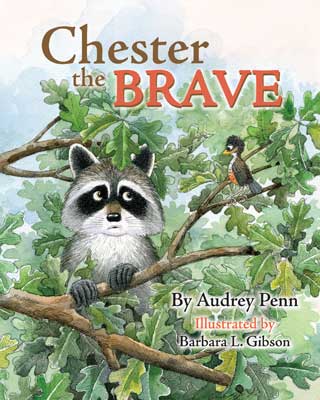
For the youngest readers, ages 6 and up,there’s Night of the White Deer by Jack Bushnell and illustrated by Miguel Co ($16.95, Tanglewood Books). It is a timeless, enchanting story about the appearance of a legendary white deer and a journey into the nighttime sky as a magical deer takes a young boy into the sky through the lights of the aurora and shows him countless other creatures. Was it just a dream or did it really happen? Closer to the Earth is a new addition to “The Kissing Hand” series by Audrey Penn, illustrated by Barbara L. Gibson, as we continue the adventures of Chester Raccoon, begun in 1993 ($16.95, Tanglewood Books.) In Chester the Brave little Chester learns the meaning of bravery and how to overcome his fears with a strategy, Think-Tell-Do. The artwork alone is worth the price, but the story is priceless. Molly, By Golly! The Legend of Molly Williams, America’s First Female Firefighter by Dianne Ochiltree, illustrated by Kathleen Kemly, ($16.95, Calkins Creek/Boyd Mills Press) tells the true story of a wintry day in the early 1800s when New York City’s Fire Company Number 11 is in trouble. A deadly snowstorm is blowing and many of the company’s volunteers are sick. When the fire alarm sounds, who will save the neighborhood? Molly Williams, the company’s cook, that’s who. Readers will learn how fires were fought in early America. Looking and Seeing: Learning to Observe by Carol J. Rosen ($17.00, Bookstand Publishing, softcover) provides photos of animals, insects and flowers by way of teaching the very young how to differentiate between them while learning about them. It will sharpen their ability to spot the differences and appreciate them at the same time. For readers 10 years and older, there’s a historical novel, Precious Bones by Mike Ashley-Hollinger ($16.99, Delecorte Press), a suspense-filled story set in 1949’s rural Florida that has all but vanished. Lori and her father, Nolay, who is part Miccosukee Indian, live on the edge of a swamp and when two men are found dead within two weeks, Nolay is accused. Lore, nicknamed Bones, sets out to investigate what really happened. This is a riveting coming-of-age novel that even adults would enjoy.

I am a great fan of American Girl and the many fine books it publishes for girls of all ages. Years ago I created a media spoof called The Boring Institute and for twenty years it made news with its lists of the most boring celebrities, films and television, so naturally my eye was caught by Bored No More! Quiz Book ($9.95) that is filled with ideas and advice to keep any girl, age 8 and up, so busy she won’t have time to be bored. A great investment for any parent as is Slumber Wonders: Make All Your Slumber Party Dreams Come True ($9.99) filled with advice on planning and throwing eight dream sleepovers, including shopping lists. I Love Art will bring out the artist in every little girl including some colorful stickers. In a similar fashion there’s Picture Yourself Here: Turning your favorite photos into silly scenes using the ideas and punch-outs inside ($12.99).

The teen years can be filled with all manner of fears that can inhibit their enjoyment and two books arrived recently that will be welcomed by parents of youngsters who are shy or just not getting the most of these development years. Both are published by New Harbinger Publications and are written by psychologists who help teens overcome these common problems. Get Out of Your Mind & Into Your Life for Teens ($15.99, Instant Help Books, a division of New Harbinger, softcover) has three authors to offer essential skills to teen readers to help them cope with anxieties and develop emotional intelligence to avoid or move passed unhealthy behaviors and simple self-doubt. It’s about self-acceptance and the lessons that counter some of the attitudes imparted by our culture. The Shyness & Social Anxiety Workbook for Teens ($16.95, Instant Help Books, softcover) by Jennifer Shannon will prove especially helpful for those teens who will learn how to grow more independent and focus on their social development if they suffer from too much social anxiety and shyness. It can provide a real breakthrough. Both books are written and illustrated in ways that connect directly to teen readers and are illustrated with cartoons in which they will see themselves, plus exercises and worksheets to develop their self-confidence.

Novels, Novels, Novels

Sometimes I think everyone wants to write a novel and, these days, anyone can get theirs published. I rarely take note of self-published novels, preferring to rely on those from large to small publishing houses whose livelihood depends on selling what they offer. Here’s a look at a selection from the deluge I receive every month.

The Lighthouse Road by Peter Geye ($23.95, Unbridled Books) addresses the universal themes of family loyalty, the need to be loved, and greed. Geye's novel has been compared with “Snowfalling on Ceders” and “The Shipping News." In his novel he uses the sea as the background, telling a story of Thea Eide, a young Norwegian immigrant who seeks a new life outside Duluth in the 1890s. still shocked to learn that her resident family has fallen apart and that she is adrift. It is an intricate and compelling novel that takes you to another time, but explores challenges common to every generation. Lovers of fantasy will enjoy Steven Erickson’s Forge of Darkness: Book One of the Kharkanas Trilogy ($27.99, Tor) as further proof of this author’s mastery of the genre. Filled with characters, it is an epic table of the fall of he Malazan Empire and involves the forging of a sword unlike any other for use in a devastating civil war, bitter family rivalries, wild magic, and unfettered power. Andrew Britton’s debut novel, “The American” won raves as an accomplished writer of internationally thrillers and he returns with The Operative ($25.00, Kensington) about a secret agent who is finally setting into a peaceful life after more than a decade on the deadly front lines of the war on terror. That is shattered when Ryan Kealey is swept into a merciless terror attack during a charity gala in downtown Baltimore. Dozens are death or injured, including the wife of CIA Deputy Director John Harper who turns to him as the one man with the expertise and freedom from government interference to pursue the perpetrators. He begins to uncover an unimaginable conspiracy and you won’t be able to put this novel down until the last page.

As usual, the bulk of the novels I receive are softcover books, so let’s look at some recent arrivals.

Just in time for Halloween, there’s Laura Levine’s Death of a Neighborhood Witch ($24.00, Kensington) and entertaining story, part of the Jaine Austin mysteries, is set in Beverly Hills where freelance writer and chocoholic, Jaine, battles crime and cellulite. One of her neighbors is Cryptessa Muldoon and when she is murdered, Jaine becomes the cop’s prime suspect. It’s great fun to read and the big question is whether Jaine will make it to Halloween without eating all the candy she’s bought for trick or treaters.

Shades of Orange with Many Greens is subtitled “visions of Paul Cezanne” by Walter E. Thompson ($15.95, Langson Street Press) an art historian and painter in his own right. Drawing on Cezanne’s life, the novel brings to life the erratic and bizarre character of the artists who, for 56 years, withstood intense criticism and constant rejection for the works that now costs millions to purchase. Not until late in his life was he hailed as a great impressionist. Thompson captures his travails the reader is taken to the era and the artist. The Miracle Inspector by Helen Smith ($12.99, Tyger Books) is a literary dystopian thriller set in the near future. England has been partitioned, women are not allowed to work outside the home, the arts are suppressed. A young couple, Lucas and Angela, try to escape London with disastrous consequences. The author has already earned plaudits for her previous novels and will no doubt earn more with this intriguing new one. We’re happy to see Juliette Fay’s new novel, The Shortest Way Home ($15.00, Penguin Books). Sean Doran has spent the last two decades working as a nurse in disaster-stricken countries around the world. When he makes one of his infrequent trips back to his boyhood home in Massachusetts he’s planning to be there for a few weeks at most, but finds the household on the brink of crisis. His Aunt Vivvy who raised him and his siblings after his mother died is showing signs of dementia and his sister Deirdre has moved to New York leaving no one to look after Sean’s 111-year-old nephew, Kevin. He finds himself playing a reluctant parent while falling in love with a woman from his past. Suffice to say there is plenty of drama here.

An interesting novel Aloha, Mozart by Waimea Williams ($18.95, Luminis Books, softcover) tells the story of young girl born into an impoverished Hawaiian family with the gift of a beautiful voice who rise in the world of European opera, attracting the attention of powerful men. In 1968, in Salzburg, Austria, she must confront the Nazi heart of the classical music scene in which she finds herself and, on the evening of her brilliant premiere with Soviet tanks threatening to invade the city, she must choose between recognition and the world stage or leave the city with her life and her conscience intact. Music lovers in particular will enjoy this one. In Gone to the Forest by Katie Kitamura ($15.00, Free Press) tells the story of a fiercely beautiful colonial country teetering on he brink of civil war. The novel is a gripping, psychologically intense story about the destruction of a family, a farm, and a country. The nation is not identified but embodies a bit of Kenya, Argentina, India and Zimbabwe. The author’s debut novel in 2009, “The Longshot”, won raves and this one is likely to do the same.

That’s it for October. Come back next month for a look at the best in non-fiction and fiction that may be overlooked elsewhere. And tell your book-loving friends, family and coworkers about Bookviews.com!

Thursday, August 30, 2012

Bookviews - September 2012

By Alan Caruba

My Picks of the Month

If there is one book a voter should read before they go to the polls in November, it is Dr. Paul Kengor’s The Communist: Frank Marshall Davis—The Untold Story of Barack Obama’s Mentor ($27.00, Threshhold, a division of Simon and Schuster). Many of the mysteries of the decisions the President has made since taking office become clear in the light this book sheds on one of the most formative persons in Obama’s life. At the invitation of his grandfather, Davis was asked to mentor the adolescent and teenaged Obama during his youth in the 1970s, in Hawaii. Frank Marshall Davis was a member of the Communist Party USA from about 1943 and dedicated to the success of Stalin’s Soviet Union. As Dr. Kengor notes, “He felt a connection to Frank that he painfully concedes he was unable to find in his mother, father, stepfather, grandfather, grandmother, siblings or anyone else who comprised his origins and life journey.” To hide Davis’ true identity, Obama’s memoir, “Dreams from my Father”, refers to him as “Frank” some twenty times by name and as a friend of his family. Dr. Kengor is the author of “Dupes”, a book about the way the Communist Party and its Soviet managers misled Americans, some of whom became secret agents and sympathizers holding positions of power in the FDR, Truman, and Eisenhower administrations. One cannot understand the history of that era without reading “Dupes.” In a similar fashion, one cannot understand Obama without reading his biography of Frank Marshall Davis

All things Greek seems to be a trend this month. I am happy to note that Stephen Greenblatt’s Pulitzer Prize and National Book Award winning book, The Swerve: How the World Began Modern ($16.95, W.W. Norton, softcover) is now available in a softcover edition. It is the story of the discovery of “On the Nature of Things”, a philosophical epic written circa 50 BC by a Roman poet and philosopher Lucretius and the story as well of Poggio Bracciolini who, in 1417, found the book in a German monastery and made it possible for its views to influence the leaders of the Renaissance and many others including our own Thomas Jefferson. It is a visit to a time seven centuries ago that was, in turn, influenced by the book written five centuries earlier. Anyone who loves history in general and the history of ideas in particular will love this book. Serendipitously, Michael K. Kellogg’s The Greek Search for Wisdom ($28.00, Prometheus Books) has also been published. The philosopher Alfred North Whitehead once said that all of Western philosophy was “but a series of footnotes to Plato.” It is a remarkable story of how the Greek philosophers, poets, dramatists, and historians left their mark on our world as the author looks at ten outstanding examples of Greek wisdom and provides portraits of the men who contributed to it. I recommended Stephen Mitchell’s translation of Homer’s epic poem, The Iliad when it was first published by the Free Press and I am pleased to report that is now available in paperback ($15.99). Tolstoy called it a miracle and Goethe said it astonished him. The story of Achilles and Patroclus, Hector and Priam, has dazzled readers for 2,700 years. Mitchell’s translations of classics from Gilgamesh to the poetry of Rilke are wonders in themselves, selling thousands of copies, and this one is filled with energy and simplicity, grace, and the pulsing rhythms of Homer’s original text.


Iran is very much in the news and has been since the Islamic Revolution in 1979. Its declared enemies have been the United States and Israel. At this writing, it very much looks like there will be a military action to thwart its intended objective of acquiring nuclear weapons. As such, we read a lot about the ravings of his leaders, the supreme leader, an ayatollah, and the clownish Mamoud Ahmadinejad, its president. Jamie Maslin, a travel writer, though warned against going to Iran, hitchhiked his way there and, in Iranian Rappers and Persian Porn: A Hitchhiker’s Adventures in the New Iran ($16.95, Skyhorse Publishing, softcover) we learn about the people of Iran who, it turns out, pretty much hate the authoritarian government that holds them in its grip through terror. A Brit, he is warmly welcomed by ordinary Iranians who introduce them to the many ways they defy the regime, where Christian churches are national heritage sites, where alcohol is sold on the black market and, in the process, takes us into an Iran few in the West even know exists. It is a reminder that it is not the Iranian people who are our enemy. It is the fanatical Islamic regime that holds them prisoner in their own nation.

The subject of the scandals that have plagued the Catholic Church has been in the news for many years now and Dr. Angela Senander, an associate professor of theology at Merrimack College in the Archdiocese of Boston, has written Scandal: The Catholic Church and Public Life ($14.95, Liturgical Press, softcover) that Catholics and others will find of great interest. It arrives as the Church will celebrate the fiftieth anniversary of the Second Vatican Council in October and a special “Year of Faith” called for by the Pope. And it arrives as the Church in America finds itself in conflict with the Obama administration over aspects of Obamacare that require its institutions to act against its fundamental belief in the sacredness of human life. “From political life to higher education to healthcare,” writes Dr. Senander, “the term ‘scandal’ has often served as a conversation-stopper among Catholics and the larger public. I hope this book will reverse that dynamic—and turn reflection about scandal into a conversation-starter.” The best cure for a problem is to shine light upon it.

For fans of the utterly bizarre, I recommend you pick up a copy of Ripley’s Believe it or Not: Download the Weird ($28.95, Ripley Publishing), ample proof that people are the strangest creatures on Earth. This large format, coffee table book filled with pages that are extravagantly illustrated with photos. There’s one of a 14 year old girl with a tongue that measures three-and-a-half inches (you have to see it to believe it). The pages devoted to parasites from tapeworms to ticks will gross you out and there are too many other strange things that, no doubt, will provide hours of fun. Matt Lamb has authored Dead Strange ($12.99, Zest Books, softcover) that offers “the bizarre truths behind 50 world-famous mysteries.” In a short, entertaining book he looks at everything from the Big Bang theory to the Loch Ness Monster, Bigfoot to alien abductions and crop circles. This is a fun way to learn about the common myths and claims that people either believe or disbelieve. Lamb comes down on the side of commonsense and facts in every case.

I am the very antithesis of the environmental movement because I concluded long ago it was not about the environment but rather a means to attack our economic system, our use of energy, and an obstacle to growth. That said, Charlotte Gill, the author of Eating Dirt: Deep Forests, Big Timber, and Life with the Tree-Planting Tribe ($16.95, Greystone Books, softcover) has written an interesting story of a woman who has spent twenty years working as a tree-planter. While I disagree with her views on the timber industry, I admire her devotion to trees and to replacing those cut down to meet our need for wood in all its manifestations, not the least of which is shelter. The author is a skilled writer and is passionate about her subject, having planted a million trees. Her story will no doubt please many who share her views.

September is the month youngsters return to school and one of the best books you can give a student age 8 and up is The World Almanac® for Kids 2013 ($13.99, World Almanac Books, softcover). The Almanac chronicles the highlights of 2012 with items about its notable people, places and events, alongside of lots of new, fascinating facts. It is a great homework helper, reference, and is unfailingly entertaining. Every page is a marvel of design, using all manner of art and photography as it runs the gamut of topics that include the world’s nations, technology and computers, energy, animals, music and dance, movies and television. Any young reader with an interest in the world will benefit greatly from this book.

The Subject is Food

Thomas Jefferson, the author of our Declaration of Independence, was a man of many interests and one of them was food. He found American food to be rather bland and, when he was asked by Congress in May 1784 to negotiate with European powers, he choose to live in Paris and, in the process, to amass as much knowledge of French cuisine as possible. He was aided in this by James Hemings, the brother of his slave and lover, Sally Hemings, who joined him and studied under the great chefs of Paris in return for gaining his freedom. The story is told in Thomas Jefferson’s Crème Brulee ($19.95, Quirk Books) and for anyone who loves fine dining and wine, it will prove a real delight. Jefferson found time to study agriculture and winemaking while living in France and when the two men returned, they brought with them champagne, designs for pasta presses, seeds, cheeses, and—yes—crème brulee.

I love barbeque and, if you do as well, you will surely enjoy Bob Devon’s The Complete Wood Pellet Barbeque Cookbook ($17.95, Square One Publishers, softcover), a comprehensive guide filled with tips, tricks, and recipes for wood pellet grill users. Starting with the basics, the book takes one chapter by chapter into topics that include spice blends, marinades, and sauces to maximize the flavors of beef, chicken, pork, fish, turkey, and more. This lifts grilling beyond franks and burgers and opens up a whole world of dining pleasure. From the same publisher comes The Ultimate Allergy-Free Snack Cookbook by sisters Judi and Shari Zucker ($15.95, Square One Publishers, softcover) and it will prove welcome by the more than twelve million people diagnosed with food allergy problems; the majority of whom are children under the age of 18 and, for them, many parents are preparing their own snacks. This duo have been writing cookbooks since they were 17 and this latest contains more than a hundred kid-friendly recipes that will satisfy their love of snacks and provide a healthy alternative.

My late Mother, Rebecca, taught haute cuisine for more than three decades and was an internationally recognized authority on wine. She used to say “You are what you eat.” She read widely about nutrition. She would have enjoyed Dr. William J. Walsh’s new book, Nutrient Power: Heal Your Biochemistry and Heal Your Brain ($29.95, Skyhorse Publishing). It is about a nutrient therapy system that postulates that nutrient imbalances can alter brain levels of key neurotransmitters, disrupt gene expression of proteins and enzymes, and cripple the body’s protection against environmental toxins. These imbalances, says Dr. Walsh, express themselves as behavioral disorders, autism, and even Alzheimer’s disease. If the nutrient deficiency can be identified then a drug-free therapy can be initiated to correct the imbalances. It makes a lot of sense to me and if you are looking for answers to behavioral problems in yourself or others you know, this book may hold the key to solving them.

History of the Wild West

The old West, a relatively brief period at the end of the 1800s and early 1900s, nonetheless exerts a grip on the American imagination as no other period. It has been the subject of countless films and, of course, books. There are historians who focus on the era and, in particular, the colorful, if deadly, train robbers and others.

We can thank the University of North Texas Press for keeping their memory alive. Three new books provide hours of pleasure with The Deadliest Outlaws: The Ketchum Gang and the Wild Bunch by Jeffrey Burton ($24.95, softcover), He Rode with Butch and Sundance: The Story of Harvey ‘Kid Curry’ Logan by Mark T. Smokov ($29.95), and The McLaureys in Tombstone, Arizona: An O.K. Corral Obituary by Paul Lee Johnson ($29.95).

After Tom Ketchum was sentenced to death for attempting to hold up a railway train, his attorneys argued that the penalty was cruel and unusual for such a crime. After the appeal failed he became the first and only thief to be executed for the crime. When hanged in 1901, his head was torn away by the rope as he fell from the gallows. Born near the fringe of the Texas frontier, he was orphaned at age nine and raised by older brothers. He became a ranch hand and trail driver, murdered a man, and fled. After returning he and his brother Sam killed two men in New Mexico and, with two others, the Ketchum gang was born.

Kid Curry has finally received his due as a member of the Wild Bunch led by Butch Cassidy and the Sundance Kid. He was an ugly piece of work with a violent temper made worse by alcohol, though not the bloodthirsty killer others have claimed. His biographer asserts that Curry planned and carried out the gang’s train robbers and that there is no concrete evidence that Cassidy ever participated. The fate of Tom and Frank McLaury was to be gunned down by the Earp brothers and Doc Holliday at the O.K. corral. Both were exonerated though the shootout would continue to take several more lives in its wake. Individually or all three books offer a picture of what life was like on the frontier.

Children’s Books, the Ideal Gifts

In a world filled with bad news, impressionable children can grow up without a realization that it is filled with many good people. That is why I especially liked Lynea Gillen’s Good People Everywhere ($15.95, Three Pebble Press, a laminated hardcover) beautifully illustrated by Kristina Swarner. In simple language and pictures, it reinforces the understanding that, while bad people may make headlines, good people go about their lives by useful and helpful all around the world. The author has been a school teacher and counselor for more than thirty years. Ideal for those ages 3 and up to about 6 or 7. I heartily recommend it.

One of my favorite publishers of children’s books is Kids Can Press. Its fall catalog is filled with wonderful books to entertain those so young the books can be read to and those who are early readers. Among them is Susan Hood’s The Tooth Mouse, illustrated by Janice Nadeau ($16.95). It is based on the French version of our tooth fairy story in which a mouse leaves money in exchange for their baby teeth. When the old Tooth Mouse announces it is time to name her successor, Sophie wants to be selected, but she must fulfill three tasks to prove she is brave, honest and wise. Toads on Toast by Linda Bailey and illustrated by Colin Jack ($16.95) is a very funny tale of Momma Toad’s efforts to save herself and her babies from ending up on Fox’s frying pan. It is pure fun from beginning to end as she outwits him.

Four Kids Can books present their stories comic book style for kids ages 4 to 8, pre-school to third grade. They are Binky Takes Charge by Ashley Spires; That Spooky Night by Dan Bar-el, illustrated by David Huyck; Luz Makes a Splash by Claudia Devila (all $16.95) and Scaredy Squirrel Prepares for Christmas by Melane Watt ($17.95). Each offers a story to capture the imagination of a young reader as well as teach a few useful life lessons. For a dash of reality, there’s poet Marilyn Singer’s A Strange Place to Call Home ($16.99) illustrated by Caldicott medalist Ed Young. Kids love animals and fourteen different ones are described along with the dangerous places that are their habitats. It is a testimony to the incredible diversity of life and its adaptability.

For youngsters in a bilingual family that speaks and reads both English and Spanish, there’s Healthy Foods from A to Z (Comida Sana de la A a la Z) by Stephanie Maze and photos by Renee Comet ($15.95, Moonstone Press) both of whom have many books to their credit. The book features “faces” made from the various fruits and vegetables that offer a great way for a youngster, age 4 to 8, to learn about them. It also includes projects and information for children and their parents. If I had as Many Grandchildren as You by Lori Stewart ($19.95, Palmar Press) is a great gift for grandparents to give to their grandchildren with his lively, warm-hearted verse that offers an optimistic message illustrated by excellent photography. It is written for children looking for some adventuresome fun and for grandparents finding their special role as makers of memories, as it sparks imagination and creativity.

I have long been a fan of the books published by American Girl. Many are based on characters set in a particular era. A new one is Caroline Abbott and the series set in the time of the 1812 war begins appropriately with Meet Caroline growing up two hundred years ago with a story that shows girls how to stay steady and believe in themselves during difficult times. Caroline is nine years old and lives near Lake Ontario in Sackets Harbor, New York. Her father is a shipbuilder, but British soldiers have captured him and her cousin, so she must navigate the challenges of wartime. It is the first of six historical novels written by Kathleen Ernst and there is also an 18-inch Caroline doll. At $6.95 each, this series will intrigue girls age 8 and older.

If there’s a child or children in your life, beyond the love you give, you should also be giving them books that tell them about their world in which they live, its history, and to pass on good values and knowledge.

Novels, Novels, Novels

The torrent of new novels continues and, as often as not, I have to tell authors seeking reviews that I tend to take note of novels from established publishers, large and small, whose livelihood depends on what they offer. Self-published authors are not only up against what they publish, but against countless other self-published authors all seeking reviews.

An auspicious debut is Flesh ($25.95, Black Heron Press) by Vietnam-born Khanh Ha, set at the beginning of the 20th century when Vietnam was still under the control of France. It begins with the beheading of a bandit in front of his wife and two young sons. The oldest son, Tai, embarks on a mission to retrieve his father’s skull and find a suitable burial site. Then to have revenge on the man who betrayed his father’s trust. It is a journey, too, for the reader into a former time of indentured labor, the back streets of Hanoi with its opium dens, and a vast gap between desperate coolies and the lawless rich. Along the way Tai falls in love as the story twists and turns on its way to revenge as the author explores the human psyche. By contrast, Return to Willow Lake: A Lakeshore Chronicles Book is the ninth novel by Susan Wiggs ($24.95, Harlequin) already a bestselling novelist with a large following. It takes the reader to the Catskill town of Avalon on the shores of Willow Lake for a summer of laughter and tears, of old dreams and new possibilities. It reminds us of how important home is. Sonnet Romano seems to have life figured out. Her career at UNESCO is on the rise and she has just won a Hartstone fellowship that will send her to work overseas. Her boyfriend, the campaign manager of her father’s senate race, is happy for her as well. All this comes apart when she learns her mother is unexpectedly expecting and the pregnancy is high risk. At which point Sonnet puts everything on hold to head home. This is a big juicy story of interesting characters and a plot that keeps you turning the pages.

Joanne Harris, the author of “Chocolat” that was made into an Oscar-nominated film, and eleven other bestselling novels, is back with a sequel, Peaches for Father Francis, ($26.95, Viking) that is sure to please the readers of “Chocolat” in which eight years have passed and Vianne is summoned back to the village of Lansquenet where she used to run her chocolate shop. Returning with her daughters, Anouk and Rosette, is seems as if everything and nothing has changed in the small village. The relationships with your one-time best friend, Josephine, is still in an ambiguous with her lover, Roux, and is the mother of a son born just days after Rosette’s birth. Her adversary Father Francis Reynaud still feels persecuted and misunderstood, but the most obvious change has been the arrival of a large number of Moroccans and the tensions this has caused. Harris is a master of exploring such relationships and readers of “Chocolat” will surely enjoy her return to this story after the passage of time. James Phoenix makes his debut with Frame Up ($27.95, Grey Swan Press) as we go along with a private eye, Fenway Burke. Need I say it is set in Boston? It is a classic hardboiled detective novel with a set of memorable characters that includes a huge fellow nicknamed Tiny who runs the city’s largest bookie operation. Toss in a white-bearded lobsterman, and Fenway’s love interest, Megan, a public defender, and you have a story about a kid who’s been framed for murder. Bodies pile up and Fenway discovers he’s up against a violent and talented international hit man. Just staying alive makes this quite an adventure.

Stacks of softcover books keep getting higher every day as new novels arrive. Here is a selection of some of the most recent arrivals.

The Garden of Evening Mists by Malaysian author, Tan Twan Eng, ($15.99, Weinstein Biooks) is the work of a novelists who has already enjoyed much acclaim for his first novel, “The Gift of Rain.” This is an intricate novel about a woman, Teoh Yun Ling, who is retiring from the Supreme Court bench in Kuala Lumpur. Much earlier in her life, she and her sister had been interned in a Japanese slave-labor camp. They had survived the horrors by recalling in exacting detail the exquisite Japanese gardens of Kyoto they had once visited as a family. When she returns to the Cameron Highlands of Malaya, she seeks out Nakamura Aritomo, the exiled former gardener of the Emperor of Japan who has created the only Japanese garden in all of Malaya. She asks his instruction to create a garden in his sister’s memory. Suffice to say there is so much to this novel that it draws the reader into a different era, a different culture, and the interweaving of lives. Jonathan Tropper follows up his breakout novel, “This is Where I Leave You” which was named one of the best of the year by the Washington Post, Los Angeles Times and others. Three years later, Tropper has written One Last Thing Before I Go ($26.95, Dutton) whose central character is 44-year-old Drew Silver, a washed-up musician getting by on royalty checks from a long faded hit song. His ex-wife is about to re-marry and his Princeton-bound daughter, Casey, has just informed him that she’s pregnant. When he learns that his heart needs an emergency, life-saving surgery, he makes a very unusual decision to become a better man if it kills him. There’s wit and insight in this story so it was worth the wait for it.

Here is a quick look at a number of softcover novels worth reading. Two are from Revell, a division of Baker Publishing, are Dying to Read by Lorena McCourtney ($14.99), a fast-paced and witty romantic mystery about a private investigator trying to determine who lives at a particular address. When the house happens to contain a dead body, an ordinary investigation gets complicated. Perfectly Ridiculous by Kristin Billerbeck looks at the life of a normal teenage girl and her struggles to fit it and not be “different.” Her overprotective parents don’t make that easy, especially when a free trip to Argentina includes their decision to go along.

The Other Half of Me by Morgan McCarthy ($15.00, Free Press) is a debut novel set in a mysterious Welsh estate of Evendon and a family whose lives draw you in, especially when the father goes missing and an emotional roller coaster ride begins. Jerry B. Jenkins, by contrast, has written more than 175 books including the Left Behind series. In The Breakthrough ($14.99, Tyndale House Publishers) he continues his “11th Precinct” series. Boone Drake, the youngest bureau chief of the Chicago Police Department’s Major Case Squad, must tackle life’s hard decisions, forced to decide from being there for his family and spearheading a human-trafficking sting in China. There are some real moral choices to be made, but he heads to Beijing to find a young boy before he disappears forever. In a summer filled with forest fires, in One Foot in the Black ($14.95, MCM Publishing) Kurt Kamm tells a coming-of-age story of a young forest fire fighter. Fleeing an abusive father, Greg Kowalski joins a firefighting crew only to suffer the loss of his team’s captain, a man who had become a mentor. While the story is fiction, it is a depiction of how wildfires are fought and the dangers they pose. It pulses with the dangers faced and the inner struggles of anger and loss.

It was perhaps inevitable that someone would parody the bestselling “Fifty Shades of Grey” by E.L. James and “Fanny Merkin”, a.k.a. Andrew Shaffer, has done that in Fifty Shames of Earl Grey ($13.99, Da Capo Press). It is the story of innocent and unsuspecting Anna Steal who meets a young, rich CEO named Earl Grey (yes, same as the tea) who sweeps her off her feet. It probably helps if you read James’ book, but it doesn’t matter because Shaffer’s is a madcap piece of fun though, if I may say so, not everyone’s cup of tea.

That’s it for September! Remember to tell your family, friends, and co-workers about Bookviews.com, the one source for many of the best new books that you may well not read about anywhere else. Then come back in October!

Sunday, July 29, 2012

Bookviews - August 2012

By Alan Caruba

My Picks of the Month

As America heads over the fiscal cliff toward financial collapse, there’s a book that does a great job of explaining the federal budget and the politics that surrounds it. It does so in a manner that anyone without any understanding beyond the media reports can, indeed, understand. Red Ink: Inside the High-Stakes Politics of the Federal Budget by Paul Wessel ($22.00, Crown Business) arrives at just the right time prior to the national elections because two diametrically opposed views are held by the presidential candidates and others in their respective political parties. Among the surprises it contains is the fact that nearly two-thirds of the budget is on autopilot and goes out the door without an annual vote by Congress. In 2009, for the first time in the nation’s history, every dollar of revenues had been committed to the so-called “entitlement” programs before Congress even walked in the door! Suffice to say, the book is filled with very scary revelations about the conduct of our government as regards too much borrowing, too much spending, and too little restraint. One reads a book like this in order to take what steps one can to protect one’s assets.

As we head toward the elections in November, Stanley Weintraub, a historian and award-winning author of more than fifty books, has a new one, Final Victory: FDR’s Extraordinary World War II Presidential Campaign ($26.00, Da Capo Press) that, for those old enough to recall that era or young enough to be curious about it, will prove a fascinating visit to the past. I was about ten years old at the time and, like most of the young men fighting in Europe and Asia, had never known any other President that Franklin Delano Roosevelt. Elected initially in 1932, he had already served three terms when no other President had served more than two—based on a tradition set by George Washington. By 1941, he was a very sick man, suffering from a weakening heart in addition to having been crippled by polio prior to having first been elected. Would Americans turn to a younger Tom Dewey, a Republican, or stick with FDR who was visibly aged? Weintraub takes the reader through all the political machinations in both Parties, the campaign rigors, the selection of the relatively unknown Harry Truman as FDR’s running mate, and the election. His fourth term would last 83 days until felled by a cerebral hemorrhage, but he had ensured that the Democrat Party held onto the White House. The 22nd Amendment to the Constitution ensured that no President thereafter could hold the office for more than two terms.

Many are asking who will be Mitt Romney’s choice for the Vice Presidential candidate and many believe it will be Florida’s first-term Senator, Marco Rubio. He has authored an autobiography, An American Son, ($26.95, Portfolio, Penguin Sentinel) that covers his family’s roots in Cuba, the decision to flee Castro in the 1950s, and his political career and rise to become speaker in the Florida legislature and, from there to the U.S. Senate. At age 41, he has proven to be an articulate spokesman for conservative principles. The autobiography reads smoothly and, if Romney selects him, his Hispanic roots will no doubt be part of that decision given the growing U.S. population of Americans with Hispanic ancestry. There are no surprises here, but those with an interest in American politics will find it a useful introduction to him. The candidacy of Mitt Romney is arousing predictable interest in his religion. Mormons have served this nation in positions of public trust since the days of the Eisenhower administration. Joanna Brooks has written The Book of Mormon Girl: A Memoir of an American Faith ($14.00, Free Press, softcover) that tells her story of what it was like growing up in Church of the Latter-day Saints. She is a scholar of religion and American culture, and a senior correspondent for ReligiousDispatches.org. For the many people who know nothing about the Mormon faith, I would surely recommend her book for the introduction it provides. Among the strictures of the faith, she learned there would be no tea, no coffee, no cigarettes, no alcohol of any kind, and no caffeine. Like many who struggle with their faith, she tells of moving away from it during a controversial moment in the Church’s history, but also of returning so that her daughters could know the comfort of the faith in which she grew up. It is a heart-warming, honest story.

Donald L. Barlett and James B. Steele have teamed to write books on the state of America over the years and they don’t like what they see. The Betrayal of the American Dream ($26.99, Public Affairs) examines how the middle class, the key to America’s economic success in many ways, has been systematically destroyed by what they identify as wealthy elites in combination with a government that does their bidding. This is an unrelentingly dour and depressing book, but it is also an unflinching look at the way outsourcing has eliminated many of the jobs that afforded the middle class a good life. I did not always find myself in agreement with their solutions, but I also could find little to argue with regarding the unfairness of policies that benefit the rich and large corporations while stripping wage earners of promised benefits and unfairly taxing them as a group. Coming at a time when Americans are suffering a new Great Depression, their book is particularly timely.

Events before and since 9/11 and occurring in the past decade in the Middle East have awakened Americans to the realization that they have been under attack by Islam since the 1980s with attacks as well on our embassies and on the USS Cole. Many plots have been thwarted since 9/11, but the fact that has not truly taken hold in the West is that Islam has been at war with all “unbelievers” for 1,400 years. The Koran not only requires war, but gives Muslims permission to kill anyone who dares to disagree with Islam or who says anything negative about its founder, Muhammed. To understand him and the malignant “religion” he created, I would recommend that you read Ali Sina’s Understanding Muhammad and Muslims (18.95, softcover). Sina, born in Iran, did not fall pray to the insidious way Islam captures the minds of those born into the faith and he has devoted his life to helping Muslims escape from Islam through his organization, http://www.faithfreedom.org/. It is a masterful, scholarly work that examines the life of Muhammad and reveals him in ways that demonstrate how he created a cult around himself. It was an ugly, violent, narcissistic life and one that now holds more than a billion people around the world in its grasp.

For a change of pace, let me state for the record that I do not believe in ghosts and never had. Two books have arrived for people who do. One is The Science of Ghosts: Searching for Spirits of the Dead by Joe Nickell ($18.00, Prometheus Books, softcover) who takes ghosts seriously and examines evidence for contact from eyewitness accounts to spirit photographs, and even forensic trace evidence. Filled with case studies, this book will interest other fans of ghostly affairs. Then there’s A Ghost Hunter’s Guide to the Most Haunted Places in America by Terrance Zepke ($9.95, Safari Publishing, softcover, $4.50 ebook). The author grew up in a part of South Carolina which is said to have lots of ghosts and “haints.” A journalist by training, she takes you on a tour of the Trans-Allegheny lunatic asylum in West Virginia, the Birdcage Theatre in Arizona, and the Colonial Park Cemetery in Georgia, among a dozen other places. There are popular theories about ghosts that include the view that they do not know they’re dead or that they have unfinished business.

For women interested in fashion and a healthy lifestyle, there’s Ballet Beautiful by Mary Helen Bowers ($20.00, Da Capo Press, softcover) and The Book of Styling: An Insider’s Guide to Creating Your Own Look by Somer Flaherty ($16.99, Zest Books, softcover). The author of the former book was a member of the New York City Ballet and is now a highly regarded fitness instructor. When Natalie Portman had to portray a ballet dancer in “Black Swan”, it was Bowers that helped her achieve the transformation. Her book is filled with photos and a world of good advice regarding a sustainable health regimen rather than fad diets or overworking one’s body. And once you have become slim and gorgeous (or not) there’s Flaherty’s book that brings together a decade of experience in the fashion industry as a stylist, journalism instructor, editor and writer. The book will be particularly useful for ‘tweens’, teens, and younger women, finding the right look or a variety of looks The book takes the reader through all of the popular styles and is filled with great advice.

Peace of Mind

The one thing that we most seek in life is peace of mind. As often as not, factors beyond our control interfere with that. The sales of various pharmaceuticals intended to provide an escape from anxiety is testimony to this quest.

Learning to Breath: My Yearlong Quest to Bring Calm to My Life ($15.00, Free Press, softcover) by Priscilla Warner tells the story of her lifelong panic disorder. More than 40 million Americans are estimated to have an anxiety disorder of some kind. By the usual standards, Ms. Warner should have been content. She was a college graduate, an accomplished art director, the coauthor of a New York Times bestseller, “The Faith Club”, happily married and the mother of two grown sons. When she read about Tibetan monks who had meditated so effectively they were able to change their brains, she wanted in. She went in quest of meditation’s secrets, trying all manner of ways to achieve a similar change. This book, part memoir, part a guide to rewiring one’s brain, makes for some very interesting reading. Dr. Gordon Livingston, MD, a psychiatrist, has authored The Thing You Think You Cannot Do: Thirty Truths about Fear and Courage ($19.99, Da Capo Press, softcover), a study of fear. He takes the reader from the primal impulse to escape death to the modern-day compulsion to avoid failure and humiliation. Such fears can become overwhelming and debilitating. Indeed, he catalogs a collection of human fears that include loss, intimacy, aging, inadequacy, discussing how people can choose to face them head-on. The author endured the loss of his own sons, one to suicide and another to leukemia, just thirteen months apart. When I think back on my own life, it has been remarkably free of fear, but it is never far from my thoughts. There is an antidote to fear. It is courage. It’s there inside of you and this book will help you tap into it.

Steven Hassan, an expert on cults, has written Freedom of Mind: Helping Loved Ones Leave Controlling People, Cults and Beliefs ($9.95, Freedom of Mind Press, Newton, MA, softcover). He has helped thousands of people victimized by abusive relationships or who have joined cults that exercise mind-control. A former cult member in his youth, after breaking free he became a licensed mental health counselor and holds a master’s degree in counseling psychology from Cambridge College. If someone you know is trapped in a situation and you want to help, you should read this book and equip yourself to know how to extricate them. You can learn more by visiting www.freedomofmind.com.

Due off the press in September from Central Recovery Press, Nancy L. Johnson, a licensed psychotherapist and substance abuse treatment practitioner, has authored My Life as a Border Collie: Freedom from Codependency ($16.95) a fun book on a serious topic. She shares the life lessons she learned from her observations of the relationship exhibited by her border collie, Daisy. She noticed similar traits in herself that resembled codependency, “our tendencies to attend to others, to herd, to overreact.” The book includes new and specific information on the subject, but it is written with a light touch regarding out-of-balance relationships as she brings 35 years of her professional experience to bear on the subject. She sure has learned a lot from Daisy!

Unlike the heroes of earlier wars, those who have fought in Iraq and Afghanistan did not return to victory parades and confetti. In Marguerite Guzman Bouvard’s book, The Invisible Wounds of War ($18.00, Prometheus Books, softcover) she tells the story of an estimated 4,300 veterans who return with crippling post-traumatic stress disorder. A resident school at Brandeis’ Women’s Studies Research Center, her book is a plea for Americans to recognize the plight of male and female soldiers as they pay a heavy psychological cost. These have been the two longest wars in which American military have engaged and the book focuses on the extreme duress of being in a combat zone with no clear frontlines with enemies who could be anyone among the civilian population. All this is compounded by multiple deployments. Lost limbs and other injuries bespeak the horrors of war, but the wounded mind needs repair as well.

Something Spectacular: The True Story of One Rockette’s Battle with Bulimia by Greta Gleissner ($ 16.00, Seal Press-an imprint of Perseus Books, softcover) is about a girl who dreamed of becoming a Rockette, the famed chorus line at New York’s Radio City Music Hall. They are all gorgeous, talented, and slim. Ms. Gleissner shares her personal chronicle about the devastating effects bulima exacted on her personal and professional life during her time as a Rockette. On the outside she was a happy-go-lucky dancer, but on the inside she was a food addict tortured by obsessive, self-destructive voices. Her bulimia began when she was a freshman in high school and slowly began to consume her entire life. By the time she joined the Rockettes, she was binging up to ten times a day, chasing a high that only comes from purging. It is a truly frightening story and a cautionary one. Cured at last, today she has a master’s in social work and a practice in New York City. Any bulimic should read this book and its encouraging story of overcoming this debilitating disorder.

In these difficult times, motivating oneself can be a problem, but Bob Prentice wants to give you a helping hand with his book iMotivate Me ($17.95, softcover) He has found fresh ways to address motivation and provides the tools for increasing it. This is not a new topic as books go, but I think the author has brought a variety of practical ideas and exercises so the reader can act on its recommendations.

Raising Children

There are those who see corporations as employing thousands and providing goods and services people want and those who, like socialists, see them as a threat to mankind, preferring to have government make all the decisions about your life for you. Joel Baken is among the latter and has written Childhood Under Siege: How Big Business Targets Your Children ($15.00, Free Press, softcover). Having previously penned “The Corporation”, this book expands on its themes, blaming “profit-seeking corporations” for using marketing to “manipulate” children’s emotions and inculcate “obsessive consumerism.” Of course, marketing does that to adults as well though some might point out that consumerism is what underwrites a thriving economy. This is, in general, a book filled with hysteria, but it occasionally makes a good point or two.

A far better approach to preparing your children to live in the real world is Mary Hunt’s Raising Financially Confident Kids ($12.99, Revell, softcover). She warns that our children are being groomed to become world-class consumers, and they are well on their way to becoming future debtors. The author agrees that they are being manipulated in much the same way adults are to buy things they may not need. Ms. Hunt is a personal finance expert who has developed a plan to “debt-proof” one’s children by teaching them how to handle money, neutralize the glamour of easy spending, and develop a set of values having to do with money, credit, and debt. Having raised two sons, she speaks from personal experience as well, suggesting that one start at age seven or eight. Since many parents are encountering debt problems, this book will prove useful for all age groups! I was raised in an era when parents did not discuss sex with their children, but that is not an option in the present era when children grow up with all manner of sexual language and images in everyday life. It starts when they are quite young and Deborah Roffman has penned Talk to Me First: Everything You Need to Know to Become Your Kid’s ‘Go-To’ Person’ about Sex ($14.99, Da Capo Press, Lifelong Books, softcover). It is filled with excellent advice on topics such as teaching kids to view the sexually-saturated media critically, becoming approachable to ask questions regarding sex, and learning how to communicate with information, clarity about values, anticipatory guidance, and setting limits. The author has written extensively on this subject and really knows what she is talking about. The fact is that kids are going to be able to get their information about sex from a myriad of sources including, of course, popular culture. Today’s parent has the responsibility to be the primary source of advice and guidance for age-appropriate information.

Surviving Your Adolescents: How to Manage and Let Go of Your 13-18 Year Olds ($14.95, ParentMagic, Inc, softcover) by Thomas W. Phelan, PhD is one of those titles that tells you everything you need to know about the book. The author notes that these are the years in which things can go terribly wrong in the form of unwanted pregnancies, death in auto accidents, drug and alcohol problems. He discusses how parents can deal with being snubbed at the dinner table when they ask “How was your day?” When told “Nothing”, he reminds the reader that there is a strong connection between parent/teen relationships and adolescent safety. He offers a five-part job description to parents of teens to establish a comfortable coexistence. Coming Around: Parenting Lesbian, Gay, Bisexual and Transgender Kids ($14.95, New Horizon Press, softcover) isn’t officially due off the press until October, but is included here because parents who encounter the issues involved will surely welcome news of this book. The author, Anne Dohrenwend, PhD, ABPP, is a psychiatrist who specializes in counseling LGBT kids and their families. It is filled with strategies for youngsters to cope with school, church, sports authority figures, and others, as well as friends and the child’s siblings. She reminds the reader that their children’s future does not depend on being trouble-free and, indeed, learning how to cope with what life has dealt them is what parent and child must learn. The book asserts that as many as 7.2 million Americans under the age of 20 are lesbian or gay and that most adult GLB’s knew they were that way by the age of nine.

Just published this month by New Horizon Press is a book that addresses the greatest tragedy in a parent’s life, When Your Child Dies: Tools for Mending Parent’s Broken Hearts by Avril Nagel and Randie Clark ($14.95, softcover). Death claims babies, infants, children and adolescents every year, as well as adult children. The authors, both of whom lost a child, provide readers with compassionate, pragmatic tools to handle the emotional, practical, and psychological challenges that confront parents so that they may learn how to regain and redefine their lives while holding close their child’s memory.

Deep Thinking

I receive a steady stream of books from Prometheus Books of Amherst, New York, and many are devoted to topics that address matters of the intellect and philosophy. Among the latest to arrive are the following.

The Marvelous Learning Animal: What Makes Human Nature Unique by Arthur W. Staats ($27.00) Instead of innate tendencies and inherited traits, this professor emeritus of psychology at the University of Hawaii has concluded that what sets us aside from all other primates is our ability to learn. Endowed with a brain that has one hundred billion neurons, humans are learning creatures, a process that begins at birth. The Language of Life: How Communication Drives Human Evolution by James Lull and Eduardo Neiva ($19.00, softcover) explores the totality of communication processes that create and sustain biological equilibrium and social stability. In this book that introduce a new discipline, evolutionary communication, to analyze how humans used communication to survive and to deal with sex, culture, morality, religion and technological change. A change of pace is provided by Joe Carlen’s The Einstein of Money: The Life and Timeless Financial Wisdom of Benjamin Graham ($25.00) a man who Warren Buffett has acknowledged many times as a primary influence on his approach to investing. During his life, Graham wrote six books on the topic and was known as the Dean of Wall Street. With access to his posthumously published memoirs, Carlin tells the colorful story of his business career and personal life. It makes for very lively reading.

Other publishers have books to offer that provide some interesting insights as well. Resilience: Why Things Bounce Back by Andrew Zolli and Ann Marie Healy ($26.00, Free Press) made its debut in July. Together the authors offer an in-depth primer on the emerging field of resilience research, the study of how individuals, communities, organizations, economies and even the planet can better adapt to dramatically changing circumstance. The history of human civilization, about five thousand years, is testimony to how some societies demonstrated resilience while others disappeared. Most certainly the last century and this one has been one of rapid technological change and that, in turn, is affecting current events. Another book on this topic is Resilience: The Science of Mastering Life’s Greatest Challenges by Dr. Steven M. Southwick, MD, and Dr. Dennis S. Charney, MD ($22.99, Cambridge University Press). The authors are professors of psychiatry and experts in posttraumatic stress and resilience. They offer some inspiration stories of ordinary people who have triumphed over adversity and identify the ten resilience factors that each one used to beat the odds and to flourish. Most people will face some sort of crisis in their lives, the loss of a loved one, a serious accident, divorce, and they can take a toll on our physical and emotional well-being. This book offers both science and solutions the reader can use to their benefit.

Lastly, there’s Models Behaving Badly: Why Confusing Illusion with Reality Can Lead to a Disaster on Wall Street and in Life ($16.00, Free Press, softcover) by Emanuel Derman. The author is the head of risk at Prisma Capital Partners and a professor at Columbia University where he directs their program in financial engineering. Starting as a theoretical physicist, he worked from 1985 to 2002 on Wall Street, running quantitative strategies research groups in fixed income, equities and risk management. He was appointed a managing director at Goldman Sachs & Company in 1997. The financial models he developed there have become widely used industry standards. The question he asks in this book is whether it is possible to create a representation of the world and what happens when they are wrong? It is his view that there is no reliable science of behavior, only limited and faulty analogies. Suffice to say, this is a provocative book at a time when such models are in wide use.

Novels, Novels, Novels

Summer is traditionally thought of as a time when people catch up on their reading while vacationing or just relaxing at the beach or around the home. For this reason, there are a few more novels in this month’s edition than usual.

For fun, there’s Norman Schreiber’s Out of Order ($14.95, Topquark Press, softcover) that had me laughing from the first page to the last. Schreiber, whom I have known for decades, takes us inside a Brooklyn condominium where the president of the coop board has been murdered and chopped up. It falls to Michael Levine, a psychotherapist, to be among the first to discover the body. Through Levine’s distinct New York perspective, we are introduced to a cast of condo characters, any one of whom you’d personally want to kill with your bare hands. By the time the second murder victim shows up, you cannot put the story down. It is hilarious. Every so often a comic novel comes along that provides relief from the other genres and Russell Potter’s Pyg: The Memoirs of Toby, the Learned Pig ($15.00, Penguin, softcover) is a tour de force. Written in the form of a rediscovered memoir “edited” by Potter, it tells the story of Toby who lived in the late 18th century. After winning a blue ribbon at a livestock fair, he is rescued from the butcher’s knife by Sam, his guardian and steadfast companion. Potter perfectly captures the style of literature from that period as he tells how Toby and Sam join a traveling circus and become a national sensation. In time Toby earns top university spots at Oxford and Edinburgh where he meets the era’s luminaries such as Samuel Johnson, Robert Burns and William Blake. It’s a lot of fun.

The Age of Desire by Jennie Fields ($27.95, Viking) tells the story in fictional form of Edith Wharton, the novelist of the Gilded Age, who at 45 fell in love with a handsome young journalist and had an affair with him. It put a tremendous strain on her relationship with her governess, Anna Bahlman, turned literary secretary, who was also her confessor and life-long friend. Others, too, were troubled and Ms. Fields has written a real page-turner for anyone who enjoys reading about matters of the heart, even if blinded by infatuation. Based on a thorough knowledge of Wharton’s life, her famous friends like Henry James, and her travels, the novel is enhanced further by the discovery of a cache of more than 100 letters from Edith to Anna. Another Viking novel just out this month is also well worth reading. It’s Maryanne O’Hara’s Cascade ($25.95) and it is an excellent debut. It is 1935 in Cascade, Massachusetts where Desdemona Hart Spaulding has had to trade in her art school training and dreams of moving to New York to pursue a career. Her ailing, bankrupt father dies. She is married to Asa Spaulding and stands to lose her father’s legacy, the Shakespeare Playhouse, as the Massachusetts Water Board decides to turn Cascade into a reservoir. Everything she has or wanted is being lost to her. In the midst of this, Jacob Solomon, a fellow artist arrives. I won’t give away the twists and turns of this story, but it is filled with nuance and insight, emotion and determination.

The deep bond between a mother and her child is explored in a novel of the same name, Mother & Child, by Carole Maso ($26.00, Counterpoint Press) that is a meditation on life and death that crosses invisible psychological and mystical realms of life. This will appeal to those who enjoy stories about ghosts and UFO, but it is devoted to the kind of reality a mother and child construct between them. For those who love ancient mythology, shape-shifting dragons, lots of action and a modern heroine, there’s Forged in Fire by J.A. Pitts, ($26.99, Tor/Forge), the third volume of an urban fantasy. Sarah Jane Beauhall is a blacksmith turned dragon slayer in a world secretly run by them. It’s about magic, danger, and all the elements that lovers of fantasy thrive upon.

I am convinced that every lawyer in America wants to write a novel and, given the profession they’re in, they often see the worst of life. As the narrator of Linda Rocker’s debut novel says, “If you’re looking for an interesting place to commit a murder, you can’t do better than West Palm Beach.” Punishment ($18.95, Wheatmark, softcover) is informed by the fact that the author is a retired judge and her knowledge of the justice system. It is the story of a high profile murder trial complicated by a bailiff’s murder, the bombing of the courthouse, and the victim’s father seeking revenge. Yes, it is a very lively story about a number of very dead victims. A novel that gave me pause is Show Time ($15.95, Lost Coast Press, softcover) because Phil Harvey hasn’t just come up with a thriller, but rather a grim story of pathological insanity on several levels. It is about a new reality show in which three women and four men risk death by starvation or freezing or by each other as contestants when they are left on an island in Lake Superior and the survivors are promised $400.000. Every that occurs is broadcast. Suffice to say this novel speaks to the worst instincts of those who created the show, those participating, and those watching. Everything about it is vile and I would recommend NOT reading it.

There has always been a market and audience for “naughty” books involving sex and the enormous success of “Fifty Shades of Grey”” is testimony to that. Tiffany Reisz makes her debut with The Siren ($14.95, Harlequin MIRA, softcover) It is an exploration of bondage, sadism and masochism, with Nora Sutherlin, a writer of erotica, at the center of a story. It is a fairly predictable story written to provide titillation. The author is described as a graduate with a B.A. in English who has “five piercings and one tattoo. She has only been arrested twice.” If you want to lower your IQ and feel thoroughly ashamed of yourself, this is the book for you.

Short stories can carry a punch and Cynthia Lang’s Sarah Carlisle’s River and Other Stories ($12,95, Mill City Press, softcover) demonstrates a real talent for them. The namesake of the title, Sarah, is featured in the lead story. She had lived a life of wealth until the War of 1812 ended the family fortune. Nine short stories provide many different characters whom we recognize in our own way, each altered by a life experience. It’s a great read for this summer and any time.

That’s it for August. Whew! The year is flying by, but I will be back in September to discuss some of the new books of the autumn when the publishing industry gets into high gear. Tell all your book-loving friends, family and co-workers about Bookviews.com and come back.