Saturday, June 30, 2012

Bookviews - July 2012


By Alan Caruba

My Picks of the Month

It is rare to read a book written to dispute and dismember another author, but in the case of Martin Sieff’s That Should Still Be Us: How Thomas Friedman’s Flat World Myths are Keeping Us Flat on Our Backs ($22.95, John Wiley and Sons), he can not only be forgiven, but celebrated for taking on the three-time Pulitzer Prize winning Thomas Friedman, one of The New York Times’ gurus and author of some of the most egregiously wrong books on the state of the world. Sieff is the Chief Global Analyst for The Globalist Research Center, a former United Press International Managing Editor for International Affairs, and widely published where it counts, such as The Wall Street Journal. One quote should suffice: “Americans are ignorant of the lessons of history, and that’s why their country is going down the tubes. The lesson of economic history is clear: there is no flat playing field in the world and there never has been. There are rich nations and poor nations. There are winners and losers.” Sieff examines why America, when it abandoned its manufacturing base, leaving it unprotected against competition from the days of Lincoln through Kennedy, and then abandoned common sense to attack the extraction, sale and use of its abundant natural resources—oil, coal, and natural gas—it successful crippled its economy. It outsourced the basis of its wealth and China, learning all the lessons of what made us rich, turned those lessons against us. If you want to truly understand the real world and why bad policies have saddled Americans with the greatest debt in its entire history, you must and should read this extraordinary book.

As the nation moves closer to the November elections and in the wake of the rout of the Wisconsin recall effort, it is clear to many that the liberal policies for decades that created Big Government with its many now nearly insolvent “entitlement” programs have begun to wear out their welcome. Even the 2008 financial crisis was triggered by the liberal housing programs—Fannie Mae and Freddie Mac—that had pushed the banking system to issue “sub-prime” mortgage loans. R. Emmett Tyrrell, Jr., founder and editor of The American Spectator which along with the National Review has been a platform for conservative philosophy and politics, has written The Death of Liberalism ($19.99, Thomas Nelson), a short, elegantly written, witty look at the roots of liberalism and the failures of communism, socialism, and fascism. He reviews the ascent of conservatism since the 1950s, the success of Ronald Reagan in the 1980s, and how even Bill Clinton’s legacy is based on the conservative programs put forth by a Republican controlled Congress beginning in 1994. Tyrrell points out the loss of the grip of liberalism on the majority of Americans who, for three decades or more, have been identifying themselves in polls as either conservatives or independents in numbers far exceeding liberals. This is a very good book to read before you go to the polling both in November.
The New Levithan: How the Left-Wing Money Machine Shapes American Politics and Threatens America’s Future ($27.00, Crown Publishing) by David Horowitz and Jacob Laskin contains surprises and some frightening insights to the way public opinion and policy has been influences by billions in foundation funding. The biggest surprise for many will be the fact that it is not the Right wing that has piles of money with which to advance its policies, but the Left and the foundations are those that were begun by some of the nation’s early conservative entrepreneurs such as Rockefeller and Ford. One by one their control was taken over by liberal administrators and now their billions influence the important and policies through a huge matrix of organizations devoted to such issues as environmentalism, immigration, national security, health care, and education. The authors also chronicle the role of unions and how government employee unions at all levels have bankrupted states with pension and health benefits that those in the private sector cannot afford, but who must pay for those given to public sector employees. Between the tax-exempt organizations, government unions, and radical groups, America has seen a shift away from the fundamental values that have served it well since its establishment.

I expect to see books on political issues as we get closer to the November national elections, but one that arrived turned out to be a big disappointment, despite its title, America, You Sexy Bitch: A Love Letter to Freedom by Meghan McCain and Michael Ian Black ($26.00, Da Capo Press). Billed as “humor and current events” but barely offering either, Ms. McCain is the daughter of Sen. John McCain and Mr. Black is a stand-up comedian. The idea for the book was a spontaneous suggestion that they do one together that evolved into a cross-country ride coupling two people with different political beliefs, touching base with regular folks and recording their feedback while adding their own commentary about the trip. The concept just doesn’t work despite their efforts. Ms. McCain is the better writer of the two. Mr. Black needs to learn a trade. Another disappointment was We Learn Nothing: Essays and Cartoons by Tim Kreider ($20.00, Free Press). Granted he has a following as a writer for the New York Times and his satirical cartoons, “The Pain—When Will It End?—ran in the Baltimore City Paper for twelve years. He is, like guacamole, an acquired taste, but just not my idea of funny. There is a mordant quality to his writings and cartoons. If you want to read some of the best essays of the modern era, pick up a copy of Final Fridays ($26.00, Counterpoint Press), a collection of essays, lectures, tributes and other nonfiction from 1995 onward by John Barth. For those of an intellectual inclination, this National Book Award winner’s ruminations on everything will provide considerable reading pleasure as Barth combines wit and the well turned phrase to keep you turning the pages.

This year marks Silent Spring at 50 ($25.95, hardcover, $12.99 digital, Cato Institute) subtitled “The False Crises of Rachel Carson has an official publication date in September, but in the shadow of Rio+20, the Earth Summit held in June, it is worth recalling that the book is widely credited with starting the environmental movement. The author’s style allowed a wide audience to access the “science” she was presenting, but the problem was that much of it was cherry-picked and utterly false. It was a polemic against DDT in particular and the use of beneficial chemicals that protected human health and enhanced crop yields by protecting against insect and weed predation. DDT was eventually banned despite ample evidence of its value by an EPA that ignored the data. The result was that millions around the world died from mosquito-borne malaria and other diseases that could have been deterred. There was no massive rise in the rates of cancer as Carson asserted. The book’s contributors make a powerful case as specialists in public health, economics, law, and the sciences. The lessons one can draw from it include the fact that environmental organizations continue to use the same flawed and often false data to advance their goals.

Did you know that every year in the United States more than 50,000 fake Ph.D.s are bought while only 40,000 real Ph.D.s are earned? This means there are doctors, lawyers, teachers and even ministers who purchased the degree on their wall. Degree Mills: The Billion-Dollar Industry that has Sold over a Million Fake Diplomas by retired FBI Agent Allen Ezell and John Bear, Ph.D. ($21.00, Prometheus Books, softcover) reveal how millions of people are using credentials they never earned. There are at least 5,000 fake MDs in the U.S. according to a Congressional survey. This is a very interesting book, particularly for those whose jobs involve checking on the credentials of people applying for employment in business, government, and academia.

Most books about architecture are large and filled with photos and descriptions of all manner of structures. They often address historical aspects and the aesthetics. It is the rare book on the subject that provides the layman with the real nitty-gritty, but I am happy to report that Robert Brown Butler’s Architecture Laid Bare ($25.00, softcover) does. It is a 458 page reference with 240 illustrations. Anyone with dreams of building their own home or adding to an existing one should read this book because it will prepare you to deal with an architect or construction team and have no regrets for lack of knowledge about design, structure, electrical, lighting, plumbing, and all aspects that represent a home that works in terms of your needs and aspirations. Don’t be another person who discovers too late that you have been duped. Butler writes in a conversational fashion so that you get to know the author, an architect who shares years of experience with you. It is his seventh book on the subject. Available at Amazon.com, you can learn more by visiting www.architecturelaidbare.com.

Some years ago I reviewed Nicholas A. Basbanes’ A Gentle Madness: Bibliophiles, Bibliomanes, and the Eternal Passion for Books ($15.95, Fine Books Press, softcover). It was a bestselling book then and remains the most comprehensive book about the passion of book collecting. There is no one to rival Basbanes for his knowledge and I was happy to learn that a new, updated, definitive edition had been published. The research is self-evident, but it is the anecdotal elements that are entertaining as the author reviews the lives of some of the great collectors. It began with the 2,200 year-old Library of Alexandra, moves on to the dawn of Western printing in the Middle Ages, into the Renaissance, and now into the advances of twentieth-century collecting. I admit I am resisting reading books in their new electric formats. I like the feel of a book in my hands. If you do, then this book will provide endless hours of reading pleasure.

Food, Wonderful Food

I have not received many cookbooks of late, but I liked Food in Jars by Marisa McClellan ($23.00, Running Press) because it reminded me of my youth when preserving all manner of items was commonplace. Canning is still popular today and this delightful books offers more than a hundred recipes for everything from jams and pickles, to chutneys and relishes. Designed for use in smaller kitchens, the small batch recipes can be prepared in an apartment after perhaps bringing items from local farmer’s market food items home. Once preserved, they can be served throughout the year. It is a comprehensive book with simple tips for first-timers to folks who have gardens and want to store their bounty. For some reason homemade always tastes better!

In these hard times when money is tight, Gabi Moskowitz looked around her and asked what if folks who may have lost a job and never learned to cook had a cookbook that would show them how to enjoy real gourmet meals for under $20 a dish? Thus was born The Brokeass Gourmet Cookbook ($16.95, Egg & Dart, softcover). It is filled with excellent ideas and tips on stock your pantry on a budget, add flavor to your meals with your own sauces, make great soups, and just a whole lot more to make dinner your favorite meal of the day without going into debt doing it. Making Perfect Popcorn by John Beigel is clearly the book the world has been waiting for ($16.95, McOsprey Publishing, softcover) if, that is, you love popcorn. Truth be told, this is an excellent A-to-Z book on the topic with all kinds of information that will enhance your popcorn experience and I was astonished how many things one needs to know to get the ultimate popcorn experience.

Memoirs, Autobiographies & Biographies

Buddy Guy is the winner of six Grammys and Billboard magazine’s Century Award. He was inducted into
the Rock and Roll Hall of Fame in 2005 and, now in his mid 70s, is regarded as one of the best blues guitarists alive today. He has written When I Left Home ($26.00, Da Capo Press) with David Ritz, the co-author of numerous autobiographies of musicians, including Ray Charles and Etta James. He was the son of Louisiana sharecroppers and 13 years old when he heard John Lee Hooker’s “Boogie Chillen” and his father gave him a worn-in two-string guitar. In time he would share the stages all over the world with the likes of Eric Clapton, Keith Richards, and his friend and idol, B.B. King. For anyone who loves the blues, I guarantee you will love this autobiography.

Confessions of a Horseshoer by Ron Tatum ($24.95, University of North Texas Press) might seem an odd book to recommend, but Tatum is far more than a farrier, the older term for a trade he has pursued for some forty years. He joined the Marine Corp and retired from the reserves as a Major. He has been a Presbyterian minister, a juvenile probation officer, a drug/alcohol counselor, and a college dean and professor with a doctorate in high education. He still teaches college and he still shoes horses. This is a delightful book in which you will learn how he has balanced the different worlds he inhabits. It is filled with insights and humor, with reflections on all manner of things and thoughts he has encountered. For the simple delight of reading about his life, I would recommend this book highly. Another, more familiar, profession gets its day in court with Thomas P. Casselman’s memoir of his years in a small courtroom in Marguette, Michigan. I Talk—You Walk: Forty Years of Winning Defense Strategies ($18.95, Avery Color Studies, softcover) is a collection of short stories that evolve around the law, murder and mayhem, and in which the author takes the reader behind the scenes with him and private investigator Rhona Goodwin as they work their way through the case. This is the law at work at the local level, yet reflecting in many ways the more famous cases that grab the headlines. Local politics, domestic melodrama, racial bias, and townies versus outsider land barons all meet and clash in the courtroom and those at higher levels in ways that rival any big city trial.

Military Matters

Americans have been treated to news about SEAL Team 6 who took out Osama bin Laden last year, but there is another group of warriors who also deserve the thanks of the nation. Dick Couch has written Sua Sponte: The Forging of a Modern American Ranger ($26.95, Berkley Caliber) whose title means “Of their own accord.” It is the motto of the 75th Ranger Regiment. Couch, a graduate of the US Naval Academy, is uniquely suited to write this book regarding the unique and distinct military culture of this particular fighting force. In the war on Islamic terrorism, the Rangers have been given the assignment to capture or kill the enemy. They do not patrol, nor do they train allied forces. What sets them apart is the direct-action their missions involve. The book is about how such men are selected and trained. This is Special Operations in a time of war. The book has already garnered accolades from retired U.S. Army generals and others, and now it has mine.

The other side of the story is that of the jihadi warriors and a fairly astonishing book, Terrorists in Love: True Life Stories of Islamic Radicals by Ken Ballen ($15.00, Free Press, softcover) that provides a look at the real lives of those who choose to commit suicide to advance Islam’s cause. In the hands of Ballen, a veteran attorney, skilled interrogator, and founder of Terror Free Tomorrow, six men emerge as the products of societies and a religion so different from ours that it defies the imagination to understand it. These are people who believe in spirits, genies, and in the power of dreams over the reality of their lives. They live within the fierce and unforgiving world of the Islamic faith. It is a world that shapes killers who believe they are heroes.

World War Two continues to provide books about various aspects of that conflict. Intrepid Aviators: The True Story of U.S.S. Intrepid’s Torpedo Squadron 18 and Its Epic Clash with the Superbattleship Musashi by Gregory G. Fletcher ($26.95, New American Library) is just out this month. It tells the story of the young American pilots who sank Japan’s greatest battleship during the Battle of Leyte Gulf. It was 1944 and six young bomber pilots flew off the deck on a search-and-destroy mission. It would turn out to be the opening round of history’s greatest—and last—epic naval battle. The author’s father, Will Fletcher, survived being shot down, escaping into the jungles of the Philippines where he eluded capture by the Japanese with the help of Filipino guerillas. The author served as a navel aviator from 1969 to 1974 and is now an attorney.

Getting Down to Business Books

Information Bombardment: Rising Above the Digital Onslaught by Nick Bontis, Ph.D. ($28.95, Institute for Intellectual Capital Research) begins with more than a dozen pages of praise from a variety of people from the business and academic community. It is testimony to the fact that all of us are being overwhelmed by a daily torrent of information via the Internet and, of course, by other media as well. Like others I begin my day weeding out the many emails that have arrived overnight and which continue throughout the day. Dr. Bontis provides advice on how to sort through the emails, the tweets, the instant messages, websites and blogs posts that one receives or visits. He discusses how one can “de-stress” one’s life from the pressure, anxiety, fears and other health-related problems that too much information is often intended to induce. He shows how to prioritize your information sources, and in the world of business, to speed up innovation through increased collaboration among team members, colleagues and stakeholders. This are real-world solutions and, if this book describes your life, I suggest you pick up a copy and read it.

The Small-Business Guide to Government Contracts by Steven J. Koprince ($29.95, Amacom) addressed how to comply with key rules and regulations while at the same time avoiding terminated agreements, fines or worse. In short, a very useful book for the twenty-three percent of contracts the federal government reserves for all kinds of goods and services provided by small businesses. It represented just over $109 billion in 2011. Small businesses often invest a great deal of time and money to winning a government contract without considering what happens next. These contracts can lead to fines and even jail time because of all the strings attached, unique and complicated requirements and restrictions. Before reaching for the brass ring of a government contract, reach for this book! Another problem many Americans are facing is having to deal with bill collectors and William Davis has written a short book, Confessions of an Ex-Bill Collector ($24.95, available via Amazon.com, softcover) The author spent five years in the bill collection business and what he doesn’t know about it and about how you can free yourself from debt is probably not worth knowing. When I asked him about the price, he said, “Yes you have a good point, but consider what just an hour’s consultation with an attorney would be? I wanted the book to include only the best information that would benefit the consumer and not just a lot of useless information just to make the book bigger. Also the money the consumer can save not paying high interest and getting rid of bill collectors, obtaining peace of mind and being able to purchase the car or home of their dreams is worth many times the price of the book.” Another short, easy to read book is How to Understand Economics in 1 Hour by Marshal Payn ($7.95, Assent Publishing, softcover, available on Kindle as well). I wish I had read this when I was in college or any time in my youth. A lot of us get up in years without really understanding what economics is and this book remedies that. Much of the financial problems we have today is the result of people just not understanding the fundamentals. You don’t have to be a genius because Payn spells it out so well that even I felt my knowledge refreshed as a result..

A great number of books on the subject of management address the topic of character and, clearly, having the right traits makes a big difference. Lead by Greatness: How Character Can Power Your Success by David Lapin ($19.95, Avoda Books, softcover) falls into this category. The author says “Greatness of character powers leadership success more than any other single factor” and he brings his experience as a rabbi, a business strategist, and CEO of Lapin International to bear on the subject of inspiring teams, sparking innovation, and allowing companies to thrive. The combination of spiritual teacher and bottom-line-focused management expert makes for a very interesting book. It is based on his having worked with hundreds of senior executives around the world. For inspiration mixed with practical application, this book will prove helpful to anyone at any level in the world of business.

Books for Younger Readers

Many books these days for pre-and-early school children are written to impart advice on how to cope with life’s problems. Thomas and son Peter Weck have authored a number of books that both entertain and teach, illustrated by Len DiSalvo. Their latest is The Labyrinth ($15.95, Lima Bear Press, Wilmington, DE) which deals with jealousy, common among the young and old. Written for those 4 to 8 years of age, it tells the story of Princess Belinda Bean who becomes queen when her father steps aside. Mean Old Bean who wanted to be king lures her into a magic labyrinth and it is up to L. Joe Bean, the wise man of Beandom, to rescue her. Learning how to rise to new responsibilities and forgiveness are two lessons, but the story is so delightfully told that younger readers will enjoy it for a tale well told.

New Horizon Press has published two children’s books for the very young, They Call Me Fat Zoe: Helping Children and Families Overcome Obesity and Cats Can’t Fly: Teaching Children to Value New Friendships (Both $9.95) use animal characters to help children cope effectively by learning better eating habits and by overcoming shyness. For parents who are trying to address these issues, these books will prove very helpful.

Tiffany Jansen offers girls in the third and fourth grades, ages 9 and younger, worthy role models while introducing them to medieval times. Published by Medieval Maidens ($5.95, Knoxville, MD, http://www.medievalmaidens.net/). Two of this series feature Mary Tudor, a girl in the court of Henry VII of England who prepares for her sister’s Scottish wedding and feast. A second book is about the celebration of Twelfth Night. This is a highly entertaining way to learn about a past era.

A young adult fantasy, The Life Squad by Amir Yassai is a debut novel (available from Amazon.com) that those in their pre-and-early teens will likely enjoy as it poses a dilemma. What if you possessed the gift to give life, but that gift destroyed those closest to you? Discovering one day that he is able to reanimate the dead, protagonist Adam Bronn sets out to find the answers to how this mysterious gift may also be the cause of the death and despair that’s surrounded him his whole life. After meeting others with the same power, they become the “life squad” intent on preventing their powers from being used for evil. It is a classic story and one that will keep young readers turning the pages. A much lighter bit of reading is provided by Gwendolyn Heasley in A Long Way from You ($8.99, Harper Teen, an imprint of HarperCollins Publishers). Eager to develop her talent as an artist, Kitsy is offered the opportunity to attend a summer art class in New York City when her best friend Corrine’s family sponsors the trip from Texas. It is a study in learning how to navigate the big city and deal with New Yorkers, especially a young man with a knack for getting under her skin. It’s a summer that is going to be about a lot more than figure drawing.

Novels, Novels, Novels

The great thing about fiction is that there is a story to suit every taste.

Jill Smolinski has a following based on her earlier novels so they will be delighted to learn she has a new one, Objects of My Affection, ($24.99, Touchstone, an imprint of Simon and Schuster). Lucy Bloom’s life is in disarray. Freshly dumped by her boyfriend and suddenly rootless after selling her home to send her teenage son, Ash, to drug rehab, she finds herself sharing a bedroom with her best friend’s pre-schooler daughter! She is, however, to start over and wangles a job cleaning clutter from the home of a renowned artist-turned-reclusive-hoarder, Marva Meier Rios. It is a major undertaking, but Lucy learns that Marva has a big secret and the two form an unlikely bond. This is a novel about how to let go of things and events in our lives, knowing what has real value and what does not.

William J. Cobb has written a most unusual novel, The Bird Saviors, ($26.95, Unbridled Books) about a teenage mother who counts birds at a time when there are fewer and fewer of them around here Pueblo, Colorado home. An avian flue has been ravaging the bird population and is a metaphor for an era of bleakness. Her mother has abandoned her fundamentalist preacher father and now he wants to marry her off to an older man with two wives. It’s time for Ruby to make a break for it and she does. An ornithologist arrives and, like Ruby, thinks birds are special and a romance develops. All the primary emotions are captured, defiance, anger, compassion, and unexpected love.

For those who love a good mystery, they are likely to enjoy Cheryl Crane’s new novel, Imitation of Death ($24.00, Kensington Publishing Group) with a sale date of August and formal release in September. Crane is the only child of famed film star, Lana Turner. She grew up in the world of Hollywood glamour, murder and mystery. I enjoyed her previous novel, “The Bad Always Die Twice” in which she introduced us to realtor and amateur sleuth Nikki Harper. Among Hollywood realtors Nikki is a superstar, but her investigative skill levels are well below par. Her first case ended with her best friend behind bars and now a body has been found in a dumpster behind her friend, Victoria Bordeaux’s mansion. Nikki wants to help but soon discovers the list of suspects keeps growing. The one thing of which she is convinced is that the Jorge Delgado, a childhood friend and son of Victoria’s housekeeper is innocent. There is plenty here to keep one turning the pages for an entertaining few hours in a world Crane knows well. Hollywood is also the setting for The Director’s Cut—Backstage Pass #3 by Janice Thompson ($14.99, Revell, softcover) in which the central character, Tia Morales, is used to call the shots as the director of a popular sitcom, “Stars Collide”. Life on the set is orderly, but outside the studio it is another matter as she tried to make her family behave as well as her stars do. Yes, she’s a bit of a control freak, but that’s also her charm in this story of learning to take life a bit easier and letting it lead where it may.

I am always a bit wary of novels based on ancient biblical texts, real or imagined, but the popularity of “The Da Vinci Code” is enough to indicate that many people do enjoy such tales. If so, they will enjoy Q Awakening by G.M. Lawrence ($25.95, Variance Publishing, Cabot, Arkansas) Among biblical scholars where is a widespread belief that a “Q” manuscript, a lost Christian gospel, exists. The novel’s protagonist, Declan Stewart’s destiny is inextricably intertwined with “Q”—for the German word for quelle (the source). This is an international thriller that stretches from the deserts of Sinai to the coasts of New Zealand, the streets of Zurich to the mountains of Syria. Stewart is compelled to find the clues to solve mystery of the gospel and there are others who do not want the world to know about it. This is also a spiritual hero’s journey. You will not be disappointed if you join his journey.

The classic horror story is Mary Shelley’s Frankenstein. The unabridged text from the 1833 third edition is captured and enhanced by the illustrations of Zdenko Basic and Manuel Sumberac’s images that take you back to the times when the book was written ($18.95, Running Press) in what is called a Steampunk version. Intended for teenage readers, it will prove equally pleasing—and scary—for adults who have always meant to read it, but never got around to it. Lovers of suspense will enjoy The Last Policeman ($14.95, Quirk Books, softcover) by Ben H. Winter, an Edgar Award nominee. It takes place in a pre-apocalyptic America and world that has six months to live before a giant asteroid hits it. Detective Hank Palace sees the effect this has on Concord, New Hampshire where suicide is commonplace as people decide not to wait for the end. At the scene of one such death, he concludes that it is a murder, but with only six month’s to go, his colleagues say why investigate? He does anyway and we are treated to how crazy the world gets. This novel never lets you go once you start and raises some interesting questions about one’s work ethic, moral responsibility, and mortality.

For those who like short stories and, in particular, fantasies, Steven Erickson delivers with The Devil Delivered and Other Tales ($14.99, Tor Books) which consists of four speculative novellas that Erickson wrote in between his ten volume series, “The Malazan Book of the Fallen.” Does this guy ever take time out to eat and sleep? What he does is writer some compelling fiction with each story so different from the other you will just have to take my word that this collection is a real bargain and deals with some very interesting themes.

That’s it for July. Come back next month for the best in new non-fiction and fiction, offering news about books you might not learn about anywhere else. Tell your book-loving friends, family and co-workers about Bookviews.com so they too can enjoy this eclectic report. See you in August!

Tuesday, May 29, 2012

Bookviews - June 2012


By Alan Caruba

My Picks of the Month

By far the greatest scandal of the Obama administration has been the revelations about the Department of Justice gun-running operation to Mexican drug cartels called “Fast and Furious.” As bad as this program proved to be—including the murder of a Border Patrol office with one of the guns involved in the program—it is the cover up that followed as the Attorney General and others stonewalled congressional inquiries. Katie Pavlich, a reporter with extensive contacts within the Bureau of Alcohol, Tobacco, Firearms and Explosives, has written Fast and Furious: Barack Obama’s Bloodiest Scandal and its Shameless Cover Up ($27.95, Regnery Publishing) and, while she has been interviewed on C-SPAN and a few other media outlets, the mainstream media has in general ignored this story, having buried similar evidence of wrong-doing. In short, the program was intended to smear gun shop owners with the assertion that it is they, not the drug cartels, who are responsible for the thousands of deaths that have resulted and for the establishment of drug trade routes into America and the virtual takeover of a section of Arizona as their “stash houses.” The program is an attack on the Second Amendment right to own guns by Obama, his Attorney General Eric Holder, and the Secretary of Homeland Security, Janet Napolitano, all with a long history of opposition to gun ownership and now with instances of perjury in their testimony to congressional committees. She tells a fact-filled, well-documented story of this scandal and every American should read this book before they go to the polls in November.

I am not a fan of Rachel Maddow, the MSNBC host. She is a liberal. I am a conservative. That said, she has written a very good book on how America goes to war, how our military has changed, how distanced the civilian population for those doing the fighting, and how Congress has abandoned its constitutional responsibility to declare war. The U.S. has not done so since World War Two. The Founding Fathers were wary of standing armies and giving a chief executive the right to take the nation into war by himself. It was and still is a very good policy. Ms. Maddow has written a book, Drift: The Unmooring of American Military Power ($25.95, Crown Publishers) that is on the bestseller lists and deserves to be. It’s a serious subject and I wish she wrote in a more serious style, but style is of little importance when discussing the fact that the U.S. has not truly won a war since WWII. Moreover, the wars we do get into drag out interminably. We won the war against the Axis and Empire of Japan in four years. We have been in Afghanistan for more than a decade and only recently exited Iraq after invading in 2003. We have little to show for either engagement. This is an important book worth reading. While I do not agree with some of her conclusions, I think she has written an important book.

The Art of Intelligence: Lessons from a Life in the CIA’s Clandestine Service by Henry A. Crumpton ($27.95, the Penguin Group) is “must reading” for anyone who wants to gain an invaluable insight into the role of intelligence gathering in general and the CIA in particular. Crumpton, now a retired officer who gave some four decades of his life to the service, provides a look at the CIA that is rare. This is not surprising given the agency’s devotion and need for secrecy. Crumpton first applied to the agency to become a spy at the age of ten! He was admitted in his early twenties and held many different positions within the agency, the last being director of national resources. He gained recognition outside the agency for his role following 9/11 in driving al Qaeda and the Taliban from Afghanistan. In a recent “60 Minutes” interview, he warned that the nation’s enemies have more spies inside American since the days of the Cold War. A corollary to Crumption’s book is Peter L. Bergen’s Manhunt: The Ten-Year Search for Bin Laden ($26.00, Crown Publishers) a review of the long effort to find and kill the man behind 9/11 and many previous attacks on American embassies and other targets like the USS Cole. The author is an expert on Bin Laden, having written “The Osama bin laden I know”, “Holy War”, and “The Longest War”, each a careful analysis of the threat he and al Qaeda pose. His latest book provides many new details of bin Laden’s flight after the defeat of the Taliban to Tora Bora where American troops came close to capturing him. After 9/11 his life became a constant search for a safe place to hide. Bergen paints a picture of his Spartan life in hiding while trying to maintain control of al Qaeda as American drones killed his key lieutenants. His end was the result of tireless efforts by the CIA who ultimately found him less than a mile from Pakistan’s military academy.

Owning a home used to be called the American dream. When the financial markets collapsed in 2008 under the weight of “bundled” and “securitized” mortgage loans whose origin was as often as knot unknown and whose value became “toxic”, the nation woke up to what Randal O’Toole calls the American Nightmare (25.95, Cato Institute), the name of his new book. Like a lot of people, he wanted to know who’s to blame. Was it greedy bankers, corrupt politicians, or home buyers who could not meet their obligations? Surprisingly, O’Toole says that the crisis was “not caused by deregulation, low interest rates, or other federal actions along.” Instead, he points to the “conflict between federal efforts to stimulate home ownership and local efforts to discourage single-family housing.” It was, says O’Toole, growth management plans and artificial limits on building housing implemented at both the state and local level. After all, more housing means the need for more schools, more streets and parking, more police and fire personnel. What emerged over the years as what came to be called “the war on sprawl.” This is a critical public issue and O’Toole offers some solutions that include privatizing or abolishing Fannie Mae and Freddie Mac, along with privatizing public housing and zoning. If, as usual, government would get out of the way, the crisis could have been avoided and future housing bubbles, too.

I am a fan of Jonah Goldberg, a leading voice among the nation’s conservatives, but his latest book, The Tyranny of Cliches: How Liberals Cheat in the War of Ideas ($27.95, Sentinel Penguin) proved to be a disappointment because I found myself growing bored within the first fifteen minutes or so of reading it. It’s not that he doesn’t make a case for the misuse of language to advance liberal notions such as “one man’s terrorist is another’s freedom fighter” or that peace comes with mutual understanding. There are lots of genuinely mushy notions that liberals believe that do not reflect history or reality, but Goldberg has written a book when a commentary would do. For those who like to wrestle with ideas, his book will prove a useful exercise.

Popular culture not only reflects our society, but is by definition fun. Comic books have been a part of that and the characters on The Big Bang Theory pay homage to its heyday. Now Brian Cronin has tapped fellow enthusiasts who have seen comic book characters go from paper to the wide screen in theatres and at home. Why Does Batman Carry Shark Repellent? And Other Amazing Comic Book Trivia ($15.00, Plume, softcover) is very entertaining, featuring lists on all aspects of comics from characters to artists to story lines. Want to know the ten most memorable moments in DC Comics history, the ten highest grossing comic book movies of all time, or the nine celebrities who guest-starred in comics without their permission? For comic book fans, this book is one they will have to have. For fans of the movies, there’s Peter Bart’s Infamous Players: A Tale of Movies, the Mob (and Sex) ($15.00, Weinstein Books, softcover) in which the former Paramount vice president and Variety editor-in-chief takes the reader on a behind-the-scenes look at Hollywood in the late 1960s and early 1970s. This is the real story as told by someone who was there and responsible in part for The Godfather, Chinatown, Rosemary’s Baby, Serpico and Paper Moon, to name just a few. For a film aficionado this book will provide some wonderful stories involving iconic stars like Steve McQueen, Jack Nicholson, Marlon Brando and many others.

I have some friends who are among the funniest writers on the Earth. They have the gift of being funny on paper and that is a unique talent. One wrote for some iconic television sitcoms and the other had a kind of underground newspaper that was a guilty pleasure for people in high places until the Internet put it out of business. I am still delighted to know they think I am funny, too, even though in my other life I write very serious commentary on current events, trends, and issues. Perhaps that’s why I was drawn to Funny: The Book – Everything You Always Wanted to Know About Comedy by David Misch ($18.99, Applause Cinema and Theatre Books, an imprint of Hal Leonard Corp, softcover). Misch has the “chops” to write such a book. He wrote “Mork and Mindy” and the pilot for David Letterman’s first talk show. He has written, created, and produced programs for NBC, CBS, ABC, HBO, and a host of other channels. Indeed, his credits are too long to spend time here listing. Jason Alexander of the Seinfeld Show sums it up nicely saying, “It takes a serious mind to analyze comedy. It takes a funny mind to appreciate it. David Misch is of two minds.” This is a history and analysis of comedy that is mercifully brief, but also blessedly filled with insight that takes in the wide swath of humor from the earliest days of civilization to the present. He doesn’t miss much and, along the way, he provides a lot of laughs. On a far more serious level, Robert G. Pielke, Phd, looks at Rock Music in American Culture: The Sounds of Revolution ($40.00, McFarland & Company, softcover).This is not light reading, but it is an exhaustive look at the way rock music has shaped public attitudes while reflecting the changes in American society since the 1950s. Having lived through those decades, I can attest to the fact that Dr. Pielke has produced a worthy addition to books about them and about the bands and singers who left their mark through their music as well as a record of the events of these past times.

A number of books by Joseph D’Agnese have crossed my desk over the years. He is a passionate historian and patriot, chronicling the lives of the Founding Fathers with his co-author Denise Kiernan. They are back with a dandy little book you could put in your pocket or purse, Stuff Every American Should Know ($9.95, Quirk Books) that would be an ideal gift for a younger member of the family next month on the Fourth of July. It runs the gamut from explaining the difference between the Declaration of Independence and the U.S. Constitution to answering who invented blue jeans and why. It’s not who you think! It is a very interesting introduction to U.S. history and fills in gaps in one’s knowledge. It entertains. It makes you proud and happy to be an American.

Memoirs, Autobiographies and Biographies

A memoir of what life was like after Iranian Revolution in 1979 is told by Aria Minu-Sephehr, We Heard the Heavens Then ($25.00. Free Press) the son of one of the Shah’s most powerful military leaders when the Iranian monarchy collapsed. He was ten years old at the time and had enjoyed a modern, cosmopolitan life of privilege. He lives today because his family moved to the United States to escape the wrath of the ayatollahs. Today he is the founder of the Forum for Middle East Awareness and his book offers a firsthand account of the forces that took over Iran and why. It is, he says, a clash between modernity and religion. This is an account of growing up in the wake of being on the losing side of a revolution.

Larry King has written an entertaining memoir of his years as a reporter and television interviewer as well as his own life behind the scenes in Truth Be Told, now available in softcover ($15.00, Weinstein Books). King grew up in the Depression as the son of Russian immigrants and would become known to millions as the host of the longest running television show with the same host. It was beamed live into 200 nations and may have done more to let the rest of the world know about America than anything comparable. As a student at the University of Miami, I often visited Pumpernik’s restaurant on Miami Beach, but I was surprised to learn that King first began is broadcast career there. During his fifty years he interviewed just about everyone in show business, various tycoons and politicians. He has had his health scares along the way, but today at age 77, he is the father to two young boys, helping to coach their Little League team. It’s a good read.

From the same era of immigration, the daughter of Jacob Rabinovich tells his story and hers in a multigenerational autobiography, One Last Child, by Antonia Phillips Rabb ($23.27, Author House, softcover). Nachman Rabinovich’s son, Jacob, would grow up to found Stop & Shop, the innovator of the modern supermarket. Jacob like his parent’s other children had Tay Sachs disease and four of Jacob’s children would die during childhood. Antonia, adopted at three months of age, had zero chance of a similar fate. Her story, deftly told, is one that encompasses not just her personal life, but a near century and a quarter of change in America, years of accelerated cultural change. Twelve decades is a lot of time to cover, but she keeps the momentum going and thus provides a window to her world and ours. Rabb, a mother of six and grandmother of seventeen, is a skilled writer with nine books of poetry to her credit. This is an excellent slice of history well worth reading.

An interesting memoir is told by Paul Stutzman. When he lost his wife of 36 years to cancer, he undertook a journey that was transformative and regenerating. He tells the story of Hiking Through: One Man’s Journey to Peace and Freedom on the Appalachian Trail ($13.99, Revell, softcover) of a 2,176 mile journey through fourteen states and what he learned over five months, immersing himself in nature and befriending fellow hikers to find healing and closure. He began confused and wondering if God had a plan for his life. “I set out to find out the answer. I know it does not make much sense to the average person, but I believe God called me out to the wilderness to teach me lessons.” Many came from strangers he met along the trail; a Catholic priest on a sabbatical, a young man recently divorced, wealthy people and poor. As he learned, everyone is equal on that difficult trail from Georgia to Maine. This is an inspiring story, particularly in times when many of us feel burdened by life’s challenges, asking the same questions.

Getting Down to Business Books

It must be said that, after years of reviewing business books, there is as the Bible says, nothing new under the sun. The topics remain essentially the same, but are tweaked to respond to new technologies and trends. It doesn’t mean the books are any less useful, particularly for someone trying to create a roadmap to a career or to manage a business.

Everyone runs into obstacles in life and Bill Wackermann says you need to Flip the Script ($26.00, Free Press) a guide on “How to turn the tables and win in business and life.” The author has gained a reputation for doing that, turning around businesses by combining ingenuity and innovative branding. He has made him the youngest executive vice president at Conde Nast in the company’s history. Funny, engaging, and extremely practical, this book will be especially useful to young professionals, spelling out core principles of the process and thus achieving the respect of one’s bosses and co-workers. Attitude is much of what this book is about and Wackermann says you must find a good role model, stay open to change, project confidence, and develop a genuine sense of humility.

There was a time when women in business were either secretaries or worked along side their husbands in family businesses. Now they are a significant part of the workforce and no where is this more evident than in the corporate world. Jennifer K. Crittenden is a veteran of more than twenty years working in male-dominated companies in the U.S., Europe, and the U.K. She has written The Discreet Guide for Executive Women ($17.95, Whistling Rabbit Press, softcover) that I would recommend to any woman who wants to know how to succeed in that work environment. “Do not treat men as the enemy” counsels Ms. Crittenden and then offers a wealth of good advice on how to build relationships, spot a glass ceiling, and avoid classic errors that involve conflict, emotional behavior, and sex. Another author, also female, discusses the dynamics that prevent organizations from breaking through to new levels of productivity and innovation. Denise Moreland has written Management Culture ($16.96, Two Harbors Press, softcover), bringing twenty years of management experience in a large government agency to bear on the subject. She’s a certified associate of the Human Systems Dynamics Institute and knows whereof she speaks. She is a great believer in building respectful and positive environments. This book will prove useful to both managers and employees alike as the rules about who’s “the boss” are being re-written in the new work space. Working Successfully with Screwed-Up People ($12.99, Revell, softcover) is one of those titles that wonderfully captures the essence of a book. Elizabeth B. Brown gives the reader the grand tour of all the types of characters one encounters in the workplace and shows the reader how to get along with them despite their annoying behavior. This is a guide to not letting difficult people drive you crazy, a frequent complaint. If this describes your situation, pick up a copy!

Sharing the Sandbox: Building and Leading World-Class Teams in the 21st Century by Dean M. Brenner, president of The Latimer Group ($24.95, AG Books) addresses the way the new century has made it harder than ever to be an effective team leader. Ironically, the Internet both facilitates communication and leads people to think they are an expert who can do the job better. The author lays out a roadmap for creating winning teams that reach their goals and, in doing so, will greatly aid anyone who wants to spearhead successful projects, enhance their career, and effectively provide leadership for any team effort. Not surprisingly, he is the chairman of the U.S. Olympic Sailing Program, responsible for leading athletes and coaches preparing for the 2012 Summer Games. Greg DiCillo is the cofounder and president of Life Cycle Strategies, Inc. and an expert in marketing principles and methodologies of product management. He brings twenty years to this constant challenge and now has authored Dominate Your Space: Unleashing the Power of Your Product Managers ($16.95, Life Cycle Strategies, softcover). The book is designed for middle market and large industrial and B2B business executives, CEOs, and entrepreneurs. In short, anyone who has to sell something to someone. It is a slim book and that is a plus. It is a practical guide for assessing, building and sustaining a high performance product-management organization. If that is one of your goals, pick up this book.

To Your Health!

America may be the most health-conscious nation on Earth. The airwaves and print media are filled with constant stories about aspects of health and health maintenance. This is reflected as well in the number of books devoted to the subject.

With more than 100,000 copies sold and many five-star reviews on Amazon, Cancer: Step Outside the Box by Ty Bollinger ($31.40, 510 Squared Partners, softcover) is now in its fifth edition. Having lost seven family members to cancer, the author was motivated to understand this loss and has spent the past decade of his life to medical research in order to find alternative cancer treatments and cures. If your family has experienced a similar situation or you wish to avoid this disease that takes many forms, this is unquestionably the book to read. Heart disease is one of the major killers and The Living Heart in the 21st Century by famed cardiologist Michael E. DeBakey, MD, and Antonio M. Gotto, Jr., MD and Doctor of Philosophy ($20, Prometheus Books, softcover) is an authoritative guide regarding the common conditions affecting the heart and circulatory system that provides lifesaving tips to help both healthy people as well as heart patients. For more than four decades, the authors have set the standard in their books for reliable information on heart disease and cardiovascular health. The book is organized in an easy-to-understand format that includes the latest guidelines on reducing cardiovascular risk including the scientific rationale for these guidelines. You will learn how doctors detect, diagnose, and treat coronary heart disease if it does occur, providing valuable information so that patients can take charge of their own healthcare and communicate more effectively with their medical providers. For the layman, this is an invaluable guide.

As Americans live longer lives, the issue of dementia becomes a greater risk and problem. For those who have been diagnosed with it, Dementia: The Journey Ahead: A Practical Guide for in-Home Caregivers by Susan Kiser Scarff with Ann Kiser Zultner ($16.95, Langdon Street Press, softcover) will prove to be a great help. The transition to caregiver is often a difficult one for a spouse who must become a nurse or a child who must take on new responsibilities. An estimated six to eight million American homes experience this every year. Susan Scarff unexpectedly found herself in this situation for her husband, turning daily activities into arduous tasks and constant supervision. There was both physical and emotional hardship and her book not only chronicles the transition, but provides much useful advice for others in a similar situation.

For everyone who must deal with a physician or faces a stay at the hospital, The Take-Charge Patient: How You Can Get the Best Medical Care by Martine Ehrenclou ($19.95, Lemon Grove Press, softcover) is based on interviews with more than two hundred medical professionals. It is filled with advice on how to be your own best advocate, how to choose the right doctor and prepare for medical appointments, prevent medical and medication errors, and master your health insurance, as well as find discounted medical care, medications, and much more. This is an inside look at the way the medical system works and how to get the best medical care. It has been hailed by many in the medical community and is a treasure trove of useful information. An interesting and disturbing book along the same lines is Addicted Healers: 5 Key Signs Your Healthcare Professional May be Drug Impaired by Dr. Ethan O. Bryson ($14.95, New Horizon Press, softcover) due out in September. The author warns that prescription drug abuse represents a serious and growing public health problem in the medical profession. It puts those undergoing medical treatment at risk and urges the public to become more active in spotting the problem and reporting it. The author is an associate professor in the departments of anesthesia and psychiatry at the Mount Sinai School of Medicine in New York. One hopes that the media will take notice of this book and share notice of it.

The Healthcare Cure: How Sharing Information Can Make the System Work Better by Jeff Margolis ($21.00, Prometheus Books, softcover) addresses the needs of more than 250 million Americans who have health insurance coverage. Most do not know how the healthcare system works or their role in it. It is frequently a time of confusion and frustration when they try to navigate their way through the tangled web of benefits and care. Margolis, an industry expert, offers a look at the system from the perspective of various industry participants and recommendations on how it can be adjusted to produce better results by combining information technology with the right incentives. This is a real insider’s look at the system and a worthy contribution on how to fix it.

History as Told by Scholars and Those That Lived it

I love reading history because, as the philosopher George Santayana said, “Those who do not remember history are bound to live through it again.”

The science of astronomy was advanced on June 3, 1769 when scientists of that time measured the transit of Venus as it passed directly between the Sun and the Earth. The story is told in The Day the World Discovered the Sun: An Extraordinary Story of Scientific Adventure and the Race to Track the Transit of Venus by Mark Anderson ($26.00, Da Capo Press). The event permitted scientists to discover the physical dimensions of the solar system and reveal a crucial key to worldwide navigation. Venus will repeat the trip on June 5, 2012. Anderson tells the stories of the three most important transit voyages and the men that tracked it; a French astronomer Jean-Baptiste Chappe d’Auteroche, British naval officer James Cook, and a Hungarian priest, Maximilian Hell, all of whom endured adventure and hardship to track Venus’s journey across the Sun. All theirs and other measurements from scores of other observations around the world were collected and studied, the greatest astronomical puzzle of the day was slowly pieced together, making longitude measurements at sea more accessible than ever before. It opened the door for a new age of exploration.

To the extent that we did not learn the lessons of the Great Depression, the nation is again learning its lessons—or not. Michael Hiltzil, the author of “Colossus”, has written The New Deal: A Modern History ($16.99, Free Press, softcover) that takes the reader back to that period that left millions unemployed, introduced Social Security, and by virtue of various “experiments” with the economy, stretched it out ten years until the advent of World War II. Then as now Wall Street experienced a slew of legislation that affected its ability to rebuild the economy due to constraints on credit. High rates of taxation were also the order of the day. If you are unfamiliar with that critical decade, this book will provide much insight.

Private First Class Gregory V. Short arrived in Vietnam in early February 1968. He was an 18-year-old Marine, a mortarman with the 2nd Battalion, 1st Marine Regiment, stationed at Con Thien near the DMZ. He begins his story there in Ground Pounder: A Marine’s Journey Through South Vietnam 1968-1969 ($29.95, University of North Texas Press.) The living conditions were awful and the unit was constantly bombarded by the North Vietnamese. His next assignment was as a forward observer and, working with the U.S. Army’s 1st Air Cavalry Division and other units, he helped relieve the siege at Khe Sanh close to the Laotian border where contact with the enemy was often heavy and always chaotic. For a generation whose grandfathers fought there as well as those who find military history of interest, this is a gritty story of what it was like to fight in that long ago war. Today, Short is a retired educator who resides in Denton, Texas.

Nine Rubies by Mahru Ghashghaei as told to Susan Synder ($15.99, Ideas--Inventive Designs for Education & the Arts, available from Amazon, Barnes & Noble, Sony and iBookstore, softcover) is a testimony to friendship and the value of personal stories. In the case of Mahru, it is an Iranian woman, abandoned by her father, whose sister was abused and tricked into marrying against her will at age 13, and a shocking family secret that very nearly destroyed her life as a young woman. Through sheer strength of character, she persevered, became a nurse, and trained medical volunteers during the Iran-Iraq war of the 1980s. With a group of friends, she adopted nine orphaned boys to keep them from foster care and further harm while the nation was at war. When staying in Iran became untenable, Mahru left her family and started a new life in America with her husband and sons. Susan Synder became her friend, someone who collected family oral histories. For insight into what life in Iran was like after the ayatollahs took control and what it still is, it is a look inside Iran and the Middle East and a reason to help bring freedom to the religious and politically strive-torn region.

Books for Younger Readers

Many children are born with hearing loss and Wendy Kupfer, the mother of a child with severe to profound hearing loss, has written a children’s book for ages three to seven, Let’s Hear It for Amigal ($16.99, Handfinger Press) to provide those with hearing aids and cochlear implants enjoy self-esteem and to help educate their friends. Amigal is a spirited child, but unhappy that she can’t hear the things we take for granted. By portraying Amigal as a confident little girl, the book provides a terrific resource for teachers, parents, and caregivers. Delightfully illustrated by Tammie Lyon, it is beautiful, upbeat story. An estimated 12,000 babies are born each year with hearing loss and this lighthearted and informative book will bring a lot of joy into their lives.

Pre-teens and older will enjoy a fantasy tale, The Rock of Ivanore – Book One: The Celestine Chronicles by Laurisa White Reyes ($16.95, Tanglewood) that begins as Marcus and other boys from the village come of age when the wizard Zyll commands them to find the Rock of Ivanore. Marcus must develop new magic powers and survive the wild lands in his search for the Rock. Filled with twists and turns, the plot will hold the reader’s attention as it is filled with adventure and action.

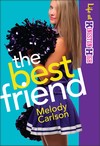
Teen girls will explore the often treacherous world of friendship, loyalty, and choices girls face in high school when they read The Best Friend by Melody Carlson ($12.99, Revell, softcover). Lishia Vance is flummoxed. One day she has friends. The next everyone has turned against her. When she makes friends will Riley Atkins, a popular cheerleader, things begin to look up again, but is Riley really the friend she seems or is Lishia better off without her? Carlson is an award-winning author of more than two hundred books, including “The Jerk Magnet”, reviewed here. Regine’s Book: A Teen Girl’s Last Words by Regine Stokke is taken from her real life ($16.99, Zest Books, softcover) is about her struggle with cancer, the second leading cause of death in children under 14 years of age. Nearly 50,000 new leukemia cases will be diagnosed this year alone. She began blogging about her experiences, the basis for the book, writing openly about the emotional and physical aspects of her 15-month struggle to recover. She died at home in December 2009, but her book will inspire young readers and open their eyes to the realities of this disease.

Zest Books, (http://www.zestbooks.net/) publishes lots of fun books about pop culture and The End ($12.99, softcover) is subtitled “50 apocalyptic visions from pop culture that you should know about before it’s too late.” Since the Mayan end of the world prediction is slated for December 21 this year, this is a timely book that looks at all the ways films, television, paintings, songs, literature and other works of art have depicted this ancient and on-going theme. The world has not come to an end despite all the predictions and for teens this will prove very good news.

Novels, Novels, Novels

So many novels, so little time to read them all; for the purpose of this monthly report here is a selection that offer entertainment as the summer begins.

Viking, an imprint of the Penguin Group, has long been one of the prominent publishers of fiction and they maintain their reputation with three novels, one of which is the debut of Natasa Dragnic, Every Day, Every Hour ($25.95) as translated by Liesl Schillinger. In a small Croatian coastal city in the early 1960s, five-year-old Luka, smitten by new classmate Dora, faints in excitement and is awakened by her kiss. The two become inseparable until Dora and her parents move to Paris. Then, both in their twenties, Luka and Dora meet again in Paris where Luka has an exhibition of his paintings and they fall in love. This is a classic romance filled with intense emotion. The Orphanmaster is also a debut novel ($27.95). Jean Zimmerman’s knowledge of 17th century Manhattan is the basis of her vivid reaction of the harsh reality of life in New Amsterdam in a lively and fast-paced tale of mystery, romance, political intrigue and suspense. It is 1663 and orphan children are disappearing or turning up dead. A young woman, herself an orphan, Blandine van Courvering, along with a dashing British spy, Edward Drummond, join up to search for the killer. Their budding romance is threatened by a charge that Blandine is a witch and Edward faces being hanged. Many other Dickensian characters inhabit the story at a time when the British kind is planning to wrest control of the colony. The Irish are gifted storytellers and much admired among them is Dermot Healy, the author of three novels, a memoir, a collection of stories, and five volumes of poetry. In his latest novel, Long Time, No See ($27.95) takes the reader to the isolated coastal town of Ballintra in Northwest Ireland and serves up a cast of innocents and wounded, broken misfits. It is told by Phillip Feeney, also known as “Mister Psyche”, a young man on the brink of adulthood who has been a bit undone by a recent traumatic event. He’s awaiting his exam results while living at home with his folks and doing odd jobs. He spends time hanging out with and running errands for two men some fifty years his senior, his Uncle Joejoe and his uncle’s friend, known as the “The Blackbird.” These are ordinary people made extraordinary by the author’s considerable literary gifts and the poetry that flows unconsciously from the lips of the Irish.

A number of softcover books will provide hours of entertainment and of insight into life in other nations. Zakhar Prilepin, the winner of the Russian National Bestseller Prize and Russian Super Natsbest Prize, demonstrates why he is so popular there and gaining an international reputation. He writes of life in modern Russia. His novel, Sin ($24.95, Glagoslav Publications) is a guided tour of Russia’s recent past and present, replete with the issues of unemployment, poverty, violence, and local wars, all seen through the prism of the relationships of its characters, both loved ones and strangers. It is an intensely human story that takes you to a different place that, at the same time, feels familiar. The world of WWII Egypt is the setting for Jasmine Nights by Julia Gregson ($16.00, Touchstone/Simon and Schuster) for a powerful story of love, adventure, beauty and danger. It is a travelogue of sorts, from England to Egypt to Turkey, filled with exotic sights and sounds, as Saba Tarcan, a talented singer who longs to break free from her traditional Turkish father who will not allow her to sing in public. She jumps at the change to join the Entertainment National Service Association, becoming part of a theatrical company sent to entertain the soldiers at the height of the desert war in North Africa. She is asked by the British Secret Service to take part in a covert mission and complications ensue. It’s an intricate story of two people struggling to hold onto their love for one another in perilous times.

A new novel takes one back to the legendary days of the American West based on a true story of Charley Darkey Parkhurst who died in 1880 and was celebrated as a one-eyed, tobacco-spitting, gold-rush era Wells Fargo driver, a famed California stage coach driver and outlaw killer. What wasn’t known was that Charley was a woman. Karen Kondazian has transformed his/her story into a novel, The Whip ($15.00, Hanson Publishing Group), a beautifully written story of the Old West that moves between the exploits of Charley and the heartbreak of his/her secret. Why did she choose to live as a man? It was a hard life as a “whip” as the early drivers were known. They were held in high regard. This is a very entertaining and emotionally moving reading. A more recent and far different setting is the backdrop for Shelter by Frances Greenslade ($15.00, Free Press). A debut novel, it chronicles the struggles of sisters Maggie and Jenny as they attempt to make sense of a life without parents in rural Duchess Creek, Canada in the 1970s. After their beloved father’s death in a logging accident, their mother drops them off with friends and never returns. It is a search for one’s roots that drives the story and one that women in particular will find a great read on the beach or porch.

I am not generally a fan of novels that mix reality and fantasy, by Lauren Santaniello pulls it off in Death of Ignorance ($21.95, Stories to Tell), a dark psychological thriller filled with suspense, fantasy and romance. It centers on Alex Sharrock who, after witnessing his father’s murder, as a child renounces religion and God. It takes up his life thirteen years later when the 19-year-old is the lead singer for a popular rock band. He is haunted by persistent memories, nightmares, and pushed to the brink of sanity when he discovers that he is a Seer, the last of a race believed to have been eliminated by Satan’s army centuries earlier. Not light reading by any means, but a dark, intriguing story. Finally, there’s Piero Rivolta’s Journey Beyond 2012 ($21.95, New Chapter Publishers, hardcover) that is pegged to the end-of-the-world Mayan prediction. For anyone who enjoys a philosophical journey that explores modern life, a meditation on its meaning, and the nature of our existence, this book will provide a cosmic morality tale that ranges over many of the issues that represents the headlines of our present time. It challenges our beliefs, our aspirations, and our human desire for survival.

That’s it for June! Remember to tell all your book-loving friends, family, and co-workers about Bookviews, the only monthly report on new fiction and non-fiction that provides news of books across a wide range of subjects. And come back in July for still more!

Sunday, April 29, 2012

Bookviews - May 2012


By Alan Caruba

My Picks of the Month

I have known Brian Sussman from the years when he and I would get together on the radio in his hometown of San Francisco on KFSO to discuss the events of the day. A television journalist turned meteorologist, Sussman used his knowledge to debunk the global warming hoax and, when a cache of emails between its leading perpetrators was leaked to the Internet, he wrote “Climategate”, a book still worth reading, but his latest book, Eco-Tyranny: How the Left’s Green Agenda Will Dismantle America ($25.95, WND Books) should be “must” reading for anyone who has begun to suspect something very dangerous about the activities of the leading environmental organizations, the United Nations Environmental Program, and the Environmental Protection Agency, all of whom are engaged in an attack on private property, the keystone of capitalism and foundation of the U.S. economy. Step by step, Sussman demonstrates how environmentalism hides its deep roots in communism and its contempt for humanity. Even as the global warming hoax fell apart, the Greens are engaged in a new version in the name of “sustainability”, claiming the Earth cannot sustain its population and the use of its bounty, particularly in the area of energy, is destroying the Earth. Communism is responsible for at least 110 million deaths since it was introduced in Russia in 1917 and later in China and elsewhere. It is the enemy of freedom and its latest reincarnation as environmentalism is as well. This is a chilling examination of the way Americans are being denied access to the nation's treasure trove of oil, natural gas, and coal. It is a look at the way more and more of the landmass of the nation is being put off-limits to development by the government. If you read no other book this year, this would be the one I would recommend for your sake, for your family’s and the nation’s future.

Funding the Enemy: How US Taxpayers Bankroll the Taliban by Douglas A. Wissing ($25.00, Prometheus Books) is one of those books that the mainstream press doesn’t want you to know about. The author was recently interviewed on C-Span as he related the way that the government, over two administrations, has mismanaged billions of development and logistics dollars, bolstered the drug trade, and literally dumped untold millions into Taliban hands. It is a scathing critique of the war in Afghanistan. The troops in the field are well aware that the war is lost and of the way the corrupt Karzai government and the Taliban has gamed all the “development” money spent there to enrich his cronies as well as the Taliban we’re told we are fighting. The result is that Americans have been funding both sides of the war. While Americans have a general awareness of the menace that Islam poses for the nation and the world, one can gain a far more thorough understanding by reading Ali Sina’s new book, Understanding Muhamad and Muslims ($18.95, Felibri.com, an imprint of Freedom Bulwark Publication). As an occasional contributor to Sina’s website, FaithFreedom.org, I have come to know Sina through his books and writings. Born in a Muslim family in Iran, educated in Italy, and now living in Canada, Sina has established himself as a leading critic of Islam and has helped thousands to leave Islam and secure a life free of this cult built around the life of Muhamad. Passing himself off as a prophet, Muhamad fashioned a religion to impose his will on gullible followers. Sina has put together a psychological portrait of a man for whom the ends always justified the means. The violence associated with Islam was an early element of the emerging cult and is, of course, practiced today by suicide bombers and those who perpetrated 9/11. I highly recommend this book.

Dog lovers and owners will love Things Your Dog Doesn’t Want You To Know by Hy Conrad and Jeff Johnson ($12.99, Sourcebooks, softcover), a collection of essays written from dog’s point of view revealing why they do what they do. Just as human behavior is often a mystery, now you can learn why they wait by the table for scraps, regard your bed as theirs, and “The Reason I Ate the Sofa” among more than a hundred other topics by Conrad, one of the original writers for the TV series “Monk” and Johnson who works in advertising. It is hilarious and a great gift for anyone sharing their lives with a dog. I have a friend, Ron Marr, who has always had companion dogs in his life. He is also the author of An Explorer’s Guide: The Ozarks—Includes Branson, Springfield & Northwest Arkansas ($21.95, The Countryman Press, Woodstock, VT, softcover) that is available via Kindle as well. It has been completely updated in its second edition and it is a treat, especially as more Americans are choosing to vacation in destinations to which they can drive. The Ozarks offer a bounty of cultural delights, museums, great dining and shopping. Ron’s guide is jam-packed with the kind of information that guarantees some great one-day trips or longer stays for all manner of recreation. Did you know that you can visit “Stonehenge” in Rolla, Missouri, or that the region is filled with some great state parks? Here’s a book that unlocks a wonderful part of the nation.

Do you ever get the feeling that we live in a society that encourages immaturity through escapism, various distractions, and an emphasis on youth? Do you suspect you have not fully matured in your own life? If so, an interesting book, Dare to Grow Up: Learn to Become Who You are Meant to Be by Paul Dunion ($16.95, Bartleby Press, Savage, MD, softcover) is a soulful new guide to personal accountability and emotional maturity. This book is about a self-examined life, offering counsel on how to develop self-loyalty, avoiding self-betrayal, and developing a solid foundation for emotionally intimate relationships. In short, it is about integrity and when you have that, your life is vastly improved. I normally am wary of self-help books, but this one is well worth reading.

Memoirs, Biographies, Autobiographies

I confess that over the decades I have seen so many books written by survivors of the Holocaust—the Nazi program to kill all the Jews of Europe—that I have sometimes thought that every one of them has written a book about it. I think they have written these memoirs as a warning to future generations not to forget what occurred in the mid-20th century. Three softcover books representative of this genre have arrived and each one of them is worth reading. Noike: A Memoir of Leon Ginsburg ($15.00, Avenger Books) by his daughter Suzanne Ginsburg. Leon Ginsburg has been the subject of several books on World War II. Known as a child by his Hebrew name, Noike, Leon was the only child survivor from Maciejow, a shtetl of 5,000 in Eastern Poland (now part of the Ukraine). Leon was interviewed by Peter Jennings for his seminal book, The Century and by Jane Marks for her book, Hidden Children of the Holocaust. It is an extraordinary story of survival by a ten-year-old child who eluded death many times. Surviving the Angel of Death by Eva Mozes Kor and Lisa Rojany Buccieri ($8.95, Tanglewood) was written for younger readers, age 12 and up, but older readers will find its story of twins who arrived in Auschwitz at age ten and, while their parents were swiftly killed in its gas chambers, were turned over to Dr. Josef Mengele who performed sadistic “medical” experiments. Many sets of twins died as a result. It is the story of extraordinary evil and, yes, of survival. Lastly, there’s Bitter Freedom: Memoir of a Holocaust Survivor by Jafa Wallach ($18.95, Gihon River Press), the personal account of a Polish Jew who survived a Nazi sweep of Southern Poland. After sending her 4-year-old to safety, she with her husband spent twenty-two agonizingly long months in a grave-like space hidden by a brave Pole, the town’s mechanic, who provided food and water. The hole was located less than twenty feet from a Gestapo headquarters in the small town of Lesko. Ultimately the family made their way to America in May 1947.

Religion is at the heart of an interesting memoir by Mary Johnson, An Unquenchable Thirst, ($32.95, Bond Street Books, an imprint of Random House Canada). At age 17 Mary Johnson saw a picture of Mother Teresa, founder of the Missionaires of Charity, and was so moved by it that she entered a convent in the South Bronx to begin her training. From a typical Texas teenager she was transformed by her quest for meaning in her life, for an identity. She became Sister Donata and rose through the ranks of the order to find herself working with Mother Teresa. All along the way, however, she had to wrestle with her own desire for love and a deeper personal connection to a life with faith. In 1997 she left the order after twenty years and has become a respected teacher and public speaker.

A life spent around madness is the subject of Riding Fury Home: A Memoir by Chana Wilson ($17.00, Seal Press, softcover). In 1958, when she was age of seven, her mother held a rifle to her head and pulled the trigger. The gun jammed and she was taken away for the first of many visits to a mental hospital. Other suicide attempts would follow and the author chronicles forty years of her relationship with her mother and the way it was affected by the changes in the social landscape of their time. She was the sole caretaker of her mother and it was not until she left for college in Iowa that she was able to break the dysfunctional bonds and find her own space which included her own lesbianism. The author has been a psychotherapist for twenty-five years and this book must surely have been cathartic.

A more traditional biography is found in Gordon Bowker’s James Joyce ($35.00, Farrar, Straus and Giroux) due out in June. Fans of this author will find this an absorbing account of his life and work. Bowker deftly connects all the dots between his writing and his life such as how his years in Trieste influenced the shaping of “Ulysses” and the way he dealt with friends, poverty, and ill health. The miracle is how he was able to write epic novels celebrating the lives of ordinary people. He was an extremely complex man and hard even on his friends. Joyce is an acquired taste and regarded as a literary giant. This may well be the best biography to have been written about him.

Finally, Ron Reagan, the former President’s son, authored a memoir of their lives together that is now in softcover, My Father at 100, ($16.00, Plume). For fans of Ronald Reagan, this is a privileged portrait by someone who knew him as a father, a mentor, and a moral compass. A century after Reagan’s birth, even his son had to undertake a journey to learn about his youth. It is an interesting story.

Reading History

In March a Financial Times article was titled “Bleak Outlook for U.S. Newspapers” and called them “America’s fastest-shrinking industry.” Advertising revenues are half what they were in 2005 and now at 1984’s levels. Part of the challenge has come from the growth of the Internet as the go-to source for news, but part can be attributed to the loss of confidence in the objectivity and accuracy of what newspapers, with exceptions, report as news or fail to report entirely. For those like myself who began his career as a reporter and editor, that is sad news, but Christopher B. Daly, a veteran journalist and historian, has just had a splendid book published, Covering America: A Narrative History of a Nation’s Journalism ($49.95, University of Massachusetts Press) that will please its readers on many levels. Daly remains optimistic, noting that American journalism has always been challenged, going through deep change in the 1830s and again in the 1920s. Daly provides a lively, interesting review of journalism’s many personalities, events and trends. It is an excellent work of history concerning the profession and business of journalism, filled with anecdotes and intriguing facts. It surely belongs on the shelves everywhere journalism is celebrated.

An excellent look at The Elizabethans by A.N. Wilson ($30.00, Farrar, Straus and Giroux) is out this month. It is worth reading because this period in England’s history set in motion so much that followed. It was a time of exceptional creativity, wealth creation, and political expansion and was filled with colorful and dynamic characters, not the least of which was Elizabeth I. Sir Francis Drake not only defeated the Spanish Armada, but circumnavigated the world. Shakespeare wrote his plays in this period. Declaring its independence from the Church, England laid the foundations for the explosion of the British Empire. This extraordinary era is captured in a single volume that anyone interested in history will want to read and add to their personal library.

If you love a historical mystery, you will enjoy Midnight in Peking, subtitled “How the murder of a young Englishwoman haunted the last days of old China” by Paul French ($26.00, Penguin original). It is a true crime story about the murder of a British school girl, Pamala Werner, found at the base of the Fox Tower. With the Japanese already in Manchuria and encircling Peking, an investigation by a former Scotland Yard officer takes him deep into Peking’s seedy underworld of crime, drugs, and prostitution. Her father’s life is consumed with his own investigation. The author provides the resolution and transforms a front page murder into an absorbing and emotional expose.

History was on Tim Wendel’s mind when he wrote Summer of 68: The Season that Changed Baseball and America Forever ($25.00, Da Capo Press). For those too young to recall and those old enough to do so, 1968 was a tumultuous year, filled with political turbulence, civil unrest, and violence. There were riots in a hundred cities and the year saw the assassinations of Martin Luther King, Jr. and Bobby Kennedy. 1968 was also “the year of the pitcher” with men like Don Drysdale of the Los Angeles Dodgers, Luis Tiant of the Cleveland Indians, Denny McClain of the Detroit Tigers, and Bob Gibson of the St. Louis Cardinals. Wendel captures the spirit of the time and weaves together the stories of the year’s events, the teams and players in a thoroughly entertaining fashion; particularly for anyone who loves the game. This book demonstrates the deep connection between the nation and its national game. For Yankees fans, there's The New York Times Story of the Yankees ($29.95, Black Dog & Leventhal Publishers). Edited by Dave Anderson, it is a compendium of 382 articles, profiles, and essays from 1903 to the present. This book will bring joy and hours of great reading for any fan of this legendary team, Anderson is one of the leading sportswriters of our era and has done a great job selecting and organizing the book that is also filled with memorable photos.

We are getting deeper into the election year activities that will dominate the latter part of the year. For anyone who loves history and all the electioneering paraphernalia, there is a unique book, Presidential Campaign Posters, from the Library of Congress that includes 100 ready-to-frame posters ($40.00, Quirk Books). Each poster is accompanied by a short text about the particular election, starting in 1828 with Andrew Johnson’s campaign. This is a great way to learn about the campaigns that have shaped our nation. Not surprisingly, candidates have pretty much campaigned on the same issues.

Getting Down to Business Books

There is a constant stream of books about doing business. Anyone who is engaged in management, sales or entrepreneurial endeavors can benefit from them. A lot about success has to do with one’s personal attributes. The 4 Disciplines of Execution: Achieving Your Wildly Important Goals by Chris McChesney, Sean Covey, and Jim Huling ($28.00, Free Press) have teamed up to address the issue of execution because, as they say, MBA programs focus heavily on strategy, but virtually no training in execution—actually getting things done. The authors work for the FranklinCovey firm, a company with operations in 141 nations worldwide, providing guidance to corporations and organizations on getting the best results by training people to be their best and to thus achieve their goals. The book addresses strategic organizational changes that improve performance. Anyone in a managerial position will greatly benefit from reading this book.

The Winning Factor by Peter Jensen ($24.95, Amacom) takes his experience in sports psychology and applies it to workplace leaders, teaching them how to coach employees and coworkers to be the best they can be. “Success for these coaches is not only about the results but also about building competence, commitment, capacity and passion in their performances. They take on a bigger role than simply supervising, directing or managing.” Beginning with oneself its techniques will help you get the best from others. Sports plays a role in Click! The Competitive Edge for Sports, Entertainment, and Business ($14.95, Peak Performance Strategies, LLC, softcover). Dan Schaefer, PhD, the author, is a performance consultant and founder of the firm that published the book. He helps individuals, management, teams, and companies get the competitive edge through techniques to enhance personal and/or business performance. He has done this for clients throughout the U.S., Europe, South America and Asia. He can do it for you if you read his book. The irony is, of course, he is competing with the other book noted, but these books demonstrate that one can learn techniques to enhance one’s life.

Selling with Soul 2.0: Achieving Career Success without Sacrificing Personal and Spiritual Growth by Sharon V. Parker ($16.95, Berrett-Koeler’s Open Editions /iUniverse, softcover) is one of those titles that describe the book. The author is an award winning author and sales consultant. This is a guide to successful sales, but the advice she offers helps people maintain their personal values and effectively perform the sales process. In the end, honesty is the best policy.

There is lots of buzz about doing business in China as that huge market has become available to companies large and small. It has its pitfalls, however, and Stephen M. Perl, MS, MBA, an expert in Asia trade, has penned Doing Business with China: The Secrets of Dancing with the Dragon ($19.99, ChinaMart USA Book Publishing, Los Angeles, softcover). It’s estimated that China represents a $10 trillion market that is up for grabs in the next decade. This book is essential reading for any American firm that wants to do business in China. It is a practical, nuts-and-bolts handbook. There are secrets to establishing successful relationships with the Chinese government and business leaders. This book provides an invaluable cultural, political, and business insight from the U.S. perspective and it is not just for CEOs of large companies. Rather, it applies to small companies as well, to entrepreneurs, and is useful for government and private think-tank policymakers, as well as employees, who are doing or planning to do business with China.

Parenting and Women’s Issues

To most men, women remain a mystery. Being either sex poses its unique challenges and there are books with advice. Susanna Foth Aughtmon has written I Blame Eve: Freedom from Perfectionism, Control Issues, and the Tendency to Listen to Talking Snakes ($12.99, Revell, softcover), a humorous and encouraging book that explores “our deep need to be in control.” It blends Scripture (Revell is a Christian publishing house) with insight and the view that there is “a unique path laid out for each of us.” In contrast, Orna Gadish addresses the fact that 47% of young adults have never been married, 51% are living without a spouse, and choosing to be single is now a worldwide phenomenon. Don’t Say I Do! Why Women Should Stay Single ($14.95, New Horizon Press, softcover) officially due off the press in July. Our society has afforded women the freedom to hold jobs that give them a freedom that did not exist for earlier generations. The author focuses on the “inadequacies and dissatisfaction with traditional marriage” encouraging women to think for themselves and stay single. Clearly this is transforming the male-female relationship that has been the keystone for society and has significant implications for the future. I am old fashioned enough to think that marriage has worked well enough for generations and single women raising children have a raft of problems that need to be addressed. Some women, however, will find comfort in this book.

Parenting has long been a topic for authors and these days are no different. The loss of parental control to schools and government agencies is beginning to percolate into a major issue. Honeycomb Kids: Big Picture Parenting by Anna M. Campbell, the mother of three ($17.95, Chelsea Green Publishing, softcover) has a strong environmental focus. Unfortunately the way environmentalists have been terrorizing children with doomsday scenario needs to be addressed, but this book, despite its otherwise useful advice, contributes to this problem. I don’t recommend it. One reason for concern is the way schools have been turned into indoctrination centers for environmentalism and increasingly for teaching socialism as superior to capitalism. Your Teacher Said What? Trying to Raise a Fifth Grade Capitalist in Obama’s America by Joe and Blake Kernan ($15.95, Two Harbors Press, softcover) recounts the challenges of teaching the value of free market capitalism to a child in the grip of the nation’s educational system and a popular culture that attacks capitalism in the name of the redistribution of wealth, communism’s promise. Prior to his anchoring duties, Joe Kernen was CNBC’s on-air stock editor, after having joined the Financial News Network. Previously he had been a stock broker. If this is your concern too, I recommend you read this book. A growing trend over the years has been homeschooling and it is well known that such children score better and do better than their contemporaries in schools that often resemble minimum security prisons. More than 1.5 million Americans have chosen this for their children. Homeschooling: Why and How by Gail Nagasako ($15.95, Two Harbors Press, softcover) provides a wealth of information on how parents can provide their children with an excellent education and positive socialization.

Bay and Her Boys: Unexpected Lessons I Learned as a (Single) Mom by Bay Buchanan ($25.00, Da Capo Press) offers a very different, far more cheerful look at parenthood. As of 2011, 24% of children in the United States were living in single-family homes. It is no longer a rarity. A former Treasurer of the U.S., she is a political strategist and an influential conservative leader. She tells of a surprise and devastating divorce twenty-three years ago. Pregnant at the time, she was left to raise her sons while becoming a working mom. She hopes to change the national dialogue about single women while recounting what it was like to hold on to traditional values. The book offers some very good advice for all mothers, single or married.

A problem that has been gaining more public attention is autism. Stop Autism Now: A Parent’s Guide to Preventing and Reversing Autism Spectrum Disorders by Dr. Bruce Fife ($17.95, Picadilly Books, Ltd., Colorado Springs, CO, softcover), a prolific author of health-related books, addresses the fact that more than a million people have autism and it appears to be on the rise. Other related disorders include attention deficit and hyperactivity syndrome. Autism remains a mystery to the medical community and to the parents of children, but this book undertakes to solve the mystery offering a theory on the brain’s microglia that have a function similar to white blood cells, protecting the brain from assaults by infectious microorganisms and toxins. Dr. Fife says it is not a hopeless condition and offers his solutions. I cannot attest to his findings, but he makes a strong case.

Parents will love Don’t Sit on the Baby! The Ultimate Guide to Sane, Skilled, and Safe Babysitting by Halley Bondy ($12.99, Zest Books, softcover). Due out in June, babysitting is a popular part-time job for teens and this book is written for parents to their babysitters to impart everything they need to know from dealing with diaper rash to CPR. It is filled with advice on what to expect from infants to those age ten and provides strategies for communicating with parents. If you are the parent of a teenager contemplating this as a way to earn a few dollars, I would heartily recommend you give them this book.

Books for Kids and Young Readers

There are so many books for kids and younger readers that it is a bounty of entertainment and knowledge.

Starting with books that a parent can share with pre-schoolers, reading to them, or for early readers, there’s a new addition to the popular “Chester Raccoon” series. A Color Game for Chester Raccoon by Audrey Penn, illustrated by Barbara L. Gibson ($7.95, Tanglewood) it is made to survive the often rough handling the very young give a book. Its great artwork and text provides an introduction to different colors. The Animal Masquerade by Marianne Dubuc ($16.95, Kids Can Press) is a fanciful tale of animals that disguise themselves as other creatures, providing an introduction to different creatures in a very entertaining way. A very amusing story is told in The Klampie Mystery by Luis Rodriguez ($14.95, Mascot Books) about Samantha who gets a life-sized stuffed Koala toy whose arms clamp onto anything. When her family takes a trip to Australia, she takes the toy named Klamie along and there the fun begins when a real koala replaces it. A growing concern among parents is the way video games and electronic devices not only keep kids indoors, but ill-serve the development of their imagination, a key factor in creativity. That’s why I liked One Day I Went Rambling by Kelly Bennett, illustrated by Terri Murphy ($17.95, Bright Sky Press) for those ages 5-8. It is about a boy who finds all kinds of things while playing outside and how his imagination converts them into things like a pirate’s magic ring. This is a great book for the very young. Kids are naturally fascinated by all living creatures and that can include insects. Bug Off! Creepy, Crawly Poems by Jane Yolen, illustrated by some great photos by Jason Stemple ($16.95, WordSong, an imprint of Boyds Mills Press, Honesdale, PA) is an excellent introduction to bees, butterflies, ants, spiders and other common insects.

A Pirate Girl’s Treasure: An Origami Adventure by Peyton and Hilary Leung ($18.95, Kids Can Press) that uses the Japanese art of folded paper sculptures combined with a story about a girl whose pirate grandfather sends her a treasure map. This, too, is for the pre-schooler or very early reader, aged four and up. Parents of twins will welcome Take Two! A Celebration of Twins by J. Patrick Lewis and Jane Yolen, illustrated by Sophie Blackall ($16.95, Candlewick) may have something to do with the fact that Lewis is a twin. It is filled with facts about all things “twin”, fraternal, identical, and record-setting, all told with poetry. Daisy’s Perfect Word by Sandra V. Feder and illustrated by Susan Mitchell is a great introduction to independent reading and the joys of playing with language. As a longtime writer, I am biased, but the gift of reading and writing is one of the best a parent can pass along to any youngster.

For readers age eight and older, a number of books will provide hours of great reading. Robert Jae Sky has written To Dream the Impossible ($9.95, Create Space, Charleston, SC, available from Amazon.com). This father of three and grandfather of five was inspired by Olympic gold medalist Ross Powers and has written a lovely story of Rippy, a rabbit who wants to ski despite being told by everyone that rabbits do not ski. Not one to take no for an answer, Rippi perseveres and young readers will learn a value lesson while being highly entertained by this story. Margaret and the Moth Tree by Brit and Kari Trogen ($15.95, Kids Can Press) It is a classic story of an orphanage, a wicked woman who runs it, how Margaret defeats her and learns the power of making friends to find happiness in life. Alexander, Spy Catcher by Diane Stormer ($10.95, iUniverse, softcover) is about Alexander and his brother Ben who enjoy the usual things while coping with learning algebra, sports tryouts, and talking with girls. Then they discover that their Uncle Charlie may be in danger because of a secret government project he is working on. When they tell him of the strange things they have noticed, he disappears without a trace! They have to help their family discover what has happened to him and therein lies a gripping story. Riley Mack and the Other Known Troublemakers by Chris Grabenstein ($16.99, Harpercollins Childrens) is a title that instantly appealed to me. Written by a former improv comedian and president of the New York chapter of the Mystery Writers of America, it introduces seventh-grade mastermind, Riley and his pals, the “Gnat Pack”, as they fight the town bully and his crooked cop of a father. They liberate dogs held captive in a puppy mill and thwart a bank robbery! This one is a real page turner that is sure to please.

Finally and especially for girls, American Girl has a number of new books with clever twists such as its “Innerstar University” series that include The New Girl and Behind the Scenes, ($8.95 each) books that have twenty different ends starring the reader. These are interactive and take place on the Innerstar University campus where girls can discover how their decisions can change the outcome of the story. Clever idea. Another useful book is A Smart Girl’s Guide to Liking Yourself—Even on Bad Days ($9.95) that teaches how to overcome low self-esteem and develop confidence; always a good thing for any youngster. A series of mysteries featuring young girls in different time periods of America’s history includes The Crystal Ball, The Hidden Cloud and The Cameo Necklace at an affordable $6.95 each. In each a girl experiences an adventure that will keep any reader turning the pages.

Novels, Novels, Novels

Day after day I receive emails promoting new novels. They come from established publishing firms and from self-published novelists. They are so frequent I have an automatic email reply message wish them well, but noting that the volume of new novels makes it impossible to accept their request.

Here are just a few new novels that have arrived in the last month or so. Let’s begin with the hardcover novels and move on to the softcover. I am convinced that inside of every lawyer is a novelist. Margaret McLean is a former criminal prosecutor who has drawn on a notorious chapter of Boston history as the framework of her second novel, Under Oath ($24.90, Forge) to create an exciting courtroom mystery involving a murder, conspiracy, and the infamous code of silence that has kept murders on the streets. When gangster Billy Malone stands accused of killing Trevor Shea, a suspected informant, with a poisoned dose of heroin, prosecutor Annie Fitzgerald must get witnesses to testify. When her chief witness is killed the question is whether justice will prevail over FBI cover-ups and a jury that defies their instructions. This is a worthy contribution by Emily St. John Mandel from one of the best publishers of novels, Unbridled Books. The Lola Quartet by ($24.95) begins with a photograph. Eilo Sasaki takes a picture of a young girl she meets while handling a home foreclosure in Florida. The child bears a striking resemblance of her brother Gavin and is approximately ten years old. Her last name is Montgomery and, ten years earlier, Gavin’s girlfriend, Anna Montgomery, disappeared amidst rumors that she was pregnant. When Gavin is shown the photo, he begins to ask questions about the past. This is her third novel and Mendel is making a name for herself in literary circles and with a growing fan base. If you read this novel, you know why.

Bethany Frankel is a three-time bestselling author, a popular TV reality star, successful businesswoman and devoted mom. She makes her fiction debut with Skinnydipping ($25.00, Simon and Schuster), a sexy and hilarious story of Faith Brightstone, an iconic aspiring actress just out of college who wants to conquer Hollywood and have all the perks of fame. Like so many others, her plans do not pan out as she gains a behind-the-scenes experience, suffers heartbreak, and abandons La La Land for New York. The resemblance to Frankel’s real life is unmistakeable. Faith is discovered at a fancy food show after establishing a business, becomes a reality TV star, and wins a contest for her own show. Frankel’s fans will jump at the chance to read this thinly disguised autobiographical novel. A unique look at life in Israel is provided by Sayed Kashua, an Arab who has enjoyed success there, having written two previous novels and as the creator of a groundbreaking Israeli sitcom, “Arab Labor”. He straddles two cultures and his novel, Second Person Singular, ($25.00, Grove Press) is about an Arab criminal attorney in Jerusalem who has a thriving practice in the Jewish part of Jerusalem. By chance, in a bookstore he picks up a book by Tolstoy that has a love letter in his wife’s handwriting. He is immediately consumed by suspicion and jealousy, and determined to find the book’s previous owner. This is a powerful novel of love and betrayal, a complex psychological mystery, and a searing dissection of individuals who live in a divided society.

Some softcover novels offer entertainment and insight. The Mermaid Garden by Santa Montefiore ($16.00, Simon and Shuster) is now in softcover. It is a complex and compelling story that spans four decades in the lives of its characters, set in Tuscany and on the coast of Devon, England that begins when a young girl spies on a beautiful palazzo from beyond its iron gate. Abandoned by her mother and left in poverty by her alcoholic father, ten year old Floriana finds La Magdalena a perfect place to escape into daydreams. One day she is spotted by Dante, the son of the villa’s wealthy owner. He invites her inside and shows her the villa’s enchanting Mermaid Garden. They become friends and Floriana becomes convinced that her destiny in that garden with him. The story moves to a charming old hotel by the sea that has fallen on hard times. When a charming, handsome Argentine artist, the lives of the owner and her family. Another story takes you to Japan. The Briefcase by Hiromi Kawakami traces the story of Tsukiko who happens to meet a former high school sensei (teacher) in a local bar. Their relationship develops from a perfunctory acknowledgement of each other as they eat and drink alone at the bar into an enjoyable sense of companionship, and finally into a deeply sentimental love affair. Memoirs of a Porcupine by UCLA professor Alain Mabanckou is set in Africa ($15.95, Soft Skull Press) and is an example of magical realism based on an African legend that says all human beings have an animal double! Some are benign while others are wicked. When Kibandi at age ten is initiated into this world, he fuses with an animal and, from then on, he and his porcupine double become accomplices in nefarious adventures.

Last, but hardly least, is a delightful collection of 88 “short-short” stories found in Flush Fiction ($16.95, softcover) “you can read in a single sitting.” Published by Uncle John’s Bathroom Reader (Ashland, Oregon), it was compiled by the editors of the Bathroom Reader’s Institute. They are all shorter than a thousand words and run the gamut of various genre from humor to mystery, romance to adventure, et cetera. You can check it out at http://www.bathroomreader.com/ and for folks who love to read no matter where they are, it is a real treat.

That’s it for May. Be sure to tell all your book-loving friends, family, and coworkers about Bookviews.com so they too can learn about the many fiction and non-fiction books that stand out from the deluge and deserve to be read. Then come back in June for more!