Monday, November 5, 2012

Bookviews - November 2012


By Alan Caruba
 
My Picks of the Month

For a look at the obscene wealth of the Saudi Royal family and the way it is spent when some Saudi princesses and a huge entourage that accompanied them on a seven week visit to Los Angeles, they I recommend you read Jayne Amelia Larson’s entertaining book, Driving the Saudis: A Chauffeur’s Tale of the World’s Richest Princesses ($25.00, Free Press, a division of Simon and Schuster). Like many aspiring actresses, Larson, who has a degree from Cornell University and Harvard’s American Repertory Theatre Institute, would moonlight as a chauffeur to make ends meet. A seven-week visit by a Saudi princess, her family, and an army of people to tend to her every whim gave Larson the unique opportunity to see the royals up close and the picture that emerged was of obscene wealth and a lifestyle of excess that she reveals in her entertaining and disturbing book. She was the only woman driver among a small army of chauffeurs and her women passengers were not permitted to drive in Saudi Arabia, nor travel anywhere without a male relative. It is a velvet cage.

Mexico is on our southern border, but it might was well be on the other side of the globe except for the many Americans of Mexican descent and those here illegally. A good trading partner, Mexico nonetheless poses a great problem for the U.S. as the conduit for massive amounts of illegal drugs which find a ready market here. It poses a problem internally as well because, since 2006, more than 50,000 people have died there as the infamous drug cartels battle one another. In The Fire Next Door” Mexico’s Drug Violence and the Danger to America ($24.95, Cato Institute) Ted Galen Carpenter, a senior fellow for defense and foreign policies studies, has written a thoroughly documented look at what threatens to become a failed state as the result of the corruption and violence seeping across the border into the U.S. Carpenter reveals how the current U.S.-backed policies have been a disaster. Changes are necessary and Carpenter spells them out, as opposed to the band-aide approach that has failed. It is a true horror story and not one that current and future administrations can ignore.
 
Fast Food Vindication by Lisa Tillinger Johansen, MS, RD, a registered dietician, ($11.98, J, Murray Press, softcover) dispels the widespread belief that Americans are getting fat because of the fast-food outlets throughout the nation. In a clear, easy-to-understand text she offers the reasons why there is an epidemic of obesity in America and, indeed, in many other nations. People are just eating too much, not getting enough exercise, and snack too often. She notes that sit-down restaurants, more often than not, offer too much food on the plate and fill up the bread tray, thus providing more food than you need to eat at a sitting, as opposed to fast-food outlets that now commonly offer alternatives to a juicy, delicious hamburger or other food choice. And it comes down to choices and moderation. One thing is for sure, it is not the government’s job to intervene in what your child eats in school or what you eat. That’s your job. How people arrive at their beliefs in all manner of things, true or not, is the subject of Second That Emotion: How Decisions, Trends, and Movements are Shaped by Jeremy D. Holden ($25.00, Prometheus Books) an advertising and communications professional knows a lot about how to influence people’s opinions and he has written a lively, interesting book about the way people form those opinions. Contrary to the view that we arrive at our opinions via slick Madison Avenue and other “spin”, Holden shows that while advertising and propaganda can provide a spark and social media can provide the kindling, individuals create consumer, political, and cultural trends based, more often than not, on thought processes that they know logically are flawed. This is a book about the decision-making process and how our passion for an idea, a politician, or a brand is often emotion-based and fuels our support for movements of all kinds. For writers who take their work seriously, Constance Hall has written Vex, Hex, Smash, Smooth: Let Verbs Power Your Writing ($26.95, W.W. Norton) and it will greatly enhance anything you write as she takes the reader through contemporary and classic examples to demonstrate how to overcome some of the “rules” we carry around in our head about what works and what doesn’t.

People who read books, fiction and non-fiction, are so much more fortunate than those who do not. The very act of reading imprints ideas on the mind while expanding one’s intellectual parameters. Lately a number of books about the joy of reading have been published. The Books They Gave Me by Jen Adams ($19.99, Free Press) is a collection of nearly 200 poignant, funny, and provocative stories that comprise a love letter to literature and the pleasure of a physical book. It is a delightful read. Joe Queenan is one of the most successful freelance writers on the scene today. He writes a column for The Wall Street Journal, but his credits include many of the leading magazines and newspapers around. In One for the Books ($24.95, Viking) he tells of how powerful books were in facilitating his escape from a bleak and dysfunctional childhood. An ironic beginning for someone noted for his wit. This book is a look at the entire culture of reading and what books mean in people’s lives. “The confraternity of book lovers are united by a conviction that literature is an endless series of expeditions.” I agree.

A very unusual, but intriguing book is From the Forest by Sara Maitland ($28.00, Counterpoint Press) who examines the origins of fairy tales, the first stories most of us hear or read. They are our earliest experience with culture and forests are our most ancient landscapes. So many fairy tales are set in forests, Rapunzel, Hansel and Gretal, Snow White, and Little Red Riding Hood come to mind. Ms. Maitland explores how nature itself informs our imaginations. You will never think of a fairy tale in the same way again. For anyone who has always wanted to read the classics they ignored earlier in life, Thunder Bay Press has released the Word Cloud Classic series, all for under $15. They make great gifts too. They run the gamut from The Adventures of Huckleberry Finn to Pride and Prejudice, Les Miserables to Anna Karenina. Check out the series at www.thunderbaybooks.com.

Memoirs, Biographies, Life Stories
 
No doubt, the many fans of Bruce Springsteen will welcome news of the first biography in 25 years to be written with the full cooperation of Springsteen. Peter Ames Carlin has written Bruce ($28.00, Touchstone, an imprint of Simon and Schuster) and was granted unprecedented access to the artists, his family, friends, and bandmates, past and present, including Clarence Clemons’ final interview before his passing. It does justice to his more than four decades of a remarkable career that has yielded twenty Grammy Awards, two Golden Globes and an Academy Award along with more than 120 million albums sold. It is a revealing account of an American music icon who overcame an unhappy childhood that included a mentally ill father who suffered from depression. It’s all here in a hefty book that is just short of 500 pages. Carlin has authored other such biographies including the Beach Boys and Paul McCartney. 

Who doesn’t like an inspiring biography, particularly in these times when “success” is considered a dirty word by some people. American Phoenix by Sarah S. Kilborne ($27.00, Free Press) is the story of William Skinner who moved from the slums of London to the United States in 1845, arriving penniless, a teenager, with a job offer and an unparalleled knowledge of silk dyeing. Over the next three decades he became a titan of the silk industry, the epitome of the self-made man, until it took a flood a mere fifteen minutes to destroy his life’s work in 1874. It was the worst industrial disaster of the era. He was the great-great grandfather of the author and she tells of his effort to rebuild his life after losing everything. It is a story of resilience, character, and the ability to recognize failure as opportunity.

The Fiddler on Pantico Run: An African Warrior, His White Descendants, a Search for Family ($25.99, Free Press) by Joe Mozingo, a journalist who was always curious about where his father’s family was from until a college professor told him his name came from Africa. That sent Joe, a blue-eyed white man on a journey to find the truth of his family’s roots. He discovered he was descended from a slave brought to the Jamestown colony in 1644. He sued for his freedom, becoming a tobacco farmer on the bank of a creek called Pantico Run in Northern Virginia, and married a white woman from a landowning family, fathering one of the nation’s first mixed race family lines. To research the story the author traveled around the US meeting other Mozingo’s and to the rainforest of Cameroon. It is an astonishing, gripping story.

The Spin Doctor by Kirk Mitchell ($24.95, New Horizon Press) is about a man who may have killed his wife, but has eluded justice. When police arrived at Kurt Sonnenfeld’s house, they found his wife fatally shot in the head. Kurt claimed she shot herself because she was depressed and unhappy in their marriage. Most women would just file for divorce and police were suspicious of his behavior and signs that pointed to murder. Though arrested, he never stood trial. Instead, he fled to Argentina and has avoided extradition. For anyone who loves a real-life murder mystery, this book will more than fit the bill.

Col. Scott F. Paradis, U.S. Army (Ret) has written Warriors, Diplomats, Why America’s Army Succeeds: Lessons for Business and Life ($24.95/$17.95, Cornerstone Achievements Publishing, hard and softcover editions) after more than thirty years of service that took him to the Middle East, Europe, and various stateside stations. He has an impressive educational background and his military awards include the Legion of Merit and Bronze Star, among others. It is not surprising that he has written about the lives of military heroes who were leaders, thinkers, and the kind of men who showed courage and selfless service to the nation, going back to its earliest days. The book is a tutorial on leadership and success. And a great book for a young man or woman who would benefit from its lessons.

Reading History
 
It is absolutely essential to read history if you are to understand the present and have some idea of what may occur in the near future. One of the great contributions to that was Larry Schweikart’s and Michael Allen’s “A Patriot’s History of the United States: From Columbus’s Great Discovery to the War on Terror” published in 2004. I am pleased to report that Schweikart has teamed with Dave Dougherty to write A Patriot’s History of the Modern World: From America’s Exceptional Ascent to the Atomic Bomb – 1889-1945 ($29.95, Sentinel/Penguin Group) and, despite its hefty 475+ pages, it reads like an exciting adventure story because it is the period of America’s ascendency why it came to be as the result of fundamental conservative values and the free enterprise system. It was also a period in which two world wars were fought and modern warfare led to carnage beyond the imaginations of those who initiated them. Why do they call their books “A Patriot’s History”? Because the tone and purpose of these two books is to take pride in America, not in a jingoistic fashion, but to recognize and celebrate that America was and is an exceptional nation among all others. Sometimes it’s called a “can do” spirit, but from the beginning it was a nation that demonstrated a deep devotion to God while practicing a level of tolerance for other faiths unknown anywhere else. It attracted and assimilated millions yearning to enjoy freedom that was (and is) a scarce commodity in most other nations, bounded by caste systems, ruled by kings, czars, and despots. No, America was not perfect, but its ideals were. I heartily recommend you read both, but in particular the new book for the way it explains how we arrived at 1945, having fought and won WWII in both the Atlantic and Pacific.

One of the great battles of WWII was the Battle of the Bulge and No Silent Night: The Christmas Battle for Bastogne by Leo Barron and Don Cygan ($26.95, NAL Caliber) captures the drama of Hitler’s armies as they attempted to deal a death blow to the American army and, failing, sounded the death knell for the Third Reich. The triumph of the battle occurred during the last Christmas of WWII against outnumbered and undersupplied American troops in freezing weather. The book is an exciting chronicle of the one day that changed the course of the war and the world. It is based on some extraordinary research and extensive interviews. Dog Company by Patrick K. O’Donnell ($26.00, Da Capo Press) tells the story of “the boys of Pointe du Hoc”, rangers who accomplished D-Day’s toughest mission and then went on to lead the way across Europe. On June 6, 1944, the 2nd Ranger Battalion’s D Company, landed on the beaches of Normandy to assault a sheer cliff under enemy gunfire. The story of the heroism of the men defies the imagination, but it is real and told well by a distinguished military historian. Anyone who loves military history will want to read these books and add them to their personal library

Life’s Learning Lessons

One of the genres of books that has plenty of new ones vying for attention are advice and self-help books. The subject is life’s many problems and challenges. For those passing through them they can be a lifeline providing insight and information.
 
For the mother of a son or sons, I recommend What a Difference a Mom Makes: The Indelible Imprint a Mom Leaves on Her Son’s Life ($17.99, Revell) by Dr. Kevin Leman. I can certainly attest to that because my Mom imparted the values that have guided my life. A lot of men who left their mark on history such the WWII leaders, Roosevelt, Churchill, and Gen. McArthur, all had mothers who paid close attention to their upbringing, often well into their adult years. The author, a psychologist, provides the kind of advice that is particularly useful to a new mother. He makes a lot of sense.

Jennifer Grim and Sarah Bradley have teamed up to write Heartbreaks and Cupcakes: Living, Laughing and Moving on After Infidelity ($11.95, softcover) that takes a look at infidelity by sharing their experiences regarding their spouse’s extramarital affairs. They address how to get over the shock and betrayal, put the pain behind them, hit the reset button, and gain strength physically and emotionally. Never Letting Go: Heal Grief with Help from the Other Side by Mark Anthony ($15.95, Llewellyn Publications, softcover) requires a belief in the afterlife and psychic mediums. An Oxford-educated attorney, his life as a medium marks him as an unusual man. He maintains that departed loved ones are still connected and watching out for those they leave behind. Anthony says that both his mother and father were clairvoyants as well and that this gift enables them to help those grieving a loss.

Having an endorsement from TV personality, Paula Zahn, is a pretty good indicator that Dear Dr. V by Dr. Marilyn Varadi ($14.95, softcover) has written a lively book, a collection of her popular advice column as a psychologist, educator, and columnist who is a cofounder of the Varadi Ovarian Initiative for Cancer Education. Suffice to say her book is filled with good advice that covers many familiar situations and challenges in life. It is fun to read. Teenage girls will benefit from reading Graceful: Letting Go of Your Try-Hard Life by Emily P. Freeman ($12.99, Revell, softcover). It is based in faith in a higher power and addresses the way girls are told be nice, make good grades, don’t complain, and, in general, to be a good girl. This book gets behind the image that girls fashion for themselves as the author recommends the role of spirituality that is more than merely following the rules, fashioning a reputation, and developing a sense of oneself.

 Soul Songs: Reflections of Joy in Everyday Life by Heidi Levin ($15.00, Langdon Street Press, softcover) is one of those books written to help the reader cope with life by finding ageless paths to peace of mind. It is written for those who are caught up in the demands and obligations of work, home, family and the social pressure to stay busy all the time. Levin recommends we smile more, laugh more, dream more, love more, and appreciate the daily opportunities of just being alive. She does this in a very appealing way. Dog owners and lovers will enjoy Little Boy Blue: A Puppy’s Rescue from Death Row and His Owner’s Journey for Truth by Kim Kavin ($22.99, Barron’s). When a journalist decided to adopt a puppy, she had no idea that she was rescuing Blue from being put down. Though Blue was a happy, friendly brindle puppy, his manner indicated he had endured some hard times. Kavin began to trace his history and discovered a shocking reality that prevails in many of America’s taxpayer-funded shelters. She also discovered a grassroots canine rescue network of dedicated animal lovers seeking to save countless dogs from an unwarranted death. The upside was the great happiness that Blue has given his adopter.

Defining Moments: Breaking Through Tough Times by Dorothea S. McArthur, PhD, ($24.95/$19.95, Cove Press, hard and softcover editions) is a book for people whose lives have been battered by events beyond their control such as natural disasters or the economy. These people often cannot afford psychotherapy, but they can afford this book by a clinical psychologist with 33 years of private practice who cites many examples while emphasizing integrity, honesty, and ethical behavior as the means of building the depth of character and self-esteem that can withstand and overcome adversity. Issues of anger, anxiety, or depression are examined and solutions are offered. A lot of people worry about growing older and, frankly, at 75 I don’t know what the fuss is about. Both my parents lived well into their 90s and never seemed to be concerned, accepting age as a normal process. In a youth-obsessed society, however, I suppose it’s to be expected. The 17 Day Plan to Stop Aging by Dr. Mike Moreno ($26.00, Free Press), the author of “The 17-Day Diet” is pretty much more of the same as he offers his advice on avoiding “inflammation, oxidative stress, glycation, methylation, and immune impairment.” Big words, eh? Scary, too. I suspect I have seen too many diet books to take them seriously and this one is just one more talking about the merits of shellfish, meat, leafy vegetables, salmon, walnuts, ad infinitum. My guess is that, if you’re not drinking booze straight from the bottle or just eating too damned much, you will likely live as long as your genes permit.

Now We’re Cooking

Not that many cookbooks this month, although there may yet be for December. For those concerned with their salt intake there’s You Won’t Believe It’s Salt-Free! ($17.99, Da Capo Press, softcover) Robyn Webb, a nutritionist and the online food editor for Diabetes Forecast magazine, has collected 125 “healthy, low-sodium, and no-sodium recipes using flavorful spice blends.” She knows that people don’t want to eat bland food is a turn-off. Her book will surprise and delight who will learn how to prepare meals to please the palate.
Get Cooking! A Jewish American Family Cookbook ($19.95, Behrman House) is proof that you don’t have to be Jewish to eat like one. What we call Jewish food is imported in large part from Eastern Europe, but includes dishes from around the world. The book arrives in time for holidays from Thanksgiving through Hanukkah/Christmas and, of course, Super Bowl Sunday! The book comes with a “Rockin’ Mama Doni Celebration” CD, filled with music by Doni Zasloff Thomas (Mama Doni), entertainer and a co-author of the book with Rachel Harkham, a noted food writer. It is written to include the participation of children, filled with pictures of them helping prepare meals and the delicious items with their recipes. It’s just plain fun.

As Bookviews readers know, my Mother was an international famed authority on wine and “haute cuisine”. I grew up eating all the traditional foods including meat, chicken and fish, but there are many who choose a vegan diet and, for them, there’s Terry Hope Romero’s new book, Vegan Eats World: 300 International Recipes for Savoring the Planet ($35.00, Da Capo Press) that really delivers the goods, offering recipes from a variety of cultures from Greek, Vietnamese, Spanish, and many other homelands. There are popular foods like lasagna, pad thai, wonton soup, and a whole range of flavorful delights. Humans were and are meat-eaters, but if one chooses to eschew such things, this book will surely please those who prefer vegetables and other food choices.

Getting Down to Business Books

New books about business arrive every week. Among the latest is The Trust Edge: How Top Leaders Gain Faster Results, Deeper Relationships, and a Stronger Bottom Line by David Horsager ($25.99, Free Press). As he notes, trust has become an elusive asset with the dawn of the new century and a recent Gallup Poll shows that America’s confidence in nearly every major societal institution is in decline. The Obama administration eroded trust in many ways and then blamed everyone and everything from banks to corporations as the source of the nation’s problems. Horsager is a business strategist who has learned how the world’s most successful people gain and keep the trust of their customers and colleagues. He shared that knowledge in his book. It is not only a necessity, but a competitive advantage. Going Social by Jeremy Goldman ($19.95, Amacom, softcover) examines how the social media, Facebook, LinkedIn, Twitter, and other platforms have provided a means to promote products and services, but as the author notes, it’s not something that can be mastered in six easy steps or ten immutable laws. It continues to evolve and expand. His book offers a range of advice that can be of value based on having managed e-commerce and social media engagement for major brands for nearly a decade. It is a very useful book.

Nowhere is the question and issue of trust more essential that the trust of citizens in any nation in the value of their currency. The Impending Monetary Revolution, The Dollar and Gold by Edmund Contoski ($19.95, American Liberty Publishers, Minneapolis, MN, softcover) provides the reader with an historic review of how money, currency, developed over the centuries, from trading furs and tools to today’s paper money. He also provides an easily comprehensible explanation of the ways governments debase their currency while, in past decades, spending too much—mostly on social programs—and relying on the national and international cartels of national banks or, in our case, the Federal Reserve (not part of the federal government, but granted the ability to simply print money without any actual value except trust. It is a very scary book. “As of June 2008, the notional amounts (face value) of financial derivatives, according to the Bank for International settlements, totaled $673 trillion—over 12 times the world’s nominal gross domestic product!” He warns that no nation has ever been able to spend its way to prosperity and, it must be said, that is exactly what the U.S. has tried to do with the failed “stimulus” program and other comparable efforts. If you want to understand what is happening in the U.S. and worldwide, this is the one book you absolutely need to read.

Michael R. Powers has authored Acts of God and Man: Ruminations on Risk and Insurance ($49.95, Columbia Business School) that looks at the private insurance industry and government’s role as both market regulator and potential “insurer of last resort.”  We saw this most recently in the aftermath of Hurricane Katrina as billions in government funding flowed into the states that experienced devastation to varying degrees. The author begins by looking at how risks from natural disasters impact our lives, health, and possessions. From there he moves onto a discussion of statistical techniques necessary for analyzing the uncertainties of hurricane, earthquakes, floods, and other natural disasters. This is not a book for the general reader, but surely will be welcomed by those who must anticipate and grapple with such events.


No More Pointless Meetings by Martin Murphy (17.95, Amacom, softcover) takes a harsh, but accurate view of the way so many meetings fail to accomplish their goal of effective and productive collaboration. It doesn’t have to be that way says the author who presents an alternative he calls workflow management—how to get more done in less time and with much less grumbling for participants. Over the years I have seen any number of books on this topic and Murphy’s book offers a very comprehensive guide for managers to identify information gaps and use workflow sessions to create value for the entire organization. Murphy is the founder and president of Quantum Meetings, a management education consultancy whose clients includes some of biggest corporate names as well as nonprofits. If this is a problem within your organization, you should get a copy of this book.

An interesting book by a retired Army Colonel, Scott F. Paradis, is Success 101: How Life Works ($24.95/$17.98, Cornerstone Achievements, hard and softcover editions). As an Army officer he spent the last three decades working national security issues in the Middle East, Europe, and various stations in the U.S. He was a National Security Fellow at Harvard’s Kennedy School and a Congressional Fellow with the U.S. Senate. In retirement, he has turned his attention to the ways anyone can achieve success and lays out a few simple, but important rules. “Once you know the rules you can play to win. It’s the way life works,” says Paradis and if you are seeking to learn how life works and how to achieve success in your own life, this book will open doors for you.

Books for Younger Readers

I am a great advocate for getting kids reading at an early age and I believe that there’s something special for a child to hold a book in their hands, read, turn the pages, and, in the case of the very young, enjoy the wonderful illustrations in books especially for them.
 

Here are some new books for kids age 4 through 7 years. In no particular order, there’s Steve Light’s Zephyr Takes Flight, a picture book about an airplane-loving little girl that teaches important lessons about imagination, friendship and family ($16.99, Candlewick). Zephyr wants to fly and she has a secret door in her room that leads to a place full of flying machines where she a little pig named Rumbus share all kinds of adventures. The author has written and illustrated many children’s books. Nightime Ninja by Barbara DaCosta, is mostly one of artwork by Ed Young, a Caldecott Medalist, ($16.99, Little Brown and Company) in which a pint-size ninja climbs and clambers around the house taking thevery young to hot springs, salt flats, oil ponds and other extreme
 environments. More fanciful adventure can be found in Waking Dragons by Jane Yolen and wonderfully illustrated by Derek Anderson ($16.99, Simon and Schuster Books for Young Readers) in which dragons do all the things that humans do when they wake up and get ready to go to school. It is a feast for the eye.

For those in the first years of school, The Poppy Lady by Barbara Elizabeth Walsh with extraordinary paintings by Layne Johnson ($16.95, Calkins Creek Books) tells the story of Moina Belle Michael who devoted more than 25 years to establish the red poppy as a universal tribute to U.S. war veterans in the wake of World War I. She was already in her 40s when the war began and the book is an excellent, short history of that horrific conflict. These days veterans in the weeks leading up to Memorial Day and Veterans Day distribute paper poppies to raise money for other veterans and their families. If there’s a veteran in your family, this is a good book with which to share their story of heroism and sacrifice. A very different book is Rangoli: An Indian Art Activity Book by Suma O’Farrell ($19.95, Mazaa LLC,www.mazaallc.com ) and is a good antidote to today’s reliance on electric gadgets that often mesmerize both children and adults. Written for those age 9 through 12, it is filled with creative activities for boys and girls. Rangoli is a popular art form in India that is usually drawn on the ground with rice flour, colored powders, or chalk near the entrance to a home as a warm welcome to visitors. The book offers step-by-step examples and provides a variety of designs with easy-to-follow instructions.

For older young readers, ages 12 through 18, there’s Four Secrets by Margaret Willey ($$17.95 hardcover and $12.95 ebook, Carolrhoda Lab, a division of Lerner Publishing Group) that tells the story of Katy, Nate, and Renata, three teens who decide to rescue Renata from being bullied every day by a group of older boys and, in particular, the school’s biggest bully. Things go awry and they end up in juvenile detention and the question is whether they will keep their secrets and whether a social worker will discover the truth behind their silences. For any young person experiencing bullying or wanting to intercede for a friend, this will prove a very compelling story. A young adult novel, Refuge by Carole Rummage ($16.00, Sweetwater Books) tells the story of Laney whose parents and young brother have been killed in a car accident. She has accept the invitation of her aunt and uncle to move across the country and live with them in North Carolina next to a wildlife refuge. She meets and is attracted to a Gabe, a handsome artist with a mysterious disease and even more mysterious family. When she makes a shocking discover, she must face the dark truth about Gabe’s past.

Some time ago I reviewed Dr. Rick Niece’s book “Side-Yard Superhero” and gave it high marks. He’s back with The Band Plays On: Going Home for a Music Man’s Encore ($15.95, Five Star Publications, softcover). It is an autobiography of sorts as the author visits his childhood growing up in DeGraff, Ohio, population 900, and tells the story of the legacy of his father, Lewis Niece who for years was the director of the DeGraff High School’s marching band, teaching not just music, but lasting lessons of character. Rick D. Niece, PhD, has been a lifelong educator and, since 1997, he and his wife, Sheree have served as president and first lady of the University of the Ozarks in Clarksdale, Arkansas. It is a celebration of America’s heartland, of friendship, community, built around the story of an encore performance by “Lewie’s Alumni Band.” I heartily recommend it.

Novels, Novels, Novels

What would Christmas be without a good murder mystery? Kudos to Kensington Books for providing two entertaining holiday stories. Elvis and the Blue Christmas Corpse by Peggy Webb ($23.00, hardcover) continues her Southern Cousins series about the Valentine family plus Elvis the basset hound. When Uncle Charlie is pressed into service as Santa at a weekend charity event at Tupelo, Mississippi mall, the whole gang gets into the holiday mood, setting up a booth to raise money for a charity. A killer, however, has decided to ruin the holiday and the family must set a trap to capture him. Mistletoe, Merriment, and Murder by Sara Rosett ($7.99, softcover) continues the holiday theme with Ellie Avery—mother, military wife, professional organizer, and sleuth—to find a killer in her small Georgia town, using her white elephant swap gift as a murder weapon! This is the seventh book in a series about Ellie and a great read.

Most of the novels noted here are softcover, but Ashen Winter by Mike Mullin ($17.95, Tanglewood) is a hardcover and the second in the “Ashfall Trilogy” that began with Mullin’s novel about the eruption of the Yellowstone super volcano. The sequel has Alex and Darla staying with Alex’s relatives, trying to cope with the new reality of the primitive world where life and death battles for food and power between the remaining communities test the strength of the survivors. The volcano is the largest in the U.S. and could, indeed, erupt. When it does, it will wreak havoc and this novel reflects that. Another hardcover Lawyer-turned-novelist, James Sheehan, has penned a courtroom thriller in The Lawyer’s Lawyer ($22.99, Center Street) that is due out in January. He has two previous novels to his credit and this will add to his fan base. It is the story of Jack Tobin, a legend in Miami courtroom circles, who has regrets having freed a serial killer by ruining the prosecution’s weak case against him and is now desperate to hunt him down before he kills again. In the midst of his search, he finds himself falsely accused of murder. He must hire a lawyer to defend him and build a bullet-proof defense together. This is an outstanding example of this genre. For those who love a big, fat novel—nearly 700 pages—for those who like some heft to their books is The Day the World Trembled by Lee Levin ($16.95, Royal Heritage Press, softcover) whose previous novel “The Messiah of Septimania” was reviewed here. A historical novel, it tells the story of the most important few days when the Carthaginian Hannibal had invaded Italy and crushed every army the Romans had hurled against him despite being heavily outnumbered. His brother Hasdrubal joined him bringing the Gauls into the invasion with him. Thus, two mighty Punic armies were poised to destroy Rome. The fate of Western civilization hung in the balance and was decided by the outcome. Anyone who loves history will enjoy this excellent novel.

A number of softcover novels offer a variety of reading pleasure. Double Blind by Brandilyn Collins ($14.99, B&H Publishing) reflects the fact that some 20 million Americans suffer from depression and many hope for a magic cure. The novel is about an experimental brain chip. When 29-year-old Lisa Newberry, nearly immobilized by depression becomes a candidate for a medical trial for the chip, her illness is cured, but it is replaced with horrific visions that threaten to drive her mad. Millions of dollars are at stake and Lisa must make some major decisions and one wrong move could cost the lives of those who might elect to have the chip. Many Americans are facing foreclosure and Cadaver Blues by J.E. Fishman ($12.97. Stonegate Ink) tells the story of smoking hot Mindy Eider who walks into the office with a foreclosure notice aimed at her elderly Uncle Gunner, the cynical debt man, Phuoc Goldberg, just sees her as another month’s rent, but Mindy can’t find her uncle and suspicious characters lurk everywhere. A sleazy bank has designs on the old man’s little house. Phuoc gets sucked into playing detective and soon finds himself looking for cadavers instead of cash. The author has a number of novels to his credit and this one will add to his reputation as a story teller.
In the Keyhole Factory by William Gillespie ($16.95, Soft Skull Press) we find a poetic and experimental look at the world we know turned on its head. Set in an alternative present, it is filled with the interwoven destinies of disparate characters up to and beyond the world-as-we-know-it that begins at an academic poetry conference that links a poet-as-astronaut in deep space with a microbiologist, a sports-car-driving sociopath who murders utopian commune dwellers, and a lone pirate rate disc jockey who believes she is the last person left alive broadcasting her story to nobody. This involves science fiction and a dispensation of belief, but is likely to appeal to readers with its look at the near future. A novel based on today’s world of Islamic terrorism, The Ragnarok Conspiracy by Erec Stebbins ($15.95, Seventh Street Books) involves an American bin Laden, an FBI agent who now confront each other over acts of vengeance that bring the world to the brink of war. It is a classic thriller that spans the world in an ever-widening arc of intrigue, violence, and personal conflict. It is a real page-turner and, set against the real events occurring, will keep you reading to the last page. To end on a lighter note, there’s Rick Klass’s laugh-out-loud comedy, Excuse Me for Living ($14.95, Arcade Publishing, an imprint of Skyhorse Publishing) which is headed for a movie house near year. In this debut novel, Klass tells a story of Daniel Topler who is grabbed from a suicide attempt based on his drug addiction woes and put in the care of an elderly psychiatrist to avoid a jail term. He falls for the psychiatrist’s daughter and must come to terms with his wasted life and restore his life to sanity. This may sound a bit dark—and it is—but it is told with a deft feel for romantic comedy.

That’s it for November! We are nearing the end of another year of great fiction and non-fiction is behind us and we will discover lots of great reading in 2013. Come back in December and remember to tell your book-loving friends, family and co-workers about Bookviews.com for news of the many books that do not leap to the bestseller lists, but provide hours of entertaining and knowledge.

© Alan Caruba, 2012

Saturday, September 29, 2012

Bookviews - October 2012

By Alan Caruba


My Picks of the Month

There are a number of new books that address major issues that were published last month and they are worthy of your attention.

 The Great Oil Conspiracy ($22.95, Sky Horse Publishing) by Dr. Jerome Corsi, PhD, concisely puts to rest all the manufactured hysteria about oil, documenting that it is not the result of dead dinosaurs and vegetation—so-called fossil fuels—but rather is continuously produced from deep within the Earth. The scientific term is “abiotic” and the book reveals how the U.S. government, following World War II, hid the fact that the German Nazi regime had perfected the way to convert coal to fuel to pursue the war. Thousands of documents describing the “Fischer-Tropsch process” were confiscated and kept from public knowledge. Dr. Corsi debunks the “peak oil” theory that said the world would run out of oil in 1970 and which has been thoroughly disproved by the many discoveries of vast oil reserves since then. Given the vast, untapped reserves of the U.S., the nation could be energy independent if the government would stand aside and open the domestic and offshore fields for exploration and extraction.

Love her or hate her, syndicated conservative columnist, Ann Coulter, already the author of eight bestselling books, is back with Mugged: Racial Demagoguery From the Seventies to Obama ($26.95, Sentinel, in imprint of the Penguin Group), One of the great mysteries of politics for me was the way the Democratic Party morphed into the party defending civil rights while the GOP was cast as the opponents of black and other Americans. It is quite absurd because it was the Republican Party that came into being just before the Civil War and it was for the abolition of slavery. Even after the war, the Democratic Party fought civil rights laws right up to the 1960s. Coulter does her usual superb, well researched and documented job of spelling out the reality of today’s politics and how, leading up to the election of Barack Obama and since, the charge of “racist” is almost exclusively one made by liberal politicians. Indeed, civil rights have been hijacked from black Americans and is now devoted to white feminist, illegal immigrants, and gays. Coulter is never boring, especially when she is challenging things you believe.

The Freedom of Information Act that permits Americans to secure government, i.e. public records, but it is being sorely abused. Congress is still trying to find the truth behind the “Fast and Furious” operation that involved running guns to Mexican drug cartels, so you can imagine the obstacles the present administration is creating for anyone seeking the truth. Christopher C. Horner, a Washington attorney and Senior Fellow with the Competitive Enterprise Institute, has authored The Liberal War on Transparency: Confessions of a Freedom of Information ‘Criminal’ ($27.00, Threshhold Editions, an imprint of Simon and Schuster). He details the stonewalling and the lengths that Obama administration officials have gone to hide what they are doing. It involves an epidemic of the use of private emails, even private desktop computers, and third-party servers used to hide the conduct of public business. This and other means of keeping the public in the dark are revealed. As always, shining light on these dark corners is essential when millions of public funds are at stake and policy decisions threat our freedoms. In a similar fashion Who’s Counting? How Fraudsters and Bureaucrats Put Your Vote at Risk by John Fund and Hans Von Spakosky ($16.99, Encounter Books) examines voter fraud which can defeat the majority by distorting election outcomes. It took the Supreme Court to determine the winner of the Bush-Gore election and it is an insidious threat to the right of all voters to be secure in the outcome of any election, but particularly the one that will occur on November 6 this year.

My friend, Burt Prelutsky, a popular blogger and former Hollywood writer for many sitcoms, is no friend to liberals and no fan of Barack Obama. His new book, Barack Obama, You’re Fired! And Don’t Bother Asking for a Letter of Recommendation ($19.95, softcover) has a forward by Bernard Goldberg, a regular on Fox TV’s Bill O’Reilly’s show, who said he believes Burt is the reincarnation of Mark Twain as he calls out liberals for their actions and beliefs. Burt is very funny. He has collected his commentaries that reveal the foolishness and chicanery of Obama and his fellow travelers. Noted personalities from Joe Wambaugh and Michael Medved, to Pat Sajak have praised his writings, including the late Andrew Breitbart. You can get your copy at burtprelutsky.com. B.K. Eakman’s Agenda Games: How Today’s High-Stakes Political Combat Works ($17.95, Midnight Whistler Publishers, softcover) takes the reader whose only information about politics comes from the mainstream media and pulls back the curtain on every political “game” in which legislators and candidates engage. She takes the reader, chapter by chapter to discover the way politicians address (or don’t address) issues involving health care, the budget, national security, education and others. Like many of her generation, she had moved from support for an ever-growing government to one that questioned Big Government. Only she devoted herself to uncovering the truth about how politics-as-manipulation had brought so many to this pace. Her book is well worth reading if you keep wondering why you are hearing and reading things that your eyes and common sense says just ain’t so.

Hardly a day goes by when some claim made in the name of science by those opposed to the benefits science provides is not in the headlines. Alex B. Berezow and Hank Campbell have authored Science Left Behind: Feel-Good Fallacies and the Rise of the Anti-Scientific Left ($26.99, Public Affairs) and for anyone trying to sort out the truth from the opposition to vaccines, use of the nation’s vast reserves of coal, oil and natural gas, genetically modified crops that yield more harvest along with other advantages, and, of course, issue involving climate, this is most certainly the book to read. Particularly valuable is their look at the way science journalism has been corrupted. Many of the most important issues for our nation’s future are examined and explained in ways that anyone can understand. Steve Goreman, Executive Director of the Climate Science Coalition of America, has written a very entertaining and informative book, The Mad, Mad, Mad World of Climatism ($22/95, New Lenox Books, softcover) that I would heartily recommend everyone read for the way he exposes the absurd claims made by those who would exploit public fears about global warming or, as it is now called, climate change. With a foreword by Harrison Schmitt, US Senator and former Apollo astronaut, Goreham systematically works through the absurdities behind eliminating incandescent light bulbs, driving electric cars, or using wind power, among others, as an alternative to understanding that the 4.5 billion year old Earth’s climate is not determined by anything mankind does and has everything thing to do with the Sun, the oceans, and elements beyond any possibility of control. An interesting phenomenon of modern life is explored by Giles Slade in The Big Disconnect: The Story of Technology and Loneliness ($19.00, Prometheus Books, softcover). He notes how, through our history, intimacy with machines has often supplanted mutual human connection. In a modern context, the reliance on smart phones act as substitutes for companionship and asks why sixty million Americans report that isolations and loneliness are major sources of unhappiness. I am not sure that he correct in his assertions, but neither do I want to ignore the questions he raises, nor the recommendations he offers.

For those with ambitions to write nonfiction, from memoirs to journalism, but who feel they haven’t adequate training, I recommend they pick up a copy of You Can’t Make This Stuff Up by Lee Gutkind ($16.00, Da Capo Press, softcover), the author and editor of nearly thirty books, founder and editor of Creative Nonfiction magazine. This is a grand tour of creative nonfiction providing challenging writing exercises, analytical reflections on the techniques the best writers use, tips on getting published, and much more. I have been a nonfiction writer my whole life and I can confirm this book will turn you into one as well. Offbeat and entertaining, Francine Brokaw takes one Beyond the Red Carpet: The World of Entertainment Journalists ($11.99, Sourced Media Books, softcover) provides an uncensored view of life as an entertainment journalist with the help of thirty colleagues who share their personal stories and funny anecdotes about celebrity interviews. The author has had a long career interviewing major celebrities over the years and if you aspire to this career, this is the one book you should read.

Reading History, Understanding the Present

If I were told I could only read one genre of books, it would be history. I have learned more about the past, the people who shaped it, the way its errors are often repeated, and why “the past is prologue” to our present times.

Quick! Who was the sixth President of the United States? It was John Quincy Adams, the son of the second President, John Adams, one of the Founding Fathers of the Republic. I have often wondered why he has been overlooked by biographers. Happily Harlow Giles Unger in John Quincy Adams ($27.50, Da Capo Press) has written an extraordinary biography of an extraordinary man who served the new nation is many roles, as the minister to six European nations, a Congressman for sixteen years, and as the sixth President. Returning to the House of Representatives, he was a champion of human rights, led the anti-slavery movement, saved free speech and the right to political dissent in Congress.. He is best remembered for defending the rights of self-liberated slaves from prosecution due to their mutiny aboard the slave ship, the Amistad. In so many ways he was the right man at the right time in the right place. I heartily recommend this book.

Lincoln’s Code: The Laws of War in American History by John Fabian Witt ($32.00, Free Press), a Yale law professor explores how slavery and the Emancipation Proclamation helped shape the modern laws of armed conflict. In particular, he reviews the code of 157 rules issued by Abraham Lincoln during the Civil War and how they became the basis for rules established in the Geneva Conventions and today’s internationally accepted laws of war. This is particularly timely in an era of asymmetrical warfare in the form of Islamic terrorism and the potential acquisition of nuclear weapons by Iran, a nation that has declared its intention to destroy Israel and maintained a state of war with the United States since its seizure of our diplomats in 1979. Witt points out that the conduct of war was subjects of great concern to George Washington, Thomas Jefferson, and Abraham Lincoln, every bit as much as modern presidents. He charts the development of such laws in America from the founding to the cataclysm of the Civil War to the dawn of the modern era.

In 1962, I was discharged from the U.S. Army after having had my service extended as the result of the Cuban Missile Crisis that ended on October 28, 1962 when Krushchev agreed to removed nuclear missiles from that island prison, averting a nuclear war. It is agreed that it was John F. Kennedy’s finest moment in office. What followed is detailed in The Fourteenth Day: JFK and the Aftermath of the Cuban Missile Crisis by David G. Coleman ($25.95, W.W. Norton) and for those who love history as much as I it is an interesting account of what flowed from that confrontation as the Kennedy administration was greeted initially with acclaim and almost immediately found itself under siege by the media and political opponents. It is a narrative of events in the Oval Office from October 1962 to February 1963 and has the added benefit of being based on JFK’s secret tapes. As he and his advisors walked a thin, dangerous line with the Soviets, he fashioned a response to them that reduced tensions, but drew the line in Berlin, a victim of the Cold War and flashpoint.

As Hispanics have replaced Afro-Americans as a growing minority in the U.S., Danny Quintana presents the Hispanic voices of those who migrated throughout America after World War II from northern New Mexico, southern Colorado, and Old Mexico to America’s cities. Immigrants from Mexico were driven by the same forces as other nationalities, seeking employment, education, and opportunity in the magnet that America became from its earliest years. In Caught in the Middle: Stories of Hispanic Migration and Solutions to America’s Immigration Dilemma ($16.95, The Beckham Publications Group, softcover) Quintana counters the misconceptions about today’s migrants, legal and illegal. It is well worth reading to understand who they were and are, and the dilemma in which they find themselves.

Journeys on the Silk Road: A Desert Explorer, Buddha’s Secret Library, and the Unearthing of the World’s Oldest Printed Book by Joyce Morgan and Conrad Walters ($24.95, Lyons Press) is the story of the discovery of the Diamond Sutra, written in 868 AD, 500 years before the invention of the printing press by Gutenberg. It is the world’s oldest book and is the story of how Aurel Stein, a Hungarian-born scholar and archaeologist employed by the British service, traveled thousands of miles across the Gobi Desert to meet with the Chinese monk to secure the Diamond Sutra, unlocking the story of the famed Silk Route that, for centuries, was traveled by merchants to bring spices and objects from the East to the West. It is a totally fascinating story. Exploration is the theme of The Last Viking: The Life of Roald Amundsen by Stephen Brown ($27.50, DaCapo Press), the story of a man who accomplished in two decades when other explorers of his day couldn’t do in a lifetime. He became the first person to reach the four great geographical mysteries of the world—the Northwest and NortheasPassages, along with the North and South Poles. This first full-scale biography tells the story of an intensely private man whose life was fill with sordid affairs, family quarrels, and financial problems arising from borrowing money he did not repay. In the end, he gave his life trying to rescue a rival explorer. The world needs heroes like Amundsen, warts and all.

The third edition of The Handy History Answer Book by David L. Hudson, Jr. has been published ($21.95, Visible Ink Press, softcover) and for anyone who wants to grasp the role of history and its impact on the present, this is the book to own! This concise guide to all things historical is a treasure of information about invention, philosophy, politics, culture, sports, business, law, media and religion. It deserves to be in everyone’s personal library and provides hours of insight and entertainment.

Memoirs

People write memoirs for a variety of reasons, but often to help others who have experienced what they have and to offer their stories by way of encouraging them to overcome and cope.

Believe: My Faith and the Tackle that Changed my Life by Eric LeGrand with Mike Yorkey ($23.99, HarperCollins) is the story of how, on October 16, 2010, LeGrand, a Rutgers defensive tackle was injured by a tackle that left him paralyzed from the neck down. He knew his life would never be the same. He battled his way back to make a new life for himself and has become a hero to men like Tim Tebow and Gov. Chris Christie who lent their support. He has since become an analyst for the Rutgers Football Radio Network. His story is an inspiration to anyone on how to turn a setback into a new life. There’s also a younger reader’s edition. Many women have to undergo mastectomies as the result of cancer and Susan Cumming’s Adventures of a One-Breasted Woman: Reclaiming My Moxie after Cancer ($12.95, Booksmyth Press, softcover) will provide inspiration and entertainment in this memoir of her first six years after treatment for early-stage breast cancer. She was a struggling New York actress when diagnosed, she is now a twenty-year survivor and a gifted writer with a very active funny bone that will prove a tonic for any other woman encountered this in their life. She’s living testimony to the saying “When life hands you a lemon, make lemonade.”

Coming soon is Michael Aaron Rockland’s wry memoir of his life as a cultural attaché in the American embassy in Spain. The time is the mid-1960s. In An American Diplomat in Franco Spain ($15.00, Hansen Publishing Group, softcover) Rockland tells of “working to give Spaniards a favorable impression of U.S. culture and to help cultivate democratic forces in Spain, but my job was complicated by the fact that we were cozy with their dictator in order to maintain three nuclear bases during the Cold War with the Soviets.” The memoir is filled with behind-the-scenes stories including a day spent alone with Martin Luther King in Madrid to a search for missing hydrogen bombs, and much more. He recounts how his six years abroad changed him and instilled a life-long love affair with Spain. It is impossible to put down as he tells of the years that were the death-rattle of the Franco regime told in a very entertaining style. He is currently a professor of American studies at Rutgers University and the author of several acclaimed books.

Getting Down to Business Books

As always there is a continuous stream of new books devoted to various aspects of business and finance, all of which are intended to help the reader learn how to achieve success.

Combining public affairs, high finance, and reflections on the 2008 financial crisis, John Allison, former BB&T Corporation chairman and CEO who becomes the CEO of the Cato Institute—a leading DC think tank this month, has written The Financial Crisis and the Free Market Cure: Why Pure Capitalism is the World Economy’s Only Hope ($28.00, McGraw-Hill). It should be mandatory reading for every member of Congress and the White House. Allison, who was the longest-serving CEO of a top-25 financial institute, spells out why Wall Street was no the cause of the financial mess we’re in, why more regulation of the financial industry is not the answer, and why lower unemployment rates cannot be achieved by more controls on the free market of goods and services. He describes how government incentives to make more mortgage loans blew up the real estate bubble that burst in late 2008. It is an indictment of how Congress misunderstands and completely mismanages the nation’s financial institutions. When you are through reading the remarkable book, you will be a committed capitalist in the finest sense of the word as he spells out what can and must be done to promote a healthy free market. As America went down the socialist road that has ruined the economies of European nations, we have found ourselves on the precipice of collapse. Allison’s book explains how and why we must step back and restore economic growth and stability.

Raising capitol for a new enterprise has always been a challenge and an interesting new book, The Kickstarter Handbook, by Dan Steinberg ($14.95, Quirk Books, softcover) that addresses how “Creators. Innovators. Dreamers. Schemers” can find patronage in the digital age. The author discusses Kickstarter.com, an online platform for the purpose of “crowd funding.” It taps the ability of people to donate money to a project and tells how dozens of artists and inventors have tapped this source of funding and offers advice on how to go about making a good presentation. I enjoy watching the poker tournaments on television so naturally The Shark and the Fish: Applying Poker Strategies to Business Leadership by Charley Swayne ($19.95, ECW Press, softcover) caught my eye. The author discusses things such as how to avoid losing control and going “full-tilt”, a poker phrase for letting negative emotions control one’s actions. Other topics include how to turn losses into lessons, and how to perfect the art of negotiating a deal. For someone just starting out in the business world or seeking the keys to making the right moves in a business, this book is filled with interesting and useful ideas.

New Sales Simplified: The Essential Handbook for Prospecting and New Business Development by Mike Weinberg ($17.95, Amacom, softcover) is one of the many new books from a publisher that specializes in business books. The author asserts that maintaining a constant flow of buyers is clear and simple, and doesn’t depend on the economy. He advises against waiting for current economic trends to end and to apply the basics of salesmanship and being proactive. Anyone is sales can benefit greatly from this book. Also from Amacom, comes the second edition of The 7 Hidden Reasons Employees Leave: How to Recognize the Subtle Signs and Act Before It’s Too Late by Leigh Branham ($24.95, Amacom). Written by an expert on employee engagement, Branham believes that employee turnover is largely preventable and reveals what really pushes talented, dedicated people out the door. He provides an arsenal of innovative strategies to help business leaders and managers keep the people upon which their company depends. These range from loss of trust in senior leaders to feeling devalued, along with a lack of growth opportunities, stress, and the need for coaching and feedback.

Books for Younger Readers and Teens

Parents these days are so fortunate to have some of the best books in the world to give their children, to encourage learning, and guide them through stages of growth. Of course, it helps if your father, Jeffrey Wilson, is a novelist and you’ve grown up around books and even thinking about writing one of your own. That’s what Connor Wilson has done with A Giant Pencil ($12.95, Magic Dreams Publishing, softcover) and considering the idea occurred when he was eight years old and the book was published when he nine, that probably makes him the nation’s youngest traditionally-published fiction writer. Aimed at readers from 5 through 8 or so, it is an entertaining story about how a young sibling and thoroughly “fussed at” kid learns that the world is a lonely place when no one is “fussing” at you. And sometimes it is for your own good. This book marks a strong beginning for a young writer.

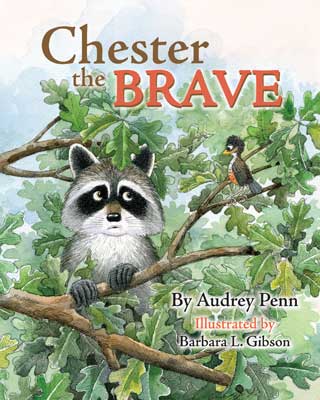
For the youngest readers, ages 6 and up,there’s Night of the White Deer by Jack Bushnell and illustrated by Miguel Co ($16.95, Tanglewood Books). It is a timeless, enchanting story about the appearance of a legendary white deer and a journey into the nighttime sky as a magical deer takes a young boy into the sky through the lights of the aurora and shows him countless other creatures. Was it just a dream or did it really happen? Closer to the Earth is a new addition to “The Kissing Hand” series by Audrey Penn, illustrated by Barbara L. Gibson, as we continue the adventures of Chester Raccoon, begun in 1993 ($16.95, Tanglewood Books.) In Chester the Brave little Chester learns the meaning of bravery and how to overcome his fears with a strategy, Think-Tell-Do. The artwork alone is worth the price, but the story is priceless. Molly, By Golly! The Legend of Molly Williams, America’s First Female Firefighter by Dianne Ochiltree, illustrated by Kathleen Kemly, ($16.95, Calkins Creek/Boyd Mills Press) tells the true story of a wintry day in the early 1800s when New York City’s Fire Company Number 11 is in trouble. A deadly snowstorm is blowing and many of the company’s volunteers are sick. When the fire alarm sounds, who will save the neighborhood? Molly Williams, the company’s cook, that’s who. Readers will learn how fires were fought in early America. Looking and Seeing: Learning to Observe by Carol J. Rosen ($17.00, Bookstand Publishing, softcover) provides photos of animals, insects and flowers by way of teaching the very young how to differentiate between them while learning about them. It will sharpen their ability to spot the differences and appreciate them at the same time. For readers 10 years and older, there’s a historical novel, Precious Bones by Mike Ashley-Hollinger ($16.99, Delecorte Press), a suspense-filled story set in 1949’s rural Florida that has all but vanished. Lori and her father, Nolay, who is part Miccosukee Indian, live on the edge of a swamp and when two men are found dead within two weeks, Nolay is accused. Lore, nicknamed Bones, sets out to investigate what really happened. This is a riveting coming-of-age novel that even adults would enjoy.

I am a great fan of American Girl and the many fine books it publishes for girls of all ages. Years ago I created a media spoof called The Boring Institute and for twenty years it made news with its lists of the most boring celebrities, films and television, so naturally my eye was caught by Bored No More! Quiz Book ($9.95) that is filled with ideas and advice to keep any girl, age 8 and up, so busy she won’t have time to be bored. A great investment for any parent as is Slumber Wonders: Make All Your Slumber Party Dreams Come True ($9.99) filled with advice on planning and throwing eight dream sleepovers, including shopping lists. I Love Art will bring out the artist in every little girl including some colorful stickers. In a similar fashion there’s Picture Yourself Here: Turning your favorite photos into silly scenes using the ideas and punch-outs inside ($12.99).

The teen years can be filled with all manner of fears that can inhibit their enjoyment and two books arrived recently that will be welcomed by parents of youngsters who are shy or just not getting the most of these development years. Both are published by New Harbinger Publications and are written by psychologists who help teens overcome these common problems. Get Out of Your Mind & Into Your Life for Teens ($15.99, Instant Help Books, a division of New Harbinger, softcover) has three authors to offer essential skills to teen readers to help them cope with anxieties and develop emotional intelligence to avoid or move passed unhealthy behaviors and simple self-doubt. It’s about self-acceptance and the lessons that counter some of the attitudes imparted by our culture. The Shyness & Social Anxiety Workbook for Teens ($16.95, Instant Help Books, softcover) by Jennifer Shannon will prove especially helpful for those teens who will learn how to grow more independent and focus on their social development if they suffer from too much social anxiety and shyness. It can provide a real breakthrough. Both books are written and illustrated in ways that connect directly to teen readers and are illustrated with cartoons in which they will see themselves, plus exercises and worksheets to develop their self-confidence.

Novels, Novels, Novels

Sometimes I think everyone wants to write a novel and, these days, anyone can get theirs published. I rarely take note of self-published novels, preferring to rely on those from large to small publishing houses whose livelihood depends on selling what they offer. Here’s a look at a selection from the deluge I receive every month.

The Lighthouse Road by Peter Geye ($23.95, Unbridled Books) addresses the universal themes of family loyalty, the need to be loved, and greed. Geye's novel has been compared with “Snowfalling on Ceders” and “The Shipping News." In his novel he uses the sea as the background, telling a story of Thea Eide, a young Norwegian immigrant who seeks a new life outside Duluth in the 1890s. still shocked to learn that her resident family has fallen apart and that she is adrift. It is an intricate and compelling novel that takes you to another time, but explores challenges common to every generation. Lovers of fantasy will enjoy Steven Erickson’s Forge of Darkness: Book One of the Kharkanas Trilogy ($27.99, Tor) as further proof of this author’s mastery of the genre. Filled with characters, it is an epic table of the fall of he Malazan Empire and involves the forging of a sword unlike any other for use in a devastating civil war, bitter family rivalries, wild magic, and unfettered power. Andrew Britton’s debut novel, “The American” won raves as an accomplished writer of internationally thrillers and he returns with The Operative ($25.00, Kensington) about a secret agent who is finally setting into a peaceful life after more than a decade on the deadly front lines of the war on terror. That is shattered when Ryan Kealey is swept into a merciless terror attack during a charity gala in downtown Baltimore. Dozens are death or injured, including the wife of CIA Deputy Director John Harper who turns to him as the one man with the expertise and freedom from government interference to pursue the perpetrators. He begins to uncover an unimaginable conspiracy and you won’t be able to put this novel down until the last page.

As usual, the bulk of the novels I receive are softcover books, so let’s look at some recent arrivals.

Just in time for Halloween, there’s Laura Levine’s Death of a Neighborhood Witch ($24.00, Kensington) and entertaining story, part of the Jaine Austin mysteries, is set in Beverly Hills where freelance writer and chocoholic, Jaine, battles crime and cellulite. One of her neighbors is Cryptessa Muldoon and when she is murdered, Jaine becomes the cop’s prime suspect. It’s great fun to read and the big question is whether Jaine will make it to Halloween without eating all the candy she’s bought for trick or treaters.

Shades of Orange with Many Greens is subtitled “visions of Paul Cezanne” by Walter E. Thompson ($15.95, Langson Street Press) an art historian and painter in his own right. Drawing on Cezanne’s life, the novel brings to life the erratic and bizarre character of the artists who, for 56 years, withstood intense criticism and constant rejection for the works that now costs millions to purchase. Not until late in his life was he hailed as a great impressionist. Thompson captures his travails the reader is taken to the era and the artist. The Miracle Inspector by Helen Smith ($12.99, Tyger Books) is a literary dystopian thriller set in the near future. England has been partitioned, women are not allowed to work outside the home, the arts are suppressed. A young couple, Lucas and Angela, try to escape London with disastrous consequences. The author has already earned plaudits for her previous novels and will no doubt earn more with this intriguing new one. We’re happy to see Juliette Fay’s new novel, The Shortest Way Home ($15.00, Penguin Books). Sean Doran has spent the last two decades working as a nurse in disaster-stricken countries around the world. When he makes one of his infrequent trips back to his boyhood home in Massachusetts he’s planning to be there for a few weeks at most, but finds the household on the brink of crisis. His Aunt Vivvy who raised him and his siblings after his mother died is showing signs of dementia and his sister Deirdre has moved to New York leaving no one to look after Sean’s 111-year-old nephew, Kevin. He finds himself playing a reluctant parent while falling in love with a woman from his past. Suffice to say there is plenty of drama here.

An interesting novel Aloha, Mozart by Waimea Williams ($18.95, Luminis Books, softcover) tells the story of young girl born into an impoverished Hawaiian family with the gift of a beautiful voice who rise in the world of European opera, attracting the attention of powerful men. In 1968, in Salzburg, Austria, she must confront the Nazi heart of the classical music scene in which she finds herself and, on the evening of her brilliant premiere with Soviet tanks threatening to invade the city, she must choose between recognition and the world stage or leave the city with her life and her conscience intact. Music lovers in particular will enjoy this one. In Gone to the Forest by Katie Kitamura ($15.00, Free Press) tells the story of a fiercely beautiful colonial country teetering on he brink of civil war. The novel is a gripping, psychologically intense story about the destruction of a family, a farm, and a country. The nation is not identified but embodies a bit of Kenya, Argentina, India and Zimbabwe. The author’s debut novel in 2009, “The Longshot”, won raves and this one is likely to do the same.

That’s it for October. Come back next month for a look at the best in non-fiction and fiction that may be overlooked elsewhere. And tell your book-loving friends, family and coworkers about Bookviews.com!

Thursday, August 30, 2012

Bookviews - September 2012

By Alan Caruba

My Picks of the Month

If there is one book a voter should read before they go to the polls in November, it is Dr. Paul Kengor’s The Communist: Frank Marshall Davis—The Untold Story of Barack Obama’s Mentor ($27.00, Threshhold, a division of Simon and Schuster). Many of the mysteries of the decisions the President has made since taking office become clear in the light this book sheds on one of the most formative persons in Obama’s life. At the invitation of his grandfather, Davis was asked to mentor the adolescent and teenaged Obama during his youth in the 1970s, in Hawaii. Frank Marshall Davis was a member of the Communist Party USA from about 1943 and dedicated to the success of Stalin’s Soviet Union. As Dr. Kengor notes, “He felt a connection to Frank that he painfully concedes he was unable to find in his mother, father, stepfather, grandfather, grandmother, siblings or anyone else who comprised his origins and life journey.” To hide Davis’ true identity, Obama’s memoir, “Dreams from my Father”, refers to him as “Frank” some twenty times by name and as a friend of his family. Dr. Kengor is the author of “Dupes”, a book about the way the Communist Party and its Soviet managers misled Americans, some of whom became secret agents and sympathizers holding positions of power in the FDR, Truman, and Eisenhower administrations. One cannot understand the history of that era without reading “Dupes.” In a similar fashion, one cannot understand Obama without reading his biography of Frank Marshall Davis

All things Greek seems to be a trend this month. I am happy to note that Stephen Greenblatt’s Pulitzer Prize and National Book Award winning book, The Swerve: How the World Began Modern ($16.95, W.W. Norton, softcover) is now available in a softcover edition. It is the story of the discovery of “On the Nature of Things”, a philosophical epic written circa 50 BC by a Roman poet and philosopher Lucretius and the story as well of Poggio Bracciolini who, in 1417, found the book in a German monastery and made it possible for its views to influence the leaders of the Renaissance and many others including our own Thomas Jefferson. It is a visit to a time seven centuries ago that was, in turn, influenced by the book written five centuries earlier. Anyone who loves history in general and the history of ideas in particular will love this book. Serendipitously, Michael K. Kellogg’s The Greek Search for Wisdom ($28.00, Prometheus Books) has also been published. The philosopher Alfred North Whitehead once said that all of Western philosophy was “but a series of footnotes to Plato.” It is a remarkable story of how the Greek philosophers, poets, dramatists, and historians left their mark on our world as the author looks at ten outstanding examples of Greek wisdom and provides portraits of the men who contributed to it. I recommended Stephen Mitchell’s translation of Homer’s epic poem, The Iliad when it was first published by the Free Press and I am pleased to report that is now available in paperback ($15.99). Tolstoy called it a miracle and Goethe said it astonished him. The story of Achilles and Patroclus, Hector and Priam, has dazzled readers for 2,700 years. Mitchell’s translations of classics from Gilgamesh to the poetry of Rilke are wonders in themselves, selling thousands of copies, and this one is filled with energy and simplicity, grace, and the pulsing rhythms of Homer’s original text.


Iran is very much in the news and has been since the Islamic Revolution in 1979. Its declared enemies have been the United States and Israel. At this writing, it very much looks like there will be a military action to thwart its intended objective of acquiring nuclear weapons. As such, we read a lot about the ravings of his leaders, the supreme leader, an ayatollah, and the clownish Mamoud Ahmadinejad, its president. Jamie Maslin, a travel writer, though warned against going to Iran, hitchhiked his way there and, in Iranian Rappers and Persian Porn: A Hitchhiker’s Adventures in the New Iran ($16.95, Skyhorse Publishing, softcover) we learn about the people of Iran who, it turns out, pretty much hate the authoritarian government that holds them in its grip through terror. A Brit, he is warmly welcomed by ordinary Iranians who introduce them to the many ways they defy the regime, where Christian churches are national heritage sites, where alcohol is sold on the black market and, in the process, takes us into an Iran few in the West even know exists. It is a reminder that it is not the Iranian people who are our enemy. It is the fanatical Islamic regime that holds them prisoner in their own nation.

The subject of the scandals that have plagued the Catholic Church has been in the news for many years now and Dr. Angela Senander, an associate professor of theology at Merrimack College in the Archdiocese of Boston, has written Scandal: The Catholic Church and Public Life ($14.95, Liturgical Press, softcover) that Catholics and others will find of great interest. It arrives as the Church will celebrate the fiftieth anniversary of the Second Vatican Council in October and a special “Year of Faith” called for by the Pope. And it arrives as the Church in America finds itself in conflict with the Obama administration over aspects of Obamacare that require its institutions to act against its fundamental belief in the sacredness of human life. “From political life to higher education to healthcare,” writes Dr. Senander, “the term ‘scandal’ has often served as a conversation-stopper among Catholics and the larger public. I hope this book will reverse that dynamic—and turn reflection about scandal into a conversation-starter.” The best cure for a problem is to shine light upon it.

For fans of the utterly bizarre, I recommend you pick up a copy of Ripley’s Believe it or Not: Download the Weird ($28.95, Ripley Publishing), ample proof that people are the strangest creatures on Earth. This large format, coffee table book filled with pages that are extravagantly illustrated with photos. There’s one of a 14 year old girl with a tongue that measures three-and-a-half inches (you have to see it to believe it). The pages devoted to parasites from tapeworms to ticks will gross you out and there are too many other strange things that, no doubt, will provide hours of fun. Matt Lamb has authored Dead Strange ($12.99, Zest Books, softcover) that offers “the bizarre truths behind 50 world-famous mysteries.” In a short, entertaining book he looks at everything from the Big Bang theory to the Loch Ness Monster, Bigfoot to alien abductions and crop circles. This is a fun way to learn about the common myths and claims that people either believe or disbelieve. Lamb comes down on the side of commonsense and facts in every case.

I am the very antithesis of the environmental movement because I concluded long ago it was not about the environment but rather a means to attack our economic system, our use of energy, and an obstacle to growth. That said, Charlotte Gill, the author of Eating Dirt: Deep Forests, Big Timber, and Life with the Tree-Planting Tribe ($16.95, Greystone Books, softcover) has written an interesting story of a woman who has spent twenty years working as a tree-planter. While I disagree with her views on the timber industry, I admire her devotion to trees and to replacing those cut down to meet our need for wood in all its manifestations, not the least of which is shelter. The author is a skilled writer and is passionate about her subject, having planted a million trees. Her story will no doubt please many who share her views.

September is the month youngsters return to school and one of the best books you can give a student age 8 and up is The World Almanac® for Kids 2013 ($13.99, World Almanac Books, softcover). The Almanac chronicles the highlights of 2012 with items about its notable people, places and events, alongside of lots of new, fascinating facts. It is a great homework helper, reference, and is unfailingly entertaining. Every page is a marvel of design, using all manner of art and photography as it runs the gamut of topics that include the world’s nations, technology and computers, energy, animals, music and dance, movies and television. Any young reader with an interest in the world will benefit greatly from this book.

The Subject is Food

Thomas Jefferson, the author of our Declaration of Independence, was a man of many interests and one of them was food. He found American food to be rather bland and, when he was asked by Congress in May 1784 to negotiate with European powers, he choose to live in Paris and, in the process, to amass as much knowledge of French cuisine as possible. He was aided in this by James Hemings, the brother of his slave and lover, Sally Hemings, who joined him and studied under the great chefs of Paris in return for gaining his freedom. The story is told in Thomas Jefferson’s Crème Brulee ($19.95, Quirk Books) and for anyone who loves fine dining and wine, it will prove a real delight. Jefferson found time to study agriculture and winemaking while living in France and when the two men returned, they brought with them champagne, designs for pasta presses, seeds, cheeses, and—yes—crème brulee.

I love barbeque and, if you do as well, you will surely enjoy Bob Devon’s The Complete Wood Pellet Barbeque Cookbook ($17.95, Square One Publishers, softcover), a comprehensive guide filled with tips, tricks, and recipes for wood pellet grill users. Starting with the basics, the book takes one chapter by chapter into topics that include spice blends, marinades, and sauces to maximize the flavors of beef, chicken, pork, fish, turkey, and more. This lifts grilling beyond franks and burgers and opens up a whole world of dining pleasure. From the same publisher comes The Ultimate Allergy-Free Snack Cookbook by sisters Judi and Shari Zucker ($15.95, Square One Publishers, softcover) and it will prove welcome by the more than twelve million people diagnosed with food allergy problems; the majority of whom are children under the age of 18 and, for them, many parents are preparing their own snacks. This duo have been writing cookbooks since they were 17 and this latest contains more than a hundred kid-friendly recipes that will satisfy their love of snacks and provide a healthy alternative.

My late Mother, Rebecca, taught haute cuisine for more than three decades and was an internationally recognized authority on wine. She used to say “You are what you eat.” She read widely about nutrition. She would have enjoyed Dr. William J. Walsh’s new book, Nutrient Power: Heal Your Biochemistry and Heal Your Brain ($29.95, Skyhorse Publishing). It is about a nutrient therapy system that postulates that nutrient imbalances can alter brain levels of key neurotransmitters, disrupt gene expression of proteins and enzymes, and cripple the body’s protection against environmental toxins. These imbalances, says Dr. Walsh, express themselves as behavioral disorders, autism, and even Alzheimer’s disease. If the nutrient deficiency can be identified then a drug-free therapy can be initiated to correct the imbalances. It makes a lot of sense to me and if you are looking for answers to behavioral problems in yourself or others you know, this book may hold the key to solving them.

History of the Wild West

The old West, a relatively brief period at the end of the 1800s and early 1900s, nonetheless exerts a grip on the American imagination as no other period. It has been the subject of countless films and, of course, books. There are historians who focus on the era and, in particular, the colorful, if deadly, train robbers and others.

We can thank the University of North Texas Press for keeping their memory alive. Three new books provide hours of pleasure with The Deadliest Outlaws: The Ketchum Gang and the Wild Bunch by Jeffrey Burton ($24.95, softcover), He Rode with Butch and Sundance: The Story of Harvey ‘Kid Curry’ Logan by Mark T. Smokov ($29.95), and The McLaureys in Tombstone, Arizona: An O.K. Corral Obituary by Paul Lee Johnson ($29.95).

After Tom Ketchum was sentenced to death for attempting to hold up a railway train, his attorneys argued that the penalty was cruel and unusual for such a crime. After the appeal failed he became the first and only thief to be executed for the crime. When hanged in 1901, his head was torn away by the rope as he fell from the gallows. Born near the fringe of the Texas frontier, he was orphaned at age nine and raised by older brothers. He became a ranch hand and trail driver, murdered a man, and fled. After returning he and his brother Sam killed two men in New Mexico and, with two others, the Ketchum gang was born.

Kid Curry has finally received his due as a member of the Wild Bunch led by Butch Cassidy and the Sundance Kid. He was an ugly piece of work with a violent temper made worse by alcohol, though not the bloodthirsty killer others have claimed. His biographer asserts that Curry planned and carried out the gang’s train robbers and that there is no concrete evidence that Cassidy ever participated. The fate of Tom and Frank McLaury was to be gunned down by the Earp brothers and Doc Holliday at the O.K. corral. Both were exonerated though the shootout would continue to take several more lives in its wake. Individually or all three books offer a picture of what life was like on the frontier.

Children’s Books, the Ideal Gifts

In a world filled with bad news, impressionable children can grow up without a realization that it is filled with many good people. That is why I especially liked Lynea Gillen’s Good People Everywhere ($15.95, Three Pebble Press, a laminated hardcover) beautifully illustrated by Kristina Swarner. In simple language and pictures, it reinforces the understanding that, while bad people may make headlines, good people go about their lives by useful and helpful all around the world. The author has been a school teacher and counselor for more than thirty years. Ideal for those ages 3 and up to about 6 or 7. I heartily recommend it.

One of my favorite publishers of children’s books is Kids Can Press. Its fall catalog is filled with wonderful books to entertain those so young the books can be read to and those who are early readers. Among them is Susan Hood’s The Tooth Mouse, illustrated by Janice Nadeau ($16.95). It is based on the French version of our tooth fairy story in which a mouse leaves money in exchange for their baby teeth. When the old Tooth Mouse announces it is time to name her successor, Sophie wants to be selected, but she must fulfill three tasks to prove she is brave, honest and wise. Toads on Toast by Linda Bailey and illustrated by Colin Jack ($16.95) is a very funny tale of Momma Toad’s efforts to save herself and her babies from ending up on Fox’s frying pan. It is pure fun from beginning to end as she outwits him.

Four Kids Can books present their stories comic book style for kids ages 4 to 8, pre-school to third grade. They are Binky Takes Charge by Ashley Spires; That Spooky Night by Dan Bar-el, illustrated by David Huyck; Luz Makes a Splash by Claudia Devila (all $16.95) and Scaredy Squirrel Prepares for Christmas by Melane Watt ($17.95). Each offers a story to capture the imagination of a young reader as well as teach a few useful life lessons. For a dash of reality, there’s poet Marilyn Singer’s A Strange Place to Call Home ($16.99) illustrated by Caldicott medalist Ed Young. Kids love animals and fourteen different ones are described along with the dangerous places that are their habitats. It is a testimony to the incredible diversity of life and its adaptability.

For youngsters in a bilingual family that speaks and reads both English and Spanish, there’s Healthy Foods from A to Z (Comida Sana de la A a la Z) by Stephanie Maze and photos by Renee Comet ($15.95, Moonstone Press) both of whom have many books to their credit. The book features “faces” made from the various fruits and vegetables that offer a great way for a youngster, age 4 to 8, to learn about them. It also includes projects and information for children and their parents. If I had as Many Grandchildren as You by Lori Stewart ($19.95, Palmar Press) is a great gift for grandparents to give to their grandchildren with his lively, warm-hearted verse that offers an optimistic message illustrated by excellent photography. It is written for children looking for some adventuresome fun and for grandparents finding their special role as makers of memories, as it sparks imagination and creativity.

I have long been a fan of the books published by American Girl. Many are based on characters set in a particular era. A new one is Caroline Abbott and the series set in the time of the 1812 war begins appropriately with Meet Caroline growing up two hundred years ago with a story that shows girls how to stay steady and believe in themselves during difficult times. Caroline is nine years old and lives near Lake Ontario in Sackets Harbor, New York. Her father is a shipbuilder, but British soldiers have captured him and her cousin, so she must navigate the challenges of wartime. It is the first of six historical novels written by Kathleen Ernst and there is also an 18-inch Caroline doll. At $6.95 each, this series will intrigue girls age 8 and older.

If there’s a child or children in your life, beyond the love you give, you should also be giving them books that tell them about their world in which they live, its history, and to pass on good values and knowledge.

Novels, Novels, Novels

The torrent of new novels continues and, as often as not, I have to tell authors seeking reviews that I tend to take note of novels from established publishers, large and small, whose livelihood depends on what they offer. Self-published authors are not only up against what they publish, but against countless other self-published authors all seeking reviews.

An auspicious debut is Flesh ($25.95, Black Heron Press) by Vietnam-born Khanh Ha, set at the beginning of the 20th century when Vietnam was still under the control of France. It begins with the beheading of a bandit in front of his wife and two young sons. The oldest son, Tai, embarks on a mission to retrieve his father’s skull and find a suitable burial site. Then to have revenge on the man who betrayed his father’s trust. It is a journey, too, for the reader into a former time of indentured labor, the back streets of Hanoi with its opium dens, and a vast gap between desperate coolies and the lawless rich. Along the way Tai falls in love as the story twists and turns on its way to revenge as the author explores the human psyche. By contrast, Return to Willow Lake: A Lakeshore Chronicles Book is the ninth novel by Susan Wiggs ($24.95, Harlequin) already a bestselling novelist with a large following. It takes the reader to the Catskill town of Avalon on the shores of Willow Lake for a summer of laughter and tears, of old dreams and new possibilities. It reminds us of how important home is. Sonnet Romano seems to have life figured out. Her career at UNESCO is on the rise and she has just won a Hartstone fellowship that will send her to work overseas. Her boyfriend, the campaign manager of her father’s senate race, is happy for her as well. All this comes apart when she learns her mother is unexpectedly expecting and the pregnancy is high risk. At which point Sonnet puts everything on hold to head home. This is a big juicy story of interesting characters and a plot that keeps you turning the pages.

Joanne Harris, the author of “Chocolat” that was made into an Oscar-nominated film, and eleven other bestselling novels, is back with a sequel, Peaches for Father Francis, ($26.95, Viking) that is sure to please the readers of “Chocolat” in which eight years have passed and Vianne is summoned back to the village of Lansquenet where she used to run her chocolate shop. Returning with her daughters, Anouk and Rosette, is seems as if everything and nothing has changed in the small village. The relationships with your one-time best friend, Josephine, is still in an ambiguous with her lover, Roux, and is the mother of a son born just days after Rosette’s birth. Her adversary Father Francis Reynaud still feels persecuted and misunderstood, but the most obvious change has been the arrival of a large number of Moroccans and the tensions this has caused. Harris is a master of exploring such relationships and readers of “Chocolat” will surely enjoy her return to this story after the passage of time. James Phoenix makes his debut with Frame Up ($27.95, Grey Swan Press) as we go along with a private eye, Fenway Burke. Need I say it is set in Boston? It is a classic hardboiled detective novel with a set of memorable characters that includes a huge fellow nicknamed Tiny who runs the city’s largest bookie operation. Toss in a white-bearded lobsterman, and Fenway’s love interest, Megan, a public defender, and you have a story about a kid who’s been framed for murder. Bodies pile up and Fenway discovers he’s up against a violent and talented international hit man. Just staying alive makes this quite an adventure.

Stacks of softcover books keep getting higher every day as new novels arrive. Here is a selection of some of the most recent arrivals.

The Garden of Evening Mists by Malaysian author, Tan Twan Eng, ($15.99, Weinstein Biooks) is the work of a novelists who has already enjoyed much acclaim for his first novel, “The Gift of Rain.” This is an intricate novel about a woman, Teoh Yun Ling, who is retiring from the Supreme Court bench in Kuala Lumpur. Much earlier in her life, she and her sister had been interned in a Japanese slave-labor camp. They had survived the horrors by recalling in exacting detail the exquisite Japanese gardens of Kyoto they had once visited as a family. When she returns to the Cameron Highlands of Malaya, she seeks out Nakamura Aritomo, the exiled former gardener of the Emperor of Japan who has created the only Japanese garden in all of Malaya. She asks his instruction to create a garden in his sister’s memory. Suffice to say there is so much to this novel that it draws the reader into a different era, a different culture, and the interweaving of lives. Jonathan Tropper follows up his breakout novel, “This is Where I Leave You” which was named one of the best of the year by the Washington Post, Los Angeles Times and others. Three years later, Tropper has written One Last Thing Before I Go ($26.95, Dutton) whose central character is 44-year-old Drew Silver, a washed-up musician getting by on royalty checks from a long faded hit song. His ex-wife is about to re-marry and his Princeton-bound daughter, Casey, has just informed him that she’s pregnant. When he learns that his heart needs an emergency, life-saving surgery, he makes a very unusual decision to become a better man if it kills him. There’s wit and insight in this story so it was worth the wait for it.

Here is a quick look at a number of softcover novels worth reading. Two are from Revell, a division of Baker Publishing, are Dying to Read by Lorena McCourtney ($14.99), a fast-paced and witty romantic mystery about a private investigator trying to determine who lives at a particular address. When the house happens to contain a dead body, an ordinary investigation gets complicated. Perfectly Ridiculous by Kristin Billerbeck looks at the life of a normal teenage girl and her struggles to fit it and not be “different.” Her overprotective parents don’t make that easy, especially when a free trip to Argentina includes their decision to go along.

The Other Half of Me by Morgan McCarthy ($15.00, Free Press) is a debut novel set in a mysterious Welsh estate of Evendon and a family whose lives draw you in, especially when the father goes missing and an emotional roller coaster ride begins. Jerry B. Jenkins, by contrast, has written more than 175 books including the Left Behind series. In The Breakthrough ($14.99, Tyndale House Publishers) he continues his “11th Precinct” series. Boone Drake, the youngest bureau chief of the Chicago Police Department’s Major Case Squad, must tackle life’s hard decisions, forced to decide from being there for his family and spearheading a human-trafficking sting in China. There are some real moral choices to be made, but he heads to Beijing to find a young boy before he disappears forever. In a summer filled with forest fires, in One Foot in the Black ($14.95, MCM Publishing) Kurt Kamm tells a coming-of-age story of a young forest fire fighter. Fleeing an abusive father, Greg Kowalski joins a firefighting crew only to suffer the loss of his team’s captain, a man who had become a mentor. While the story is fiction, it is a depiction of how wildfires are fought and the dangers they pose. It pulses with the dangers faced and the inner struggles of anger and loss.

It was perhaps inevitable that someone would parody the bestselling “Fifty Shades of Grey” by E.L. James and “Fanny Merkin”, a.k.a. Andrew Shaffer, has done that in Fifty Shames of Earl Grey ($13.99, Da Capo Press). It is the story of innocent and unsuspecting Anna Steal who meets a young, rich CEO named Earl Grey (yes, same as the tea) who sweeps her off her feet. It probably helps if you read James’ book, but it doesn’t matter because Shaffer’s is a madcap piece of fun though, if I may say so, not everyone’s cup of tea.

That’s it for September! Remember to tell your family, friends, and co-workers about Bookviews.com, the one source for many of the best new books that you may well not read about anywhere else. Then come back in October!