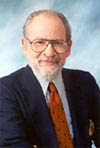
By Alan Caruba
Founding member of the National Book Critics Circle
My Picks of the Month
If you want to understand why there is so much unemployment in America these days or why Red China has the ability to destroy our financial system, you need to read Peter Navarro’s and Greg Autry’s Death by China: Confronting the Dragon – A Global Call to Action ($25.99, Prentice Hall). No single book that I have read in recent years so clearly describes how Red China has set upon a strategy to dominate manufacturing through currency manipulation and the willful refusal to abide by World Trade Organization rules. Allowed to get away with this by the U.S. and other nations, it is acting in a criminal fashion on so many levels that it boggles the mind. The great service this book performs is to reveal what it is actually doing as opposed to the myth that its 1.3 billion population represents a great new market for the U.S. and others. Quite the contrary, most are so poor they cannot afford the products we export. How bad is it?
“In terms of absolute size, America imports almost $1 billion a day more than it exports from China every business day of the year.” That’s a massive outflow of our money and it is often for products that are lethal, ranging from adulterating vitamins and pharmaceuticals, food produced under unsanitary polluted conditions, and products that can burst into flame. This book should be read by every member of Congress, in the White House, and what is left of America’s industrial base. We must disengage from China before there is only a hollowed out America with millions of unemployed citizens.
If you find Pakistan a confusing, unpredictable place, then I recommend you read John R. Schmidt’s book, The Unraveling: Pakistan in the Age of Jihad ($27.00, Farrar, Straus and Giroux). Schmid had a thirty-year career in the U.S. diplomatic service and spent several years stationed in Islamabad. For most Americans, trying to figure out if Pakistan is an ally or not depends on what day of the week it is. Internally, Pakistan is a feudal nation with patronage being the primary relationship between a handful of landed, wealthy families and the rest of the population. Political power is sought in order to be able to dole out favors. The overall welfare of the nation takes a distant second place to that. Moreover, the various governments used the Taliban as a proxy to control its neighbor Afghanistan, only to have them threaten its own government. An obsessive fear of India has dictated most of its foreign policy since it was founded in 1947 and the army is about the only stable factor the nation can depend upon. This book will give you more insight to Pakistan than you could ever get trying to parse the daily headlines.
Grand Theft Auto: How Entrepreneurs Fought for the American Dream ($26.95, New Year Publishing, Danville, CA) by Alan and Alison Spitzer provides more insight into the way two auto manufacturers and the present administration in Washington, D.C. that bailed them out attempted to deprive their franchised dealerships of their businesses and lost. It is the story of how those dealerships, many of which had been passed down from grandparent to parent to children, all involving the investment of huge amounts of money to maintain, all independent businesses who are the actual purchasers of cars and trucks, were arbitrarily told they were terminated. The insanity of the bailout and subsequent bankruptcy proceedings was that the administration’s Auto Task Force was that the dealerships were the lifeblood of the manufacturers, their market. People purchase cars from dealership, not direct from the manufacturers. As the book reveals, there never was a rationale for terminating a business relationship that the states had long recognized as binding. Rather than lose everything into which their family, from father to son, had poured their lives, Alan Spitzer fought back, along with other dealers whom they organized in a grassroots effort, they achieved a miracle; a bipartisan piece of legislation passed by the Congress to restore their rights. The book is a chilling look at the arrogance of Chrysler and General Motors, combined with a task force of bureaucrats with no experience in the auto industry. It is an inspiring look at what can be done when Americans band together and demand justice for themselves, their thousands of employees, and ultimately their customers.
Economics is often called the dismal science and we have seen over the decades since the days of Roosevelt and other presidents that the advice they received from economic advisors was flawed and often very wrong. The U.S. is now the greatest debtor nation on earth, thanks in part from the advice the present occupant of the Oval Office has received. That’s why Keynes Hayek: The Clash that Defined Modern Economics ($28.95, W.W. Norton) is a very worthy book to read. It tells the story of John Maynard Keynes and Friedrick Hayek, two economists whose views of the role government should play in a nation’s economy sharply differed. Keynes favored government intervention to alleviate problems such as unemployment. Hayek favored less government, believing that the free market would solve the occasional recessions that occurred from the over-enthusiasm generally called “bubbles” and all bubbles burst. Keynes was 16 years the senior of Hayek and world famous, but Hayek, late in life, would receive a Nobel Prize for his theories. The failure of the communist Soviet Union proved Hayek correct, just as the rise of totalitarian governments following World War One would as well. Keynes’ legacy is Social Security and Medicare, two giant government programs sucking enormous amounts of money out of the private sector to be maintained. This book is well worth reading to understand our present dilemma and the crisis facing European nations as well.
Last year I reviewed “New Deal or Raw Deal?” by Burton Folsom, Jr. It was and, in my view, still is the best book I have read on this period in the nation’s history that spanned the Great Depression years of the 1930s. Michael Hiltzick, a Pulitzer Prize-winning journalist has written The New Deal: A Modern History ($30.00, Free Press) of the same period 80 years ago and come to some very different conclusions. Indeed, his take on that period and especially on Franklin D. Roosevelt are quite different from Folsom’s. In many ways it is an apologia for FDR, a rewrite of the many other books that examined this period that generally assert that FDR’s administrations actually extended and worsened the Depression with its hodge-podge of programs and its taxation policies. Astonishingly, Hiltzick asserts that FDR was in fact a conservative as were his remedies. Hiltzick has labored hard and produced a large book that is the reverse mirror image of the way most others perceived the Depression.
For those who seek new knowledge and new insights, to challenge their intellect, two such books will surely do so. There is probably no single threat to the future of America than the “global” efforts to bring it and all other nations under the control of organizations like the United Nations, the EU and the International Criminal Court. John Fonte poses the question Sovereignty or Submission: Will Americans Rule Themselves or be Ruled by Others? ($25.95, Encounter Books) A PhD in world history and director of the Hudson Institute’s Center for American Common Culture, Fonte examines the way “globalists”, including America’s leading progressive elites, are working to establish a “global rule of law.” We are seeing efforts to re-interpret the U.S. Constitution and impose so-called global law in its place and the result can only be a day on which Americans awake to discover that all the protections they have taken for granted have vanished. In many examples drawn from around the world, this book issues a warning that must be heeded. Former U.S. Ambassador to the UN, John R. Bolton, says “John Fonte’s comprehensive dissection of the global governance impulse should be required reading for anyone interested in preserving America’s constitutional freedoms.” The other intellectual challenge is found in Five Foundations of Human Development by Errol Gibbs and Philip Gray ($25.95, Author House, softcover). It is the result of eleven years of research and writing, and the combined travel experiences to 36 countries. It explores the question of whether our materially driven lives undermines the spiritual purpose of our existence. The authors, both Christians, examine five foundations, spiritual, moral, social, intellectual, and physical that define our existence. Together they have spelled out a blueprint for the survival of humanity. Christians will find much to enjoy in this book as they are its intended readers.
Kill the Messenger: The Media’s Role in the Fate of the World by Maria Armoudian ($25.00, Prometheus Books) explores a question of great importance insofar as print and broadcast media have played a role in three deadly conflicts, Nazi Germany, the former Yugoslavia, and Rwanda. The author documents how the media were used to spread hate that resulted in the Holocaust and the genocides in the latter two nations. Then she discusses how the media acted constructively, citing its role in the peace process in Northern Ireland, rebuilding democracy in Chile, and bridging ethnic divides in South Africa. This is an interesting exploration of how the media interact with psychological and cultural forces.
Offbeat, Interesting Books
I have never been in a fight in my life, but I have come close. For most of us, the prospect is slim unless we live in places where fights are common. For those people, I recommend How to Win a Fight: A Guide to Surviving Violence by Lawrence Kane and Kris Wilder ($17.00, Gotham Books, softcover) both of whom are veteran martial arts instructors. The lessons the book offers begin with knowing how to avoid violence. In the military, it’s called situational awareness, spotting trouble. Other lessons include how to stave off violence ranging from non-lethal to lethal force. There are self-defense tips and seven mistakes to avoid in a fight. I would recommend this book to everyone for its advice and the peace of mind that comes with it.
For film lovers, the publication of Leonard Maltin’s 2012 Movie Guide ($20.00, Plume, softcover) is an annual treat, filled with information of the many new films that have debuted in the previous year and tons of news about virtually every film including the older classics. The 2012 edition has nearly 17,000 entries that include more than 300 new ones, plus listings of more than 12,000 DVD and 12,000 videos. The guide includes an updated index of leading performers and directors, along with Maltin’s all-new theatrical recommendations. This book is virtually indispensable for anyone who loves films, old and new. Hollywood, the military, even criminals along withother aspects of our culture have gifted us with all manner of phrases that have been incorporated into our daily conversations. Alan Axelrod has gathered them together in The Cheaper the Crook, the Gaudier the Patter: Forgotten Hipster Lines, Tough Guy Talk, and Jive Gems ($12.95, Skyhorse Publishing, softcover) that is great fun if you’re a language buff. Terms like “drugstore cowboy”, “button man”, “Glad rags”, and many more can be found in its pages, gathered from World Wars One and Two, the Depression, prohibition, and the Jazz Age.
With the kids back in school, parents often find themselves being asked questions about subjects they have long forgotten from their school days. Two books have some fun with this. I Used to Know That: Geography – Stuff Your Forgot from School by Will Williams and Caroline Taggart ($14.95, Reader’s Digest) covers a wide range of geography-related topics in easy, short takes that are an entire education that can be easily read and enjoyed to the point where your kids and others will think you’re some kind of genius. This makes learning fun! Why Read Moby-Dick? By Nathaniel Philbrick ($25.00, Viking) answers a question that even grownups ask. Indisputably one of the great American novels, the length and its esoteric subject matter are daunting. Philbrick loves the novel and he skillfully navigates Melville’s world, providing insight to the book’s humor and unforgettable characters, finding the thread that binds Ishmael and Ahab to our present time. Who knows? You may actually read the novel!
Biographies, Etc
My friend, Dr. Alma Bond, was a psychoanalyst for 37 years. While she still has a limited practice, based on the Freudian theories, she has in more recent years devoted herself to writing books that are quite distinctive and which demonstrate her powerful imagination. Her latest will no doubt fascinate fans of the late Jacqueline “Jackie” Kennedy who became an icon of the 1960s when her husband Jack was President until his assassination. The public could not get enough of her. She was beautiful, intelligent, the mother of two, married into the already famed Kennedy clan.. The assassination changed much. She married the Greek shipping magnate, Aristotle Onassis and when that marriage failed, her companion became a stout, adoring Wall Streeter, Maurice Templeton. She took a position as a book editor and, at the age of 63, non-Hodgkins lymphoma took her life. Throughout her life she protected her privacy, but now Dr. Bond has written a unique “autobiography” for her, Jackie O On the Couch, ($21.99, Bancroft Press) that she never wrote herself, bringing the events and personalities in her life to the reader in her voice. This is an audacious literary project, based on fact, but a work of fiction and Dr. Bond pulls it off. Anyone who lived through those years and was a fan of Jackie will greatly enjoy this book.
Lovers of rock and roll and fans of the Eagles are going to want to find Eagles: Taking it to the Limit by Ben Fong-Torres in their Christmas stocking. ($30.00, Running Press). Just out this month, it’s a large format, coffee table book to celebrate the 40th anniversary of the band’s formation. It’s been a long trip from the bar of the Troubadour on Santa Monica Boulevard in 1971 to the Rock and Roll Hall of Fame. The author is renowned for his many books on the music scene and the book is handsomely and extensively illustrated with many photos from the past four decades, along with an excellent text. Responsible for many classics, “Peaceful Easy Feeling”, Desperado”, “Hotel California” and “New Kid in Town”, the band spent ten years together living the rock and roll dream, but in addition to the constant touring, there were the usual tensions and fights that go with that lifestyle. It’s a great story, captured between two covers.
Coming in November is Walk Like a Man: Coming of Age with the Music of Bruce Springsteen by Robert J. Wiersema ($16.95, Graystone Books) that is a rock journey through twenty years of the author’s life set to the Springstein’s music. The author is emblematic of Springstein’s fans, seeing him as the paragon of all that is cool in the world of rock and roll. He brings good credentials to the book having authored two novels, been a reviewer and independent bookseller. Immersed in Springstein’s music, he is the reason the word “fan” is rooted in the word “fanatic.” This is an autobiographical tale of someone who, like others, marked the highs and lows of his life with Springstein’s music. It is the story of his coming of age along with many others, celebrating the music of his favorite performer.
Also from the world of entertainment, for fans of Lucille Ball there’s I Love Lucy: A Celebration of All Things Lucy by Elizabeth Edwards ($30.00, Running Press), a big coffee-table book out this month for the 60th anniversary of her television show and what would have been Lucy’s 100th birthday. It is filled with everything one could imagine or hope for regarding the show and its star, photos, character bios, music lyrics, and even recipes featured on the show. Many of the unforgettable episodes are presented in thumb-nail sketches. The author has worked with the Arnaz family since 1992 and this is the culmination of two previous Lucy-related books. For those of a certain age who look back fondly on this television icon and the laugh-filled show that is still in re-runs today, there’s a lot to enjoy.
The name Leonardo Da Vinci is so well known that we give it little thought beyond the fact that he was a remarkable figure in history. Indeed, we may not even know what his contributions were! Stefan Klein has corrected that with Leonardo’s Legacy: How Da Vinci Reimagined the World, now in paperback ($16.00, Da Capo Press). A painter, sculptor, scientists, inventor, and writer, his discoveries changed history. With each chapter, another invention and another facet of Da Vinci’s endless imagination are explored. Klein is a leading European science writer and anyone with a love of history and science will quickly find themselves drawn into a distant time in which this giant intellect and talent transformed the world in ways we still experience today. As noted last month, Paul Johnson has written Socrates: A Man for Our Times ($25.95, Viking), now officially on sale. Johnson is a noted historian and he brings the Greek philosopher and the times in which he lived to life. It’s a visit to the fifth century B.C. and the life of a man whose thoughts helped shape our actions and our understanding of the body and soul. The author has taken an ancient, iconic figure and made of him a living, breathing individual, albeit and intellectual giant. All of Western civilization is indebted to him.
A very different and thoroughly delightful memoir is found in Zelda, the Queen of Paris: The True Story of the Luckiest Dog in the World by Paul Chutkow ($22.95, Globe Pequot Press). A journalist, Chutkow was working in India when Indira Gandhi was in charge. Zelda adopted Chutkow and became a steadfast companion to the author, his wife, and newborn son because of her “boundless courage, humor and high spirits.” The Hindus believe in reincarnation and Zelda may have been someone with the same traits. She came along when the family was reassigned to Paris where, at first, Parisians considered Zelda a ragamuffin, but she developed a taste for Camembert cheese, warm croissants, and homemade borscht. When Zelda helped police apprehend a burglar, she became the “Queen of Paris” and “very picture of European refinement. In time, she journeyed to America as well. This is a story anyone who has ever loved a dog will love.
Getting Down to Business
Once past Labor Day people get serious about doing business, hoping to gin up profits before the end of the year. There are, of course, always books ready to offer all manner of advice.
Building A Winning Business by Tom Salonek is useful for its pragmatic approach ($9.95, softcover, http://www.intertech.com/) as it focuses on 70 “takeaways” that will improve anyone’s management skills. Based on his own experience and his father’s advice on how to work with people, the author shares how he grew his own company from $2 million in annual revenue to more than $10 million, despite the burst of the technology bubble and the worst recession of our time. He offers succinct, good advice on the fundamentals of hiring and managing employees, identifying top talent, and weeding out those with poor performance. I have seen a lot of books filled with management advice, often twice or three times as thick as this one, but this book delivers the goods. Joe Banda asks whether you are a leader and then answers with his book, You are a Leader ($14.95, Langdon Street Press, softcover). A slim volume, the book uses historical and political examples of why anyone can become an effective leader by tapping qualities they have, believing in themselves, and taking charge. It is a conventional book of unconventional wisdom that explores ten intangible qualities that exist in everyone.
Creating the right environment for work starts with the office and Smart Office Organizing: Simple Strategies for Bringing Order to Your Workspace by Sandra Felton and Marsha Sims ($13.99, Revell, softcover) will prove very helpful to those whose offices are a mess with piles of paper, files that need organizing, and represent the pressures of time and project management. It is filled with advice on how to use organizational tools, taking advantage of electronic advances, and to maintain control. If you or someone you know has this problem, this book is the answer. It seems obvious, but Michelle Tillis Lederman has written The 11 Laws of Likeability ($16.95, Amacom, softcover) that takes a look at the fact that online job boards and LinkedIn still do not substitute for face to face actual conversations and are the key to finding and keeping a job. An expert on effective business and interpersonal communications, the author shows how networking can be easy, enjoyable, and beneficial to job goals. Citing a Forbes.com survey that said 41% of more than 59,000 new employees credited personal networking as a critical job-hunting method. Her book is full of advice on how to develop the skills necessary. I have a friend who has built a business on such personal contact and it works.
In these times lots of people are paying close attention to their personal finances and to help them Paul A. Tucci has written The Handy Personal Finance Answer Book ($19.95, Visible Ink Press, softcover). His book avoids jargon while providing some good, fundamental advice anyone can apply. Combining recent data and findings, the book features financial information suitable for a wide range of ages and is particularly useful to the neophyte, perhaps just out of college or starting a new career or business. These are things rarely taught in school at any level. How do you balance your check book? What are the most common mistakes investors make? What should one consider before investing? And much, much more. To get real control over your financial life and your future, this is an excellent book. A useful book for those who have over-used their credit cards is Harvey Z. Warren’s Drop Debt: Surviving Credit Card Hell Without Bankruptcy ($14.95, Greenleaf Book Group Press, softcover). Warren, a debt relief expert has helped thousands of families find relief from debt and has written a book that will help the reader negotiate with creditors, explains why minimum payments on your credit card debt can hurt your credit rating, how to use a debt-settlement company, and much more. This is the kind of critical information that those in debt need when they are feeling the pressure and often desperate to find a way out. Instead of making more bad decisions, the book steers the reader in the right direction.
Eat, Drink & Be Merry
Naked Wine: Letting Grapes Do What Comes Naturally by Alice Feiring ($24.00, Da Capo Press) reminded me of my Mother, an international authority on wines and the way she would tell her students that wine naturally throws off all impurities during the fermentation process and why it offers so many benefits to health. The author, a food and wine journalist, tells of a growing movement to champion natural wines that avoid any additives. She’s no fan of many California and other wines she regards as “over-ripe, over-manipulated, and over-blown.” She worries that wine has become “an industry”, but the fact is that there has long been a growing global demand for wine and the insistence on “organic” wine and food ignores the obvious fact that food is organic and combined to enhance its taste. That’s why, for example, we love sauces. When it comes to wine, quality and taste always comes down to the grapes and the soil in which they are grown. In the end, the author comes off as a wine and food snob.
For those vegetarians and vegans out there, Brandan Brazier has written Thrive Foods: 200 Plant-Based Recipes for Peak Health ($20.00, Da Capo Press, softcover). It is also fairly idiotic in that he is so environmentally correct, the author discusses what foods use the least amount of natural resources to produce, require little “of our dwindling water supply, and cause a minimal amount of pollution.” Does any really care about such things when putting together the evening meal? Does it matter to anyone that farmers are probably more concerned about such things than you? They are not in the business of running up the water bill if Mother Nature will provide some rain. They are not in the business of polluting the food crops on which they depend. That said, there are some 200 recipes in this book, but you’d probably enjoy even tastier ones if you bought another cookbook. That brings me to Joanne Fluke’s Lake Eden Cookbook ($18.95, Kensington Publishing Corp). Fluke is best known for her mysteries featuring Minnesota bake shop owner Hannah Swensen. The cookbook is a compilation of recipes from mysteries and some vignettes involving the fictional Lake Eden characters. Fluke’s novels have names like “Cherry Cheesecake Murder” and “Key Lime Pie Murder.” All very entertaining for sure, particularly for fans of her novels, but the recipes are mouth-wateringly good and are mostly traditional favorites of every description cookies, cakes and pies. This one’s a keeper.
War! War! War!
War has generated books going back to the earliest accounts of such conflicts. In our era, the most epic war was World War II and it has spawned accounts at all levels from generals to privates.
General George S. Patton, Jr. was one of WWII’s greatest generals and one in whom the Germans took a great interest. Fighting Patton: George S. Patton, Jr. Through the Eyes of His Enemies by Harry Yeide ($30.00, Zenith Press) is a thick history and biography of a man who Hollywood immortalized in film. His real life equaled and surpassed that drama. At the age of five he told his parents he intended to be “a great general” and he did. He studied war like others study music or architecture. It was his passion. This book is the first to examine the legendary general through the eyes of his opposing generals, the Germans who devoted time and effort to know as much as possible about him and, during the conflict, where he was and where he was headed. They had good reason because he was instrumental in their defeat. This book is a wonderful piece of history on many levels by an author who understands the story of the mechanized cavalry—tanks—and the men who drove them into historic battles. Patton’s armored division was a key player in one of those battles that turned the tide for the allies in WWII was the Battle of the Bulge. Michael Collins and Martin King have written Voices of the Bulge ($28.00, Zenith Press) that is told through numerous first-person accounts of American officers and enlisted personnel who successfully repelled the German attack that was intended to shift the momentum of a fading war back in German hands. Almost a million men eventually took part in the conflict that generated unfathomable casualties. The book comes with a DVD that, together, is a fitting tribute to the men who made the ultimate sacrifice and the veterans who lived to tell their story.
In the Pacific theatre of World War II, the untold story of B-24s is told in Finish Forty and Home by Phil Scearce ($24.95, University of North Texas Press). In the early years of WWII in the Pacific, against overwhelming odds, young American airmen flew the longest and most perilous bombing missions of the war, often facing Japanese fighters without fighter escort, relentless anti-aircraft fire, and all while covering thousands of miles over water with no alternative landing sites. Scearce tells the true story of the men and missions of the 11th Bombardment Group as it fought alone and unheralded in the South Central Pacific. It is an homage to his father, Sgt. Herman Scearce who, at age 16, lied about his age to join the Army Air Corps. This book takes you back to a time when Americans were more engaged in the war in Europe, before the island campaigns that brought our Pacific force closer to Japan and the ultimate end of the war. The bombardment of Wake Island, Tarawa, and finally Iwo Jima made that possible. It took great courage and the 42nd Squadron lost nearly half its men through 1943. Another chapter in the Pacific is told by Joseph A. Springer in Inferno: The Life and Death Struggle of the USS Franklin in World War II (19.95, Zenith Press, softcover). On March 19, 1945, off the coast of Japan, the USS Franklin had just launched its aircraft for an attack on the shipping industry in Kobe Harbor. A single enemy aircraft came out of the cloud cover and, in a matter of second, its bomb would strike the Franklin, setting off a chain reaction of exploding ordnance and aviation fuel. More than a thousand died or were wounded. Listing heavily to starboard, it seemed the great ship was doomed, but the remaining crew of Big Ben, officers and enlisted men, volunteers to remain on board to save the ship as the USS Santa Fe came along side to rescue the wounded and nonessential personnel. The ship made an arduous journey from Okinawa to the Brooklyn Navy Yard in a great story of endurance and seamanship for a great chapter in the history of the U.S. Navy.
Children’s Books
Children’s stories have been part of the cultural heritage of all nations. A Norse tale, Sister Bear ($17.99, Marshall Cavendish Children) as retold by Jane Yolen and beautifully illustrated by Linda Graves is the story of Halva who finds a bear cub alone in the woods and brings her home to raise. Sister Bear becomes part of the family and saves Halva from some terrible trolls at one point. Ideal for ages 5 through 8. For a slightly young set, there’s Creepy Monsters, Sleepy Monsters ($14.99, Candlewick Press) about two like human kids go to school, play outside, take a bath, and finally settle down to sleep. It’s a cute and clever way to debunk fears. For the same ages comes The Cave Monster by Thomas and Peter Weck ($15.95, Lima Bear Press) When Joe Bean, Lima Bear’s cousin, has been captured by the Cave Monster, Lima must rescue him from the Black Cave. It has a happy ending and a lesson about facing up to one’s fears.
Goosebottom Books has an excellent series on famous and infamous women from history. It’s called “The Thinking Girl’s Treasury of Dastardly Dames” and the books are devoted to six women who wielded great power. The series includes Cleopatra, Agrippina, Mary Tudor, Catherine de’ Medici, Marie Antoinette, and Cixi, the last empress of China. Aimed at ages 9-13, well written by different authors and illustrated by Peter Malone, they are priced at $18.95 each. There is a world of history in each and, even though the women featured were wicked in their own way, there are many lessons to take from this series. Caldecott Medalist and bestselling illustrator Ed Young has created a poignant and powerful memoir of his childhood home in China and the house his father built. The House Babe Built ($17.95, Little Brown). As war clouds gathered over Shanghai, Baba’s home provided a place for the Young family, cousins, friends, and refugees, a place indeed of refuge. It is not just Young’s youth, but a history lesson that is beautifully told and a feast for the eyes of youngsters ages six to ten, as well as youngsters of all ages.
Two unique children’s books address the issue involving illness. The Princess and the Peanut ($15.95, Wild Indigo Publishing) deals with life-threatening peanut allergies. It helps the reader with food allergies understand they are not alone and that their lives to do not have to be defined by their condition. In a similar fashion, Even Superheroes Get Diabetes has the same theme. Written by Sue Ganz-Schmitt and illustrated by Micah Chambers-Goldberg, they will prove especially helpful to parents with children who have medical problems.
Nicole Haas has been writing poetry since she was a young girl and now she’s the mother of Wyatt and Cody. For the very young, she’s written a clever, rhymed tale, Freedom Bee, a Hive Story ($8.99, Tate Publishing, Mustang, OK) about a hive whose queen bee begins to demand all the pollen for herself, resulting in the worker bees losing interest in gathering it. The old hive collapses, a new one is built, and the queen learns her lesson. Along with its eye-catching illustrations, it’s a way to teach a useful lesson about individual freedom. In addition to the paper version, one can download a free audio version. Also for the pre-school set, Kathy M. Miller has authored and photographed a sequel to her first book about Chippy Chipmunk which garnered 15 national book awards. The new title is Babies in the Garden ($19.95, Celtic Sunrise) that is filled with more than 80 photos of the first days of chipmunks out of the burrow. Children 4 and older will enjoy this story of four chipmunks as they encounter birds, butterflies, rabbits, and even the resident cat!
Novels, Novels, Novels
Humans seem to have a need to tell stories. I receive far more novels than I could ever take notice of in this monthly report. The best I can hope for is to share word of some of the best that arrive daily.
The clichĂ© is “ripped from the headlines”, but it fits Amil Imani’s new novel, written with Cyrus Azad, Operation Persian Gulf, ($16.99, FreeAmericanPress.com, softcover) because the reader learns more about Iran, its “mad mullahs”, and its quest to acquire nuclear weapons, than one might otherwise learn by reading various newspaper headlines. The novel is about a small team of Iranian-Americans whose deep love for their former homeland drives them to fulfill a daring scheme to disable Iran’s newly activated nuclear facility at Bushehr in order to delay the weaponizing of its waste product. In that regard it is an old-fashioned thriller, filled with assassination teams, and other mayhem, but this novel is endorsed by one of the foremost authorities and authors on Islam, Robert Spencer, and Pamela Geller, a noted commentator on current events. The novel is so up-to-date it includes references to the Stuxnet virus that was planted in Iranian facilities’ computers for the same objective, to slow its relentless effort to secure nuclear weapons. That would be a major game-changer. This novel is a highly entertaining way to learn why Iran’s people live as hostages to their dictatorial mullahs and why a potential Armageddon must be avoided.
Black as Snow by Nick Nolan is his third novel ($13.95, Amazon Encore, softcover). It is a modern-day deconstruction of Snow White and one, to repeat a clichĂ©, “ripped from the headlines.” The novel’s main character leads a religious cult and, unfortunately for him, he finds himself mixed up with fanatics who are anticipating his demise and the end of the world. Sebastian Black is blessed with good looks, loads of charm, and a talent for telepathy. His mother is a prophetess, Kitty Black, and together they have forged a spiritual movement that warns of mass extinction. Suffice to say this novel has more twists and turns than a corkscrew and you will turn the pages as fast as you can to find out what happens next. A very different story is told in Tom’s Wife by Alana Cash ($12.95, Hacienda Press, softcover). Set during the Great Depression, it is the story of a very unhappy wife, a dirt-poor family, and Annie who is married to Tom, a coal miner who leaves her to tend to his farm with all the chores that involves. Despite visits from her friend Twila, life is bleak and lonely until a peddler named Jake Stern shows up to sell “notions.” After that, everything on the farm belongs to Tom except Annie’s heart. This novel rings true on many levels and women will especially grasp its message.
Some novels take a long time to gestate and this is true of First the Torch by Richard Baker ($22.00, http://www.junglesnaps.com/). Well before the U.S. got involved in Vietnam, it was the French colonial forces that were facing the Viet Minh. The story, however, begins far from Vietnam in South Dakota where Bix is a young man who wants some adventure before he settles on the family farm. He meets French-educated Chau, a Vietnamese girl who has been victimized by the racism that could be found in early 1950s American culture. They become friends and Bix decides he should join the French Foreign Legion to help save Chau’s homeland from the communists. His best friend, Steve, joins him and both end up in Dien Bien Phu. Meanwhile Chau has changed side and joined the Viet Minh. The two friends discover how quickly life can change. The author served in Viet Nam where he was twice wounded. On his return home he held many jobs and earned a master’s degree in fiction writing, earning the Ernest Hemingway Award. He currently works as an editor of Vietnam Cultural Window in Hanoi. This is a “big novel” for the themes it tackles and the story it tells. The French lost the six month siege of Dien Bien Phu. The U.S. stepped in and, as they say, the rest is history.
For those who enjoy fantasy, K.V. Johansen has penned Black Dog ($17.00, PYR, an imprint of Prometheus Books, softcover). It is filled with necromancy, treachery, massacres, rebellions, and gods dead or lost or mad. A caravan guard, Holla-Sayan, escaping the bloody conquest of a lakeside town in a land where gods walk the hills and goddesses rise from the river, stops to help an abandoned child and a dying dog. The girl is the incarnation of Attalissa, goddess of Lissavakail, and the dog is a shape-changing guardian spirit. To read this book is to enter another land, one of fantasy, of danger, and page-turning adventure. Just out this month is Trespass by Rose Tremain ($14.95, W.W. Norton, softcover). It is a gothic tale by an award-winning novelist. It is a darkly drawn tale of sibling love, family hate, and of revenge, set against the backdrop of a crumbling stone farm in Southern France. The characters are flawed as a younger sister, Audrun, longs for the day when the farm and its home will be hers. Other characters add to the general madness that runs through the macabre story.
Women are at the core of two softcover novels that offer plenty of entertainment. Angela Sloan by James Whorton, Jr., ($14.00, Free Press) is a trip back to the 1970s with a winning 14-year-old heroine, the daughter of a former CIA agent who confronts a crazy cast of characters while maintaining her undercover identity. It is a rollicking story of a straight-faced innocent who is somehow both “wised up and clueless.” When her father goes underground she is left with few answers after she receives the keys to a Plymouth Scamp and a few sequentially numbered hundred-dollar bills. Despite trying to stay under the radar, strangers keep popping up. Trying to unravel what has happened to her father and the story is told as her account of what happened while she waited for get some answers. The novel is very funny and an homage to classic espionage tropes and insider lingo. A very different story is told in The Glass Harmonica-A Sensualist’s Tale by Dorothee E. Kocks ($16.00, Rosa Mira Books) that is set largely in New England in the heady period after the founding of America. Turns out that our Puritan predecessors weren’t always as virtuous as we’ve been led to believe. Indeed, about one in three brides in the 1700s showed up pregnant on their wedding day. The story follows an immigrant from Corsia, Chjara Valle, who scandalizes her American audiences with her playing of a glass harmonica, a musical instrument invented by Benjamin Franklin; in its day it as a sensation for its ethereal sound. Not only is Chjara pregnant when she marries, her husband runs a clandestine business in erotic books and goods. This is a novel about America’s first sexual revolution when half the population was under twenty years old and the ideas of freedom filled the air. It’s definitely not for the prudish.
That’s it for October! Come back in November as we look at some great books for Christmas giving and hours of pleasurable reading. Tell your book-loving friends and family about Bookviews.com and bookmark it for news of books you may not learn about in the mainstream media.
Friday, September 30, 2011
Wednesday, August 31, 2011
Bookviews - September 2011
By Alan Caruba
Founding member of the National Book Critics Circle
My Picks of the Month
Five Stars! If you want to learn how the U.S. got into the financial mess we’re in, I recommend you pick up a copy of Lost Decades: The Making of America’s Debt Crisis and the Long Recovery by Menzie D. Chinn and Jeffrey A. Frieden ($26.95, W.W. Norton). It is singularly one of the best books on the subject I have read as the authors present an interesting history of what is shaping up to be the Great Depression 2.0. Not only does the reader learn of the history of the Great Depression and the measures that emerged that turned what should have been a relatively short recession cascaded into a period between 1929, through the 1930s, and ending with the 1941 attack on Pearl Harbor that brought the nation into World War Two. While we speak of globalization these days, the 1920s was a period in which the developed nations were closely linked financially with considerable lending and investment back and forth across the Atlantic. When the U.S. slid into the Depression, Europe followed soon after. A very nearly comparable scenario is playing out now. Then, as now, the remedies the political class put forth failed as we have seen more recently with the “stimulus” programs and other programs that have not stemmed increasing unemployment, foreclosures, and the misery that characterizes such crises. The book provides a clear, concise, and impartial explanation of how we got here.
Four Stars! The Anatomy of Israel’s Survival by Hirsh Goodman ($26.99, Public Affairs) looks at the conditions threatening Israel’s future, offering his view that it is demography, the growing Arab population within and beyond Israel that is the greatest challenge and one that requires the acceptance of a Palestinian state. There is a parity between Israel’s Arab and Jewish populations, but in a decade this will shift to the Arabs. This is one of the best books you will ever read on the history of Israel’s struggle to survive and the threats that exist today. Goodman is a longtime journalist who now holds a senior research position at the Institute for National Security Studies at the University of Tel Aviv. All around the Middle East nations are in upheaval and everyone awaits the outcome of the turmoil in Egypt, Libya, Syria and elsewhere. Achieving peace with the Palestinians may be difficult, he argues, but holds the key to the future. Anyone concerned with the welfare and future of Israel will find his analysis of great interest. The Ayatollahs’ Democracy: An Iranian Challenge ($15.95, W.W. Norton, softcover) by Hooman Majd provides valuable insights to Iranian politics, controlled by a small group of fanatical Islamists intent on achieving Middle East hegemony and, of course, nuclear weapons parity while opening threatening Israel with annihilation. Majd, a former Iranian, a journalist, spells out what has occurred since the ayatollahs took control of Iran in 1979 and how they use draconian methods to stay in power. While our concerns have turned inward toward our own economic survival, we need to remain alert to external threats and both Iran and China are at the top of the list these days.
Four Stars! A second revolution of sorts occurred in the 1950’s and 60’s when the Civil Rights movement was instrumental in ending segregation and the Jim Crow oppression of Blacks in the South. It was so successful that, by 2008, Americans elected their first Black President. Even so, the Black population in America has been outpaced by every other minority and suffers from a pathology that has destroyed its family structure and rendered much of its youth ignorant and unskilled with a large portion of its men incarcerated. Dr. Seth A. Forman, a social scientist who teaches government and public policy at Stony Brook University, has just had American Obsession: Race and Conflict in the Age of Obama published ($17.95, Booklocker.com, softcover). I heartily recommend it for the manner in which the author links facts, history, and sociology together to render a portrait of what the Black community is doing to itself, how it is influencing the politics and social policies of our times, and how Whites, who made great strides in erasing the ills of the past, are reacting at both the local and national level. Its examination of President Obama’s racial identification and adoption of black liberation theology and politics is masterful. Those interested in politics will enjoy his examination of the 2008 election. In many ways this is a courageous book for the truths it addresses that hinder Black assimilation into the larger society and its values. It comes as America’s first Black President begins a campaign to be reelected. His polling numbers are all plummeting. The 2012 election is likely to be a massive rejection of Obama and the Democratic Party.
Also in the area of policy, I recommend David H. Brown’s Full Body Scam: The Naked View of Current Airport Security ($14.95, Authorhouse, softcover). What Brown doesn’t know about aviation and air travel is probably not worth knowing. As far back as the late 1960s, Brown was the press officer for the Federal Aviation Administration’s Task Force on the Deterrence of Air Piracy. He was a response to a spate of airline skyjackings to Cuba. After 9/11 an understandable panic set in because three airliners were used to perpetrate it. The problem was the response in the form of the Transportation Safety Administration and its insane practice of treating 100% of all travelers, including babies and elderly invalids, as potential terrorists. Brown has written books on this topic heretofore and has combined two of them into this new look that raises serious questions about the erosion of Constitution rights to privacy Americans used to take for granted. I am happy to recommend this book to anyone with an interest or concern about the way the TSA has turned air travel into a very unpleasant experience for everyone without once having actually found a terrorist waiting for a pat down or a body scan.
It’s no secret that I love reading history and occasionally a book comes along that provides an unusual insight beyond the standard telling of a given event. Signing Their Rights Away: The Fame and Misfortune of the Men Who Signed the United States Constitution ($19.95, Quirk Books) is the work of Denise Kiernan and Joseph D’Agnese who previously introduced us to the men who signed the Declaration of Independence and their fates. Now they have turned their attention to the 39 men who met in the summer of 1787 to create the Constitution and to sign their names to it. Though rarely taught in our schools, the Constitution, written behind closed doors in Philadelphia, was a response, eleven years after the Revolution, to save the new nation from the chaos of the former Articles of Confederation. The nation was facing political collapse, citizens feared a strong central government, banks were issuing their own currencies, and out of that came the oldest living constitution in the world! The book chronicles how these men put aside their personal gain for the greater good of the nation, arrived at compromises, and combined the knowledge of legal scholars, those who had served in war, and were just as quirky and flawed as elected officials today. It is a truly fascinating story that puts their achievement in perspective.
Does it say something about a society in which a creature called a “metrosexual” has emerged? Most certainly, Hollywood keeps churning out films with cartoon super heroes that make men look puny by comparison. An entertaining and useful new book, Manskills: How to Avoid Embarrassing Yourself and Impress Everyone Else by Chris Peterson ($15.99, Creative Publishing International, distributed by Quayside Publishing Group softcover) provides short, page to page instructions on things like how to catch a fish without a rod and reel, iron a dress shirt, and be a great host. In truth, this would be a great gift for young men in high school or college, as well as older men who never learned fundamental skills from jumping a dead battery to selecting the best steak. Indeed, for the “foodies” among us (and I most certainly am one) there’s a delightful book by Albert Jack, What Caesar Did For My Salad: The Curious Stories Behind Our Favorite Foods ($18.00, Perigee, Berkley Publishing Group). You will be the hit of any dinner party as you explain that the word “salary” comes from the practice of paying Roman soldiers in salt. It is also why we often say someone is worth his salt. Black pepper has been in use for seven thousand years. I have a cousin who loves Cob Salad, but I bet he doesn’t know it was invented by Robert H. Cobb, founder of the famed Brown Derby restaurant chains in Los Angeles. He made it from whatever he found in the refrigerator for Sidney Grauman, owner of the Chinese Theatre, who loved it and began ordering it to a point where it caught on and became part of the menu. The book is filled with the history of foods and makes for great reading.
It is no secret that the nation’s educational system has been so dumbed down since around the 1960s that the kids passing through are being fed a diet of diversity, sex education, and distorted history, among other ills. Ron Clark was named America’s teacher of the year by Disney and deemed phenomenal by Oprah. His Ron Clark Academy in Atlanta has been visited by more than 10,000 teachers from around the world to learn how to improve education. He’s written The End of Molasses Classes: Getting Our Kids Unstuck ($23.00, Touchstone, a division of Simon and Schuster) offering real solutions for parents and teachers in which he spells out his recommendations for parents who want to instill the right attitudes and skills in their children from an early age and for teachers who need strategies to help every students achieve success in school. He also has advice for communities as to what they can do. This is a man on a mission and I recommend this book to one and all. It’s clear to anyone who was educated long ago when mastery of the English language was an essential part of learning that entire generations are deficient.
Those of my generation grew up enjoying Ripley’s Believe It or Not, a syndicated newspaper column that was filled with oddities. The Ripley’s empire has recently published Ripley’s Believe It or Not: Strikingly True ($28.95, Ripley Publishing), a collection of incredible and bizarre facts, stories, interviews, lists, and features that adds up to hours of entertaining reading. Begun in 2004, this annual reference has a million copies worldwide in circulation and, in 2010, made it to The Wall Street Journal bestseller list. It is just page after page, lavishly illustrated, that provide the kind of diversion that only a book can. Keep it handy at bedside or in the bathroom to pass the time.
Lastly, this month marks the 10th anniversary of 9/11 and it is to be expected that some publisher would put out a book to do so. Lyons Press has published 9/11: The World Speaks ($24.95) offering a selection of the cards expressing the thoughts of some of the two million people who visited the World Trade Center Visitor Center. Regrettably, they are mostly rather banal and predictable. I wish I could say it was inspiring, but it is not.
Memoirs, Biographies, Real People
Five Stars! Do you know someone who is a huge fan of Judy Garland? A big coffee table book, Judy: A Legendary Film Career by John Fricke ($30.00, Running Press) will be a birthday or holiday gift that will dazzle them. This year marks the 75th anniversary of her film debut, as well as other achievements that made her a superstar for the generations that flocked to her films and live performances. Fricke is the preeminent Garland historian and tells her story in unprecedented detail, augmented by more than 500 photos and illustrations. This has got to be the ultimate Garland book for all the information it contains. From 1936 to 1963, she provided memorable performances, singing, dancing and acting. Her life and career left an indelible imprint on her era. She was a great entertainer and now she has a book that matches her talents.
Before there was Martin Luther King Jr., there was Martin Luther King Sr., a driving force for civil rights in Atlanta from the pulpit of the Ebenezer Baptist Church. Murray A. Silver, an attorney, has written Daddy King and Me: Memories of the Forgotten Father of the Civil Rights Movement ($29/95, Continental Shelf Publishing, Savannah, GA), a slim memoir that encompasses the author’s experience at the heart of the civil rights movement, aiding not just King Jr., but all the key players in that great struggle of the 1950s and 60s. Especially close to King Sr., he was an eye witness to the events and personalities. His memoir is especially useful for anyone interested in that period of U.S. history. It is a warm, fact-filled selection of the highlights of that period and one that takes the reader behind the veil of history into the homes of his family and Dr. King Sr’s. Since his wife and Coretta Scott King shared a birthday, they celebrated together, but this book is particularly interesting for the depth of emotional attachment it reveals that kept the various participants strong in periods of shared tragedy. The power of Daddy King’s faith and his capacity for love was the platform from which his son led a revolution.
Coming in October is Paul Johnson’s short biography of Socrates ($25.95, Viking) taking the reader back to the fifth century B.C. in Athens, demonstrating how his thoughts still shape our actions, our understanding of body and soul, and providing a portrait of a middle class citizen of that nation-state whose philosophy shaped the thoughts of generations that followed. Mary Bowman-Kruhm has written a biography of anthropologist, Margaret Mead ($17.00, Prometheus Books, softcover) who came to prominence when her book “Coming of Age in Samoa” was published in 1928, swiftly becoming a bestseller. For the next five decades, she became the public face of anthropology in the U.S., generating both acclaim and controversy. She had a career at the American Museum of Natural History, three marriages, and at one time came to the aid of the American Anthropological Association when it was in financial straits. She encouraged a whole generation of anthropologists. The author has written more than thirty books for children and young adults, but the book will serve the interest of older readers. Just out this month is Einstein On the Road by Josef Eisinger ($25.00, Prometheus Books) that tells the story of how Albert Einstein, at the height of his fame traveled around the world between 1922 and 1933. At that point, the Nazi takeover of Germany caused him to leave for sanctuary in Princeton, NJ, where he became an American citizen as a member of the Institute for Advanced Study. Einstein kept notes of his observations as he traveled to places such as Japan, Spain, the British mandate of Palestine that would become the state of Israel, and to America, meeting with royalty, presidents, movie stars, and the greatest scientists and physicists of his era. Einstein was interested the advances, the arts and the culture of his day. Anyone interested in Einstein and the history of his times will find this a very enjoyable read.
The human side of the practice of medicine is revealed in The Man Who Lived in an Eggcup: A Memoir of Triumph and Self-Destruction by Dr. John Camel, MD ($14.95, Bascom Hill Publishing Group, softcover). The publisher describes it, saying, “In the corridors of every hospital lurk tales of triumph and tragedy, lives won and lost to the world of medicine. But the complexity of the human psyche cannot be stripped down to mere science. Indeed, it’s in this environment—where people remain at their most vulnerable—that the human condition manifests itself the strongest.” This is a look behind the scenes in hospitals where life can hang in the balance and when diagnosis, success and failure, includes the human component of emotions brought on by tragedy. Tragedy involving a mentally ill mother is the theme of The Memory Palace: A Memoir by Mira Bartok ($15.00, Free Press, softcover) “Even now, when the phone rings late at night, I think it’s her. I stumble out of bed ready for the worst. The last time my mother called it was in 1990. I was thirty-one and living in Chicago. She said if I didn’t come home right away she’d kill herself.” Norma Bartok was a piano prodigy in her youth, but a severe case of schizophrenia created a hellish upbringing for Mira and her sister. To survive, the decided to stay away and, for 17 years, her contact was through letters to a post office box so her mother could not find her. The author of 28 books for children, this memoir will interest anyone who has a family member suffering from this mental illness. It debuted to an avalanche of much deserved praise.
In 1946, Tomas Castellano, age 17, set sail from Franco’s fascist rule in Spain. Without telling them of his plans, he had to leave his family behind, but his desire for freedom was so great that he stole a sailboat and set sail across the Atlantic for America. The story is told in Journey ($13.40, Authorhouse.com, softcover) by his son, Stephen Mateo. It took 90 days to make the journey and a lifetime for the story to unfold. It is filled with many interesting people who helped Tomas fulfill his dream and who became a part of his life. It was not until 1955 that he was able to return to Spain and visit with the family he had left behind. In America he would marry and raise a family in freedom. It’s too easy for a story like this to slip by unnoted, but this one deserves a wide readership.
Life upon the ocean waves and the search for the treasure of sunken ships below is the subject of Capt. Syd Jones’ account, Atocha Treasure Adventures: Sweat of the Sun, Tears of the Moon: A True Story ($25.00, autographed copy, order from www.atochatreasureadventures.com, softcover). It presents three individual story lines that eventually come together as it tells the story of Treasure Salvors, Inc’s occasionally desperate and often self-destructive search for shipwrecked Spanish treasure galleon riches. The story is told through the experiences of the actual people and events, some reaching back four hundred years ago, in such a way the reader gets to experience the thrills and disappointments of today’s real treasure hunters with all the human elements of adventure, romance, tragedy, betrayal, greed, and uncommon optimism involved in finding the richest treasure galleons ever, as told by one of its participants.
I knew nothing of the Boyce-Sneed feud until I read Vengeance is Mine: The Scandalous Love Triangle that Triggered the Boyce-Sneed Feud by Bill Neal ($24.95, University of North Texas Press). It became a legend in West Texas when it erupted in bloodshed in 1912. Almost a half century later, the author has pieced together the elements of the story that featured Lena Snyder Sneed, a high spirited, headstrong wife; Al Boyce, Jr., Lena’s reckless, romantic lover; and John Beal Sneed, Lena’s arrogant and vindictive husband who responded to her plea for a divorce by having her locked up in an insane asylum. When Al rescued Lena from the asylum, the chase was on as the lovers fled to Canada. Sneed would assassinate Al’s father and later Boyce. He was twice acquitted of murder. It was a crime of passion and trials that were dramatic for the tactics used. It is great social history.
Marriage, Parenting Skills
Marriage is the greatest leap of faith anyone can make and it behooves those who plan to get married to know how to avoid one that will turn out badly. Psychotherapist Isabelle Fox, PhD, and attorney Robert M. Fox, have written The Prospective Spouse Checklist: Evaluating Your Potential Partner ($14.95, New Horizon Press, softcover) that is officially due out in October. The authors provide a rational approach to evaluating the person in order to avoid emotion-driven and unwise marriages. This is a good idea given the high rate of divorce in America and the too-frequent emotional and other damage involved. The book provides 35 keys to evaluate including ten red-flag warning signs. I would not hesitate to recommend this book to anyone contemplating marriage.
After marriage (and sometimes without) come children. Annie Murphy Paul has written Origins: How the Nine Months Before Birth Shape the Rest of Our lives ($15.00, Free Press, softcover). Childbearing has long been the subject of various myths and advice. The author sorts it out in ways that make this book an absolute must-read for expectant mothers and those who care about them. The mysteries of pre-natal development are explored in ways that make the experience less stressful and can lead to a successful, healthy birth. The Hour that Matters Most: The Surprising Power of the Family Meal by Les and Leslie Parrott. Psychologists, with Stephanie Allen and Tina Kuna ($15.99, Tyndale House, softcover) particularly resonated with me because, in my family, the evening dinner always began at 5 PM and, since my Mother was a teacher of gourmet cooking, it was always a special treat. More importantly, it was an opportunity for my older brother, myself and my parents to exchange information that was useful to them and to us. It created a strong bond, built on good food, camaraderie, and love. If dinner hour at your home is a scattershot affair, you need to read this book and benefit from it. Keeping Your Child in Mind by Dr. Claudia M. Gold, MD, ($15.00, Da Capo Press, softcover) focuses more on “what to be” as a parent, as opposed to “what to do” with children. A pediatric physician, the author bring a lot of experience and knowledge that helps the reader understand the world from the child’s perspective so that various behavior problems can quickly and effectively be addressed while controlling one’s own strong emotions. The book looks at various ages and stages of development, imparting excellent advice that will make the job of parenting much easier.
Bullying has become a major problem at schools and this particularly affects teenagers. Every parent wants to help their bullied teenager and Hey, Back Off: Tips for Stopping Teen Harassment by Jennie Withers with Phyllis Hendrickson, M.Ed. ($14.95, New Horizon Press, softcover) is filled with advice that provides tens and parents the proven tools, tips and strategies to stop bullying as well as ways to prevent them from becoming bullies. In an age of cell phones, texting, and social networks like Facebook, there has been a rise in this behavior and it behooves all concerned parents to learn what to do.
Kid’s Books
How was it that early pioneers on isolated farms or in towns where one school taught all ages were able to teach an entire generation or two of children how to read and do their sums when today’s schools often pass them through, totally illiterate, to graduation? And what role do parent’s play in encouraging youngsters to acquire a love of reading? Given the vast quantity of new and existing books for younger readers, including pre-schoolers, there is no excuse for this.
One of my favorite publishing houses for younger readers is American Girl and it is, of course, directed at girls and their particular interests. They have a number of excellent new books for the autumn. Among them are Stand Up for Yourself Journal ($9.95) that offers quizzes and questions to help girls stand strong against bullying. Feeling Great: A Girl’s Guide to Fitness, Friends & Fun ($8.95) discusses various strength exercises, yoga poses, and games for girls to explore for a healthier lifestyle. These girls, ages 7 to 10, will also enjoy A Crafty Girl’s Planner ($9.95) that is filled with ideas of things to make and do that are far more fun than just staring at the television. In a similar fashion Just Grandma and Me ($10,95) offers lots of ideas that girls can do with their grandmothers to create a bond and memories that will last a lifetime. The reader age 8 to 11 will enjoy the Innerstar University series that includes A Surprise Find and Dive Right In ($8.95 each) that explore sharing and how to accept someone more talented or skilled into your life. Growing up is filled with questions and challenges and A Smart Girl’s Guide to Knowing What to Say: Finding the Words to Fit Any Situation ($9.95) is a great way to prepare a girl to deal with all kinds of situations from asking a teacher for help to standing up to a bully.
Another favorite children’s book house I like is Kids Can Press. They, too, have a raft of new books for kids. Reaching by Judy Ann Sadler and illustrated by Susan Mitchell ($16.95) uses rhyming verse to describe a sunny afternoon with the family as a baby experiences new things and is helped in many ways. A young child with a new baby in the family would benefit greatly from having this read or, as a early reader, reading it on their own. Just for fun, there’s Binky Under Pressure by Ashley Spires ($16.95), part of a popular series about a cat. Told largely through cartoons, it follows his adventures adjusting to another cat in the house and is very funny. Another cartoon book is Big City Otto: Elephants Never Forget by the prolific and talented Bill Slavin ($16.95) who writes and illustrates his books. Otto has a good memory and cannot stop thinking about his long lost friend, Georgie, a chimp, snatched from the jungle. With his parrot pal, Crackers, they set off for America to find him and thus begins a hilarious story for the younger reader, Cartoons are also the format for Luz Sees the Light by Claudia Davila ($16.95) that explores when a blackout occurs and her mother experiences financial difficulties, introducing Luz and the reader to a future with less of everything. Finally, there’s Space Tourism for the Machines of the Future series. Written by Peter McMahon and illustrated by Andy Mora, it not only discusses future space flight, but offers some fun projects to demonstrate things like gravity and propulsion for those ages 8 to 12.
From Tanglewood Books comes Ashlee Fletcher’s first book for children, My Dog, My Cat ($13.95) that’s perfect for the earliest readers, preschoolers or those just learning their ABCs and words as it explores the pet lovers’ views of whether dogs or cats are their preferred pet. It is very simple and direct with illustrations by the author that any child will enjoy. From Reader’s Digest came two books for youngsters, Write (Or Is That ‘Right’?) Every Time by Lottie Stride ($9.95) and My Grammar and I…Or Should That Be Me? How to Speak and Write It Right by Caroline Taggart and J.A. Wines ($14.95) that take the mystery out of writing and speaking correctly and well. Perhaps no other two skills separate winners from losers in this society and these two books would be a terrific help to so many students passing through elementary and high schools these days without grasping the importance of the many elements of the language to determine sentence structure and of grammar, the proper way of speaking and writing.
Love jazz? Want to pass that love along to your children? Then pick up a copy of Anna Harwell Celenza’s wonderful book, Duke Ellington’s Nutcracker Suite ($19.95, Charlesbridge, Watertown, MA), illustrated by Don Tate and it includes a CD recording! Together with his friend, Billy Strayhorn, Duke Ellington composed, orchestrated, and recorded some of the greatest jazz classics. When offered a recording contract and told he could do anything he wanted, Strayhorn, a classically trained musician, playfully suggested he do a version of the Nutcracker Suite and soon enough the Sugar Plum Fairy became the Sugar Rum Cherry! This one is a keeper!
Novels, Novels, Novels
Though it may be hard to believe, I receive one or two emails daily from authors who have published their own books. This trend has been increasing over the years and, in particular, for novels. It is understandable that many do not wish to put themselves through the meat grinder process involved. Unspoken in this rush to self-publish, however, is the fact that most will not likely sell any copies, even if they turn them into e-books. The market place is over-saturated and one good way to know if a novel has any merit whatever is whether a mainstream publisher, large or small, has published it.
The popularity of the new film version of Planet of the Apes may well be reflected in J.E. Fishman’s new novel, Primacy ($24.95, Verbitrage). The novel takes readers from New York’s Central Park to the jungles of the Congo River where researcher Liane Vinson discovers that her bonobo Bea has begun to communicate to other bonobos in a decipherable language. She is a monkey Liane had once performed chemical and genetic testing, but Bea knows secrets that must never see the light of day. Major ethical questions arise. Does she have a memory? Can she decipher human language? The author raises questions about the experimentation on animals, vertebrates, but the reader needs to also know that major medical and pharmaceutical breakthroughs have resulted from such science. Suffice to say that animal rights advocates will love this book and there’s enough suspenseful action to please the general reader. A very different story is told in Sebastian Barry’s On Canaan’s Side ($24.95, Viking) just out this month. The narrator is 81-year-old Lilly Bere. As a teenager Lilly and her fiancĂ©, Tadg Bere, were forced to flee Ireland under threat of death from the IRA. They came to America where they settle in Chicago where Tadg is brutally murdered. Lilly moves to Cleveland where she marries, finds happiness, enduring the Depression and World War II. Becoming pregnant at 43, her husband mysteriously disappears and Lilly moves to Washington, DC where she finds work as a cook for a wealthy family and raises her son. This novel is just one tragedy upon another as Lilly strives to survive against the odds.
Wunderkind by Nikolai Grozni ($24.00, Free Press) is drawn from the author’s life as a piano prodigy growing up behind the Iron Curtain in Sofia, Bulgaria. As a teenager he wins a competition that gives him the opportunity to stay with a welcoming Italian host-family during which he becomes fully aware of the oppression under a communist government’s social and psychic dictatorship. After the fall of the Berlin Wall, the author left for the United States where he studied jazz and composition. For a look at life under communism, this book provides many insights, enough to make the reader value the freedoms we take for granted in America. World War Two is the background for Klara by Joseph Leary ($14.95, Dog Ear Publishing, softcover). Set in the 1970s America, it is a look at the thousands of Polish, Ukrainian and other residents of Chicago’s ethnic enclaves, many of whom escaped the horrors in their homelands during World War Two. A seemingly kind Ukrainian carpenter, a single parent raising his young daughter, comes under suspicion of having been a truck driver who transported children to Auschwitz, the Nazi death camp. Klara’s memories of her escape are beginning to invade her dreams. The novel looks at the way decent, hard-working people who had experienced unfathomable horrors tried to forget a past that confronts them years later and how a local parish becomes the center for that past. It is a powerful story.
Heaps of softcover novels stack up each month. Here is a selection from among them.
Winner of the prestigious Canadian Governor General’s Literary Award, The Mistress of Nothing by Kate Pullinger ($15.00, Touchstone-Simon and Schuster) marks the author’s American debut novel. Based on the real lives of famed traveler, Lady Duff Gordon and her maid, the novel takes the reader on a journey from the high society of Victorian England to the uncharted far reaches of Egypt’s Nile Valley. A bout of tuberculosis causes the move to a drier climate. In Cairo, she and her maid, Sally Naldrett, are joined by Omar as a servant and guide as they travel to Luxor. Lady Duff goes native, begins language lessons, and throws herself into weekly salons with local community leaders. Sally finds romance and, when she asks for more freedom than her status permits, she is brutally reminded that she is mistress of nothing. This is a great read. The Price of Guilt by Patrick M. Garry ($17.50, Kenric Books) marks the sixth or seventh novel this author has written. It is a modern morality tale with a suspenseful plot that explores the destructiveness of misguided guilt. It is told as a flashback as Thomas Walsh sits in a jail cell. An accident that occurred when he was age 12, one that left a classmate blind and orphaned has plagued Walsh. Years later as a prominent lawyer, though reeling from a recent political scandal and mired in marital problems, Walsh seeks out his childhood friend only to become drawn into events that leave him wondering who was really the blind one. I previously reviewed Garry’s “A Bomb Shelter Romance”, and he continues to demonstrate he is one of America’s best unknown novelists!
The British seem to have a special gene in the DNA when it comes to novels, both serious and fanciful. Helen Smith is testimony to this with her new novel, Alison Wonderland ($13.99, Amazon Encore) which is set in today’s London. After discovering her husband has been unfaithful, 20-something Alison divorces him and joins an all-female detective agency. Though exciting and fulfilling at first, Alison grows bored by the routine of catching cheating spouses. It convinces her not to wait around for “Mr. Wonderful.” Then she is put on an odd case involving genetic testing and animal mistreatment. Suffice to say it is filled with memorable characters as Alison and her friend Taron become involved with some scary folks, their evil projects, and the prospect of new romance. Two Amazon Encore novels take the reader to places in America rarely visited. The Dummy Line by Bobby Cole ($13.95) is a white-knuckle ride into the backwoods of Alabama where a man must either kill or watch his only daughter be killed. What should have been a spring evening spent shooting pool with his tomboyish, clever daughter turns into a life and death nightmare in which Jake Crosby must put his hunter’s and backwoods skills to work in a cat-and-mouse thriller. In Johnny Shaw’s Dove Season($13.95) Jimmy Veecher heads home to the Imperial Valley, a hotbed for Mexican border crossings to visit his ailing father Big Jake one last time. When asked to locate a Mexican prostitute, Yolanda, he is joined by his friend Bobby Maves, to fulfill his father’s request to bring her to him. Mission performed, he wakes up days later with a huge hangover to discover that Yolanda’s body has been found floating at the bottom of a cistern. It gets very busy for Jimmy after that and I will not spoil the fun with more details.
That’s it for September! Tell your book loving friends and family members about Bookviews.com and come back in October for more news about the latest in non-fiction and fiction books hot off the presses.
Sunday, July 31, 2011
Bookviews - August 2011
By Alan Caruba
Founding Member of the National Book Critics Circle
My Picks of the Month
Occasionally one receives a book for review that is simply astonishing for its lack of candor and common sense. Clean Energy Nation by Rep. Jerry McNerney, PhD, and Martin Cheek ($27.95, Amacom) is subtitled “Freeing America from the tyranny of fossil fuels.” What tyranny is McNerney talking about? The entire world runs on coal, oil, and natural gas. All transportation depends on gasoline or diesel. Fifty percent of all the electricity produced in the U.S. depends on coal and the U.S. is often described as the Saudi Arabia of coal because we have such vast reserves of it. We also have over an estimated trillion worth of untapped barrels of oil. To argue that this should be abandoned in favor of solar, wind, or biofuels energy, none of whose producers would exist without large government subsidies backed up by mandates for their use is a kind of willful ignorance or insanity.. Suffice to say, this is an extraordinarily silly book.
America is often called a Christian nation based on its historical roots and majority population of Christians, so one can only imagine what a chilly reception The End of Christianity, edited by John W. Loftus, ($11.99, Prometheus Books, softcover) will receive. Loftus is a former minister and now recognized as a leading spokesperson for atheism. The contributors to this book are also noted atheists. What makes the book interesting, however, is its historical review of how Christianity came into being, what religious beliefs preceded it in the ancient world, and how, theologically, it challenges believers to accept some extraordinary beliefs on pure faith. This book is not some screed decrying Christianity, but rather a studied effort to understand its roots, its spread, and the assertions on which it is based. As such, it makes for some very interesting reading. We all need our beliefs challenged on occasion to determine the strength of one’s faith. By contrast, Beginner’s Grace: Bringing Prayer to Life by Kate Braestrup ($15.00, Free Press, softcover) offers practical suggestions on how to incorporate prayer into one’s life for all occasions and situations, as well as the role that parents can play in instructing children in faith. A chaplain to the Maine Warden Service that engages in search-and-rescue, the author shares her experiences and insights.
There are currently more than 6,000 languages spoken around the world and yet one can say “hello” anywhere and be understood. The English language is the lingua franca of the world, required for everything from business and science, diplomacy and education, and entertainment. In China, more people speak English than in America as it taught in its schools to prepare Chinese to go out into the wider world. The English is Coming! How One Language is Sweeping the World by Leslie Dunton-Downer ($14.00, Touchstone, softcover) takes the reader on a journey across commerce and culture, war and peace, to show how everyday English words have become a shared piece of understanding and the way people around the world communicate with one another. This is a wonderful book for anyone who loves words and loves the language that has gone global.
Compared with the work involved in writing a book, fiction or nonfiction, getting it published is often as arduous and difficult as task. Literary history is filled with now famous writers being rejected over and over again. Mike Nappa has written 77 Reasons Why Your Book was Rejected (and how to make sure it won’t happen again!) ($14.99, Sourcebooks, softcover). It is often brutally honest, but this is made more palatable by the humor he brings to this awful task. A literary agent, Nappa knows most of the reasons given for rejection as well as the ones never expressed. The fact is that, with the invention of the computer, just about everyone has become convinced they can and should write a book. In addition, there are many affordable outlets that will publish it for you, for a fee. With thousands of book proposals flooding agents and editors, it would be useful for the aspiring writer or one who has been rejected to know why one’s book simply cannot find a publisher. I suspect Nappa grew tired of explaining over and over again why a book was rejected. Now he need only hand them his new book and, if you have a book you want published, you should read it!
While wandering the aisles of the Book Expo, I came across Urban Farming: Sustainable City Living in Your Backyard, in your Community, and in the World ($24.95, Bowtie Press, softcover) by Thomas J. Fox. I confess I am not enamored of all the tree-hugger talk of sustainability because it often masks an agenda to control people’s lives, but this book offers a lot of information about how to grow healthy vegetables and fruits in an urban setting. It is a practical guide filled with how-to advice, enhanced by many handsome full-color photos. Our little backyard in New Jersey always had space set aside where Mother would plant a variety of items that graced our dinner plates with fresh vegetables throughout the spring, summer, and into early fall.
Dog owners are a special breed—no pun intended—and some write wonderful books about their furry companions. Stanley Coren has established himself as an expert with two previous books on “How Dogs Think” and “How to Speak Dog.” His latest is a delightful memoir, Born to Bark: My Adventures with an Irrepresible and Unforgettable Dog ($16.00, Free Press, softcover). Coren writes “For Christmas the woman who would become my wife bought me a dog—a little terrier. The next year her Christmas gift to me was a shotgun. Most of the people in my family believe that the two gifts were not unrelated.” The dog was Flint and this psychologist’s memoir will provide lots of laughter as he relates his experience with an extraordinary, willful pooch and those that had preceded it.
Getting Down to Business (Books)
Those in the field of marketing are always searching for answers to why we purchase what we purchase. In interesting book will help answer that question. The Consuming Instinct: What Juicy Burgers, Ferraris, Pornography, and Gift Giving Reveal About Human Nature by Gad Saad ($25.00, Prometheus Books) answers what it is that all successful fast-food restaurants have in common. Why women are more likely to be compulsive shoppers than men, but men more likely to become addicted to pornography. How the fashion industry plays on our innate need to belong and many other questions that involve the underlying evolutionary basis for most of our consumer behavior. While culture is important, says Dr. Saad, a professor of marketing at the John Molson School of Business at Concordia University, there are deeper forces at work in our psyche that range from survival to reproduction to kin selection. All of which makes this a very interesting book to read for any reason whatever. In a somewhat similar fashion Glued to Games: How Video Games Draw Us in and Hold Us Spellbound by Scott Rigby and Richard M. Ryan ($34.95, Praeger) explores the heart of gaming’s powerful psychological and emotional allure. Indeed, it is no longer just kids and teens who are hooked on them, but adults as well. Parents, researchers, and those who love these games will find this book of interest, particularly if there’s someone in the family or a friend who is addicted to them. Both authors come to the subject with backgrounds in psychology and related research, so this is a serious book about an entertaining topic.
It’s a topic that politicians, business executives, celebrities, and many others find of great interest, Elements of Influence: The Art of Getting Others to Follow Your Lead ($26.00, Amacom). Terry R. Bacon says it is not some kind of magic power, but rather something that we do all the time whenever we want someone to do something, to believe something, to agree with us or to behave differently. While it is not possible to influence anyone to do anything, it is possible to develop the skills necessary and the author explains how influence really actually works, ethically, consensually, and productively, in business, in everyday life, and in a world of cultural diversity. It does, however, require “a great deal of adaptability, perceptiveness, and insight into other people” says the author. Backed by decades of research, I have no doubt that this book would prove useful to anyone seeking to improve their ability to influence those around them. In the world of business, the best result is leadership.
On a lighter level there’s Dumbemployed: Hilariously Dumb and Sadly True Stories About Jobs Like Yours by Phil Edwards and Matt Kraft ($13.00, Running Press, softcover) that is filled with more than 800 short paragraphs that demonstrate you are not alone if your workplace sometimes resembles a madhouse. Divided into five chapters, bosses, customers, just dumb, overtime and weird shift, it is a chronicle of every workplace misery you could imagine, plus some you can’t. These short takes will make you laugh (or groan) from page to page.
Let’s Get Cooking
Cookbooks come in all sizes and varieties, but one especially good idea is one that comes in a five-ringed binder that permits the cook to lay it flat on the counter top and, when you add in tabbed sections, the ease of use is matched by the quality of its recipes. This is the case of the Taste of Home Baking: All-New Edition ($29.95, Taste of Home Books) that is officially due out this September. It offers 786 recipes that are accompanied by more than 730 color photos in 510 pages. This is a hefty book that is likely to serve its user for a lifetime with its comprehensive collection of recipes on just about every kind of baked item from cakes to breads and everything in between. It would make an ideal gift for the newly married homemaker who wants to bake but does not want to deal with often daunting recipes. Instead, if offers all the tips and advice one could want for a beginner, but plenty of recipes for the most advanced baker.
Put your order in now to get your copy of All About Roasting by Molly Stevens ($35.00, W.W. Norton) due in the bookstores in November. If I could only eat food prepared in one fashion, it would be “roasted” because it brings out the taste of meats. The author describes when to use high, moderate or low heat to get the best results in juicy, well-seared meats, caramelized drippings, and concentrated flavors. There are 150 recipes that include beef, lamb, pork and poultry, as well as herb-roasted shrimp and basted broccoli. Suffice to say this is a book for anyone who is really serious about producing meals that will linger in the memory of family and guests for years after. The author has won both the James Beard and IACP cookbook awards, and is a contributing editor at Fine Cooking magazine. It will become a treasured reference and guide on the bookshelves of those who purchase it.
From Da Capo Press come two food-oriented books, two of which are devoted to the vegan lifestyle. Just out in July is Vegan for Life: Everything You Need to Know to be Healthy and Fit on a Plant-Based Diet by Jack Norris, RD, and Virginia Messina, MPH, RD ($17.00, softcover) and Sinfully Vegan: More than 160 Decadent Desserts to Satisfy Every Sweet Tooth by Lois Dieterly ($18.00, softcover). The former book addresses how difficult it is to give up meat, fish, eggs, dairy, and all other animal-derived ingredients and it acknowledges that “many new vegans can suddenly find themselves suffering from deficiencies of fundamental nutrients like protein, calcium, and iron.” That a warning sign worth considering insofar as the human body, over millennia is designed and intended to eat meat. There are teeth in everyone’s mouth whose purpose is to chew meat. For those who, for whatever reason, intend to become vegans, this book will be helpful, but I personally do not recommend the vegan diet. As for vegan desserts, you will find plenty in the latter book.
Women have their special needs and an interesting book, Eat to Defeat Menopause: The Essential Nutrition Guide for a Healthy Midlife---with more than 130 Recipes ($19.00, Lifelong Books, softcover) by Karen Giblin and Mache Seibel,.MD. The midlife “change” is subject to myths, uncertainties, and some trepidation. It makes sense that what one eats can have good or bad effects on the body’s changing chemistry. The good news is that black bean and rice salads, lobster and duck chow mein, and chocolate mouse pie are among the many ways to satisfy every craving or mood swing. You will learn why eating foods that contain phytoestrogens, such as soy and garlic, combat hot flashes, mood swings are stabilized by eating omega-3 fatty acids and vitamin B. There is a lot of excellent and interesting dietary information in this food.
I have seen so many diet books over the years that I am wary of most, but Timothy S. Harlan, MD, has penned Just Tell Me What to Eat! The Delicious 6-Week Loss Plan for the Real World ($25.00, Da Capo Press). It addresses the fact that there are an estimated 145 million Americans, aged 25 and up, who are overweight. After hearing from patients complain how confused they were by all the various diet plans, he decided to write one of his own. It is not a fad diet, nor a typical diet plan because it not only tells the reader what to eat, but why to eat it. The recipes reflect a variety of cuisines from Italian and French to Spanish and American. It even discusses convenience food alternatives when there isn’t time to prepare a meal. It is an informed and informative book about dieting that should prove helpful to take its advice and stick to it.
Science & Math Stuff
As someone who has difficulty with sums, I am in awe of those who can do them in their head and actually think math is fun! For them, there’s Here’s Looking at Euclid by Alex Bellos ($15.00, Free Press, softcover) “From counting ants to games of chance, an awe-inspiring journey through the world of numbers”, says the subtitle. The book is full of interesting information such as the fact that numbers of not innate to humans, but came into use about 8,000 years ago. There’s a tribe in the Amazon that can only count to five. Apparently they need one hand to count the fingers on the other. Who knows? If you love numbers, odds are you will enjoy this book. Even more arcane is The Wave Watcher’s Companion by Gavin Pretor-Pinney ($15.00, Perigee, softcover) that will appeal to anyone who has wondered about the motions we call waves, from brain waves to sound waves, infrared waves, to all manner of comparable patterns that appear to have a similarity. This book isn’t just for those into science, but also natures, history, and even surfing.
There has been controversy about the theory of evolution since Charles Darwin put it forth and, indeed, a friend of mine, Robert W. Felix, disputes it in his book “Magnetic Reversals and Evolutionary Leaps” that correlates such phenomenon with mass extinctions and the sudden emergence of new species. The Fact of Evolution by Cameron M. Smith ($18.00, Prometheus Books, softcover) asserts that evolution is, well, a fact. He offers all manner of real-world examples to show that not only does it happen, but that it must happen. Suffice to say this is some very deep scientific writing about things such as “phyletic gradualism vs. punctuated equilibrium.” Don’t ask me what any of that means. You will have to read the book to find out, but I have my doubts about anything that has to come up with arcane, undecipherable language to describe its views. From the same publisher comes The Fallacy of Fine-Tuning: Why the Universe is Not Designed for Us by Victor J. Stenger ($28.00, Prometheus Books). Stenger is a physicist who goes after the view that the universe was the creation of God and why nature is not part of a divine plan. A great deal of effort is expended in this effort and, if you’re an atheist, you will find comfort in the author’s conclusion. If you’re not, reading it will not likely change your mind. I doubt the universe really cares what anyone thinks.
National Issues
As the 2012 election begins to loom in the minds of Americans who will be tasked to select a President and Congress, it is not surprising that there are books offering to provide information and a point of view on national issues.
People who self-identify as patriots, members of the Tea Party movement, and other groups devoted to the U.S. Constitution and national values are being derided regularly these days by those who want to change America into something it was never intended to be. If you would like to learn what that is, I recommend that you read The Patriot’s History Reader: Essential Documents for Every American ($17.00, Sentinel, softcover). The editor, Larry Schweikart, first came to notice with his book, “A Patriot’s History of the United States”, and other books based on history, a subject he teachers at the University of Dayton. This new book contains a whole range of reading matter from the original Articles of Confederation (that were replaced by the Constitution) to Barack Obama’s “A New Beginning” speech in 2009. There are many such documents from our history that provide valuable insights to the choices we made and the nation we became.
Dr. L. Lynn Cleland, Ph.D., has authored Save Our System, subtitled “Why and how ‘We the People’ must reclaim our liberties now.” We know that too many Americans have passed through the educational system without receiving the knowledge they need to understand the Constitution and what it was the Founding Fathers had in mind when they fashioned the federal government, a republic composed of separate republics, the States. The book ($16.95, Two Harbors Press, softcover) is not a diatribe against either political party, but it does identify the nation’s systemic problems, along with their causes, evolution, solutions, and actions citizens can take to return the nation to its fundamental principles. You will learn what effect “career politicians” have on both creating and distorting the answer to problems, government systems that are near failure, and much more in this excellent “textbook” to bring any reader up to speed to make important decisions about the future at election time.
Adrift: Charting Our Course Back to a Great Nation by William C. Harris and Steven C. Beschloss ($25.00, Prometheus Books) brings together Harris, the president of Science Foundation Arizona and other science-related organizations, and Beschloss, a journalist who was a Pulitzer Prize nominee. The authors offer their diagnosis of what they deem to be critical systemic weaknesses plaguing America. The blueprint they propose leans a tad to liberal solutions, but their proposals are worth considering.
There’s considerable irony that all the proposals offered by President Obama during his 2008 campaign and first year in office regarding issues involving the programs put in place by former President Bush were abandoned in their favor and continued maintenance. In National Security, Civil Liberties, and the War on Terror ($21.00, Prometheus Books, softcover), those issues are hotly debated in a collection of essays edited by M. Katherine B. Darmer, a professor of law at Chapman University School of Law and an assistant US Attorney in New York, NY, and Richard D. Fybel, an associate justice of the California Court of Appeal in Santa Ana, CA.
Novels, Novels, Novels
Novels arrive daily and my office table has more than forty of them in various stacks during any given month. They come from the mainstream publishers, large and small, some university presses, and self-published authors. (See my Pick of the Month book on why most authors have their books rejected.) Humans are story-telling creatures from the days they huddled around fires in caves.
One of this year’s most exciting new novels reflects recent headlines that the Pentagon has been under cyber attack from a foreign nation. Its timing could not be much better. If I could, I would want everyone in the White House, the Congress, the Pentagon, and the business community to read The Chinese Conspiracy by John Mariotti ($22.95, iUniverse, softcover). It is a thrilling novel of cyber war whose author has established himself as a successful writer of nine non-fiction books, as well as a contributor to blogs on the Forbes and American Express websites. The story begins with a scenario of America’s vital communications and elements of its infrastructure system, including the Pentagon, shut down by an unknown cyber enemy. Imagine the chaos if all the traffic lights in New York turned green at the same time? Mariotti uses his extensive knowledge of commerce and computer technology to envision an America in which no one can talk via their cell phones or access the Internet. It is one in which millions of computers have been invaded by a “worm” that controls their use. This may, in fact, be the way a future war will be fought, but for now this novel offers a globe-spanning story that will remind you of novels by Tom Clancy. If you read just one thriller this year, make sure it is this one. The best place to purchase this novel is via Amazon.com.
The itch to write a novel is one that so seizes some people that it would be better described as an addiction. The authors that amaze me are those who managed to put thousands of words on page after page. The only rule I apply is whether they manage to hold your attention. This was the task before Sam Djang who spent eight years and traveled to many nations—Russia, China, Mongolia, among others—to research the life of Genghis Khan. To the extent that Genghis Khan: The World Conqueror (Volumes I and II) is 90% factual, held together by a skein of fiction, he has more than succeeded in capturing the life, the times, and the impact of a man who, in his lifetime, conquered more land than Alexander the Great, Napoleon Bonaparte, or the size of the Roman Empire, surely makes him a worthy topic. By 2010 A.D., the Mongol Empire measured 13,754,663 square miles, the largest in history. Volume One and Volume Two are both 420 pages in length ($29.95/$19.95, New Horizon Books, hard and softcover editions.) Khan’s was the age when human civilization gained knowledge of the compass, paper, gun powder, astronomy, mathematics, and developed techniques to make glass. Anyone who loves history will thoroughly love this book.
If you are in the mood for a courtroom thriller, pick up a copy of Margaret McLean’s Under Fire ($24.99, Forge) who has already been hailed as one of next new faces of Boston crime fiction with her debut. On a tragic night, a Boston firefighter is shot and killed in the line of duty while rescuing Amina Diallo and her 15-year-old son, Malick, from their burning store. A Senegalese Muslim immigrant, she is arrested for arson and murder, facing a likely conviction given Boston’s unease with its growing immigrant and Muslim population. Her defense attorneys are facing more than just prejudices, but attacks on their client and key defense witness. Ms. McLean, a former prosecutor, trial attorney, and currently a professor at Boston College, joins a well-worn path from attorney to novelist with her first novel and does so in ways that will keep you turning the pages.
Another debut novel is Luke Williams’ The Echo Chamber ($25.95, Viking) that was published in Great Britain in May to rave reviews and is available now in America. The reader is invited into the world of Evie Steppman, born in 1946 during the dying days of the British Empire in Nigeria. Evie has acute hearing and, to her, the world is a loud, cacophonous place. She is too young to make sense of all the sounds, but she hoards them in a vast internal sonic archive. The novel is narrated by a 54-year-old Evie, now living in Scotland, sorting through an attic filled with objects from her past. Her powers of hearing are beginning to fade and she sets out to record her history before it disintegrates on her. Family, empire, and memory coalesce in a novel that is an amazing feat of imagination. This one is surely worth reading. And still another novelist makes his debut with The Butterfly Cabinet ($22.99, Free Press). Bernie McGill has spun a tale based on a true story of the death of the daughter of an aristocratic Irish family at the end of the 19th century. It begins with a former nanny, now in her 90s, who received a letter from the last of her charges that evokes a secret she has been keeping for more than 70 years about what really happened on the last day in the life of Charlotte Orman, the four-year-old, only daughter in a house where she was employed. If you’re thinking of the recent Casey Anthony trial, this novel suggests that such events have a way of repeating themselves.
Cheryl Crane, the daughter of movie star, Lana Turner, gained fame when in 1957, at the age of 14, she stabbed to death one of her mother’s lovers, a Hollywood hoodlum, who was threatening to kill her mother. She has written a number of books and has authored The Bad Always Die Twice ($24.00. Kensington). It goes on sale officially on August 30. This novel draws on her own life in real estate and debuts a Nikki Harper series based pm a realtor-turned-amateur sleuth. It closely reflects her own life as a realtor to the stars. It begins with a frenzied call from Nikki’s business partner, Jessica Martin, saying that a TV has-been, Rex March, has been found dead in Jessica’s bed. Especially shocking is that, as far as anyone knew, Rex had died six months earlier. It’s obvious that Jessica is being framed and Nikki knows she must act swiftly to find out who the killer is. This is a very lively, fast-paced thriller that is sure to please fans of this genre. You Never Know by Lilian Duval ($21.95, Wheatmark, Tucson, AZ) explores what happens when extraordinary things happen to ordinary people. The author is a survivor of the 9/11 attack and lives in New Jersey where the novel’s protagonist, Tobias Hillyer, has a life filled with both tragedy and extraordinary luck. This is a novel in which the characters intertwine in an ever-changing landscape of events, capped by Hillyer’s win of a MegaMillions lottery that, despite the millions involved, evoke a whole new set of problems. It an intriguing story filled with unexpected twists and turns.
There are scores of softcover novels. Just out this month there’s The Whole Package by Cynthia Ellingen ($15.00, Berkley) who makes her debut with a novel about three women approaching forty who find that even though things haven’t gone according to plan, their friendship and resourcefulness present them with the perfect opportunity for a new venture, a restaurant staffed exclusively by handsome men. Women, of course, will enjoy this one. There’s love and lust to spare in Francine Thomas Howard’s novel, Paris Noire, (14.95, AmazonEncore) about African American and Caribbean immigrants to France as the U.S. Army liberates Paris in 1944. The widowed mother of two young adults is concerned as they embark on their romances and contemplates a new one for herself in a story that explores race, sex, and a vivid time in history.
That’s it for August and ahead are the many new books that are published each autumn. Be sure to come back to Bookviews as we select from the torrent, leaving the bestsellers to the mainstream media while we mine for lesser literary gems. Tell your book-reading friends and family members about Bookviews, bookmark it, and come back in September.
Subscribe to:
Posts (Atom)


