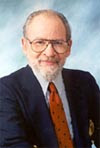
By Alan Caruba
Founding Member of the National Book Critics Circle
My Picks of the Month
Occasionally one receives a book for review that is simply astonishing for its lack of candor and common sense. Clean Energy Nation by Rep. Jerry McNerney, PhD, and Martin Cheek ($27.95, Amacom) is subtitled “Freeing America from the tyranny of fossil fuels.” What tyranny is McNerney talking about? The entire world runs on coal, oil, and natural gas. All transportation depends on gasoline or diesel. Fifty percent of all the electricity produced in the U.S. depends on coal and the U.S. is often described as the Saudi Arabia of coal because we have such vast reserves of it. We also have over an estimated trillion worth of untapped barrels of oil. To argue that this should be abandoned in favor of solar, wind, or biofuels energy, none of whose producers would exist without large government subsidies backed up by mandates for their use is a kind of willful ignorance or insanity.. Suffice to say, this is an extraordinarily silly book.
America is often called a Christian nation based on its historical roots and majority population of Christians, so one can only imagine what a chilly reception The End of Christianity, edited by John W. Loftus, ($11.99, Prometheus Books, softcover) will receive. Loftus is a former minister and now recognized as a leading spokesperson for atheism. The contributors to this book are also noted atheists. What makes the book interesting, however, is its historical review of how Christianity came into being, what religious beliefs preceded it in the ancient world, and how, theologically, it challenges believers to accept some extraordinary beliefs on pure faith. This book is not some screed decrying Christianity, but rather a studied effort to understand its roots, its spread, and the assertions on which it is based. As such, it makes for some very interesting reading. We all need our beliefs challenged on occasion to determine the strength of one’s faith. By contrast, Beginner’s Grace: Bringing Prayer to Life by Kate Braestrup ($15.00, Free Press, softcover) offers practical suggestions on how to incorporate prayer into one’s life for all occasions and situations, as well as the role that parents can play in instructing children in faith. A chaplain to the Maine Warden Service that engages in search-and-rescue, the author shares her experiences and insights.
There are currently more than 6,000 languages spoken around the world and yet one can say “hello” anywhere and be understood. The English language is the lingua franca of the world, required for everything from business and science, diplomacy and education, and entertainment. In China, more people speak English than in America as it taught in its schools to prepare Chinese to go out into the wider world. The English is Coming! How One Language is Sweeping the World by Leslie Dunton-Downer ($14.00, Touchstone, softcover) takes the reader on a journey across commerce and culture, war and peace, to show how everyday English words have become a shared piece of understanding and the way people around the world communicate with one another. This is a wonderful book for anyone who loves words and loves the language that has gone global.
Compared with the work involved in writing a book, fiction or nonfiction, getting it published is often as arduous and difficult as task. Literary history is filled with now famous writers being rejected over and over again. Mike Nappa has written 77 Reasons Why Your Book was Rejected (and how to make sure it won’t happen again!) ($14.99, Sourcebooks, softcover). It is often brutally honest, but this is made more palatable by the humor he brings to this awful task. A literary agent, Nappa knows most of the reasons given for rejection as well as the ones never expressed. The fact is that, with the invention of the computer, just about everyone has become convinced they can and should write a book. In addition, there are many affordable outlets that will publish it for you, for a fee. With thousands of book proposals flooding agents and editors, it would be useful for the aspiring writer or one who has been rejected to know why one’s book simply cannot find a publisher. I suspect Nappa grew tired of explaining over and over again why a book was rejected. Now he need only hand them his new book and, if you have a book you want published, you should read it!
While wandering the aisles of the Book Expo, I came across Urban Farming: Sustainable City Living in Your Backyard, in your Community, and in the World ($24.95, Bowtie Press, softcover) by Thomas J. Fox. I confess I am not enamored of all the tree-hugger talk of sustainability because it often masks an agenda to control people’s lives, but this book offers a lot of information about how to grow healthy vegetables and fruits in an urban setting. It is a practical guide filled with how-to advice, enhanced by many handsome full-color photos. Our little backyard in New Jersey always had space set aside where Mother would plant a variety of items that graced our dinner plates with fresh vegetables throughout the spring, summer, and into early fall.
Dog owners are a special breed—no pun intended—and some write wonderful books about their furry companions. Stanley Coren has established himself as an expert with two previous books on “How Dogs Think” and “How to Speak Dog.” His latest is a delightful memoir, Born to Bark: My Adventures with an Irrepresible and Unforgettable Dog ($16.00, Free Press, softcover). Coren writes “For Christmas the woman who would become my wife bought me a dog—a little terrier. The next year her Christmas gift to me was a shotgun. Most of the people in my family believe that the two gifts were not unrelated.” The dog was Flint and this psychologist’s memoir will provide lots of laughter as he relates his experience with an extraordinary, willful pooch and those that had preceded it.
Getting Down to Business (Books)
Those in the field of marketing are always searching for answers to why we purchase what we purchase. In interesting book will help answer that question. The Consuming Instinct: What Juicy Burgers, Ferraris, Pornography, and Gift Giving Reveal About Human Nature by Gad Saad ($25.00, Prometheus Books) answers what it is that all successful fast-food restaurants have in common. Why women are more likely to be compulsive shoppers than men, but men more likely to become addicted to pornography. How the fashion industry plays on our innate need to belong and many other questions that involve the underlying evolutionary basis for most of our consumer behavior. While culture is important, says Dr. Saad, a professor of marketing at the John Molson School of Business at Concordia University, there are deeper forces at work in our psyche that range from survival to reproduction to kin selection. All of which makes this a very interesting book to read for any reason whatever. In a somewhat similar fashion Glued to Games: How Video Games Draw Us in and Hold Us Spellbound by Scott Rigby and Richard M. Ryan ($34.95, Praeger) explores the heart of gaming’s powerful psychological and emotional allure. Indeed, it is no longer just kids and teens who are hooked on them, but adults as well. Parents, researchers, and those who love these games will find this book of interest, particularly if there’s someone in the family or a friend who is addicted to them. Both authors come to the subject with backgrounds in psychology and related research, so this is a serious book about an entertaining topic.
It’s a topic that politicians, business executives, celebrities, and many others find of great interest, Elements of Influence: The Art of Getting Others to Follow Your Lead ($26.00, Amacom). Terry R. Bacon says it is not some kind of magic power, but rather something that we do all the time whenever we want someone to do something, to believe something, to agree with us or to behave differently. While it is not possible to influence anyone to do anything, it is possible to develop the skills necessary and the author explains how influence really actually works, ethically, consensually, and productively, in business, in everyday life, and in a world of cultural diversity. It does, however, require “a great deal of adaptability, perceptiveness, and insight into other people” says the author. Backed by decades of research, I have no doubt that this book would prove useful to anyone seeking to improve their ability to influence those around them. In the world of business, the best result is leadership.
On a lighter level there’s Dumbemployed: Hilariously Dumb and Sadly True Stories About Jobs Like Yours by Phil Edwards and Matt Kraft ($13.00, Running Press, softcover) that is filled with more than 800 short paragraphs that demonstrate you are not alone if your workplace sometimes resembles a madhouse. Divided into five chapters, bosses, customers, just dumb, overtime and weird shift, it is a chronicle of every workplace misery you could imagine, plus some you can’t. These short takes will make you laugh (or groan) from page to page.
Let’s Get Cooking
Cookbooks come in all sizes and varieties, but one especially good idea is one that comes in a five-ringed binder that permits the cook to lay it flat on the counter top and, when you add in tabbed sections, the ease of use is matched by the quality of its recipes. This is the case of the Taste of Home Baking: All-New Edition ($29.95, Taste of Home Books) that is officially due out this September. It offers 786 recipes that are accompanied by more than 730 color photos in 510 pages. This is a hefty book that is likely to serve its user for a lifetime with its comprehensive collection of recipes on just about every kind of baked item from cakes to breads and everything in between. It would make an ideal gift for the newly married homemaker who wants to bake but does not want to deal with often daunting recipes. Instead, if offers all the tips and advice one could want for a beginner, but plenty of recipes for the most advanced baker.
Put your order in now to get your copy of All About Roasting by Molly Stevens ($35.00, W.W. Norton) due in the bookstores in November. If I could only eat food prepared in one fashion, it would be “roasted” because it brings out the taste of meats. The author describes when to use high, moderate or low heat to get the best results in juicy, well-seared meats, caramelized drippings, and concentrated flavors. There are 150 recipes that include beef, lamb, pork and poultry, as well as herb-roasted shrimp and basted broccoli. Suffice to say this is a book for anyone who is really serious about producing meals that will linger in the memory of family and guests for years after. The author has won both the James Beard and IACP cookbook awards, and is a contributing editor at Fine Cooking magazine. It will become a treasured reference and guide on the bookshelves of those who purchase it.
From Da Capo Press come two food-oriented books, two of which are devoted to the vegan lifestyle. Just out in July is Vegan for Life: Everything You Need to Know to be Healthy and Fit on a Plant-Based Diet by Jack Norris, RD, and Virginia Messina, MPH, RD ($17.00, softcover) and Sinfully Vegan: More than 160 Decadent Desserts to Satisfy Every Sweet Tooth by Lois Dieterly ($18.00, softcover). The former book addresses how difficult it is to give up meat, fish, eggs, dairy, and all other animal-derived ingredients and it acknowledges that “many new vegans can suddenly find themselves suffering from deficiencies of fundamental nutrients like protein, calcium, and iron.” That a warning sign worth considering insofar as the human body, over millennia is designed and intended to eat meat. There are teeth in everyone’s mouth whose purpose is to chew meat. For those who, for whatever reason, intend to become vegans, this book will be helpful, but I personally do not recommend the vegan diet. As for vegan desserts, you will find plenty in the latter book.
Women have their special needs and an interesting book, Eat to Defeat Menopause: The Essential Nutrition Guide for a Healthy Midlife---with more than 130 Recipes ($19.00, Lifelong Books, softcover) by Karen Giblin and Mache Seibel,.MD. The midlife “change” is subject to myths, uncertainties, and some trepidation. It makes sense that what one eats can have good or bad effects on the body’s changing chemistry. The good news is that black bean and rice salads, lobster and duck chow mein, and chocolate mouse pie are among the many ways to satisfy every craving or mood swing. You will learn why eating foods that contain phytoestrogens, such as soy and garlic, combat hot flashes, mood swings are stabilized by eating omega-3 fatty acids and vitamin B. There is a lot of excellent and interesting dietary information in this food.
I have seen so many diet books over the years that I am wary of most, but Timothy S. Harlan, MD, has penned Just Tell Me What to Eat! The Delicious 6-Week Loss Plan for the Real World ($25.00, Da Capo Press). It addresses the fact that there are an estimated 145 million Americans, aged 25 and up, who are overweight. After hearing from patients complain how confused they were by all the various diet plans, he decided to write one of his own. It is not a fad diet, nor a typical diet plan because it not only tells the reader what to eat, but why to eat it. The recipes reflect a variety of cuisines from Italian and French to Spanish and American. It even discusses convenience food alternatives when there isn’t time to prepare a meal. It is an informed and informative book about dieting that should prove helpful to take its advice and stick to it.
Science & Math Stuff
As someone who has difficulty with sums, I am in awe of those who can do them in their head and actually think math is fun! For them, there’s Here’s Looking at Euclid by Alex Bellos ($15.00, Free Press, softcover) “From counting ants to games of chance, an awe-inspiring journey through the world of numbers”, says the subtitle. The book is full of interesting information such as the fact that numbers of not innate to humans, but came into use about 8,000 years ago. There’s a tribe in the Amazon that can only count to five. Apparently they need one hand to count the fingers on the other. Who knows? If you love numbers, odds are you will enjoy this book. Even more arcane is The Wave Watcher’s Companion by Gavin Pretor-Pinney ($15.00, Perigee, softcover) that will appeal to anyone who has wondered about the motions we call waves, from brain waves to sound waves, infrared waves, to all manner of comparable patterns that appear to have a similarity. This book isn’t just for those into science, but also natures, history, and even surfing.
There has been controversy about the theory of evolution since Charles Darwin put it forth and, indeed, a friend of mine, Robert W. Felix, disputes it in his book “Magnetic Reversals and Evolutionary Leaps” that correlates such phenomenon with mass extinctions and the sudden emergence of new species. The Fact of Evolution by Cameron M. Smith ($18.00, Prometheus Books, softcover) asserts that evolution is, well, a fact. He offers all manner of real-world examples to show that not only does it happen, but that it must happen. Suffice to say this is some very deep scientific writing about things such as “phyletic gradualism vs. punctuated equilibrium.” Don’t ask me what any of that means. You will have to read the book to find out, but I have my doubts about anything that has to come up with arcane, undecipherable language to describe its views. From the same publisher comes The Fallacy of Fine-Tuning: Why the Universe is Not Designed for Us by Victor J. Stenger ($28.00, Prometheus Books). Stenger is a physicist who goes after the view that the universe was the creation of God and why nature is not part of a divine plan. A great deal of effort is expended in this effort and, if you’re an atheist, you will find comfort in the author’s conclusion. If you’re not, reading it will not likely change your mind. I doubt the universe really cares what anyone thinks.
National Issues
As the 2012 election begins to loom in the minds of Americans who will be tasked to select a President and Congress, it is not surprising that there are books offering to provide information and a point of view on national issues.
People who self-identify as patriots, members of the Tea Party movement, and other groups devoted to the U.S. Constitution and national values are being derided regularly these days by those who want to change America into something it was never intended to be. If you would like to learn what that is, I recommend that you read The Patriot’s History Reader: Essential Documents for Every American ($17.00, Sentinel, softcover). The editor, Larry Schweikart, first came to notice with his book, “A Patriot’s History of the United States”, and other books based on history, a subject he teachers at the University of Dayton. This new book contains a whole range of reading matter from the original Articles of Confederation (that were replaced by the Constitution) to Barack Obama’s “A New Beginning” speech in 2009. There are many such documents from our history that provide valuable insights to the choices we made and the nation we became.
Dr. L. Lynn Cleland, Ph.D., has authored Save Our System, subtitled “Why and how ‘We the People’ must reclaim our liberties now.” We know that too many Americans have passed through the educational system without receiving the knowledge they need to understand the Constitution and what it was the Founding Fathers had in mind when they fashioned the federal government, a republic composed of separate republics, the States. The book ($16.95, Two Harbors Press, softcover) is not a diatribe against either political party, but it does identify the nation’s systemic problems, along with their causes, evolution, solutions, and actions citizens can take to return the nation to its fundamental principles. You will learn what effect “career politicians” have on both creating and distorting the answer to problems, government systems that are near failure, and much more in this excellent “textbook” to bring any reader up to speed to make important decisions about the future at election time.
Adrift: Charting Our Course Back to a Great Nation by William C. Harris and Steven C. Beschloss ($25.00, Prometheus Books) brings together Harris, the president of Science Foundation Arizona and other science-related organizations, and Beschloss, a journalist who was a Pulitzer Prize nominee. The authors offer their diagnosis of what they deem to be critical systemic weaknesses plaguing America. The blueprint they propose leans a tad to liberal solutions, but their proposals are worth considering.
There’s considerable irony that all the proposals offered by President Obama during his 2008 campaign and first year in office regarding issues involving the programs put in place by former President Bush were abandoned in their favor and continued maintenance. In National Security, Civil Liberties, and the War on Terror ($21.00, Prometheus Books, softcover), those issues are hotly debated in a collection of essays edited by M. Katherine B. Darmer, a professor of law at Chapman University School of Law and an assistant US Attorney in New York, NY, and Richard D. Fybel, an associate justice of the California Court of Appeal in Santa Ana, CA.
Novels, Novels, Novels
Novels arrive daily and my office table has more than forty of them in various stacks during any given month. They come from the mainstream publishers, large and small, some university presses, and self-published authors. (See my Pick of the Month book on why most authors have their books rejected.) Humans are story-telling creatures from the days they huddled around fires in caves.
One of this year’s most exciting new novels reflects recent headlines that the Pentagon has been under cyber attack from a foreign nation. Its timing could not be much better. If I could, I would want everyone in the White House, the Congress, the Pentagon, and the business community to read The Chinese Conspiracy by John Mariotti ($22.95, iUniverse, softcover). It is a thrilling novel of cyber war whose author has established himself as a successful writer of nine non-fiction books, as well as a contributor to blogs on the Forbes and American Express websites. The story begins with a scenario of America’s vital communications and elements of its infrastructure system, including the Pentagon, shut down by an unknown cyber enemy. Imagine the chaos if all the traffic lights in New York turned green at the same time? Mariotti uses his extensive knowledge of commerce and computer technology to envision an America in which no one can talk via their cell phones or access the Internet. It is one in which millions of computers have been invaded by a “worm” that controls their use. This may, in fact, be the way a future war will be fought, but for now this novel offers a globe-spanning story that will remind you of novels by Tom Clancy. If you read just one thriller this year, make sure it is this one. The best place to purchase this novel is via Amazon.com.
The itch to write a novel is one that so seizes some people that it would be better described as an addiction. The authors that amaze me are those who managed to put thousands of words on page after page. The only rule I apply is whether they manage to hold your attention. This was the task before Sam Djang who spent eight years and traveled to many nations—Russia, China, Mongolia, among others—to research the life of Genghis Khan. To the extent that Genghis Khan: The World Conqueror (Volumes I and II) is 90% factual, held together by a skein of fiction, he has more than succeeded in capturing the life, the times, and the impact of a man who, in his lifetime, conquered more land than Alexander the Great, Napoleon Bonaparte, or the size of the Roman Empire, surely makes him a worthy topic. By 2010 A.D., the Mongol Empire measured 13,754,663 square miles, the largest in history. Volume One and Volume Two are both 420 pages in length ($29.95/$19.95, New Horizon Books, hard and softcover editions.) Khan’s was the age when human civilization gained knowledge of the compass, paper, gun powder, astronomy, mathematics, and developed techniques to make glass. Anyone who loves history will thoroughly love this book.
If you are in the mood for a courtroom thriller, pick up a copy of Margaret McLean’s Under Fire ($24.99, Forge) who has already been hailed as one of next new faces of Boston crime fiction with her debut. On a tragic night, a Boston firefighter is shot and killed in the line of duty while rescuing Amina Diallo and her 15-year-old son, Malick, from their burning store. A Senegalese Muslim immigrant, she is arrested for arson and murder, facing a likely conviction given Boston’s unease with its growing immigrant and Muslim population. Her defense attorneys are facing more than just prejudices, but attacks on their client and key defense witness. Ms. McLean, a former prosecutor, trial attorney, and currently a professor at Boston College, joins a well-worn path from attorney to novelist with her first novel and does so in ways that will keep you turning the pages.
Another debut novel is Luke Williams’ The Echo Chamber ($25.95, Viking) that was published in Great Britain in May to rave reviews and is available now in America. The reader is invited into the world of Evie Steppman, born in 1946 during the dying days of the British Empire in Nigeria. Evie has acute hearing and, to her, the world is a loud, cacophonous place. She is too young to make sense of all the sounds, but she hoards them in a vast internal sonic archive. The novel is narrated by a 54-year-old Evie, now living in Scotland, sorting through an attic filled with objects from her past. Her powers of hearing are beginning to fade and she sets out to record her history before it disintegrates on her. Family, empire, and memory coalesce in a novel that is an amazing feat of imagination. This one is surely worth reading. And still another novelist makes his debut with The Butterfly Cabinet ($22.99, Free Press). Bernie McGill has spun a tale based on a true story of the death of the daughter of an aristocratic Irish family at the end of the 19th century. It begins with a former nanny, now in her 90s, who received a letter from the last of her charges that evokes a secret she has been keeping for more than 70 years about what really happened on the last day in the life of Charlotte Orman, the four-year-old, only daughter in a house where she was employed. If you’re thinking of the recent Casey Anthony trial, this novel suggests that such events have a way of repeating themselves.
Cheryl Crane, the daughter of movie star, Lana Turner, gained fame when in 1957, at the age of 14, she stabbed to death one of her mother’s lovers, a Hollywood hoodlum, who was threatening to kill her mother. She has written a number of books and has authored The Bad Always Die Twice ($24.00. Kensington). It goes on sale officially on August 30. This novel draws on her own life in real estate and debuts a Nikki Harper series based pm a realtor-turned-amateur sleuth. It closely reflects her own life as a realtor to the stars. It begins with a frenzied call from Nikki’s business partner, Jessica Martin, saying that a TV has-been, Rex March, has been found dead in Jessica’s bed. Especially shocking is that, as far as anyone knew, Rex had died six months earlier. It’s obvious that Jessica is being framed and Nikki knows she must act swiftly to find out who the killer is. This is a very lively, fast-paced thriller that is sure to please fans of this genre. You Never Know by Lilian Duval ($21.95, Wheatmark, Tucson, AZ) explores what happens when extraordinary things happen to ordinary people. The author is a survivor of the 9/11 attack and lives in New Jersey where the novel’s protagonist, Tobias Hillyer, has a life filled with both tragedy and extraordinary luck. This is a novel in which the characters intertwine in an ever-changing landscape of events, capped by Hillyer’s win of a MegaMillions lottery that, despite the millions involved, evoke a whole new set of problems. It an intriguing story filled with unexpected twists and turns.
There are scores of softcover novels. Just out this month there’s The Whole Package by Cynthia Ellingen ($15.00, Berkley) who makes her debut with a novel about three women approaching forty who find that even though things haven’t gone according to plan, their friendship and resourcefulness present them with the perfect opportunity for a new venture, a restaurant staffed exclusively by handsome men. Women, of course, will enjoy this one. There’s love and lust to spare in Francine Thomas Howard’s novel, Paris Noire, (14.95, AmazonEncore) about African American and Caribbean immigrants to France as the U.S. Army liberates Paris in 1944. The widowed mother of two young adults is concerned as they embark on their romances and contemplates a new one for herself in a story that explores race, sex, and a vivid time in history.
That’s it for August and ahead are the many new books that are published each autumn. Be sure to come back to Bookviews as we select from the torrent, leaving the bestsellers to the mainstream media while we mine for lesser literary gems. Tell your book-reading friends and family members about Bookviews, bookmark it, and come back in September.
Sunday, July 31, 2011


Wednesday, June 29, 2011
Bookviews - July 2011
By Alan Caruba
A founding Member of the National Book Critics Circle
Biographies, Autobiographies and Memoirs ~ Lots of Advice ~ Business Books ~ Summer Reading for Kids & Teens ~ Novels
My Picks of the Month
This report has recommended three previous books devoted to President Obama’s life and eligibility to hold the highest office in the land. In retrospect, as carefully documented as they were, the nation was not ready to consider that fact, nor ready to accept the consequences. Lyndon B. Johnson, however, surprised the nation with his announcement that he would not run for reelection in 1968 and, in 1974, Richard M. Nixon became the first President to resign from office in the wake of the Watergate scandal. Prior to Obama’s election, however, Dr. Jerome R. Corsi, PhD, had authored “The Obama Nation”, warning that his credentials and life history was suspect. Now he has written Where’s the Birth Certificate? The Case That Barack Obama is Not Eligible to be President ($25.95, WND Books). More than 380 pages, complete with appendices and footnotes, meticulously reveal that he was not and is not eligible. I believe this book will lead to Obama’s resignation in the run up to the September 2012 Democratic Party nominating convention. I also believe that the mainstream media that formerly ignored or deriding all those who raised this issue are moving inexorably away from that position. Simply stated, Article 2, Section 1 of the U.S. Constitution requires that a President be a “naturally born” citizen and Obama, as is widely known, is the son of a Kenyon citizen. Natural born requires that both parents be American citizens. How and why this was ignored in Obama’s case is examined in Corsi’s book, along with a massive cover up of the documentation that would and should disqualify him. Ignoring the Constitution has serious implications for the rule of law, the keystone of the American Republic.
I recommend you add Catherine Herridge’s new book to your summer reading list. It is The Next Wave: On the Hunt for Al Qaeda’s American Recruits ($25.00,.Crown Forum). If you watch Fox News then you know that Ms. Herridge is a national correspondent based out of Washington, D.C., and you know she has been following the story of terrorism directed against the nation for a long time. As a result, she has contacts deep inside the counterintelligence community as well as having traveled to Guantanamo many times to cover the proceedings there regarding some of the most evil people on Earth. She devotes a lot of the book to connecting the dots involving the life and activities of Anwar al-Awlaki, the American-born imam who facilitated the movement of several of the 9/11 terrorists before the attack on the Twin Towers and Pentagon. His knowledge of American culture has made him a valuable al Qaeda asset, so much so that he is the only American on a CIA hit list. He is currently believed to be hiding out in Yemen, but distance is nothing to the Internet and he is a master of recruiting disaffected American Muslims to attack their fellow Americans. One of them was Nidal Hassan, the Fort Hood killer. Jihad is not just a present-day conflict; it is generational, and it is now a movement as opposed to a top-down vertical organization. The failed underwear bomber and Time Square bomber should not make us forget that there are new plots to kill Americans being hatched every day.
Two companion volumes to the Herridge book will explain a lot to anyone who has not been paying any more attention to al Qaeda or Hezbollah for the last decade or longer. The first is Peter l. Bergen’s The Longest War: The Enduring Conflict Between America and Al Qaeda ($16.00, Free Press) now in softcover is authored by a man widely regarded as a leading expert on al Qaeda, a national security analyst who has been in the belly of the beast. His book provides a comprehensive history of an organization devoted to terrorism for the ultimate purpose of imposing Islam on the West and everywhere else. Your grandchildren will be dealing with this threat. Consider Israel, now more than sixty year’s since its founding, but still facing implacable enemies. One of them is Hezbollah and Thanassis Cambinis has written A Privilege to Die: Inside Hezbollah’s Legions and Their Endless War Against Israel ($15.00, Free Press, softcover). Part standing army, part terrorist group, party political party, and part theological movement, it joins al Qaeda and Hamas it its intention to remake the map of the Middle East. An influential movement, this book will surprise you with its description of the people who are willing to die for it, people who span economic classes and religious sect for its apocalyptic beliefs. Based in Lebanon, the Party of God, has influence well beyond its borders.
I have a friend who has spent most of his life accompanied by dogs and presently has two who regard him as the alpha male of the pack. His love for dogs makes up for a distinct skepticism about humans and it is difficult to disagree with him much of the time. Dog lovers will love The Dog Next Door and Other Stories of the Dogs We love, edited by Callie Smith Grant ($12.99, Revell, softcover). There are an estimated 77.5 million dogs in the U.S. with 39% of U.S. households owning at least one while 24% own two. Americans love their dogs and they will love this follow-up to “A Prince Among Dogs” for the 35 true stories Grant has collected to celebrate these tail-waggers. Another passion for many Americans is baseball and 1961: The Inside Story of the Maris-Mantle Home Run Chase by Phil Pepe ($20.00, Triumph Books) tells of the year-long power surge that approached Babe Ruth’s record of 60 home runs for the 1927 New York Yankees. Maris would surpass it. The book is about an era when the game was not beset with doping scandals and raw power and real skill determined the outcome. Pepe has written more than fifty books on sports and this one is a wonderful look behind the scenes as well as on the field.
I cannot imagine what it must be to pilot a fighter jet, but a new book, Viper Force: 56th Fighter Wing by John M. Dibbs, an award-winning air-to-air photographer with text by Lt. Col. Robert ‘Cricket’ Renner, ($40.00, Zenith Press) will get you as close to the experience as one can have by enjoying page after page of extraordinary photos and a text provided by as 1988 Air Force Academy graduate who retired in 2010 after 22 years of active duty service that included 37 combat sorties over Iraq. If a machine can be called beautiful, than surely the F-16 Fighting Falcon, known to its pilots and crews as the Viper, is a thing of beauty and the photos are testament to that. Reading this book gives one a wonderful insight to the lives of those associated with this fighter jet and a sense of its lethal capacity to protect the nation that built it. From the same publisher comes Burt Rutan’s Race to Space by Dan Linehand ($30.00, Zenith Press). Rutan has earned a reputation as an aerospace visionary and he is seeking to make private space travel affordable and accessible these days. The book is the story of that endeavor. I suspect, however, that its appeal will be mostly to those steeped in the engineering aspects of the effort and those for whom this quest remains the ultimate expression of pushing the envelope.
Odds and Ends: My Mother taught gourmet cooking, mostly French and European cuisine, so I am partial to cookbooks (she wrote two) that share their enthusiasm and recipes for this gastronomic genre. I first encountered Chef Jacques Haeringer through the “Chez Francois Cookbook”, the bible of classic Alsatian cuisine. The chef lives in Northern Virginia where L’Augberge Chez Francois in Great Falls attracts not only the locals, but some famous DC folk as well. His new book is Two for Tonight ($26.95, Bartleby Press) and is a gourmet’s dream of romance when you combine great recipes, a nice bottle of wine, and a summer al fresco meal. These are meals for dining outdoors whether it’s his Alsatian fish stew or any of the other mostly fish dishes with the occasional lamb chop, veal scallopini, or Kobe beef dish for meat-eaters. The color photos are mouthwatering and, yes, I miss Mom's wonderful dinners. While recently attending the Book Expo in New York, I came across a book that I think many older computer users will find of interest. It’s Windows® 7 for Seniors: Quicksteps by Marty Matthews ($20.00, McGraw-Hill, softcover). It has many advantages in that it uses a larger print size, has lots of illustrations, and is filled with how-to tips that will enhance the use of this popular operating program. It is comprehensive and anyone taking advantage of it will discover how remarkable Windows®7 can be.
Many book lovers also aspire to be writers and for those who think they have a novel in them, there’s A Kite in the Wind: Fiction Writers on Their Craft, edited by Andrea Barrett and Peter Turchi ($19.95, Trinity University Press, softcover). It features twenty contributors offering some excellent advice that will answer many of the questions a beginner may have. I have always been a non-fiction writer and concluded long ago that my brain is not equipped to write fiction. That requires a whole different set of sensibilities as well as the development of specific skills. This book will help future and current fiction writers hone those skills.
Let me finish with the thought that I do not normally take note of a specific poet’s work, preferring to deal only with anthologies of poetry. The reason is simple and cruel. If I feature one poet, I receive the books of others and great poetry is usually produced in relatively small amounts in any given era. I am going to make an exception for Maxine Kumin whom I met long ago when we were both young. I was at the Bread Loaf Writer’s Conference, famed even then as a Middlebury College legacy of Robert Frost. I was there to write about it for Publishers Weekly and Kumin was one of the writers there to give readings and share their insights on the craft with aspiring writers. I was, at that point, already an aspiring and published poet but it would be my first and last time. I was old school, but Maxine was a modernist. All this returned to me when I received Where I Live: New and Selected Poems 1990-2010 ($16.95, W.W. Norton, softcover). Maxine is the author of 17 poetry collections, as well as numerous works of fiction and nonfiction. She’s won the Pulitzer Prize and a raft of other literary awards. If you were to choose a present day poet to read, you would discover she writes poetry that goes straight into your mind and heart. There is no way to “describe” a particular poet’s work, though I am sure many try. To read a modern poet, Maxine Kumin would be a very good choice.
Biographies, Autobiographies and Memoirs
The thing about some memoirs is that one often ends up wondering why the writer thought their life was all that significant or why the publisher did. Not all lives are equal in this respect, but I suppose one can learn something from a memoir if it reflects one’s own questions about life or illuminates some dark, unexplored corner.
My AOL address book was recently hacked for the second time and I am searching for software to prevent that occurring again. Serendipitously Mafiaboy: A Portrait of a Hacker as a Young man, arrived. Told by Michael Calce with Craig Silvermann ($22.95, Lyons Press), it is his account of what it was like to be a 15-year-old boy who, in the spring of 2000, was exposed as “Mafiaboy”, the cybercriminal who had crippled the websites of Yahoo!, Amazon, CNN, E*Trade, eBay and Dell. Not only were people asking how some adolescent could pull off devastating denial-of-service attacks, but why? Due out officially in August, Calce reveals the story of how his prodigious talent for unraveling and manipulating computer technology evolved into a teenage obsession. He was too young to realize the scope of the damage he was doing, but joining a gang of hackers gave him a sense of power and mission. In the end, the FBI joined with Canadian authorities in a manhunt to find out who he was. Calce acknowledges how reckless and stupid his attacks were. He was caught, spent eight months in a group home for troubled adolescents, and a year on probation with restricted access to computers. Cyber-folk will find this book of interest. Where’s My Wand? by Eric Poole ($15.00, Berkley, softcover) is an entertaining tale of growing up gay and Baptist in the 1970s. It is not a gay polemic as one might assume, but rather a hilarious recounting of confused gender at a time and place, and in the person of a very clever youngster looking for a way to make sense of it and come to peace with it. Gay folk will no doubt enjoy it, but the surprise is that straight folk will too. A comparable search for identity is told by Maise Houghton in Pitch Uncertain: A Mid-Century Middle Daughter Finds Her Voice ($24.95, Tide Pool Press, Cambridge, MA). It is the story of how she slowly decoded her parent’s marriage as the middle child coming of age in the 1950s. Her parents had an estranged by oddly loyal relationship and the author captures the era and genteel culture of the time. I am not sure who would find this book of interest except for someone of the same age and gender, but it is a well-told account. A very different memoir is told by Kelle Groom, I Wore the Ocean in the Shape of a Girl ($23.00, Free Press) that recounts her young life as an addict and how, at age 19, she became pregnant with a son that she would end up losing twice, first to adoption, and then, within a year to cancer. This is a look into an addictive personality who discovered alcohol at age 15 and was an out-of-control alcoholic by age 19. The child’s death only hastened her downward spiral. The memoir, based in part on journals she kept at the time, is about her search for that lost son. In recovery she became a poet, earning a spot in Best American Poetry 2010, along with other accolades. Anyone who has known an alcoholic knows how totally destructive this addiction can be unless the pattern is broken. In a very real way, writing saved her life.
Sex, Mom, & God by Frank Schaeffer ($26.00, Da Capo Press) recounts what it was like to grow up in L’Abri, the Swiss chalet/Christian community that his parents, Evangelicals Francis and Edith Schaffer ran. He was surrounded by women, beautiful women, but the one who influenced his sexuality was his devout, but candid, mother who was at ease answering his questions about Jesus or sex, believing that conservative religion wasn’t about ruining sex for believers and others. Part memoir, part exploration of Evangelical views on issues such as abortion, premarital sex, and contraception, the book explores the harsh attitude organized religion has toward women and sex, while demonstrating that faith and fun can actually co-exist. Learning to Die in Miami: Confessions of a Refugee Boy by Carlos Eire, the National Book Award winning author of “Waiting for Snow in Havana” ($15.00. Free Press, softcover) recounts what it was like to come of age as a Cuban émigré attached to the memories of his youth in that island nation. He explores the tension between Carlos the Cuban and Charles the American as he eventually embraced his continual reinvention as someone distinctly American.
Nica’s Dream: The Life and Legend of the Jazz Baroness by David Kastin ($26.95, W.W. Norton) is a fascinating biography of Baroness Kathleen Annie Pannonic “Nica” de Koenigswater, a British Rothchild who flew her own plane before she was twenty-one. Her husband was a French baron and, during World War II, they joined the French Resistance and went to North Africa where she drove ambulances at the front lines of battle against Rommel. That might have been enough for a biography, but in 1953 she moved to New York to pursue who overwhelming love of jazz and never left. As a patron of jazz, she befriended jazz legends and, indeed, both Charlie Parker and Thelonius Monk died in her home. There is much to explore in her extraordinary life and the author, a music critic and journalist, plums it for its history of the powerful forces at work in a remarkable chapter in American history when jazz defined American modernism, mid-century New York, self-invention, and race. Any fan of jazz will want to read this book.
New York plays a role in Genius of Place: The Life of Frederick Law Olmsted by Justin Martin ($30.00, Da Capo Press). Olmsted is best known as the designer of Central Park and Prospect Park, as well as other famous sites including Stanford University in California, and the Capitol Grounds in Washington, D.C. He was likely the most famous landscape architect of his times and since, but he was also a champion of abolition to American and British audiences in the 1850s and 60s. He was a forerunner of environmentalists to preserve public places that included Niagara Falls and Yosemite. This is a life well-lived and filled with achievements that still touch the lives of all who enjoy the fruits of his labors.
Adventures of an Accidental Sociologist by Peter L. Berger is subtitled “How to Explain the World Without Becoming a Bore” ($26.00, Prometheus Books) doesn’t live up to its promise. Essentially a memoir of an extraordinary and distinguished career as a sociologist, author and educator, it still manages to spend a lot of time on minutia that may interest his colleagues and former students, but didn’t motivate this reader to engage to the end. Is it just me? That’s a question I often ask, but if an author doesn’t capture and hold my attention, I tend to blame them. By contrast, James Hesketh is a freelance journalist and former motorcycle columnist for The Miami Herald. His memoir is Riding a Straight and Twisty Road ($15.95, Central Recovery Press, softcover) and recounts his life and his love of motorcycling, calling motorcycle riders “motion addicts” in ways that only other cyclists could understand. For them motorcycling is “a celebration of life.” Hesketh tells of a life initially affected by a childhood trauma and then a struggle for recovery to reclaim his life from another sort of addiction. In the course of his memoir, we learn about the changing history of motorcycle culture, a cross-country ride in response to a personal crisis, and the new serenity he found at the end of the road. It is a well-told tale that is sure to resonate with many readers who love motorcycling and/or are seeking recovery from their own addictions.
Lots of Advice
There is no end to books offering advice about every aspect of life and, having seen many of them, I still believe they perform a useful service. I particularly liked Better by Mistake: The Unexpected Benefits of Being Wrong by Alina Tugend ($22.95, Riverhead books). As we all know, we’re told that it’s okay to make mistakes so long as we learn from them and don’t repeat them. Ms. Tugend points out that, in reality, we are frequently punished for making mistakes. She points out that mistakes occur all the time, but her book focuses on how we can identify them correctly and, in the process, improve not only ourselves, but our families, our work, and even the world around us. She has done a lot of research about the cultural attitudes regarding mistakes, how they can affect us from the earliest stages of our lives, and shape us into adults who are risk-averse and reluctant to take on challenges. This is one of those unexpected books, the kind that looks at something commonplace and provides a complete new understanding of it.
Overcoming Anxiety, Worry, and Fear: Practical Ways to Find Peace is one of those titles that tell you everything you need to know about the book. Gregory L. Jantz, PhD, along with Ann McMurray ($13.99, Revell, softcover).has added a new book to the more than 25 he has already written, several coauthored with Ms. McMurray. There is no question that we are living in times that are fraught with anxiety that comes at us from the media and is generated in our own lives as many struggle to make a living and get on with life’s other tasks. This new book offers a whole-person approach to coping with and eliminating anxiety. It is a combination of common sense, biblical wisdom, and therapeutic advice that can free the readers from being anxiety all the time. If this describes you or someone you know, the book will prove a good investment.
I suspect most mothers simply ask themselves “what would my mother do?” by way of raising their own children. I have no doubt that raising children can prove quite overwhelming for many young mothers. Momsense: A Common-Sense Guide to Confident Mothering by Jean Blackmer ($12.99, Revell, softcover) is there to help. The book features “real mom” stories along with proven and practical advice, encouraging them not to seek perfection, but to honestly assess their skills and develop their own mothering style. If you’re a new mom or know one, this book will prove a blessing. It makes a lot of momsense! Books on better parenting abound and I particularly liked Smart Parenting for Smart Kids: Nurturing Your Child’s True Potential by Eileen Kennedy-Moore, PhD and Mark S. Lowenthal, PsyD ($16.95, Jossey-Bass, softcover) in which the two authors combine their expertise to provide strategies to help children develop social and emotional skills that will need to become capable, confident, and caring people. Among the chapters are “building connection”, “developing motivation” and “finding joy.” In a society beset by fear-mongering, endless testing in school, and mixed messages about personal conduct, raising a child is a real challenge, but most parents can do it with a bit of guidance. This book provides that guidance and the children will be the beneficiaries. The iConnected Parent: Staying Close to Your Kids in College (and Beyond) While Letting Them Grow Up by Barbara K. Hofer, PhD, and Abigail Sullivan Moore ($15.00, Free Press, softcover) advises parents on how to stay connected to college-bound youngsters while giving them the space they need to become independent adults. The advent of cell phones, email, and texting, many kids turn to their parents for instant answers on how to handle a variety of problems they encounter. The authors suggest that too much guidance at this stage in life results in kids that never really emerge as adults in their own right. This is a significant book in a new era of connectiveness and one I would recommend to any parent whose child is going off to college.
Getting Down to Business (Books)
With unemployment verging on or exceeding 14 million, Unbeatable Resumes by Tony Beshara ($16.95, Amacom, softcover) is a very timely book indeed. As the author explains, it is a sales tool to get the attention of a hiring authority. Based on 38 years as a placement and recruitment specialist, the author knows what makes a resume effective. This book takes the mystery and the agony out of writing a resume that has a high probability of winning a candidate a face-to-face interview. His survey of more than 3,000 hiring decision-makers, managers and human relations specialists, reveals the hallmarks of a well-written resume. For those seeking employment, this could well be the best investment in yourself that you could make.
Another book on this topic that I would recommend is from the “Knock’m Dead” series that has sold more than five million books to date. Secrets & Strategies for Success in an Uncertain World by Martin Yate ($14.95, Adams Media, softcover) not only deals with resumes, but offers tips on turning interviews into job offers and tips about job security and promotions, understanding key career choices and career change strategies. This book addresses how to take control of your job search, your career, and your life. Career Mapping by Ginny Clarke and Echo Garrett ($17.95, Morgan James Publishing, softcover) isn’t officially due out until next month, but it takes a look at the world of work and concluded that it has changed forever. The only way to thrive in this highly competitive, technology-driven economy is to think of yourself as a free agent says the author. In short, you have to have a plan and her book is devoted to that. She too has been a recruiter and a career coach, so she is well positioned to understand the changes and how to adjust and take advantage of them. This book will work for the newcomer to the job marketplace as well as people nearing retirement age who want to switch gears. Books like this give those out of work a real advantage.
Everyone in business is looking for ways to secure an advantage over their competition. Front Runners: Lap your Competition with 10 Game-changing Strategies for Total Business Transformation by Mahesh Rao ($24.95, Bascom Hill Publishing Group) offers a step-by-step program that has been successfully implemented by numerous executives of Fortune 100 companies over the past decade. Rao has been an executive consultant with more than twenty years of business experience, as well as a coach to top executives, who has spent many years building strategies, managing global business and technology operations. With a degree in engineering and an MBA from Kellogg Graduate School of Management, he holds 14 US and international patents. The book comes with endorsements from the president of Global Brands and Commercial, Hilton Worldwide, and an executive vice president of Cisco Systems.
The “buzz” these days is all about “social media” and anyone seeking to master these rapidly growing communications vehicles would do well to read one or both books that have been recently published. Social Boom! How to Master Business Social Media by Jeffrey Gitomer ($22.99, FT Press--Financial Times) discusses how this tool is the best, least expensive, most direct way of communicating with your customers and how you can take advantage of Facebook, LinkedIn, Twitter and YouTube. It is easy to read and easy to implement. How to Make Money with Social Media by Jamie Turner and Reshma Shad, PhD ($24.99, FT Press, Pearson Education Inc) offers comparable advice and comes with glowing endorsements from top level executives. It is self-described as an in-the-trenches guide” written by experts who have developed money-making marketing campaigns for many of the world’s largest companies. This is not for lightweights because it discusses how to set objectives, assess one’s competition, craft strategies, select platforms, and integrate social media into broader marketing programs. Marketers, executives, and entrepreneurs can all benefit from its advice.
Summer Reading for the Kids & Teens
I have a number of favorite publishers of children’s and young adult books, and among them is Charlesbridge Publishing of Watertown, Massachusetts. Year after year, season after season, their editors and writers provide books for young readers and the latest batch is no exception. There’s Little Pig Joins the Band written and illustrated by David Hyde Costello ($14.95). This one is for the very earliest reader, age 5 or so, and of course can be read to the pre-school set. Being quite small Little Pig finds most musical instruments too big for him to play. It turns out that that he has a natural talent as the leader of the band! Those further along in reading skills, ages 7 and up, will enjoy Leo Landry’s Grin and Bear It ($12.95) about a bear who can write funny jokes by gets stage fright when he tries to tell them. Readers with a Hispanic heritage will especially enjoy Under the Mambo Moon by Julia Durango, illustrated by Fabricio VanderBroeck ($12.95) filled with wonderful poetry and short tales it is a tribute to Latin American cultures and music. What child does not love animals? Cool Animal Names by Dawn Cusick is lavishly illustrated by color photos of all manner of creatures, including insects and fish, who share the Earth. Those in the early grades in school will enjoy Miss Martin is a Martian, a Children’s Book Award Winner by Colleen Murray Fisher, illustrated by Jared Chapman ($7.95) and told from the point of view of one of her students who cannot imagine how she knows so much and is on to all his tricks! For the younger reader age pre-teen and older, there is a spooky, scaring, completely fascinating novel, Escape from Zobadak by Brad Gallagher about a mysterious box that leads to an antique maze of wooden corridors. This story is so complex that it draws the reader in and won’t let go until the last page.
Kids Can Press is another favorite of mine and a visit to its website will reveal why. Two recent books are Totally Human: Why We Look and Act the Way We Do by Cynthia Pratt Nicolson and illustrated by Dianne Eastman ($16.95). Aimed at those aged 8 and up, it is a clever, frank discussion of why humans hiccup, burb, shake when they’re scared, crave surgery food, and many other common characteristics. It’s a great introduction to the human race. Mathemagic! Number Tricks by Lynda Colgan and illustrated by Jane Kurisu ($16.95) will intrigue younger readers with an interest or flair for mathematics, and particularly good for those who need a reason to develop these skills.
There’s a world of fun in How Back-Back Got His Name by Thomas and Peter Weck and illustrated by Len DiSalvo ($15.95, Lima Bear Press) just out this month with a story about Lima Bear and his animal pals who help Plumpton the opossum when his back disappears! Ideal for those aged 4 to 8, it is fully of laughs. The Adventures of Blue Ocean Bob ($16.99, Children’s Success Unlimited LC) is aimed at children aged 5 and up. It quite deliberately intends to share its philosophy of life to motivate young minds to make the most of every day using the creatures of the sea to impart it. For the child that needs a nudge in this direction, it is a good book to share. In a similar fashion, two books from New Horizon Press are intended to help children be team players and to teach the value of perseverance. They are Joni and the Fallen Star by Cindy Jett Pilon, illustrated by John Hazard ($9.95) and The Tale of the Teeny, Tiny Black Ant by Teresa R. Allen, illustrated by Tea Seroya ($9.95). Both are geared to either pre-schoolers to whom they can be read or early readers aged 5 and up.
For the older reader, ages 10 and teens, there’s The Lucy Man: The Scientist Who Found the Most Famous Fossil Ever! ($16.00, Prometheus Books softcover) by CAP Sacier. It is a biography of Dr. Donald C. Johanson who found Lucy, (Australopithecus afarensis) in 1974. A paleoanthropologist, the skeleton was the first up-right walking human ancestor that was mostly complete. Any youngster showing an interest in such things will be immersed for hours in this book. Its foreword is provided by the subject of the book. Just published this month is a novel by Karen DelleCava, A Closer Look, ($16.95, WestSide Books, Lodi, NJ) for those aged 14 and older. It is about alopecia, an affliction that causes a person’s hair to fall out. How Cassie deals with this, at first trying to keep it a secret, and then confronting it when the secret is exposed, is the heart of a story about dealing with setbacks and still achieving one’s goals in life. This may seem a bit creepy, but I suspect many teenagers will find it a reflection in some way of their own lives.
Novels, Novels, Novels
Summer is traditionally a time for taking a novel to the beach or just the backyard to catch some sun and pass some time. I have stacks and stacks of novels and can only share news of some, so here goes.
Rules of Civility marks the debut of Amor Towles ($26.95, Viking) that is in many ways a throwback to the way novels were written in earlier times and, in particular, its theme of rising from humble beginnings to reach great heights, a classic American tale. It is the story of an irresistible young woman that is set in the late 1930s. On New Year’s Eve in a Greenwich Village jazz bar, 25-year-old secretary, Katey Kontent and her boardinghouse roommate meet Tinker Grey, a handsome banker. Both fall for him, but the meeting sets Katey on a year-long journey through the upper echelons of New York society where she encounters a glittering new world of wealth and station, along with all the other emotions and behaviors that lurk beneath the surface. Katey is made of stern stuff and good values. Towles was born and raised just outside of Boston, graduated from Yale University, and an MA from Stanford University. He is a principal at an investment firm in Manhattan. He has just joined the ranks of promising new authors.
A very intriguing story is told by Kevin Klesert in The Other Side of Light ($32.95,
(http://www.theothersideoflight.com/). A combination of science fiction and historical fiction, Klesert asks what would happen if a modern U.S. Naval Task Force with the Secretary of Defense on board to watch how new technology can render the entire task force invisible to the enemy only to have it go awry and transport them back to December 3, 1941, four days before Pearl Harbor! Knowing what happened, they must wrestle with the question of changing history by intervening. I am not going to tell you much more because it would spoil the plot. This one is a fascinating take on the twists and turns of history. The genre of the science of genetics and its unexpected events is the background to The Genius Gene ($34.95 hardcover, $14.95 softcover, $4.99 Kindle, http://www.geniusgenebook.com/) by Howard Bernberg. We are introduced to geneticist Catherine Fox and archeologist Paul Butler, attractive, accomplished, ethical, and widely acclaimed. Political, religious, and scientific institutions are trying to cope with rapid medical advances that allow the potential of our own genomes to be unlocked. This is a complex story of an older Nobel Prize winning geneticist who has developed a package of genetic enhancements he wants to legalize, the purpose of which is to create superior humans and make all others obsolete. The plot's twists and turns will have you turning the pages in this compelling and scary story. Fans of supernatural thrillers will want to glom onto the first four of a five-book series you can check out at http://www.mannyjonesseries.com/. Eli Just has chosen a very different kind of hero to battle the forces of evil, a live-and-let-live bachelor with a minor but successful music career. Strange things begin to happen to Manny when his band takes a break. I am not a fan of this kind of fantasy genre, but Just makes it work. The Manny Jones series is priced at $29.95.
Among the softcover novels available there are several that stand out. On the light side, there’s Why I Love Singlehood by Elisa Lorella and Sarah Girrell ($13.95, Amazon Encore). Eva Perino is single and the proud owner of The Grounds, a bustling coffee shop in the heart of a North Carolina college town. She’s busy, she’s happy, and there is no need, she feels, for a man in her life. It has been two years since her live-in boyfriend broke her heart and her blog about singlehood is a big hit, but Eva begins a secret and very funny search for love when she secretly joins an online dating site. It is soon time to decide between her lifestyle choices. A very different story is told by Christina Ali Farah in Little Mother ($22.95, Indiana University Press). The Somali-Italian author provides an insight to the Somali diaspora, the result of that torn nation’s civil wars. She tells the story of two cousins, Domenica Axad and Barni, forced to flee. Barni ekes out a living in Rome and Domenica wonders Europe in a painful effort to reunite her broken family. After ten years the two women meet again and, when Domenica gives birth to a son, Barni, an obstetrician, is there by her side. It is a powerful story of the strength of women, family, and the tenacious yearning for a homeland that has been denied to them. Short stories make for good summer reading and you will find some excellent ones in Stolen Pleasures by Gina Berrialt ($15.95, Counterpoint Press). She died in 1999 after receiving many awards for her four novels, short story collections, and several screenplays. Novelist and screenwriter, Leonard Gardner, shared her life for many years and selected the stories in this collection. No two of the stories is alike and each taps into the fundamental emotions that drive our lives.
Being New Jersey born and bred, I naturally want to give a nod to a fellow resident, Janet Stafford, who has written an excellent new novel, Saint Maggie, ($16.00, Squeaking Pips Press, Box 5854, Hillsborough, NJ 08844, softcover). Set in the days just before the Civil War, this debut novel has a full cast of characters who share a rooming house on the square of a small New Jersey town. It is run by Maggie Blaine, a compassionate Christian woman who participates is the Underground Railroad for escaped slaves moving north. When the new minister moves in, sparks begin to fly and we are treated to a bit of history and a bit of romance. All in all, a very good story from beginning to end.
That’s it for July! We are now more than halfway through the year and hundreds of great new books await us. Come back in August for news of the best in fiction and nonfiction. Don’t keep Bookviews a secret! Tell your friends, coworkers, and others!
A founding Member of the National Book Critics Circle
Biographies, Autobiographies and Memoirs ~ Lots of Advice ~ Business Books ~ Summer Reading for Kids & Teens ~ Novels
My Picks of the Month
This report has recommended three previous books devoted to President Obama’s life and eligibility to hold the highest office in the land. In retrospect, as carefully documented as they were, the nation was not ready to consider that fact, nor ready to accept the consequences. Lyndon B. Johnson, however, surprised the nation with his announcement that he would not run for reelection in 1968 and, in 1974, Richard M. Nixon became the first President to resign from office in the wake of the Watergate scandal. Prior to Obama’s election, however, Dr. Jerome R. Corsi, PhD, had authored “The Obama Nation”, warning that his credentials and life history was suspect. Now he has written Where’s the Birth Certificate? The Case That Barack Obama is Not Eligible to be President ($25.95, WND Books). More than 380 pages, complete with appendices and footnotes, meticulously reveal that he was not and is not eligible. I believe this book will lead to Obama’s resignation in the run up to the September 2012 Democratic Party nominating convention. I also believe that the mainstream media that formerly ignored or deriding all those who raised this issue are moving inexorably away from that position. Simply stated, Article 2, Section 1 of the U.S. Constitution requires that a President be a “naturally born” citizen and Obama, as is widely known, is the son of a Kenyon citizen. Natural born requires that both parents be American citizens. How and why this was ignored in Obama’s case is examined in Corsi’s book, along with a massive cover up of the documentation that would and should disqualify him. Ignoring the Constitution has serious implications for the rule of law, the keystone of the American Republic.
I recommend you add Catherine Herridge’s new book to your summer reading list. It is The Next Wave: On the Hunt for Al Qaeda’s American Recruits ($25.00,.Crown Forum). If you watch Fox News then you know that Ms. Herridge is a national correspondent based out of Washington, D.C., and you know she has been following the story of terrorism directed against the nation for a long time. As a result, she has contacts deep inside the counterintelligence community as well as having traveled to Guantanamo many times to cover the proceedings there regarding some of the most evil people on Earth. She devotes a lot of the book to connecting the dots involving the life and activities of Anwar al-Awlaki, the American-born imam who facilitated the movement of several of the 9/11 terrorists before the attack on the Twin Towers and Pentagon. His knowledge of American culture has made him a valuable al Qaeda asset, so much so that he is the only American on a CIA hit list. He is currently believed to be hiding out in Yemen, but distance is nothing to the Internet and he is a master of recruiting disaffected American Muslims to attack their fellow Americans. One of them was Nidal Hassan, the Fort Hood killer. Jihad is not just a present-day conflict; it is generational, and it is now a movement as opposed to a top-down vertical organization. The failed underwear bomber and Time Square bomber should not make us forget that there are new plots to kill Americans being hatched every day.
Two companion volumes to the Herridge book will explain a lot to anyone who has not been paying any more attention to al Qaeda or Hezbollah for the last decade or longer. The first is Peter l. Bergen’s The Longest War: The Enduring Conflict Between America and Al Qaeda ($16.00, Free Press) now in softcover is authored by a man widely regarded as a leading expert on al Qaeda, a national security analyst who has been in the belly of the beast. His book provides a comprehensive history of an organization devoted to terrorism for the ultimate purpose of imposing Islam on the West and everywhere else. Your grandchildren will be dealing with this threat. Consider Israel, now more than sixty year’s since its founding, but still facing implacable enemies. One of them is Hezbollah and Thanassis Cambinis has written A Privilege to Die: Inside Hezbollah’s Legions and Their Endless War Against Israel ($15.00, Free Press, softcover). Part standing army, part terrorist group, party political party, and part theological movement, it joins al Qaeda and Hamas it its intention to remake the map of the Middle East. An influential movement, this book will surprise you with its description of the people who are willing to die for it, people who span economic classes and religious sect for its apocalyptic beliefs. Based in Lebanon, the Party of God, has influence well beyond its borders.
I have a friend who has spent most of his life accompanied by dogs and presently has two who regard him as the alpha male of the pack. His love for dogs makes up for a distinct skepticism about humans and it is difficult to disagree with him much of the time. Dog lovers will love The Dog Next Door and Other Stories of the Dogs We love, edited by Callie Smith Grant ($12.99, Revell, softcover). There are an estimated 77.5 million dogs in the U.S. with 39% of U.S. households owning at least one while 24% own two. Americans love their dogs and they will love this follow-up to “A Prince Among Dogs” for the 35 true stories Grant has collected to celebrate these tail-waggers. Another passion for many Americans is baseball and 1961: The Inside Story of the Maris-Mantle Home Run Chase by Phil Pepe ($20.00, Triumph Books) tells of the year-long power surge that approached Babe Ruth’s record of 60 home runs for the 1927 New York Yankees. Maris would surpass it. The book is about an era when the game was not beset with doping scandals and raw power and real skill determined the outcome. Pepe has written more than fifty books on sports and this one is a wonderful look behind the scenes as well as on the field.
I cannot imagine what it must be to pilot a fighter jet, but a new book, Viper Force: 56th Fighter Wing by John M. Dibbs, an award-winning air-to-air photographer with text by Lt. Col. Robert ‘Cricket’ Renner, ($40.00, Zenith Press) will get you as close to the experience as one can have by enjoying page after page of extraordinary photos and a text provided by as 1988 Air Force Academy graduate who retired in 2010 after 22 years of active duty service that included 37 combat sorties over Iraq. If a machine can be called beautiful, than surely the F-16 Fighting Falcon, known to its pilots and crews as the Viper, is a thing of beauty and the photos are testament to that. Reading this book gives one a wonderful insight to the lives of those associated with this fighter jet and a sense of its lethal capacity to protect the nation that built it. From the same publisher comes Burt Rutan’s Race to Space by Dan Linehand ($30.00, Zenith Press). Rutan has earned a reputation as an aerospace visionary and he is seeking to make private space travel affordable and accessible these days. The book is the story of that endeavor. I suspect, however, that its appeal will be mostly to those steeped in the engineering aspects of the effort and those for whom this quest remains the ultimate expression of pushing the envelope.
Odds and Ends: My Mother taught gourmet cooking, mostly French and European cuisine, so I am partial to cookbooks (she wrote two) that share their enthusiasm and recipes for this gastronomic genre. I first encountered Chef Jacques Haeringer through the “Chez Francois Cookbook”, the bible of classic Alsatian cuisine. The chef lives in Northern Virginia where L’Augberge Chez Francois in Great Falls attracts not only the locals, but some famous DC folk as well. His new book is Two for Tonight ($26.95, Bartleby Press) and is a gourmet’s dream of romance when you combine great recipes, a nice bottle of wine, and a summer al fresco meal. These are meals for dining outdoors whether it’s his Alsatian fish stew or any of the other mostly fish dishes with the occasional lamb chop, veal scallopini, or Kobe beef dish for meat-eaters. The color photos are mouthwatering and, yes, I miss Mom's wonderful dinners. While recently attending the Book Expo in New York, I came across a book that I think many older computer users will find of interest. It’s Windows® 7 for Seniors: Quicksteps by Marty Matthews ($20.00, McGraw-Hill, softcover). It has many advantages in that it uses a larger print size, has lots of illustrations, and is filled with how-to tips that will enhance the use of this popular operating program. It is comprehensive and anyone taking advantage of it will discover how remarkable Windows®7 can be.
Many book lovers also aspire to be writers and for those who think they have a novel in them, there’s A Kite in the Wind: Fiction Writers on Their Craft, edited by Andrea Barrett and Peter Turchi ($19.95, Trinity University Press, softcover). It features twenty contributors offering some excellent advice that will answer many of the questions a beginner may have. I have always been a non-fiction writer and concluded long ago that my brain is not equipped to write fiction. That requires a whole different set of sensibilities as well as the development of specific skills. This book will help future and current fiction writers hone those skills.
Let me finish with the thought that I do not normally take note of a specific poet’s work, preferring to deal only with anthologies of poetry. The reason is simple and cruel. If I feature one poet, I receive the books of others and great poetry is usually produced in relatively small amounts in any given era. I am going to make an exception for Maxine Kumin whom I met long ago when we were both young. I was at the Bread Loaf Writer’s Conference, famed even then as a Middlebury College legacy of Robert Frost. I was there to write about it for Publishers Weekly and Kumin was one of the writers there to give readings and share their insights on the craft with aspiring writers. I was, at that point, already an aspiring and published poet but it would be my first and last time. I was old school, but Maxine was a modernist. All this returned to me when I received Where I Live: New and Selected Poems 1990-2010 ($16.95, W.W. Norton, softcover). Maxine is the author of 17 poetry collections, as well as numerous works of fiction and nonfiction. She’s won the Pulitzer Prize and a raft of other literary awards. If you were to choose a present day poet to read, you would discover she writes poetry that goes straight into your mind and heart. There is no way to “describe” a particular poet’s work, though I am sure many try. To read a modern poet, Maxine Kumin would be a very good choice.
Biographies, Autobiographies and Memoirs
The thing about some memoirs is that one often ends up wondering why the writer thought their life was all that significant or why the publisher did. Not all lives are equal in this respect, but I suppose one can learn something from a memoir if it reflects one’s own questions about life or illuminates some dark, unexplored corner.
My AOL address book was recently hacked for the second time and I am searching for software to prevent that occurring again. Serendipitously Mafiaboy: A Portrait of a Hacker as a Young man, arrived. Told by Michael Calce with Craig Silvermann ($22.95, Lyons Press), it is his account of what it was like to be a 15-year-old boy who, in the spring of 2000, was exposed as “Mafiaboy”, the cybercriminal who had crippled the websites of Yahoo!, Amazon, CNN, E*Trade, eBay and Dell. Not only were people asking how some adolescent could pull off devastating denial-of-service attacks, but why? Due out officially in August, Calce reveals the story of how his prodigious talent for unraveling and manipulating computer technology evolved into a teenage obsession. He was too young to realize the scope of the damage he was doing, but joining a gang of hackers gave him a sense of power and mission. In the end, the FBI joined with Canadian authorities in a manhunt to find out who he was. Calce acknowledges how reckless and stupid his attacks were. He was caught, spent eight months in a group home for troubled adolescents, and a year on probation with restricted access to computers. Cyber-folk will find this book of interest. Where’s My Wand? by Eric Poole ($15.00, Berkley, softcover) is an entertaining tale of growing up gay and Baptist in the 1970s. It is not a gay polemic as one might assume, but rather a hilarious recounting of confused gender at a time and place, and in the person of a very clever youngster looking for a way to make sense of it and come to peace with it. Gay folk will no doubt enjoy it, but the surprise is that straight folk will too. A comparable search for identity is told by Maise Houghton in Pitch Uncertain: A Mid-Century Middle Daughter Finds Her Voice ($24.95, Tide Pool Press, Cambridge, MA). It is the story of how she slowly decoded her parent’s marriage as the middle child coming of age in the 1950s. Her parents had an estranged by oddly loyal relationship and the author captures the era and genteel culture of the time. I am not sure who would find this book of interest except for someone of the same age and gender, but it is a well-told account. A very different memoir is told by Kelle Groom, I Wore the Ocean in the Shape of a Girl ($23.00, Free Press) that recounts her young life as an addict and how, at age 19, she became pregnant with a son that she would end up losing twice, first to adoption, and then, within a year to cancer. This is a look into an addictive personality who discovered alcohol at age 15 and was an out-of-control alcoholic by age 19. The child’s death only hastened her downward spiral. The memoir, based in part on journals she kept at the time, is about her search for that lost son. In recovery she became a poet, earning a spot in Best American Poetry 2010, along with other accolades. Anyone who has known an alcoholic knows how totally destructive this addiction can be unless the pattern is broken. In a very real way, writing saved her life.
Sex, Mom, & God by Frank Schaeffer ($26.00, Da Capo Press) recounts what it was like to grow up in L’Abri, the Swiss chalet/Christian community that his parents, Evangelicals Francis and Edith Schaffer ran. He was surrounded by women, beautiful women, but the one who influenced his sexuality was his devout, but candid, mother who was at ease answering his questions about Jesus or sex, believing that conservative religion wasn’t about ruining sex for believers and others. Part memoir, part exploration of Evangelical views on issues such as abortion, premarital sex, and contraception, the book explores the harsh attitude organized religion has toward women and sex, while demonstrating that faith and fun can actually co-exist. Learning to Die in Miami: Confessions of a Refugee Boy by Carlos Eire, the National Book Award winning author of “Waiting for Snow in Havana” ($15.00. Free Press, softcover) recounts what it was like to come of age as a Cuban émigré attached to the memories of his youth in that island nation. He explores the tension between Carlos the Cuban and Charles the American as he eventually embraced his continual reinvention as someone distinctly American.
Nica’s Dream: The Life and Legend of the Jazz Baroness by David Kastin ($26.95, W.W. Norton) is a fascinating biography of Baroness Kathleen Annie Pannonic “Nica” de Koenigswater, a British Rothchild who flew her own plane before she was twenty-one. Her husband was a French baron and, during World War II, they joined the French Resistance and went to North Africa where she drove ambulances at the front lines of battle against Rommel. That might have been enough for a biography, but in 1953 she moved to New York to pursue who overwhelming love of jazz and never left. As a patron of jazz, she befriended jazz legends and, indeed, both Charlie Parker and Thelonius Monk died in her home. There is much to explore in her extraordinary life and the author, a music critic and journalist, plums it for its history of the powerful forces at work in a remarkable chapter in American history when jazz defined American modernism, mid-century New York, self-invention, and race. Any fan of jazz will want to read this book.
New York plays a role in Genius of Place: The Life of Frederick Law Olmsted by Justin Martin ($30.00, Da Capo Press). Olmsted is best known as the designer of Central Park and Prospect Park, as well as other famous sites including Stanford University in California, and the Capitol Grounds in Washington, D.C. He was likely the most famous landscape architect of his times and since, but he was also a champion of abolition to American and British audiences in the 1850s and 60s. He was a forerunner of environmentalists to preserve public places that included Niagara Falls and Yosemite. This is a life well-lived and filled with achievements that still touch the lives of all who enjoy the fruits of his labors.
Adventures of an Accidental Sociologist by Peter L. Berger is subtitled “How to Explain the World Without Becoming a Bore” ($26.00, Prometheus Books) doesn’t live up to its promise. Essentially a memoir of an extraordinary and distinguished career as a sociologist, author and educator, it still manages to spend a lot of time on minutia that may interest his colleagues and former students, but didn’t motivate this reader to engage to the end. Is it just me? That’s a question I often ask, but if an author doesn’t capture and hold my attention, I tend to blame them. By contrast, James Hesketh is a freelance journalist and former motorcycle columnist for The Miami Herald. His memoir is Riding a Straight and Twisty Road ($15.95, Central Recovery Press, softcover) and recounts his life and his love of motorcycling, calling motorcycle riders “motion addicts” in ways that only other cyclists could understand. For them motorcycling is “a celebration of life.” Hesketh tells of a life initially affected by a childhood trauma and then a struggle for recovery to reclaim his life from another sort of addiction. In the course of his memoir, we learn about the changing history of motorcycle culture, a cross-country ride in response to a personal crisis, and the new serenity he found at the end of the road. It is a well-told tale that is sure to resonate with many readers who love motorcycling and/or are seeking recovery from their own addictions.
Lots of Advice
There is no end to books offering advice about every aspect of life and, having seen many of them, I still believe they perform a useful service. I particularly liked Better by Mistake: The Unexpected Benefits of Being Wrong by Alina Tugend ($22.95, Riverhead books). As we all know, we’re told that it’s okay to make mistakes so long as we learn from them and don’t repeat them. Ms. Tugend points out that, in reality, we are frequently punished for making mistakes. She points out that mistakes occur all the time, but her book focuses on how we can identify them correctly and, in the process, improve not only ourselves, but our families, our work, and even the world around us. She has done a lot of research about the cultural attitudes regarding mistakes, how they can affect us from the earliest stages of our lives, and shape us into adults who are risk-averse and reluctant to take on challenges. This is one of those unexpected books, the kind that looks at something commonplace and provides a complete new understanding of it.
Overcoming Anxiety, Worry, and Fear: Practical Ways to Find Peace is one of those titles that tell you everything you need to know about the book. Gregory L. Jantz, PhD, along with Ann McMurray ($13.99, Revell, softcover).has added a new book to the more than 25 he has already written, several coauthored with Ms. McMurray. There is no question that we are living in times that are fraught with anxiety that comes at us from the media and is generated in our own lives as many struggle to make a living and get on with life’s other tasks. This new book offers a whole-person approach to coping with and eliminating anxiety. It is a combination of common sense, biblical wisdom, and therapeutic advice that can free the readers from being anxiety all the time. If this describes you or someone you know, the book will prove a good investment.
I suspect most mothers simply ask themselves “what would my mother do?” by way of raising their own children. I have no doubt that raising children can prove quite overwhelming for many young mothers. Momsense: A Common-Sense Guide to Confident Mothering by Jean Blackmer ($12.99, Revell, softcover) is there to help. The book features “real mom” stories along with proven and practical advice, encouraging them not to seek perfection, but to honestly assess their skills and develop their own mothering style. If you’re a new mom or know one, this book will prove a blessing. It makes a lot of momsense! Books on better parenting abound and I particularly liked Smart Parenting for Smart Kids: Nurturing Your Child’s True Potential by Eileen Kennedy-Moore, PhD and Mark S. Lowenthal, PsyD ($16.95, Jossey-Bass, softcover) in which the two authors combine their expertise to provide strategies to help children develop social and emotional skills that will need to become capable, confident, and caring people. Among the chapters are “building connection”, “developing motivation” and “finding joy.” In a society beset by fear-mongering, endless testing in school, and mixed messages about personal conduct, raising a child is a real challenge, but most parents can do it with a bit of guidance. This book provides that guidance and the children will be the beneficiaries. The iConnected Parent: Staying Close to Your Kids in College (and Beyond) While Letting Them Grow Up by Barbara K. Hofer, PhD, and Abigail Sullivan Moore ($15.00, Free Press, softcover) advises parents on how to stay connected to college-bound youngsters while giving them the space they need to become independent adults. The advent of cell phones, email, and texting, many kids turn to their parents for instant answers on how to handle a variety of problems they encounter. The authors suggest that too much guidance at this stage in life results in kids that never really emerge as adults in their own right. This is a significant book in a new era of connectiveness and one I would recommend to any parent whose child is going off to college.
Getting Down to Business (Books)
With unemployment verging on or exceeding 14 million, Unbeatable Resumes by Tony Beshara ($16.95, Amacom, softcover) is a very timely book indeed. As the author explains, it is a sales tool to get the attention of a hiring authority. Based on 38 years as a placement and recruitment specialist, the author knows what makes a resume effective. This book takes the mystery and the agony out of writing a resume that has a high probability of winning a candidate a face-to-face interview. His survey of more than 3,000 hiring decision-makers, managers and human relations specialists, reveals the hallmarks of a well-written resume. For those seeking employment, this could well be the best investment in yourself that you could make.
Another book on this topic that I would recommend is from the “Knock’m Dead” series that has sold more than five million books to date. Secrets & Strategies for Success in an Uncertain World by Martin Yate ($14.95, Adams Media, softcover) not only deals with resumes, but offers tips on turning interviews into job offers and tips about job security and promotions, understanding key career choices and career change strategies. This book addresses how to take control of your job search, your career, and your life. Career Mapping by Ginny Clarke and Echo Garrett ($17.95, Morgan James Publishing, softcover) isn’t officially due out until next month, but it takes a look at the world of work and concluded that it has changed forever. The only way to thrive in this highly competitive, technology-driven economy is to think of yourself as a free agent says the author. In short, you have to have a plan and her book is devoted to that. She too has been a recruiter and a career coach, so she is well positioned to understand the changes and how to adjust and take advantage of them. This book will work for the newcomer to the job marketplace as well as people nearing retirement age who want to switch gears. Books like this give those out of work a real advantage.
Everyone in business is looking for ways to secure an advantage over their competition. Front Runners: Lap your Competition with 10 Game-changing Strategies for Total Business Transformation by Mahesh Rao ($24.95, Bascom Hill Publishing Group) offers a step-by-step program that has been successfully implemented by numerous executives of Fortune 100 companies over the past decade. Rao has been an executive consultant with more than twenty years of business experience, as well as a coach to top executives, who has spent many years building strategies, managing global business and technology operations. With a degree in engineering and an MBA from Kellogg Graduate School of Management, he holds 14 US and international patents. The book comes with endorsements from the president of Global Brands and Commercial, Hilton Worldwide, and an executive vice president of Cisco Systems.
The “buzz” these days is all about “social media” and anyone seeking to master these rapidly growing communications vehicles would do well to read one or both books that have been recently published. Social Boom! How to Master Business Social Media by Jeffrey Gitomer ($22.99, FT Press--Financial Times) discusses how this tool is the best, least expensive, most direct way of communicating with your customers and how you can take advantage of Facebook, LinkedIn, Twitter and YouTube. It is easy to read and easy to implement. How to Make Money with Social Media by Jamie Turner and Reshma Shad, PhD ($24.99, FT Press, Pearson Education Inc) offers comparable advice and comes with glowing endorsements from top level executives. It is self-described as an in-the-trenches guide” written by experts who have developed money-making marketing campaigns for many of the world’s largest companies. This is not for lightweights because it discusses how to set objectives, assess one’s competition, craft strategies, select platforms, and integrate social media into broader marketing programs. Marketers, executives, and entrepreneurs can all benefit from its advice.
Summer Reading for the Kids & Teens
I have a number of favorite publishers of children’s and young adult books, and among them is Charlesbridge Publishing of Watertown, Massachusetts. Year after year, season after season, their editors and writers provide books for young readers and the latest batch is no exception. There’s Little Pig Joins the Band written and illustrated by David Hyde Costello ($14.95). This one is for the very earliest reader, age 5 or so, and of course can be read to the pre-school set. Being quite small Little Pig finds most musical instruments too big for him to play. It turns out that that he has a natural talent as the leader of the band! Those further along in reading skills, ages 7 and up, will enjoy Leo Landry’s Grin and Bear It ($12.95) about a bear who can write funny jokes by gets stage fright when he tries to tell them. Readers with a Hispanic heritage will especially enjoy Under the Mambo Moon by Julia Durango, illustrated by Fabricio VanderBroeck ($12.95) filled with wonderful poetry and short tales it is a tribute to Latin American cultures and music. What child does not love animals? Cool Animal Names by Dawn Cusick is lavishly illustrated by color photos of all manner of creatures, including insects and fish, who share the Earth. Those in the early grades in school will enjoy Miss Martin is a Martian, a Children’s Book Award Winner by Colleen Murray Fisher, illustrated by Jared Chapman ($7.95) and told from the point of view of one of her students who cannot imagine how she knows so much and is on to all his tricks! For the younger reader age pre-teen and older, there is a spooky, scaring, completely fascinating novel, Escape from Zobadak by Brad Gallagher about a mysterious box that leads to an antique maze of wooden corridors. This story is so complex that it draws the reader in and won’t let go until the last page.
Kids Can Press is another favorite of mine and a visit to its website will reveal why. Two recent books are Totally Human: Why We Look and Act the Way We Do by Cynthia Pratt Nicolson and illustrated by Dianne Eastman ($16.95). Aimed at those aged 8 and up, it is a clever, frank discussion of why humans hiccup, burb, shake when they’re scared, crave surgery food, and many other common characteristics. It’s a great introduction to the human race. Mathemagic! Number Tricks by Lynda Colgan and illustrated by Jane Kurisu ($16.95) will intrigue younger readers with an interest or flair for mathematics, and particularly good for those who need a reason to develop these skills.
There’s a world of fun in How Back-Back Got His Name by Thomas and Peter Weck and illustrated by Len DiSalvo ($15.95, Lima Bear Press) just out this month with a story about Lima Bear and his animal pals who help Plumpton the opossum when his back disappears! Ideal for those aged 4 to 8, it is fully of laughs. The Adventures of Blue Ocean Bob ($16.99, Children’s Success Unlimited LC) is aimed at children aged 5 and up. It quite deliberately intends to share its philosophy of life to motivate young minds to make the most of every day using the creatures of the sea to impart it. For the child that needs a nudge in this direction, it is a good book to share. In a similar fashion, two books from New Horizon Press are intended to help children be team players and to teach the value of perseverance. They are Joni and the Fallen Star by Cindy Jett Pilon, illustrated by John Hazard ($9.95) and The Tale of the Teeny, Tiny Black Ant by Teresa R. Allen, illustrated by Tea Seroya ($9.95). Both are geared to either pre-schoolers to whom they can be read or early readers aged 5 and up.
For the older reader, ages 10 and teens, there’s The Lucy Man: The Scientist Who Found the Most Famous Fossil Ever! ($16.00, Prometheus Books softcover) by CAP Sacier. It is a biography of Dr. Donald C. Johanson who found Lucy, (Australopithecus afarensis) in 1974. A paleoanthropologist, the skeleton was the first up-right walking human ancestor that was mostly complete. Any youngster showing an interest in such things will be immersed for hours in this book. Its foreword is provided by the subject of the book. Just published this month is a novel by Karen DelleCava, A Closer Look, ($16.95, WestSide Books, Lodi, NJ) for those aged 14 and older. It is about alopecia, an affliction that causes a person’s hair to fall out. How Cassie deals with this, at first trying to keep it a secret, and then confronting it when the secret is exposed, is the heart of a story about dealing with setbacks and still achieving one’s goals in life. This may seem a bit creepy, but I suspect many teenagers will find it a reflection in some way of their own lives.
Novels, Novels, Novels
Summer is traditionally a time for taking a novel to the beach or just the backyard to catch some sun and pass some time. I have stacks and stacks of novels and can only share news of some, so here goes.
Rules of Civility marks the debut of Amor Towles ($26.95, Viking) that is in many ways a throwback to the way novels were written in earlier times and, in particular, its theme of rising from humble beginnings to reach great heights, a classic American tale. It is the story of an irresistible young woman that is set in the late 1930s. On New Year’s Eve in a Greenwich Village jazz bar, 25-year-old secretary, Katey Kontent and her boardinghouse roommate meet Tinker Grey, a handsome banker. Both fall for him, but the meeting sets Katey on a year-long journey through the upper echelons of New York society where she encounters a glittering new world of wealth and station, along with all the other emotions and behaviors that lurk beneath the surface. Katey is made of stern stuff and good values. Towles was born and raised just outside of Boston, graduated from Yale University, and an MA from Stanford University. He is a principal at an investment firm in Manhattan. He has just joined the ranks of promising new authors.
A very intriguing story is told by Kevin Klesert in The Other Side of Light ($32.95,
(http://www.theothersideoflight.com/). A combination of science fiction and historical fiction, Klesert asks what would happen if a modern U.S. Naval Task Force with the Secretary of Defense on board to watch how new technology can render the entire task force invisible to the enemy only to have it go awry and transport them back to December 3, 1941, four days before Pearl Harbor! Knowing what happened, they must wrestle with the question of changing history by intervening. I am not going to tell you much more because it would spoil the plot. This one is a fascinating take on the twists and turns of history. The genre of the science of genetics and its unexpected events is the background to The Genius Gene ($34.95 hardcover, $14.95 softcover, $4.99 Kindle, http://www.geniusgenebook.com/) by Howard Bernberg. We are introduced to geneticist Catherine Fox and archeologist Paul Butler, attractive, accomplished, ethical, and widely acclaimed. Political, religious, and scientific institutions are trying to cope with rapid medical advances that allow the potential of our own genomes to be unlocked. This is a complex story of an older Nobel Prize winning geneticist who has developed a package of genetic enhancements he wants to legalize, the purpose of which is to create superior humans and make all others obsolete. The plot's twists and turns will have you turning the pages in this compelling and scary story. Fans of supernatural thrillers will want to glom onto the first four of a five-book series you can check out at http://www.mannyjonesseries.com/. Eli Just has chosen a very different kind of hero to battle the forces of evil, a live-and-let-live bachelor with a minor but successful music career. Strange things begin to happen to Manny when his band takes a break. I am not a fan of this kind of fantasy genre, but Just makes it work. The Manny Jones series is priced at $29.95.
Among the softcover novels available there are several that stand out. On the light side, there’s Why I Love Singlehood by Elisa Lorella and Sarah Girrell ($13.95, Amazon Encore). Eva Perino is single and the proud owner of The Grounds, a bustling coffee shop in the heart of a North Carolina college town. She’s busy, she’s happy, and there is no need, she feels, for a man in her life. It has been two years since her live-in boyfriend broke her heart and her blog about singlehood is a big hit, but Eva begins a secret and very funny search for love when she secretly joins an online dating site. It is soon time to decide between her lifestyle choices. A very different story is told by Christina Ali Farah in Little Mother ($22.95, Indiana University Press). The Somali-Italian author provides an insight to the Somali diaspora, the result of that torn nation’s civil wars. She tells the story of two cousins, Domenica Axad and Barni, forced to flee. Barni ekes out a living in Rome and Domenica wonders Europe in a painful effort to reunite her broken family. After ten years the two women meet again and, when Domenica gives birth to a son, Barni, an obstetrician, is there by her side. It is a powerful story of the strength of women, family, and the tenacious yearning for a homeland that has been denied to them. Short stories make for good summer reading and you will find some excellent ones in Stolen Pleasures by Gina Berrialt ($15.95, Counterpoint Press). She died in 1999 after receiving many awards for her four novels, short story collections, and several screenplays. Novelist and screenwriter, Leonard Gardner, shared her life for many years and selected the stories in this collection. No two of the stories is alike and each taps into the fundamental emotions that drive our lives.
Being New Jersey born and bred, I naturally want to give a nod to a fellow resident, Janet Stafford, who has written an excellent new novel, Saint Maggie, ($16.00, Squeaking Pips Press, Box 5854, Hillsborough, NJ 08844, softcover). Set in the days just before the Civil War, this debut novel has a full cast of characters who share a rooming house on the square of a small New Jersey town. It is run by Maggie Blaine, a compassionate Christian woman who participates is the Underground Railroad for escaped slaves moving north. When the new minister moves in, sparks begin to fly and we are treated to a bit of history and a bit of romance. All in all, a very good story from beginning to end.
That’s it for July! We are now more than halfway through the year and hundreds of great new books await us. Come back in August for news of the best in fiction and nonfiction. Don’t keep Bookviews a secret! Tell your friends, coworkers, and others!
Sunday, May 29, 2011
Bookviews - June 2011
By Alan Caruba
My Picks of the Month ~ Advice Books (Mostly) for Woman ~ The Story of America ~ Dogs of War ~ Books for Kids and Young Adults ~ Novels
My Picks of the Month
In 1984 I created a very popular media spoof called The Boring Institute© and it thrived until, after 9/11, I decided to put it on hiatus. Along the way I learned a lot about boredom and wanted to write a book about it, but publishers only wanted a “funny” book, not a serious one. Peter Toohey, a professor of classics in the University of Calgary’s Department of Greek and Roman Studies, has written Boredom, A Lively History ($26.00, Yale University Press). I had an opportunity to do a radio show with Prof. Toohey. He is an erudite and charming man, and an intellectual. Academics tend to squeeze a subject for all its juices. He has applied this to the subject of boredom and its fundamental attributes by referring to every painting, book, and every other historical and cultural reference. That said, he has done a very good job. I personally think that boredom has been a major driving factor throughout history and in our present culture. Prof. Toohey’s book is well written and well researched and, at this point, the definitive book on the subject.
When you see as many books as I do in the course of a month or a year, one is always on the look-out for those that stand out from the others. For example, I have a friend who has always had dogs as his companions, but did you know that Americans spend an estimated $45.4 billion annually on their cats, dogs, birds and other pets? This is money that is not being spent on ourselves as food, clothing and other necessities. In The Animal Connection: A New Perspective on What makes Us Human by Pat Shipman, ($26.95, W.W. Norton) the author points out that, unlike other mammals, we are the only species that routinely adopts other species in this way. A paleoanthropologist, Shipman notes that our desire to keep and care for other animals in a uniquely human trait and, she says, our species’ greatest strengths. In a fascinating tour of the past, Shipman takes us through various milestones in our development, noting how humans related to other species. This is a wonderfully readable book that rates our domestication of other species as a major advance that defines our hominid lineage.
In a very different way, Waterford Press of Phoenix, AZ has published a unique booklet, Cat Care, a simplified owner’s manual ($7.95) that teaches you just about everything you need to know. It is quite brilliant even though it is quite short, taking the reader through the basics of food, health, playtime, the preparation before a cat becomes your pet, training fundamentals and everything else! This publishing house offers some wonderful Pocket Naturalist ® Guides, Travel, and Tutor guides, along with wildlife guides. Visit its website and be prepared to be excited by it. For sheer malicious fun, there’s a book of cartoons by Elia Anie. Evil Cat: A Fluffy Kitty Gets Mean ($10.95, Perigee, an imprint of the Berkley Publishing Group, softcover) featuring 95 versions of darkly humorous variations on an insidiously evil cat intent on destroying all decency. You will laugh!
In another section of this month’s report, the Zenith Press is noted for its many fine books on war, but it has also published two unusual books that anyone with an interest in history and engineering would enjoy. They are RMS Titanic Owner’s Workshop Manual and NASA Space Shuttle Owner’s Workshop Manual ($28.00 each). Extensively illustrated with photos, design and construction illustrations and plans, these two books relate why the Titanic suffered a tragic failure and sinking at sea and how the space shuttled defied gravity to fly its many missions to carry large payloads into space. First flown in 1981, six orbiters have been built before retirement after a thirty-year career.
There are a lot of college-bound young people as always and three softcover books will make that adventure a lot easier for them and their parents. They are published by Sourcebooks and cover the topics one really needs to know in order to make the transition. The Happiest Kid on Campus: A Parent’s Guide to the Very Best College Experience (for You and Your Child) by Harlen Cohen ($14.99) provides a wealth of advice on how to make the change work for both parents and the student. It’s all about the do’s and don’ts, and is a great companion for his other book, The Naked Roommate: And 107 Other Issues You Might Run Into in College ($14.99) that has already sold more than 125,000 copies to those smart enough to equip themselves for experiences they might not otherwise anticipate. Women will account for 58% of the enrollments in 2011 and they have their own special issues. These are happily addressed by Christie Garton in Chic U: The College Girl’s Guide to Everything ($14.99) that discusses everything from how to handle homesickness to the pros-and-cons of co-ed dorms, sororities, and the inevitable temptations of drinking, drugs and sex. I would not send my daughter to college without making sure she read this book first!
Combining history and humor, How They Croaked: The Awful Ends of the Awfully Famous ($17.99, Walker & Company) written by Georgia Bragg and illustrated by Kevin O’Malley is just page after page of fun. The history recounted is quite good and you will be astounded to learn how so many famous folks breathed their last. For example, a trip to London by Pocahontas, her two-year-old son, with her husband John Rolfe was literally the death of her. The air was so fetid that she soon developed respiratory problems and was dead at age 21 far from her home in Virginia. Beethoven was not only deaf and could not hear the music he composed, but he died a dreadful death made worse by the doctor’s effort to drain his stomach that had become bloated. George Washington was literally bled to death by his doctors. The novelist, Charles Dickens had a variety of illnesses including serious mental disease. A stroke killed him. I know all this sound ghoulish, but the various stories are fascinating compared to the usual things you have read about famous folks.
Advice Books (Mostly) for Women
Women must need a lot of advice these days because there are a number of new books that want to provide it.
Saundra Dalton Smith, M.D. has authored Set Free to Live Free: Breaking Through the 7 Lies Women Tell Themselves ($12.99, Revell, softcover). Apparently, perfection, envy, image, balance, control, emotions and limits represent a lot of problems for women and, since the author, a board-certified internal medicine physician, treats a lot of women, she sees a lot of the problems that arise as a result. Paula Renaye is a certified coach and motivational speaker with a passion for helping people face reality and take personal responsibility for their choices. Her latest book is The Hardline Self Help Handbook ($19.95, Diomo Books) and is billed as a fast-track course in self-discovery and self-empowerment that asks “What are you willing to do to get what you really want?” Both men and women can benefit from the advice she offers. Written for both adults and young adults, It’s Not Personal: Lessons I’ve Learned from Dealing with Difficult Behavior ($14.95, Orange Sun Press, softcover) by Cindy Hampel is filled with good advice. Hampel, whose won awards for investigative journalism and has a world of experience with corporate and non-profit organizations addresses how to handle fear and guilt tactics, stay poised under pressure, and the kind of attitude one needs to get through difficult encounters and experiences. Who hasn’t had to deal with bullies, a cranky neighbor, an unpleasant business encounter, and even a demanding elderly parent? Knowing how to deal with them lets you focus on your own goals and push life’s common disturbances aside. In the end, it’s really up to you.
Fans of Dr. Mehmet Oz of television fame know he has been married for 25 years to Lisa Oz who has also been a producer, entrepreneur, mother of four children, and the co-author of six bestsellers. One of them, Transforming Ourselves and the Relationships That Matter Most is now available in softcover ($14.00. Simon and Schuster). The author discusses how to “identify one’s authentic self and why it matters in a relationship, how your relationship with your body affects those with other people, tips for “conscious parenting”, and other advice that a reader might find of value. What Did I Do Wrong? What to Do When You Don’t Know Why the Friendship is Over is by Liz Pryor, Good Morning America’s advice guru ($14.00, Free Press, softcover). The book addresses breakups with your best girlfriends and, she says, they often come without warning and can be devastating. The book discusses why friendships fizzle, how to resolve old wounds, and even how to—sometimes—reconnect.
Think by Lisa Bloom is subtitled “straight talk for women to stay smart in a dumbed-down world ($25.99, Vanguard Press). The author thinks that women are in danger of spiraling into a nation of dumbed-down, tabloid media-obsessed, reality TV addicts. Paradoxically, women these days are excelling in education at every level, often out-performing their male counterparts in employment situations, but still spending too much time and money on their appearance, including, says the author, choosing plastic surgery in record-breaking numbers. Part of the problem, says Ms. Bloom is a culture that rewards beauty over brains. Are too many women just playing dumb or are they actually clueless? This is a very provocative book that will definitely make women readers think.
Then, of course, there is The Mommy Docs’ Ultimate Guide to Pregnancy and Birth by three OB/GYNs ($15.95, Da Capo Press, softcover) which, at 526 pages, is as complete a tome on the subject as one could want. Were there such books for our grandmothers and their grandmothers? Verily, if the answer you’re looking for in this guide cannot be found, the question is not worth asking. From preparing your body for pregnancy to birth, this is an impressive piece of work. Say Goodbye to Varicose & Spider Veins Now by Dr. Greg Martin ($14.95, Plentiful Publishing, softcover) discusses ‘how revolutionary new medical techniques can improve your health and quality of life by eliminating pain, swelling, cramps, restlessness and unsightliness in your legs.” According to the book, 80 million Americans, women and men, suffer from this condition. The author says this is a real health problem that should be addressed, increasing the risk for blood clots, phlebitis, and pulmonary embolisms. Have this problem or know someone who does? Get this book!
The Story of America
It’s no secret that I love reading history and American history is a particular favorite. I was born just before World War II and came of age in the years that followed. One of the enduring markers of that time was the fear that the Russians would lob an atom bomb at the U.S. and after the Sputnik satellite in 1957 some people started building bomb shelters. The fears reached their peak with the 1962 Cuban Missile Crisis. During that time, the government issues all manner of Civil Defense brochures and pamphlets. Eric G. Sweden has gathered their content between the covers of Survive the Bomb: The Radioactive Citizens Guide to Nuclear Survival ($17.00, Zenith Press) and it is not only a stroll down memory lane, it is still has relevance today as many worry that Islamic extremists could use nuclear weapons against the U.S. Its advice would be useful to cope with any kind of natural or manmade disaster.
One of the great chapters of American history is brilliantly captured in Railroaded: The Transcontinentals and the Making of Modern America by Richard White ($35.00, W.W. Norton. This MacArthur Award-winning historian cuts through the myths about “robber barons” are replaced with facts from the Gilded Age that reveal that many of the early investors in railroads were small-time grocers and merchants who were drawn to the subsidies and land grants of the Civil War Congress. A handful turned corporate and national economic disaster into personal fortunes. The railroads that opened up the West and connected the two coasts also made corruption a permanent fixture of the political system as favors were exchanged without even the need for bribery; such as favorable prices for stock, low-cost loans, and campaign contributions. Sounds like the recent housing bubble, eh? Well, there is so much more because the railroads are the sinews of modern America. This is great reading. A year or so ago I had praise for Colossus by Michael Hiltzik, a history of the building of the Hoover Dam during the Hoover and Roosevelt years. It is now available in softcover ($17.00, Free Press) and I am looking forward to his forthcoming history of “The New Deal”, coming in September. The dam was a great engineering achievement, but its human back-story reads like a suspense novel. If you want to talk about good times, let’s not forget the Roaring Twenties. David Wallace has written Capital of the World: A Portrait of New York City in the Roaring Twenties ($24.95, Lyons Press) and, in doing so, brings to life the era and personalities of the jazz loving customers, Prohibition gangsters who kept their glasses filled, and the music playing. It was the era of Mafia boss Lucky Luciano, Mayor Jimmy “Gentleman Jim” Walkers, the famed madam, Polly Adler, and comedienne Fanny Brice. Literary stars emerged such as the Round Table’s Alexander Woolcott and Dorothy Parker. You could go to the Cotton Club and hear Bessie Smith or the ballpark to watch Babe Ruth. Wallace has captured them and the fabled decade in which they thrived.
Another chapter of American history was the fabled gold rush and Howard Blum has written The Floor of Heaven: A True Tale of the Last Frontier and the Yukon Gold Rush ($26.00, Crown Publishers). It occurred in the last decade of the 1800s. The Wild West had been tamed and the men who tamed it had outlived their usefulness as “civilization” moved in to build towns and begin cities. When gold was discovered in Alaska and the adjacent Canadian Klondike, a giddy mix of greed and the lust for adventure sent men fleeing a worldwide economic depression, driven by dreams of wealth, to some of the most inhospitable regions of the northwest. All manner of greenhorns and grifters followed in their wake. It was, to say the least, a very colorful and dramatic time. This book never fails to ignite the imagination, particularly with its story of the Pinkerton detectives who tracked the men who stole a fortune in gold bars from the Treadwell Mine in Juneau, Alaska.
The Dogs of War
Much of what we call history is, in fact, the story of war. It holds a fascination for us because it is the ultimate drama for those who participated, were its victims and heroes, and because it is an expression of the aggressive aspect of our species, the one that for good or evil, defines humans. One sees it in its many forms all around us.
One publishing company, Zenith Press, devotes itself to reporting the events of war and, especially, World War Two. Their latest, a large format—coffee table—book is Bombs Away! The World War II Bombing Campaigns Over Europe by John R. Bruning ($50.00) and it is extraordinary. While battles were being fought on the ground with tanks, troops, and artillery, it was the war from the skies that rendered the relentless destruction of cities and specific military targets. Both the Nazis and the allies developed air warfare to a point never previously achieved. Bruning is among a handful of great military historians and his earlier books on “The Battle of the Bulge”, “The Air Battle for Korea”, and others are testimony to that. Filled with page after page of photos, this latest chapter from World War Two will provide hours of great reading while paying tribute to those whom we have come to call “the greatest generation.” 101st Airborne: The Screaming Eagles at Normandy by Mark Bando ($29.99, large format softcover) recounts one of the greatest days of this famed fighting unit that was composed of a cross-section of American men who volunteered to undergo rigorous training and who enjoyed a high degree of esprit de corps. This is an inspiring book and would make a great gift for the survivors as well as those following in their warrior tradition.
Other new Zenith Press titles include one that also involves the air war, Mission to Berlin by Robert F. Dorr ($28.00) that tells the story of the 314 bombing missions to Berlin between 1940 and 1945. Berliners did not expect to be bombed and in the early years of the war were not. Berlin, however, was a legitimate military target as the headquarters of the Third Reich and German armed forces. The sixth largest city in Europe, it was home to manufacturing facilities such as aircraft factories. Forty miles of defenses protected it, but the British and American fliers carried out a sustained effort that is well worth reading. Hitler’s most daring commando, Otto Skorzeny, who died in 1975, was called “the most dangerous man in Europe” for his exploits. His book, Skorzeny’s Special Missions, ($16.99, softcover) is a memoir of his war years and vividly depicts commando action. The recent mission to kill Osama bin Laden had its roots in these early exploits. Modern wars are also generating their histories and Zenith has published Dick Camp’s Battle for the City of the Dead: In the Shadow of the Golden Dome, Najaf, August 2004 ($30.00) tells of the spring and summer of that year when Iraq was coming apart at the seams, was rent by sectarian violence between Shiites and Sunnis, and Shiite cleric, Muqtada al-Sadr and his Mahdi Militia used the Imam Ali Mosque as its base of operations. A U.S. Marine battalion and two U.S. Army battalions broke the militia’s defenses in the cemetery and Najaf’s old city. This is an ugly story of war, but one that needs telling and is told well.
The role that bombers played in World War Two is also explored by David Sears in Pacific Air ($27.50, Da Capo Press) in a book that provides a panorama of the battle against Japan. Despite three years of sacrifices by fearless airmen who took on a strong military power, a combination of aeronautical ingenuity and aviators who refused to accept defeat turned the tide and led to victory. Anyone who loves military history will thoroughly enjoy the stories of the many young men who helped write it against daunting odds. In the end, Navy and Marine Corps pilots at the controls of F4F Wildcats, F6F Hellcats, and TBF Avengers destroyed more than 5,000 Japanese aircraft and scored a big win in the Battle of the Philippine Sea. The Wolf: The Mystery Raider that Terrorized the Seas during World War I by Richard Guilliatt and Peter Hohnen ($16.00, Free Press, softcover) reaches back to 1917 to tell the story of a disguised German raider ship that embarked on a 15-month wartime mission to capture or bomb every ship in its path, becoming at one point an international floating prison to more than 800 men, women and children, prisoners and crew as it sailed the world’s major oceans. Amazingly, it made it back to Germany, 64,000 miles and 444 days later. Gretel’s Story: A Young Woman’s Secret War Against the Nazis by Gretel Wachtel and Claudia Strachan ($24.95, Lyons Press) puts a human face on story of war as it recounts how a young, free-spirited woman was caught up in World War II and waged her own war against the Nazis by helping a local priest protect those hunted by the Gestapo, hid her Jewish doctor in the cellar of her house, allied herself with the Resistance, served as a typist in the Wehrmacht and passed along secrets learned from her work, finally to be arrested by the Gestapo in 1945, and liberated by the British army. It is an astonishing story. She moved to England in 1993 and died there in 2006. This memoir would make a great movie.
The Itch to Travel
There are folks who just love to travel. Throughout the 1980s as part of my work as a writer and photojournalist, I traveled all over the United States. With the exception of New England there were only a few States I did not visit, often several times. I have not gotten on a plane in so long I cannot recall. My idea of travel is the local supermarket. Leave the USA? No way. For those who do still want to travel, however, there are many excellent books to help satisfy that itch.
I recently attended the annual Book Expo in New York where thousands of new books are on display, often with authors to sign them, and long aisles of publishers promoting them. I paused at the East View MapLink booth and discovered their Crumpled City soft city maps for places like New York, Paris, London, Tokyo and others. They are literally on cloth so you can stuff them in your pocket or backpack when not using them to find your way around. It is a very clever idea. Check them out at http://www.evmaplink.com/.
Though not a “travel book” by definition, David Monagan’s Ireland Unhinged: Encounters with a Wildly Changing Country ($28.00, Council Oak Books) provides an intriguing look at today’s Ireland by someone born in Connecticut who moved himself and his family to Ireland in 2000 and established himself as one of its observers. His travel books include “Jaywalking With the Irish” and “Journey Into the Heart.” Monagan was there to observe its recent economic miracle declines swiftly into collapse. His book is a clear-eyed look at his adopted country. This is a highly personal story of Ireland and its people for whom Monagan has a depth of love and concern. It’s still a great place to visit and this book will provide insights you will likely not fine elsewhere.
Whereabouts Press of Berkeley, California, has a unique series that booklovers will want to tap before selecting a destination. It is “A Traveler’s Literary Companion” and one of the latest is devoted to India ($14.95, softcover), edited by Chandrahas Choudhury. It is a different way to experience that vast subcontinent as it serves up short fiction by accomplished writers, many of whom are famous in the English-speaking world beyond India. The foreword is by Anita Desai and one of the contributors is Salmon Rushdie. Its thirteen selections provide insights into Indian culture and history, representing eight (translated) languages and a dozen different cultures and regions. I have known about this series for a long time. Twenty different nations and cities are available from Argentina to Vietnam, Amsterdam to Vienna.
Michael Jacobs has written an exhaustive book about the Andes ($24.95, Counterpoint Press, softcover), a mountain range stretching 4,500 miles through South America, rivaled in height only by the Himalayas. Jacobs, a travel writer, takes one on a tour across seven different countries, from the balmy Caribbean to the inhospitable islands of Tierra del Fuego. His route begins in Venezuela and ends with the tip of the continent. Along the way you will learn of Simon Bolivar, the young Charles Darwin, and a host of other characters whose lives were intertwined with the Andes in some fashion. This is a hefty volume that is likely to be regarded as a travel classic in the years to come.
Alaska has become a destination for travels in part because of the fame acquired by its former Governor Sarah Palin, but it is also a place of great natural beauty as well as famed for its recreational opportunities. It is a huge place and the 63rd edition of The Milepost ® 2011: Alaska Travel Planner, edited by Kris Valencia ($29.95, softcover) is 784 pages with more than 700 color photos and 100 maps including the classic MILEPOST® Plan-A-Trip Map with mileage plus latitudes/longitudes for GPS users. It contains all the information needed and more. Where to stay, where to eat, where to visit. This book is a triumph and definitive for anyone who wants to visit Alaska, the Yukon, British Columbia, Alberta, or the Northwest Territories. Go not leave home without it!
Books for Kids and Young Adults
The next time some young person says “I’m bored”, tell them to go read a book. Not turn on the television and not play some video game. Nothing engages the mind and helps it to grow more positively than reading.
You can get the reading habit going even in the pre-school years by reading to a child. One of my favorite series for this stars Howard B. Wigglebottom by Howard Binkow and illustrated by Susan f. Cornelison. Aimed at ages 4 through 8, these books teach useful lessons in a delightful, entertaining way. You can learn more about them at http://www.wedolisten.com/. The latest is Howard B. Wigglebottom Learns Too Much of a Good Thing is Bad ($15,00, Thunderbolt Publishing) in which Howard, a white rabbit, does too much celebrating on his birthday, eating too much, buying too many balloons that carry him aloft, and generally giving him a tummy ache and scaring the wits out of him. It’s all good fun for the young reader who also will learn a valuable lesson. Also for the same age group, there’s Big Bouffant by Kate Hosford and illustrated by Holly Clifton-Brown ($16.95, Carol Rhoda Books, a division of Lerner Books). It’s the story of a trend-setting girl who is bored with the standard hairstyles in her classroom and, inspired by her grandmother’s bouffant, get one in order to stand apart from the pack. First mocked and then imitated, Annabelle experiences the thrill of trying something new and, yes, getting bored with it and ready to move onto to something else. It’s a clever story.
Beach Ball Books has published John Thorn’s First Pitch: How Baseball Began ($14.99) for ages 9 and up. Thorn is Major League Baseball’s Official Baseball Historian and former editor of “Total Baseball”, so you can be sure the facts are accurate as he traces the game back to its roots and dispels many of the myths about how it evolved. Handsomely illustrated with photos and artwork from its early years, readers will learn many fascinating things such as women have been playing baseball since at least 1798 and was being played in China in 1836. It’s popularity spread after the Civil War when it became a game played by professional athletes. The Ultimate Guide to Basketball by James Buckley, Jr. ($7.99) is an alternative book for the younger readers, ages 7 and up, that enjoy that game. The same publisher provides fun reading with Weird Sports ($6.99) that includes elephant soccer, extreme unicycling, and even bog snorkeling. To learn more about this and others, visit http://www.beachballbooks.com/.
For middle school young folk and teens, there are novels that both tackle serious topics or are just fun. In the latter citatory there’s Nerd Camp by Elissa Brent Weissman ($15.99, Atheneum Books for Young Readers), ideal for those ages 8 through 12. Told through 10-year-old Gabe’s eyes, he is looking forward to the Summer Center for Gifted Enrichment that other kids call the Smart Camp for Geeks and Eggheads. When he meets his super-cool, soon-to-be stepbrother, Gabe begins to wonder if he isn’t geeky-squared? All manner of trials ensue from a lice epidemic to a karaoke showdown, and the camp experience turns out to be far less stressful than he anticipated. Two new books from Westside Books will prove compelling for young adults, ages 14 and up.. They are A Kid from Southie by John Shea and Mike Harmon ($16.95) and Open Wounds by Joseph Lunievicz ($16.95). South Boston is where Aiden O’Connor, a high school senior, must sort out his loyalties to a local street gang and the benefits of a better life, a trip through temptation and the sacrifices it will take to make the right choices. Queens, New York, is the setting for the second novel in which Cid Wymann is almost a prisoner in his own home to avoid the harsh world outside. He loves Errol Flynn movies filled with swordplay and duels, deciding to become a great fencer. When his cousin Cid arrives from England, he introduces him to a Russian fencing master who provides training and, at age 16, he learns to channel his aggression through the discipline of the blade. Suffice to say, an adult could read these books with equal pleasure.
Novels, Novels, Novels
Time was a novelist had to run a gauntlet of publishing house editors in order to get published. They usually needed a literary agent as well. Not so today. Any author can publish their novel and even reach a large audience of readers if the “buzz” goes viral and people hear about it.
Jeffrey M. Anderson, a former book publicist, has gone the self-publishing route with Ephemera ($15.99, Creatorspace, softcover). It is a perfect book to take to the beach to read on a summer’s day for its length, 420 pages, and densely written, compelling story about Nester Cab, a second-rate magazine writer whose life is changed when a mysterious note left in his office awakens his curiosity. He begins a search for a missing soldier and, in the course of it, discovers a clandestine anti-government organization and a hidden world of government conspiracies, real and imagined. Anderson is particularly adept at character description and the dialogue rings true. The novel is filled with madmen, killers, and megalomaniacs. It is a modern day journey for truth told with a mixture of satire and sadness. Ephemera is defined as "a short-lived thing, printed matter of passing interest." Your interest will be grabbed from the beginning to the end of this novel.
I think former Sen. Bob Graham’s novel, Keys to the Kingdom ($25.99, Vanguard Press) is going to generate a lot of buzz, a suspense novel that has the particular benefit of the fact the author served in Congress, knows its secrets, was the former Chairman of the Senate’s Select Committee on Intelligence for many years, and has written a timely story about terrorism, and nuclear proliferation. Sen. Graham’s writing style has an eye for detail that lends a verisimilitude to the story that begins with a New York Times opinion editorial by a Florida Senator who served as a co-chair of the 9/11 commission and is murdered not long after the piece is published. The issue raised is the full role that Saudi Arabia played in the 9/11 attack; something not seriously addressed by the commission. The Senator, sensing the danger he has provoked by his commentary, recruited an ex-Special Forces operative, Tony Ramos, providing him with detailed instructions for an investigation. Ramos joins forces with the slain senator’s daughter to uncover a shocking conspiracy linking Saudi Arabia, Osama bin Laden, and al Qaeda. It spans Saudi Arabia, India, Pakistan, and Afghanistan. At the heart of the novel is the question of whether Ramos and his team can stop an al Qaeda attack, this time nuclear, on American shores?
Vietnam haunts the collective memory of Americans who fought in or lived through the war in the 1970s. Daughters of the River Huong by Uyen Nicole Duong ($13.95, Amazon Encore, softcover) has the distinction of being told by a winner of the Vietnam National Honor Prize for Literature at age 16, who like many fled her native country in the wake of that war. Now, thirty years later, her debut novel tells a century-long tale that captures the complex history of Vietnam and its people. Told through the eyes of Simone, a precocious teenager, it is the story of a concubine of the extinct Kingdom of Champa, her daughters, and her mother. From monarchy to French colonial occupation, the American intervention, the fall of Saigon, and Communist rule, it is a compelling history as experienced by all elements of Vietnamese society. The author, a Harvard graduate, was the first Vietnamese-American appointed as a US judge. It is well worth reading for many reasons, not the least of which is its compelling story. Penguin Classics has published El Filibusterismo by Jose Rizal ($17.00, softcover) to celebrate the 150th anniversary of the author’s birth and the translation of his story, a revolutionary epic set in his native Philippines. A story of obsession and revenge, it has a rich cast of characters as it tells the story of resistance to colonial rule by a champion of Filipino nationalism and independence. This novel so angered Spanish authorities that, when the revolution broke out, the author was imprisoned and, at age 35, executed. Another nation’s history is captured in Knight of Swords by Ian Breckon ($14.95, Counterpoint, softcover), set in the winter of 1944 when northern Italy is a battlefield with Communist partisans battling the forces of Mussolini’s fascist Republic. A wounded fugitive finds shelter in an isolated and decaying castle in the mountains, home to a reclusive nobleman and his family. As he regains his strength, he discovers they have no intention of letting him leave. Snowed in during the long winter, the fugitive, the Baron, and his family are drawn into a complex game of power and seduction. India is the setting for An Atlas of Impossible Longing by Anuradha Roy ($14.00, Free Press, softcover) marks her American debut. The place is a small town in Bengal where a family lives in solitude in a vast new house. This is pre-partition India of the 1940s and focuses on the relationship between an orphan of unknown caste, Mukunda, and Bakul, an orphaned daughter. Mukunda is banished to Calcutta where he prospers, but his thoughts are always of Bakul and he knows he must return. It is a richly romantic novel that explores many themes.
Another summer read is an erotic adventure novel, Captured Prey by Craig Odanovich ($14.95, Emerald Book Company, softcover). Its plot ranges from the windswept ranchlands of Texas to the back rooms of political power on a New Year’s Eve on the beaches of Rio. It is a romp, inside the bedroom and out as Misty, an elite fitness trainer to a well-heeled male clientele spins her web for the powerful men who come her way and gets snared by her own tap. A very different story is told by Marilyn Howell in Honor Thy Daughter ($16.95) published by the nonprofit Multidisciplinary Association for Psychedelic Studies (MAPS). Though fiction, it is a hard-hitting story of the author’s loss of her 32-year-old daughter to colon cancer and for anyone who has lost a loved one to cancer this story will strongly resonate. The unique aspect of the story is the use of psychedelic therapy to ease her daughter’s final days, making for a politically provocative and emotionally stunning tale. Howell makes a compelling case against the 40-year ban on research into psychedelic psychotherapy, especially as it relates to end-of-life issues as opposed to the chemotherapy drugs in wide use today.
Two softcover novels explore universal themes. In Long Drive Home author Will Allison returns after his literary sensation, “What You Have Left”, a 2007 novel that was widely heralded. In this novel, a sudden decision by a happily married suburban father who gives into an angry impulse when he jerks the steering wheel of his car to scare a reckless driver who dies as a result. It explores the moral ambiguities of personal responsibility as he tries to explain his action to his daughter. It is written in part as a confessional letter of a single event that alters both their lives. In Her Sister’s Shadow Katharine Britton ($15.00, Berkley, softcover) tells the story of two estranged sisters whose lives are brought together again after a sudden death. Forty years earlier Lilli Niles fled her family in White head, Massachusetts to escape her over-competitive sister Bea and a betrayal that has resonated ever since. Living in London, she received a call from Bea who has just lost her husband and wants Lilli to fly home for the funeral. It is a strong debut for the author who explores the bonds of sisterhood. Making his debut with The Descent of Man ($24.95, Unbridled Books) Kevin Desinger also employs the theme of a happily married man with a successful, quiet suburban life. Having survived the grief of his wife’s miscarriage, seen his marriage tremble, but stand, he refuses to lose her, and the questioned explored is how far he will go when he wakes one night to find two men trying to steal his car and, against her wishes, goes outside to get the plate number of the thieves’ truck, only to make the split-second decision to steal it! Sinister events ensue as his life spirals into a nightmare and he risks everything to regain of his life before that night.
For lovers of thrillers and the detective genre, there’s Fool’s Republic by Gordon W. Dale ($19.95, North Atlantic Books) and Wahoo Rhapsody: An Atticus Fish Novel by Shaun Morey ($13.95/$9.98, print and digital, Amazon Encore). The former is a masterful political thriller in which a man who has lived a normal life, barely noticeable, finds himself detained and accused of crimes against the state that are never specified.
He fights back using his only weapon, a high IQ, as the novel explores issues of freedom of action, of thought and the right to be left alone. The novel is a bit of an intellectual exercise. Shaun Morey’s story is a more traditional story about the motley crew, a captain, first mate, and novice deckhand aboard the fishing charter boat of the novel’s title. The crimes at its center are drug-running and murder. Atticus Fish, an expatriate American lawyer becomes involved when an old friend is murdered by a drug lord and Fish sets out to save the charter’s crew from becoming human chum. It is a very entertaining story told with a light touch.
That’s it for June. The summer holds the promise of many new fiction and non-fiction books to entertain and inform, so bookmark this site and tell all your book-loving friends and family about Bookviews. See you in July!
My Picks of the Month ~ Advice Books (Mostly) for Woman ~ The Story of America ~ Dogs of War ~ Books for Kids and Young Adults ~ Novels
My Picks of the Month
In 1984 I created a very popular media spoof called The Boring Institute© and it thrived until, after 9/11, I decided to put it on hiatus. Along the way I learned a lot about boredom and wanted to write a book about it, but publishers only wanted a “funny” book, not a serious one. Peter Toohey, a professor of classics in the University of Calgary’s Department of Greek and Roman Studies, has written Boredom, A Lively History ($26.00, Yale University Press). I had an opportunity to do a radio show with Prof. Toohey. He is an erudite and charming man, and an intellectual. Academics tend to squeeze a subject for all its juices. He has applied this to the subject of boredom and its fundamental attributes by referring to every painting, book, and every other historical and cultural reference. That said, he has done a very good job. I personally think that boredom has been a major driving factor throughout history and in our present culture. Prof. Toohey’s book is well written and well researched and, at this point, the definitive book on the subject.
When you see as many books as I do in the course of a month or a year, one is always on the look-out for those that stand out from the others. For example, I have a friend who has always had dogs as his companions, but did you know that Americans spend an estimated $45.4 billion annually on their cats, dogs, birds and other pets? This is money that is not being spent on ourselves as food, clothing and other necessities. In The Animal Connection: A New Perspective on What makes Us Human by Pat Shipman, ($26.95, W.W. Norton) the author points out that, unlike other mammals, we are the only species that routinely adopts other species in this way. A paleoanthropologist, Shipman notes that our desire to keep and care for other animals in a uniquely human trait and, she says, our species’ greatest strengths. In a fascinating tour of the past, Shipman takes us through various milestones in our development, noting how humans related to other species. This is a wonderfully readable book that rates our domestication of other species as a major advance that defines our hominid lineage.
In a very different way, Waterford Press of Phoenix, AZ has published a unique booklet, Cat Care, a simplified owner’s manual ($7.95) that teaches you just about everything you need to know. It is quite brilliant even though it is quite short, taking the reader through the basics of food, health, playtime, the preparation before a cat becomes your pet, training fundamentals and everything else! This publishing house offers some wonderful Pocket Naturalist ® Guides, Travel, and Tutor guides, along with wildlife guides. Visit its website and be prepared to be excited by it. For sheer malicious fun, there’s a book of cartoons by Elia Anie. Evil Cat: A Fluffy Kitty Gets Mean ($10.95, Perigee, an imprint of the Berkley Publishing Group, softcover) featuring 95 versions of darkly humorous variations on an insidiously evil cat intent on destroying all decency. You will laugh!
In another section of this month’s report, the Zenith Press is noted for its many fine books on war, but it has also published two unusual books that anyone with an interest in history and engineering would enjoy. They are RMS Titanic Owner’s Workshop Manual and NASA Space Shuttle Owner’s Workshop Manual ($28.00 each). Extensively illustrated with photos, design and construction illustrations and plans, these two books relate why the Titanic suffered a tragic failure and sinking at sea and how the space shuttled defied gravity to fly its many missions to carry large payloads into space. First flown in 1981, six orbiters have been built before retirement after a thirty-year career.
There are a lot of college-bound young people as always and three softcover books will make that adventure a lot easier for them and their parents. They are published by Sourcebooks and cover the topics one really needs to know in order to make the transition. The Happiest Kid on Campus: A Parent’s Guide to the Very Best College Experience (for You and Your Child) by Harlen Cohen ($14.99) provides a wealth of advice on how to make the change work for both parents and the student. It’s all about the do’s and don’ts, and is a great companion for his other book, The Naked Roommate: And 107 Other Issues You Might Run Into in College ($14.99) that has already sold more than 125,000 copies to those smart enough to equip themselves for experiences they might not otherwise anticipate. Women will account for 58% of the enrollments in 2011 and they have their own special issues. These are happily addressed by Christie Garton in Chic U: The College Girl’s Guide to Everything ($14.99) that discusses everything from how to handle homesickness to the pros-and-cons of co-ed dorms, sororities, and the inevitable temptations of drinking, drugs and sex. I would not send my daughter to college without making sure she read this book first!
Combining history and humor, How They Croaked: The Awful Ends of the Awfully Famous ($17.99, Walker & Company) written by Georgia Bragg and illustrated by Kevin O’Malley is just page after page of fun. The history recounted is quite good and you will be astounded to learn how so many famous folks breathed their last. For example, a trip to London by Pocahontas, her two-year-old son, with her husband John Rolfe was literally the death of her. The air was so fetid that she soon developed respiratory problems and was dead at age 21 far from her home in Virginia. Beethoven was not only deaf and could not hear the music he composed, but he died a dreadful death made worse by the doctor’s effort to drain his stomach that had become bloated. George Washington was literally bled to death by his doctors. The novelist, Charles Dickens had a variety of illnesses including serious mental disease. A stroke killed him. I know all this sound ghoulish, but the various stories are fascinating compared to the usual things you have read about famous folks.
Advice Books (Mostly) for Women
Women must need a lot of advice these days because there are a number of new books that want to provide it.
Saundra Dalton Smith, M.D. has authored Set Free to Live Free: Breaking Through the 7 Lies Women Tell Themselves ($12.99, Revell, softcover). Apparently, perfection, envy, image, balance, control, emotions and limits represent a lot of problems for women and, since the author, a board-certified internal medicine physician, treats a lot of women, she sees a lot of the problems that arise as a result. Paula Renaye is a certified coach and motivational speaker with a passion for helping people face reality and take personal responsibility for their choices. Her latest book is The Hardline Self Help Handbook ($19.95, Diomo Books) and is billed as a fast-track course in self-discovery and self-empowerment that asks “What are you willing to do to get what you really want?” Both men and women can benefit from the advice she offers. Written for both adults and young adults, It’s Not Personal: Lessons I’ve Learned from Dealing with Difficult Behavior ($14.95, Orange Sun Press, softcover) by Cindy Hampel is filled with good advice. Hampel, whose won awards for investigative journalism and has a world of experience with corporate and non-profit organizations addresses how to handle fear and guilt tactics, stay poised under pressure, and the kind of attitude one needs to get through difficult encounters and experiences. Who hasn’t had to deal with bullies, a cranky neighbor, an unpleasant business encounter, and even a demanding elderly parent? Knowing how to deal with them lets you focus on your own goals and push life’s common disturbances aside. In the end, it’s really up to you.
Fans of Dr. Mehmet Oz of television fame know he has been married for 25 years to Lisa Oz who has also been a producer, entrepreneur, mother of four children, and the co-author of six bestsellers. One of them, Transforming Ourselves and the Relationships That Matter Most is now available in softcover ($14.00. Simon and Schuster). The author discusses how to “identify one’s authentic self and why it matters in a relationship, how your relationship with your body affects those with other people, tips for “conscious parenting”, and other advice that a reader might find of value. What Did I Do Wrong? What to Do When You Don’t Know Why the Friendship is Over is by Liz Pryor, Good Morning America’s advice guru ($14.00, Free Press, softcover). The book addresses breakups with your best girlfriends and, she says, they often come without warning and can be devastating. The book discusses why friendships fizzle, how to resolve old wounds, and even how to—sometimes—reconnect.
Think by Lisa Bloom is subtitled “straight talk for women to stay smart in a dumbed-down world ($25.99, Vanguard Press). The author thinks that women are in danger of spiraling into a nation of dumbed-down, tabloid media-obsessed, reality TV addicts. Paradoxically, women these days are excelling in education at every level, often out-performing their male counterparts in employment situations, but still spending too much time and money on their appearance, including, says the author, choosing plastic surgery in record-breaking numbers. Part of the problem, says Ms. Bloom is a culture that rewards beauty over brains. Are too many women just playing dumb or are they actually clueless? This is a very provocative book that will definitely make women readers think.
Then, of course, there is The Mommy Docs’ Ultimate Guide to Pregnancy and Birth by three OB/GYNs ($15.95, Da Capo Press, softcover) which, at 526 pages, is as complete a tome on the subject as one could want. Were there such books for our grandmothers and their grandmothers? Verily, if the answer you’re looking for in this guide cannot be found, the question is not worth asking. From preparing your body for pregnancy to birth, this is an impressive piece of work. Say Goodbye to Varicose & Spider Veins Now by Dr. Greg Martin ($14.95, Plentiful Publishing, softcover) discusses ‘how revolutionary new medical techniques can improve your health and quality of life by eliminating pain, swelling, cramps, restlessness and unsightliness in your legs.” According to the book, 80 million Americans, women and men, suffer from this condition. The author says this is a real health problem that should be addressed, increasing the risk for blood clots, phlebitis, and pulmonary embolisms. Have this problem or know someone who does? Get this book!
The Story of America
It’s no secret that I love reading history and American history is a particular favorite. I was born just before World War II and came of age in the years that followed. One of the enduring markers of that time was the fear that the Russians would lob an atom bomb at the U.S. and after the Sputnik satellite in 1957 some people started building bomb shelters. The fears reached their peak with the 1962 Cuban Missile Crisis. During that time, the government issues all manner of Civil Defense brochures and pamphlets. Eric G. Sweden has gathered their content between the covers of Survive the Bomb: The Radioactive Citizens Guide to Nuclear Survival ($17.00, Zenith Press) and it is not only a stroll down memory lane, it is still has relevance today as many worry that Islamic extremists could use nuclear weapons against the U.S. Its advice would be useful to cope with any kind of natural or manmade disaster.
One of the great chapters of American history is brilliantly captured in Railroaded: The Transcontinentals and the Making of Modern America by Richard White ($35.00, W.W. Norton. This MacArthur Award-winning historian cuts through the myths about “robber barons” are replaced with facts from the Gilded Age that reveal that many of the early investors in railroads were small-time grocers and merchants who were drawn to the subsidies and land grants of the Civil War Congress. A handful turned corporate and national economic disaster into personal fortunes. The railroads that opened up the West and connected the two coasts also made corruption a permanent fixture of the political system as favors were exchanged without even the need for bribery; such as favorable prices for stock, low-cost loans, and campaign contributions. Sounds like the recent housing bubble, eh? Well, there is so much more because the railroads are the sinews of modern America. This is great reading. A year or so ago I had praise for Colossus by Michael Hiltzik, a history of the building of the Hoover Dam during the Hoover and Roosevelt years. It is now available in softcover ($17.00, Free Press) and I am looking forward to his forthcoming history of “The New Deal”, coming in September. The dam was a great engineering achievement, but its human back-story reads like a suspense novel. If you want to talk about good times, let’s not forget the Roaring Twenties. David Wallace has written Capital of the World: A Portrait of New York City in the Roaring Twenties ($24.95, Lyons Press) and, in doing so, brings to life the era and personalities of the jazz loving customers, Prohibition gangsters who kept their glasses filled, and the music playing. It was the era of Mafia boss Lucky Luciano, Mayor Jimmy “Gentleman Jim” Walkers, the famed madam, Polly Adler, and comedienne Fanny Brice. Literary stars emerged such as the Round Table’s Alexander Woolcott and Dorothy Parker. You could go to the Cotton Club and hear Bessie Smith or the ballpark to watch Babe Ruth. Wallace has captured them and the fabled decade in which they thrived.
Another chapter of American history was the fabled gold rush and Howard Blum has written The Floor of Heaven: A True Tale of the Last Frontier and the Yukon Gold Rush ($26.00, Crown Publishers). It occurred in the last decade of the 1800s. The Wild West had been tamed and the men who tamed it had outlived their usefulness as “civilization” moved in to build towns and begin cities. When gold was discovered in Alaska and the adjacent Canadian Klondike, a giddy mix of greed and the lust for adventure sent men fleeing a worldwide economic depression, driven by dreams of wealth, to some of the most inhospitable regions of the northwest. All manner of greenhorns and grifters followed in their wake. It was, to say the least, a very colorful and dramatic time. This book never fails to ignite the imagination, particularly with its story of the Pinkerton detectives who tracked the men who stole a fortune in gold bars from the Treadwell Mine in Juneau, Alaska.
The Dogs of War
Much of what we call history is, in fact, the story of war. It holds a fascination for us because it is the ultimate drama for those who participated, were its victims and heroes, and because it is an expression of the aggressive aspect of our species, the one that for good or evil, defines humans. One sees it in its many forms all around us.
One publishing company, Zenith Press, devotes itself to reporting the events of war and, especially, World War Two. Their latest, a large format—coffee table—book is Bombs Away! The World War II Bombing Campaigns Over Europe by John R. Bruning ($50.00) and it is extraordinary. While battles were being fought on the ground with tanks, troops, and artillery, it was the war from the skies that rendered the relentless destruction of cities and specific military targets. Both the Nazis and the allies developed air warfare to a point never previously achieved. Bruning is among a handful of great military historians and his earlier books on “The Battle of the Bulge”, “The Air Battle for Korea”, and others are testimony to that. Filled with page after page of photos, this latest chapter from World War Two will provide hours of great reading while paying tribute to those whom we have come to call “the greatest generation.” 101st Airborne: The Screaming Eagles at Normandy by Mark Bando ($29.99, large format softcover) recounts one of the greatest days of this famed fighting unit that was composed of a cross-section of American men who volunteered to undergo rigorous training and who enjoyed a high degree of esprit de corps. This is an inspiring book and would make a great gift for the survivors as well as those following in their warrior tradition.
Other new Zenith Press titles include one that also involves the air war, Mission to Berlin by Robert F. Dorr ($28.00) that tells the story of the 314 bombing missions to Berlin between 1940 and 1945. Berliners did not expect to be bombed and in the early years of the war were not. Berlin, however, was a legitimate military target as the headquarters of the Third Reich and German armed forces. The sixth largest city in Europe, it was home to manufacturing facilities such as aircraft factories. Forty miles of defenses protected it, but the British and American fliers carried out a sustained effort that is well worth reading. Hitler’s most daring commando, Otto Skorzeny, who died in 1975, was called “the most dangerous man in Europe” for his exploits. His book, Skorzeny’s Special Missions, ($16.99, softcover) is a memoir of his war years and vividly depicts commando action. The recent mission to kill Osama bin Laden had its roots in these early exploits. Modern wars are also generating their histories and Zenith has published Dick Camp’s Battle for the City of the Dead: In the Shadow of the Golden Dome, Najaf, August 2004 ($30.00) tells of the spring and summer of that year when Iraq was coming apart at the seams, was rent by sectarian violence between Shiites and Sunnis, and Shiite cleric, Muqtada al-Sadr and his Mahdi Militia used the Imam Ali Mosque as its base of operations. A U.S. Marine battalion and two U.S. Army battalions broke the militia’s defenses in the cemetery and Najaf’s old city. This is an ugly story of war, but one that needs telling and is told well.
The role that bombers played in World War Two is also explored by David Sears in Pacific Air ($27.50, Da Capo Press) in a book that provides a panorama of the battle against Japan. Despite three years of sacrifices by fearless airmen who took on a strong military power, a combination of aeronautical ingenuity and aviators who refused to accept defeat turned the tide and led to victory. Anyone who loves military history will thoroughly enjoy the stories of the many young men who helped write it against daunting odds. In the end, Navy and Marine Corps pilots at the controls of F4F Wildcats, F6F Hellcats, and TBF Avengers destroyed more than 5,000 Japanese aircraft and scored a big win in the Battle of the Philippine Sea. The Wolf: The Mystery Raider that Terrorized the Seas during World War I by Richard Guilliatt and Peter Hohnen ($16.00, Free Press, softcover) reaches back to 1917 to tell the story of a disguised German raider ship that embarked on a 15-month wartime mission to capture or bomb every ship in its path, becoming at one point an international floating prison to more than 800 men, women and children, prisoners and crew as it sailed the world’s major oceans. Amazingly, it made it back to Germany, 64,000 miles and 444 days later. Gretel’s Story: A Young Woman’s Secret War Against the Nazis by Gretel Wachtel and Claudia Strachan ($24.95, Lyons Press) puts a human face on story of war as it recounts how a young, free-spirited woman was caught up in World War II and waged her own war against the Nazis by helping a local priest protect those hunted by the Gestapo, hid her Jewish doctor in the cellar of her house, allied herself with the Resistance, served as a typist in the Wehrmacht and passed along secrets learned from her work, finally to be arrested by the Gestapo in 1945, and liberated by the British army. It is an astonishing story. She moved to England in 1993 and died there in 2006. This memoir would make a great movie.
The Itch to Travel
There are folks who just love to travel. Throughout the 1980s as part of my work as a writer and photojournalist, I traveled all over the United States. With the exception of New England there were only a few States I did not visit, often several times. I have not gotten on a plane in so long I cannot recall. My idea of travel is the local supermarket. Leave the USA? No way. For those who do still want to travel, however, there are many excellent books to help satisfy that itch.
I recently attended the annual Book Expo in New York where thousands of new books are on display, often with authors to sign them, and long aisles of publishers promoting them. I paused at the East View MapLink booth and discovered their Crumpled City soft city maps for places like New York, Paris, London, Tokyo and others. They are literally on cloth so you can stuff them in your pocket or backpack when not using them to find your way around. It is a very clever idea. Check them out at http://www.evmaplink.com/.
Though not a “travel book” by definition, David Monagan’s Ireland Unhinged: Encounters with a Wildly Changing Country ($28.00, Council Oak Books) provides an intriguing look at today’s Ireland by someone born in Connecticut who moved himself and his family to Ireland in 2000 and established himself as one of its observers. His travel books include “Jaywalking With the Irish” and “Journey Into the Heart.” Monagan was there to observe its recent economic miracle declines swiftly into collapse. His book is a clear-eyed look at his adopted country. This is a highly personal story of Ireland and its people for whom Monagan has a depth of love and concern. It’s still a great place to visit and this book will provide insights you will likely not fine elsewhere.
Whereabouts Press of Berkeley, California, has a unique series that booklovers will want to tap before selecting a destination. It is “A Traveler’s Literary Companion” and one of the latest is devoted to India ($14.95, softcover), edited by Chandrahas Choudhury. It is a different way to experience that vast subcontinent as it serves up short fiction by accomplished writers, many of whom are famous in the English-speaking world beyond India. The foreword is by Anita Desai and one of the contributors is Salmon Rushdie. Its thirteen selections provide insights into Indian culture and history, representing eight (translated) languages and a dozen different cultures and regions. I have known about this series for a long time. Twenty different nations and cities are available from Argentina to Vietnam, Amsterdam to Vienna.
Michael Jacobs has written an exhaustive book about the Andes ($24.95, Counterpoint Press, softcover), a mountain range stretching 4,500 miles through South America, rivaled in height only by the Himalayas. Jacobs, a travel writer, takes one on a tour across seven different countries, from the balmy Caribbean to the inhospitable islands of Tierra del Fuego. His route begins in Venezuela and ends with the tip of the continent. Along the way you will learn of Simon Bolivar, the young Charles Darwin, and a host of other characters whose lives were intertwined with the Andes in some fashion. This is a hefty volume that is likely to be regarded as a travel classic in the years to come.
Alaska has become a destination for travels in part because of the fame acquired by its former Governor Sarah Palin, but it is also a place of great natural beauty as well as famed for its recreational opportunities. It is a huge place and the 63rd edition of The Milepost ® 2011: Alaska Travel Planner, edited by Kris Valencia ($29.95, softcover) is 784 pages with more than 700 color photos and 100 maps including the classic MILEPOST® Plan-A-Trip Map with mileage plus latitudes/longitudes for GPS users. It contains all the information needed and more. Where to stay, where to eat, where to visit. This book is a triumph and definitive for anyone who wants to visit Alaska, the Yukon, British Columbia, Alberta, or the Northwest Territories. Go not leave home without it!
Books for Kids and Young Adults
The next time some young person says “I’m bored”, tell them to go read a book. Not turn on the television and not play some video game. Nothing engages the mind and helps it to grow more positively than reading.
You can get the reading habit going even in the pre-school years by reading to a child. One of my favorite series for this stars Howard B. Wigglebottom by Howard Binkow and illustrated by Susan f. Cornelison. Aimed at ages 4 through 8, these books teach useful lessons in a delightful, entertaining way. You can learn more about them at http://www.wedolisten.com/. The latest is Howard B. Wigglebottom Learns Too Much of a Good Thing is Bad ($15,00, Thunderbolt Publishing) in which Howard, a white rabbit, does too much celebrating on his birthday, eating too much, buying too many balloons that carry him aloft, and generally giving him a tummy ache and scaring the wits out of him. It’s all good fun for the young reader who also will learn a valuable lesson. Also for the same age group, there’s Big Bouffant by Kate Hosford and illustrated by Holly Clifton-Brown ($16.95, Carol Rhoda Books, a division of Lerner Books). It’s the story of a trend-setting girl who is bored with the standard hairstyles in her classroom and, inspired by her grandmother’s bouffant, get one in order to stand apart from the pack. First mocked and then imitated, Annabelle experiences the thrill of trying something new and, yes, getting bored with it and ready to move onto to something else. It’s a clever story.
Beach Ball Books has published John Thorn’s First Pitch: How Baseball Began ($14.99) for ages 9 and up. Thorn is Major League Baseball’s Official Baseball Historian and former editor of “Total Baseball”, so you can be sure the facts are accurate as he traces the game back to its roots and dispels many of the myths about how it evolved. Handsomely illustrated with photos and artwork from its early years, readers will learn many fascinating things such as women have been playing baseball since at least 1798 and was being played in China in 1836. It’s popularity spread after the Civil War when it became a game played by professional athletes. The Ultimate Guide to Basketball by James Buckley, Jr. ($7.99) is an alternative book for the younger readers, ages 7 and up, that enjoy that game. The same publisher provides fun reading with Weird Sports ($6.99) that includes elephant soccer, extreme unicycling, and even bog snorkeling. To learn more about this and others, visit http://www.beachballbooks.com/.
For middle school young folk and teens, there are novels that both tackle serious topics or are just fun. In the latter citatory there’s Nerd Camp by Elissa Brent Weissman ($15.99, Atheneum Books for Young Readers), ideal for those ages 8 through 12. Told through 10-year-old Gabe’s eyes, he is looking forward to the Summer Center for Gifted Enrichment that other kids call the Smart Camp for Geeks and Eggheads. When he meets his super-cool, soon-to-be stepbrother, Gabe begins to wonder if he isn’t geeky-squared? All manner of trials ensue from a lice epidemic to a karaoke showdown, and the camp experience turns out to be far less stressful than he anticipated. Two new books from Westside Books will prove compelling for young adults, ages 14 and up.. They are A Kid from Southie by John Shea and Mike Harmon ($16.95) and Open Wounds by Joseph Lunievicz ($16.95). South Boston is where Aiden O’Connor, a high school senior, must sort out his loyalties to a local street gang and the benefits of a better life, a trip through temptation and the sacrifices it will take to make the right choices. Queens, New York, is the setting for the second novel in which Cid Wymann is almost a prisoner in his own home to avoid the harsh world outside. He loves Errol Flynn movies filled with swordplay and duels, deciding to become a great fencer. When his cousin Cid arrives from England, he introduces him to a Russian fencing master who provides training and, at age 16, he learns to channel his aggression through the discipline of the blade. Suffice to say, an adult could read these books with equal pleasure.
Novels, Novels, Novels
Time was a novelist had to run a gauntlet of publishing house editors in order to get published. They usually needed a literary agent as well. Not so today. Any author can publish their novel and even reach a large audience of readers if the “buzz” goes viral and people hear about it.
Jeffrey M. Anderson, a former book publicist, has gone the self-publishing route with Ephemera ($15.99, Creatorspace, softcover). It is a perfect book to take to the beach to read on a summer’s day for its length, 420 pages, and densely written, compelling story about Nester Cab, a second-rate magazine writer whose life is changed when a mysterious note left in his office awakens his curiosity. He begins a search for a missing soldier and, in the course of it, discovers a clandestine anti-government organization and a hidden world of government conspiracies, real and imagined. Anderson is particularly adept at character description and the dialogue rings true. The novel is filled with madmen, killers, and megalomaniacs. It is a modern day journey for truth told with a mixture of satire and sadness. Ephemera is defined as "a short-lived thing, printed matter of passing interest." Your interest will be grabbed from the beginning to the end of this novel.
I think former Sen. Bob Graham’s novel, Keys to the Kingdom ($25.99, Vanguard Press) is going to generate a lot of buzz, a suspense novel that has the particular benefit of the fact the author served in Congress, knows its secrets, was the former Chairman of the Senate’s Select Committee on Intelligence for many years, and has written a timely story about terrorism, and nuclear proliferation. Sen. Graham’s writing style has an eye for detail that lends a verisimilitude to the story that begins with a New York Times opinion editorial by a Florida Senator who served as a co-chair of the 9/11 commission and is murdered not long after the piece is published. The issue raised is the full role that Saudi Arabia played in the 9/11 attack; something not seriously addressed by the commission. The Senator, sensing the danger he has provoked by his commentary, recruited an ex-Special Forces operative, Tony Ramos, providing him with detailed instructions for an investigation. Ramos joins forces with the slain senator’s daughter to uncover a shocking conspiracy linking Saudi Arabia, Osama bin Laden, and al Qaeda. It spans Saudi Arabia, India, Pakistan, and Afghanistan. At the heart of the novel is the question of whether Ramos and his team can stop an al Qaeda attack, this time nuclear, on American shores?
Vietnam haunts the collective memory of Americans who fought in or lived through the war in the 1970s. Daughters of the River Huong by Uyen Nicole Duong ($13.95, Amazon Encore, softcover) has the distinction of being told by a winner of the Vietnam National Honor Prize for Literature at age 16, who like many fled her native country in the wake of that war. Now, thirty years later, her debut novel tells a century-long tale that captures the complex history of Vietnam and its people. Told through the eyes of Simone, a precocious teenager, it is the story of a concubine of the extinct Kingdom of Champa, her daughters, and her mother. From monarchy to French colonial occupation, the American intervention, the fall of Saigon, and Communist rule, it is a compelling history as experienced by all elements of Vietnamese society. The author, a Harvard graduate, was the first Vietnamese-American appointed as a US judge. It is well worth reading for many reasons, not the least of which is its compelling story. Penguin Classics has published El Filibusterismo by Jose Rizal ($17.00, softcover) to celebrate the 150th anniversary of the author’s birth and the translation of his story, a revolutionary epic set in his native Philippines. A story of obsession and revenge, it has a rich cast of characters as it tells the story of resistance to colonial rule by a champion of Filipino nationalism and independence. This novel so angered Spanish authorities that, when the revolution broke out, the author was imprisoned and, at age 35, executed. Another nation’s history is captured in Knight of Swords by Ian Breckon ($14.95, Counterpoint, softcover), set in the winter of 1944 when northern Italy is a battlefield with Communist partisans battling the forces of Mussolini’s fascist Republic. A wounded fugitive finds shelter in an isolated and decaying castle in the mountains, home to a reclusive nobleman and his family. As he regains his strength, he discovers they have no intention of letting him leave. Snowed in during the long winter, the fugitive, the Baron, and his family are drawn into a complex game of power and seduction. India is the setting for An Atlas of Impossible Longing by Anuradha Roy ($14.00, Free Press, softcover) marks her American debut. The place is a small town in Bengal where a family lives in solitude in a vast new house. This is pre-partition India of the 1940s and focuses on the relationship between an orphan of unknown caste, Mukunda, and Bakul, an orphaned daughter. Mukunda is banished to Calcutta where he prospers, but his thoughts are always of Bakul and he knows he must return. It is a richly romantic novel that explores many themes.
Another summer read is an erotic adventure novel, Captured Prey by Craig Odanovich ($14.95, Emerald Book Company, softcover). Its plot ranges from the windswept ranchlands of Texas to the back rooms of political power on a New Year’s Eve on the beaches of Rio. It is a romp, inside the bedroom and out as Misty, an elite fitness trainer to a well-heeled male clientele spins her web for the powerful men who come her way and gets snared by her own tap. A very different story is told by Marilyn Howell in Honor Thy Daughter ($16.95) published by the nonprofit Multidisciplinary Association for Psychedelic Studies (MAPS). Though fiction, it is a hard-hitting story of the author’s loss of her 32-year-old daughter to colon cancer and for anyone who has lost a loved one to cancer this story will strongly resonate. The unique aspect of the story is the use of psychedelic therapy to ease her daughter’s final days, making for a politically provocative and emotionally stunning tale. Howell makes a compelling case against the 40-year ban on research into psychedelic psychotherapy, especially as it relates to end-of-life issues as opposed to the chemotherapy drugs in wide use today.
Two softcover novels explore universal themes. In Long Drive Home author Will Allison returns after his literary sensation, “What You Have Left”, a 2007 novel that was widely heralded. In this novel, a sudden decision by a happily married suburban father who gives into an angry impulse when he jerks the steering wheel of his car to scare a reckless driver who dies as a result. It explores the moral ambiguities of personal responsibility as he tries to explain his action to his daughter. It is written in part as a confessional letter of a single event that alters both their lives. In Her Sister’s Shadow Katharine Britton ($15.00, Berkley, softcover) tells the story of two estranged sisters whose lives are brought together again after a sudden death. Forty years earlier Lilli Niles fled her family in White head, Massachusetts to escape her over-competitive sister Bea and a betrayal that has resonated ever since. Living in London, she received a call from Bea who has just lost her husband and wants Lilli to fly home for the funeral. It is a strong debut for the author who explores the bonds of sisterhood. Making his debut with The Descent of Man ($24.95, Unbridled Books) Kevin Desinger also employs the theme of a happily married man with a successful, quiet suburban life. Having survived the grief of his wife’s miscarriage, seen his marriage tremble, but stand, he refuses to lose her, and the questioned explored is how far he will go when he wakes one night to find two men trying to steal his car and, against her wishes, goes outside to get the plate number of the thieves’ truck, only to make the split-second decision to steal it! Sinister events ensue as his life spirals into a nightmare and he risks everything to regain of his life before that night.
For lovers of thrillers and the detective genre, there’s Fool’s Republic by Gordon W. Dale ($19.95, North Atlantic Books) and Wahoo Rhapsody: An Atticus Fish Novel by Shaun Morey ($13.95/$9.98, print and digital, Amazon Encore). The former is a masterful political thriller in which a man who has lived a normal life, barely noticeable, finds himself detained and accused of crimes against the state that are never specified.
He fights back using his only weapon, a high IQ, as the novel explores issues of freedom of action, of thought and the right to be left alone. The novel is a bit of an intellectual exercise. Shaun Morey’s story is a more traditional story about the motley crew, a captain, first mate, and novice deckhand aboard the fishing charter boat of the novel’s title. The crimes at its center are drug-running and murder. Atticus Fish, an expatriate American lawyer becomes involved when an old friend is murdered by a drug lord and Fish sets out to save the charter’s crew from becoming human chum. It is a very entertaining story told with a light touch.
That’s it for June. The summer holds the promise of many new fiction and non-fiction books to entertain and inform, so bookmark this site and tell all your book-loving friends and family about Bookviews. See you in July!
Subscribe to:
Posts (Atom)